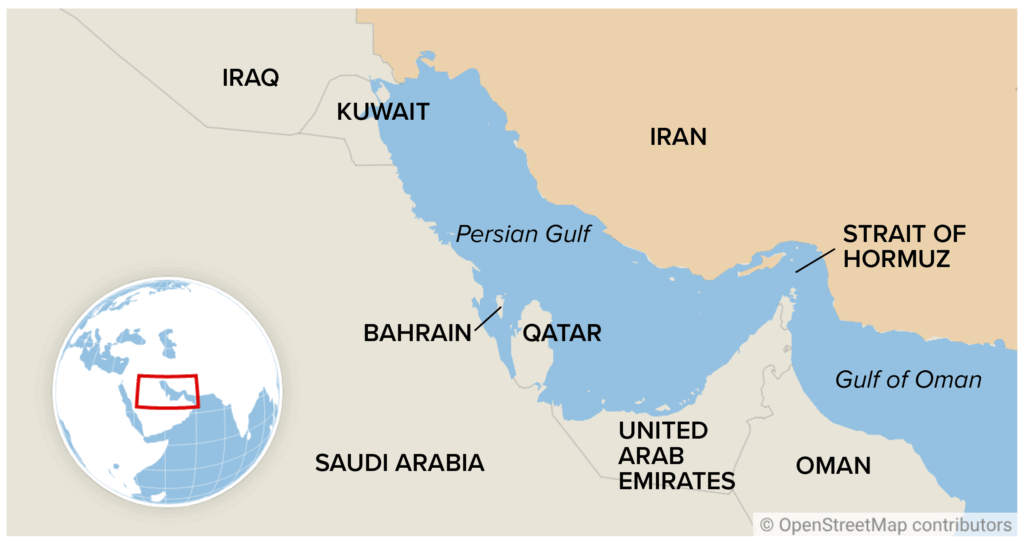
WASHINGTON—As all eyes turn to the war in Iran, the United States and its Western allies cannot afford to take their sights off Russia. Ongoing US and Israeli strikes on Iran, combined with Iran’s threats to close the Strait of Hormuz and its attacks on energy and military infrastructure across the Middle East, are leading to spikes in oil prices. Some analysts warn that oil prices could rise to one hundred dollars per barrel if there is a prolonged disruption of oil exports from the Gulf. Watching all this is Russia, eager to sell the hundreds of millions of barrels of sanctioned oil it currently has sitting in storage tankers at sea.
Oil’s rise
Oil futures have fluctuated since the war began. On Tuesday, Brent crude traded at nearly $84 per barrel, its highest price since July 2024. While the surge appears to be leveling off, oil prices are up 15 percent this week. Many analysts anticipate that the longer the conflict goes on and risks to the Strait of Hormuz and Gulf energy infrastructure persist, the greater the likelihood of further price increases.
There are global economic implications associated with high oil prices, including higher inflation, negative impacts on markets, and increased prices at the gas pump and for common goods. But there are also more specific implications for the Russian economy: Higher oil prices could help Moscow continue funding its war against Ukraine despite being under heavy sanctions. As policymakers consider next steps with Iran, they should double down on enforcing sanctions against Russia to prevent Moscow from benefiting from the conflict in Iran.
Russia’s opportunity
Russia has been under increasing economic pressure from Western sanctions since its full-scale invasion of Ukraine in 2022. The United States and its allies imposed sanctions, export controls, asset blockings, an oil price cap, and other restrictive economic measures aimed at reducing Moscow’s ability to fund and equip its war. This pressure, for example, includes US and UK sanctions targeting Russia’s four largest oil companies—Rosneft, Lukoil, Gazprom Neft, and Surgutneftgas—and their subsidiaries, as well as US, UK, and European Union (EU) sanctions targeting the “shadow fleet” of Russian oil tankers and facilitators enabling Russian sanctions evasion. These sanctions took the Group of Seven (G7) advanced economies’ sixty-dollar price cap on Russian oil, enacted in December 2022, a significant step forward by further restricting Moscow’s ability to sell its oil and reducing Russia’s oil revenue.
As these sanctions have taken hold, Russia’s economy has been hit hard. While the Kremlin has sought to reshape Russia’s economy into supporting its war, its revenue from oil exports has fallen. Prior to 2022, fossil fuel exports funded nearly 40 percent of Russia’s federal budget. In 2025, this dropped to 25 percent. This fall in revenue was due to a combination of a global oil surplus, low oil prices, and Western economic pressure.
After European countries started to phase out purchases of Russian Urals due to the price cap and sanctions, China and India became the primary importers of Russia’s oil. In the past year, however, Beijing and New Delhi reduced their imports of Russian oil due to concerns over US secondary sanctions exposure, tariffs, and, in India’s case, difficult trade negotiations with the United States. China continued to buy oil from Iran and Venezuela, evading US sanctions, and it began importing more oil from Saudi Arabia. Meanwhile, India started sourcing more oil from the United States and Gulf states to meet its domestic demand.
But now, as oil prices surge and it becomes more difficult to move oil out of the Persian Gulf, big oil consumers such as China and India will need to shore up their supplies. Russia is ready and waiting for fresh demand for its oil: On Wednesday, Russian Deputy Prime Minister Alexander Novak said that Russia is getting “signals of renewed interest from India.”
In January, the EU and the United Kingdom reduced the Russian oil price cap to $44.10 per barrel, a move that was intended to further curb Russian oil revenue. But with oil prices over $80 per barrel this week and many analysts expecting those prices to rise, $44.10 per barrel becomes an attractive discount for readily available oil, giving Russia an opportunity to increase oil sales.
The Western response
While the US-Israeli war against Iran is expanding across the Middle East, Russia’s war in Ukraine continues. If Russia is left unchecked and sanctions are not enforced, Russia may have the opportunity to replenish its coffers with oil revenue. This would shore up Russia’s declining economy, provide it with the funds it needs to continue the bloodshed in Ukraine, and weaken US and Western leverage in peace negotiations. The West cannot afford to let this happen.
The United States, the EU, the United Kingdom, and the broader G7 sanctions coalition should step up the enforcement of their existing sanctions against Russia now. This should include levying additional sanctions on Russia’s energy sector, including currently unsanctioned oil companies, refineries, ports, and financial institutions that facilitate oil and gas transactions.
In addition, the United States should align its shadow fleet sanctions with those of the EU and the United Kingdom. Aligning or matching sanctions with allies extends the tool’s reach across jurisdictions and reduces sanctions evasion. In addition to designating the shadow fleet vessels, allies should expand operations to seize them. These seizures reduce Russia’s profits from sanctioned oil and send a clear message that sanctions evasion will not be tolerated. Further, these operations remove dangerous unseaworthy vessels from the water, preventing potential environmental and maritime accidents, as well as potential national security risks, such as undersea cable cutting.
Beyond oil, Western partners should also pursue sanctions on Russia’s liquefied natural gas (LNG) sector, especially now that Qatar’s LNG capacity is shut down as a result of the war in Iran. Qatar’s LNG exports represent 20 percent of the global supply. Meanwhile, Russia remains the fourth-largest LNG supplier, behind Australia, Qatar, and the United States. With Qatari LNG offline, Russia, if left unchecked, could fill the gap in supply. Further, the United States, the United Kingdom, and the EU should make clear to China and India that sanctions on Russian energy remain in place and it would be in their best interest to comply with them.