Italy faces a dangerous gap between stability on paper and citizens’ lived experience
Bottom lines up front
- Italian politicians take office expecting a brief tenure, which has led to a pile-up of contradictory legislation bogging down courts and government agencies.
- The country’s rapidly aging population and economic backbone of small family-owned firms make the economic growth urgently needed more difficult to achieve.
- The central question for Italy is why its free and democratic institutions struggle to generate predictability and effective governance.
This is the ninth chapter in the Freedom and Prosperity Center’s 2026 Atlas, which analyzes the state of freedom and prosperity in ten countries. Drawing on our thirty-year dataset covering political, economic, and legal developments, this year’s Atlas is the evidence-based guide to better policy in 2026.
Evolution of freedom
If one focuses exclusively on aggregate indicators of institutional quality, Italy’s political and economic evolution since the mid-1990s scores high. Indexes such as those produced by Freedom House consistently classify the country as a consolidated democracy with strong political rights and civil liberties, while measures of market orientation point to broadly open and competitive economic institutions. In line with this broader assessment, the Freedom Index also places Italy among countries with strong democratic and market-oriented institutional frameworks. Yet these reassuring classifications coexist with chronic political instability and a persistent sense that institutions do not work as intended. The central question, therefore, is not whether Italy’s institutions are formally free, but why they have increasingly struggled to generate predictability and effective governance in practice.
To understand this tension, some country-specific context is essential. Since the early 1990s, Italy has undergone a profound political transformation following the collapse of its postwar party system. What is often described as the transition to the “Second Republic” was accompanied by repeated electoral reforms, the emergence and disappearance of new political parties, and a persistent pattern of short-lived governments. Since 1994, Italy has had many prime ministers and governments, and even the average time in office for senators and house representatives has shortened significantly. This instability has not weakened democratic rules as such: Alternation in power has remained regular, elections have remained competitive, and constitutional guarantees have held. But it has profoundly shaped the incentives under which political and administrative institutions operate.
The high score Italy receives on the legislative constraints on the executive component of the Political subindex should be interpreted carefully. The score is due to the perfect bicameralism and to the fact that governments are typically formed by coalitions, which require ongoing negotiation among parties with heterogeneous preferences. However, these legislative constraints are often bypassed by the executive governments of the second republic with more and more frequent government decrees and confidence votes, which reduce the quality of laws. In an environment characterized by frequent government turnover and weak retrospective accountability, unfettered executive power would increase the risk of large and difficult-to-reverse policy mistakes. Under such conditions, strong checks and balances operate as a form of institutional insurance, limiting the potential damage associated with political instability rather than generating it. In other words, given Italy’s political volatility and informational constraints, the institutional frictions that limit executive power play a stabilizing role, and the real worries relate to the frequent government decrees aiming to bypass such checks and balances.
Political instability has far-reaching consequences for how governing takes place. Short political horizons systematically alter legislative incentives. When governments expect a brief tenure, the political drive for visible action exceeds careful implementation. In Italy, this logic has translated into a sustained increase in legislative output since the mid-1990s (see, for example, Gratton et al., 2021). In the early 1980s, the Italian Parliament typically approved on the order of 250–300 laws per year. By the late 1990s and early 2000s, annual legislative output regularly exceeded 500 acts, a large share of which consisted of emergency decree-laws later ratified and expanded by Parliament. When political survival depends more on signaling activity than on long-term outcomes, frequent lawmaking becomes individually rational even if it increases systemic complexity (Aghion et al., 2006; Gratton et al., 2021).
Repeated attempts to reform public procurement in Italy provide a concrete illustration. Successive revisions of the public procurement code (Codice dei contratti pubblici) were introduced (notably in 2016, with major amendments in 2020 and 2023) with the stated objective of simplification and acceleration. Yet each reform layered new rules onto an already dense regulatory framework, generating long transition phases and widespread uncertainty for administrations and firms. Rather than resolving bottlenecks, reform activity itself became a source of legal opacity. This outcome is not accidental: It reflects a political environment in which legislating serves as a signal of decisiveness under instability, while the costs of complexity materialize only after governments have moved on.
Given this sustained accumulation of legislation, the burden of adjustment shifts to the administrative and judicial system. Bureaucracies are required to implement rules that are frequently amended, internally inconsistent, and embedded in dense webs of cross-references. As a result, administrative effort is increasingly diverted from implementation to interpretation. Discretion narrows not because rules are clear, but because ambiguity raises the risk of error and ex post sanction. Faced with unstable legal frameworks, public officials adopt more cautious and formalistic behavior, slowing decision-making and amplifying delays. In my view, the sustained deterioration observed until the mid-2010s in the control of corruption and bureaucratic quality components of the Freedom Index is driven primarily by the latter: It reflects a gradual weakening of bureaucratic effectiveness rather than a sharp increase in corrupt behavior. After 2014, the apparent change in trend seems to be largely explained by improvements in perceptions of corruption control, while underlying bureaucratic quality may not have experienced a comparable structural improvement.
Courts face a similar challenge. When legislation is complex and rapidly changing, judges are required to interpret overlapping provisions with limited guidance. This increases divergence across jurisdictions and over time, even in cases involving similar facts. Legal outcomes become less predictable, not because enforcement is weak, but because interpretation itself becomes uncertain. Firms and citizens, in turn, face a moving legal target: Compliance depends not only on what the law formally prescribes, but on how it will eventually be read and enforced. Legal uncertainty thus emerges as an endogenous consequence of legislative overproduction.
Taken together, these dynamics mark a profound change in how public authority operates in practice. The Italian state still relies on formal rules, written procedures, and legal guarantees, but the proliferation and instability of those rules increasingly undermine their coordinating role. Where a rules-based system is designed to reduce discretion and uncertainty, legal complexity has had the opposite effect. For citizens and firms, interacting with the administration often feels less like following clear rules and more like navigating a maze of overlapping requirements, exceptions, and interpretations. Outcomes depend not only on compliance, but on timing, jurisdiction, and the specific office involved. In this sense, legality itself ceases to be a source of predictability and instead becomes an additional layer of risk. The problem is not the absence of rules, but their excess: When the legal framework becomes too dense and unstable to be reliably understood, the promise of rules-based governance is hollowed out.
If Italian laws were written with a level of clarity comparable to that of Italy’s constitution, the country’s GDP today would be almost 5 percent higher.
Legal uncertainty has significant economic consequences. If Italian laws were written with a level of clarity comparable to that of Italy’s constitution, the country’s GDP today would be almost 5 percent higher. In current terms, this corresponds to roughly €110 billion per year in foregone output. This cost reflects the cumulative effect of legal ambiguity on investment, innovation, and firm growth: When rights and obligations are difficult to interpret, economic actors delay decisions, scale back projects, or avoid activities that are most subject to regulatory scrutiny. These aggregate losses do not arise uniformly across the economy, but are mediated by systematic changes in firm behavior and by who is better able to cope with legal complexity.
These costs are not borne uniformly across firms. Legal uncertainty disproportionately penalizes firms that operate transparently, invest in scale, and rely on predictable enforcement of contracts and regulations. By contrast, firms that operate at a smaller scale or in more informal ways are better able to adapt to unstable rules, absorb ambiguity, or avoid exposure altogether. In environments characterized by complex regulation and uneven interpretation, informality and opacity can become competitive advantages rather than constraints. A large body of evidence shows that regulatory complexity and legal uncertainty systematically shift activity away from more productive, formal firms toward smaller, less transparent ones, with adverse consequences for aggregate productivity. In Italy, this selection mechanism reinforces a bias toward small firm size and low growth strategies, amplifying the long-term economic costs of institutional fragility.
Another important phenomenon that cannot be captured by the freedom scores relates to political participation and trust: Citizens’ engagement with politics is a dimension that most institutional indexes only partially capture. Italy continues to meet high standards in terms of electoral competition and political rights, yet participation has declined markedly over time. Voter turnout in national parliamentary elections fell from around 90 percent in the 1970s to about 64 percent in the most recent election in 2022, one of the lowest levels in postwar Italian history. Participation in European and local elections has declined even more sharply, with turnout in European Parliament elections falling below 50 percent in recent cycles (ISTAT; International IDEA). These trends suggest that disengagement results not from the erosion of formal rights but from a weakening belief that political participation meaningfully affects outcomes in an institutional environment perceived as opaque and ineffective.
The gap between formal institutional quality and lived experience has repeatedly shaped Italy’s political trajectory over the past two decades. Since the early 2000s, Italian politics has oscillated between technocratic solutions—invoked in moments of crisis to restore credibility and stability (as under Mario Monti and later Mario Draghi)—and populist reactions that promise to bypass institutional complexity and reassert political control (seen most clearly in the rise of the Five Star Movement and the League under Matteo Salvini). Neither approach has proved fully successful. Technocratic governments have often stabilized short-term outcomes without addressing deeper institutional fragilities, while populist experiments have struggled to translate political mandates into effective and predictable governance. This pendular movement has contributed to political volatility and reinforced public frustration with both expertise and representation. As shown in a forthcoming book by Guiso et al., the 2008 financial crisis served as the watershed of populism in Europe, but in Italy, distrust in politics and government institutions is also due to the country’s political dynamics. In this context, the relative stability of the current government led by Giorgia Meloni marks a potential turning point: For the first time, a populist-led administration is joining political durability with a rhetoric—particularly on immigration and national identity—that raises concerns about the implications for political and civil rights. Whether Italy’s institutional safeguards will continue to prevent slippage along these lines is a question without an obvious answer and will be addressed more fully in the final section.
Overall, Italy’s experience shows a widening gap between formal institutional strength and institutional effectiveness. Democratic procedures and legal guarantees remain largely intact, and this is reflected in Italy’s relatively strong performance on many aggregate institutional indicators. Yet the capacity of these institutions to generate predictability, sustain investment, and foster broad-based economic opportunity has weakened. This disconnect helps explain why dissatisfaction and disengagement can coexist with formally strong institutions. It also provides the starting point for understanding Italy’s prosperity record since the mid-1990s, and why improvements in formal institutional characteristics have not translated into comparable gains in economic performance.
From freedom to prosperity
Measured along many conventional dimensions, Italy remains a prosperous country. Income per capita is high by international standards, life expectancy is among the longest in the world, and access to education, health care, and basic infrastructure is widespread. Material deprivation is limited for most of the population, and inequality, while not low, is broadly comparable to that of other large European economies. At the same time, these relatively favorable aggregates mask important compositional shifts beneath the surface, which pose a significant risk for the country’s long-term growth and social cohesion.
Although Italy remains a high-income country, its growth performance since the mid-1990s has been consistently weak. Over the past three decades, economic stagnation has become a defining feature of the Italian economy rather than a temporary deviation. Real GDP per capita has grown by less than 10 percent since the mid-1990s, compared with roughly 30 percent in France and more than 40 percent in Germany. Labor productivity growth, which averaged close to 2 percent per year during the postwar decades, has been close to zero since the late 1990s. These patterns point not to a sudden deterioration in living standards, but to a prolonged slowdown in economic dynamism that has reshaped expectations and long-term prospects.
A central feature of Italy’s stagnation is the persistent structure of its productive sector. Employment remains heavily concentrated in small firms, with businesses employing fewer than ten workers accounting for roughly half of total employment—far more than in France or Germany. While this structure once supported growth, it has become increasingly ill-suited to an economy characterized by scale economies, global value chains, and the mounting importance of intangible capital. Productivity dispersion across firms is high, yet reallocation toward more productive firms has been weak, limiting aggregate productivity growth. A substantial empirical literature documents how Italy’s skewed firm-size distribution constrains investment, innovation, and organizational upgrading, contributing to persistently low productivity.
Italy’s firm structure is closely reflected in investment behavior. Business investment as a share of GDP has trended downward since the late 1990s and remains below the euro area average, with particularly weak investment in productivity-enhancing and intangible assets such as software, organizational capital, and research and development. The institutional environment described in the previous section helps explain this pattern. Legal uncertainty and regulatory instability raise the fixed costs associated with expansion and long-horizon projects, increasing firms’ exposure to administrative procedures and judicial risk as they grow.
Italy’s weak growth performance has been accompanied by a gradual but persistent deterioration in distributional outcomes. While overall income inequality, as measured by standard Gini coefficients, remains close to the European average, the aggregate masks important shifts in how income is generated and distributed. Real wage growth has been largely stagnant since the late 1990s, particularly for large segments of the workforce, while income streams less directly exposed to economic volatility have proven more resilient.
Alongside weak growth and limited firm dynamism, Italy’s education system has struggled to function as a channel of social mobility. While average educational attainment has increased, learning environments have become increasingly segmented by family background, neighborhood, and territory. Students from lower-income households are disproportionately concentrated in schools with fewer resources, higher teacher turnover, and more challenging classroom climates. Evidence suggests that perceptions of discrimination, disengagement, and exposure to conflict are significantly more prevalent in schools serving Italy’s disadvantaged populations, and that the differences are strongly correlated with parental income and socioeconomic status. Rather than acting as a powerful equalizer, the education system increasingly mirrors existing inequalities, reinforcing differences in cognitive and non-cognitive skill formation from an early age. These patterns risk entrenching social stratification and limiting intergenerational mobility over the long run, even as aggregate indicators of educational access continue to improve.
Prolonged stagnation and repeated economic shocks disproportionately affect middle- and lower-middle-income groups whose welfare depends on stable employment and the returns to long-term investment in skills. Rather than primarily increasing demand for redistribution, this form of insecurity tends to undermine trust in mainstream political actors and institutions, fueling support for alternatives that promise protection through exclusionary policies. In this sense, social tension is less about inequality per se than about the loss of expected mobility for groups that previously experienced steady, if moderate, progress.
In Italy, formal guarantees and rights remain largely intact, yet the practical capacity to turn effort, education, and investment into progress has weakened.
Expectations play a central role in this dynamic. Economic growth depends not only on material inputs or formal rules, but on whether individuals believe that effort will be rewarded over time. As Isaiah Berlin emphasized, a meaningful distinction exists between negative freedom, understood as protection from coercion, and positive freedom, understood as the effective ability to act on one’s choices (Berlin 1969). In Italy, formal guarantees and rights remain largely intact, yet the practical capacity to turn effort, education, and investment into progress has weakened. When income prospects are uncertain and educational opportunities are uneven, formal freedoms coexist with constrained agency. This gap helps explain why improvements in institutional indicators have not translated into stronger productivity growth or renewed economic dynamism.
These constraints are felt most acutely by younger generations. Entering the labor market after two decades of weak growth, today’s young Italians face lower expected returns to education, fragmented career paths, and delayed economic independence. For many, higher educational attainment no longer guarantees stable employment or upward mobility, while access to quality learning environments and early career opportunities remain strongly shaped by family background and territory. As a result, uncertainty is experienced not as a temporary phase but as a persistent condition, influencing decisions about work, mobility, and family formation.
This erosion of confidence in institutions also shapes outcomes in areas where prosperity depends on collective action over long horizons, most notably environmental policy. Italy has made measurable progress in reducing emissions and expanding renewable energy, yet its performance has lagged behind that of several peer countries. Resistance to environmental transformation often reflects concerns about local costs, distributional effects, and the credibility of promised compensation rather than outright opposition to climate goals. In an environment where trust in institutions is fragile, commitments to future benefits carry limited weight. Policies that require short-term adjustment in exchange for long-term gains become harder to sustain, even when they are economically sound and socially desirable. Environmental outcomes therefore reflect not only policy design, but the broader institutional capacity to generate belief in credible, shared returns over time.
Taken together, these patterns point to a central tension in Italy’s recent trajectory. Formal institutions have remained broadly stable, and material living standards remain high, yet the capacity of those institutions to sustain investment, mobility, and credible long-term expectations has weakened. Economic outcomes reflect not a single failure, but the cumulative effects of legal uncertainty, constrained firm growth, segmented education, and eroded confidence in future returns. Prosperity has become more uneven, more fragile, and more dependent on background and position than headline indicators suggest. Whether the equilibrium that has characterized Italy over the past two decades is sustainable in the medium term is the core question addressed in the next section.
The path forward
Italy’s medium-term prospects are shaped by a small number of risks that revolve around institutional credibility, economic sustainability, and demographic pressure, and that together will determine whether the current equilibrium can endure.
The most immediate concern is politico-legal. A proposed constitutional reform of the judicial system, scheduled for a general referendum vote on March 22nd, could result in a significant shift in the balance of powers. Public debate has focused on a narrow and largely symbolic issue—the possibility for prosecutors to become judges—which in practice affects a very small share of magistrates. The more consequential element of the reform is the creation of a new body, appointed in part by the political majority, with the authority to oversee and evaluate the actions of the judiciary. This introduces a clear risk to judicial independence. Even in the absence of direct interference, the mere possibility of executive oversight may discourage the pursuit of sensitive cases involving politically connected actors or the government itself. The institutional risk is amplified by the political process through which the reform is advancing. Because it failed to obtain a two-thirds majority in parliament, the reform will be decided by referendum. In a context of low political participation and widespread disengagement, there is a non-negligible possibility that a far-reaching constitutional change could be approved by a relatively small share of the electorate. Such an outcome would further weaken the perceived legitimacy (or lack thereof) of institutional checks and balances.
Italy risks moving from a situation in which dissatisfaction coexists with formally strong protections to one in which the erosion of rights is tangible.
A second risk concerns civil and political rights. Italy has long exhibited a gap between strong formal guarantees and uneven lived experience. Recent developments suggest that this gap may narrow—in an unfavorable direction. Since 2022, a stronger emphasis on security and anti-immigration rhetoric has yielded policy initiatives and administrative practices that have already begun to affect indicators of political and civil rights. While the changes observed so far remain limited, the concern is one of persistence rather than rupture. If these trends continue, Italy risks moving from a situation in which dissatisfaction coexists with formally strong protections to one in which the erosion of rights is tangible. This would represent a qualitative shift relative to the past three decades.
The third challenge is economic and structural. Italy’s traditional development model, centered on small, family-owned firms operating in established sectors, has become increasingly inadequate in an economy driven by innovation, scale, and intangible capital. A transition toward more dynamic and technologically intensive activities is necessary. Yet the incentive structure produced by the current institutional environment remains unfavorable. Legal uncertainty, administrative complexity, and limited predictability discourage the long-term investments required to develop new sectors and expand firm size. Without changes to these underlying conditions, the prospects for a meaningful shift in the growth model remain weak, despite the urgency of the challenge.
Demographic and fiscal pressures reinforce these concerns. Stagnant incomes, persistently low fertility, and high levels of public and private debt interact in ways that constrain policy choices. Italy’s population is aging rapidly, and the working-age population is shrinking—placing an increasing strain on the pension system and welfare programs. At the same time, high public debt limits fiscal space, reducing the government’s ability to respond to shocks or to support growth through expansionary policies. In the absence of stronger growth, the sustainability of existing social arrangements will become increasingly difficult to maintain.
Temporary fiscal expansions can relax political and financial constraints in the short run while delaying necessary adjustments and amplifying vulnerabilities when support is withdrawn.
Finally, there is the risk associated with the conclusion of the Next Generation EU program. In recent years, these funds have supported public investment and contributed to stabilizing economic activity. There is a concern, however, that they may also have masked underlying weaknesses. Whether these resources have been systematically directed toward projects capable of raising long-term productivity remains unclear. Moreover, they will have to be repaid. When combined with already high debt levels, this raises the possibility that the apparent stabilization of recent years could give way to renewed strain once extraordinary support fades. Temporary fiscal expansions can relax political and financial constraints in the short run while delaying necessary adjustments and amplifying vulnerabilities when support is withdrawn. If growth does not materialize, the adjustment required could be abrupt.
Taken together, these risks point to a fragile equilibrium. Italy has so far avoided abrupt institutional breakdowns and severe economic crises, relying instead on gradual adjustment and external anchors. Whether this equilibrium can be sustained in the medium term will depend on the ability of institutions to preserve independence, restore credibility, and support a development path capable of generating durable growth under tighter economic and demographic constraints.
about the author
Massimo Morelli is professor of political science and economics at Bocconi University and senior research scientist at the Luxembourg Institute of Socio-Economic Research (LISER). A political economist, he earned his PhD in economics from Harvard University in 1996. He spent twenty-two years teaching and conducting research at leading American institutions, including the Institute for Advanced Study at Princeton and Columbia University, where he held a full professorship in economics and political science. Since returning to Italy in 2014, he has continued his work at the intersection of economics and political science, publishing in leading journals across both fields.
Explore the data
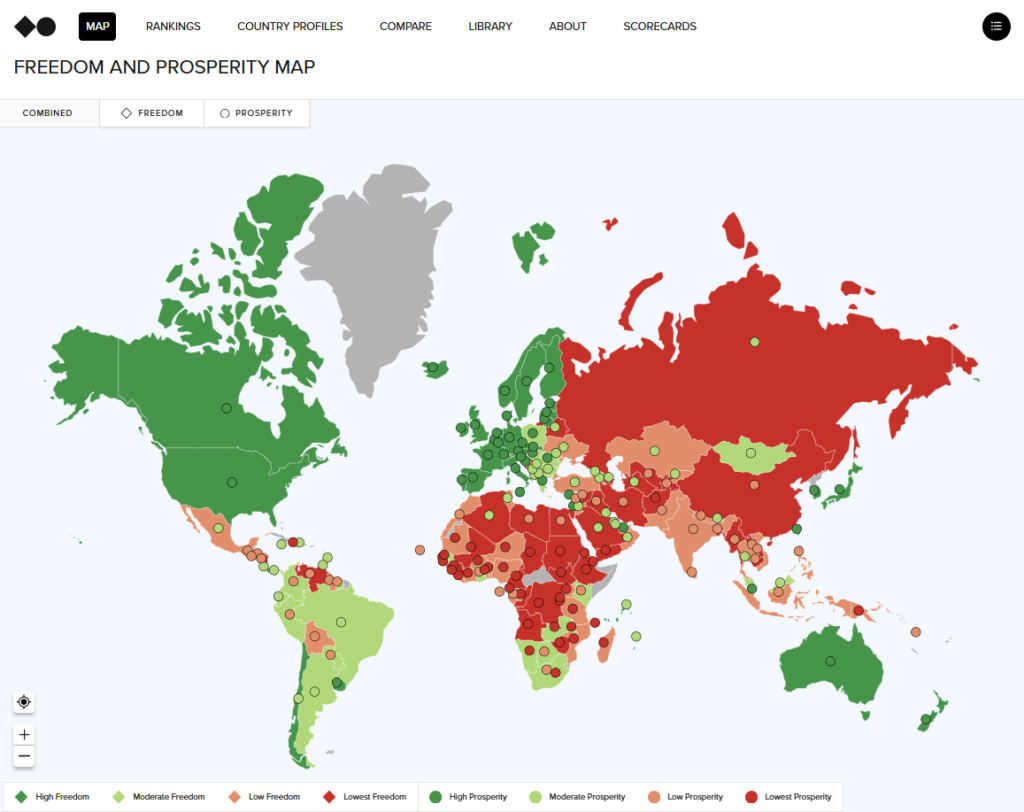
The Indexes rank 164 countries around the world. Use our site to explore thirty years of data, compare countries and regions, and examine the subindexes and indicators that comprise our Indexes.
Stay Updated
Get the Freedom and Prosperity Center’s latest reports, research, and events.
Stay connected
Read all editions
2026 Atlas: Freedom and Prosperity Around the World
Against a global backdrop of uncertainty, fragmentation, and shifting priorities, we invited leading economists and scholars to dive deep into the state of freedom and prosperity in ten countries around the world. Drawing on our thirty-year dataset covering political, economic, and legal developments, this year’s Atlas is the evidence-based guide to better policy in 2026.
2025 Atlas: Freedom and Prosperity Around the World
Twenty leading economists, scholars, and diplomats analyze the state of freedom and prosperity in eighteen countries around the world, looking back not only on a consequential year but across twenty-nine years of data on markets, rights, and the rule of law.
2024 Atlas: Freedom and Prosperity Around the World
Twenty leading economists and government officials from eighteen countries contributed to this comprehensive volume, which serves as a roadmap for navigating the complexities of contemporary governance.
Explore the program
The Freedom and Prosperity Center aims to increase the prosperity of the poor and marginalized in developing countries and to explore the nature of the relationship between freedom and prosperity in both developing and developed nations.
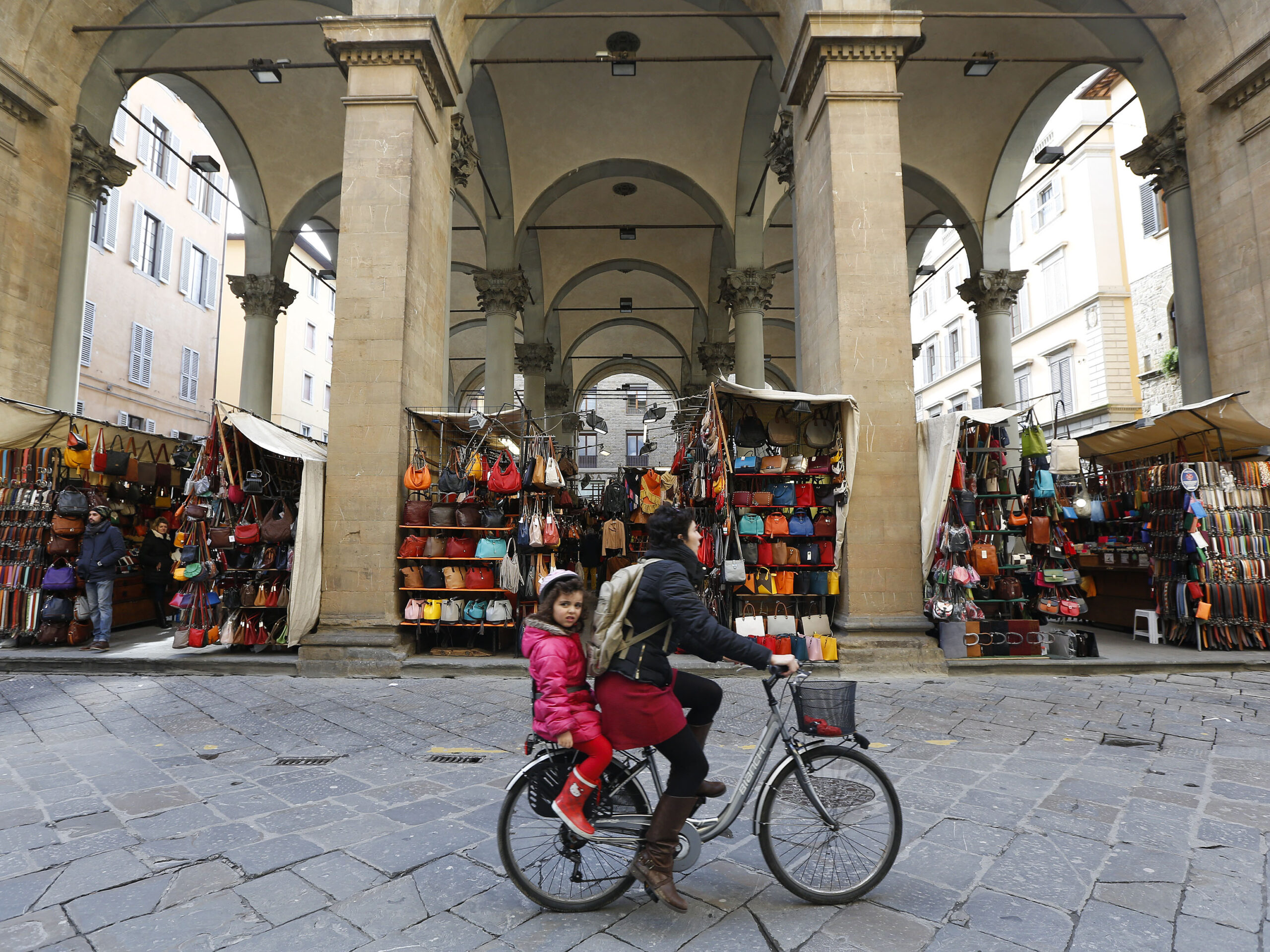
Image: A woman rides a bike near a leather market in downtown Florence, Italy March 1, 2016. REUTERS/Tony Gentile

Keep up with the Freedom and Prosperity Center’s work on social media