
The new geoeconomics of Bretton Woods
Jobs, AI, imbalances, and the future of global economic cooperation
Bottom lines up front
- The global trade, investment, and supply chain maps are being redrawn, and a new global order is in the making.
- The Bretton Woods Institutions (BWIs) are preserving international economic cooperation and coordination.
- Globalization is not ending—it is becoming more contested and fragmented.
Table of contents
- Introduction
- Why the West must retain leadership of the IMF and World Bank—and make them work better
- Right strategy, rough odds: The World Bank’s jobs agenda in a fractured global economy
- Growing global imbalances pose new challenges to the IMF
- The AI imperative: Capital, technology, and a new agenda for Bretton Woods institutions
- Conclusion
Introduction
by Amin Mohseni-Cheraghlou
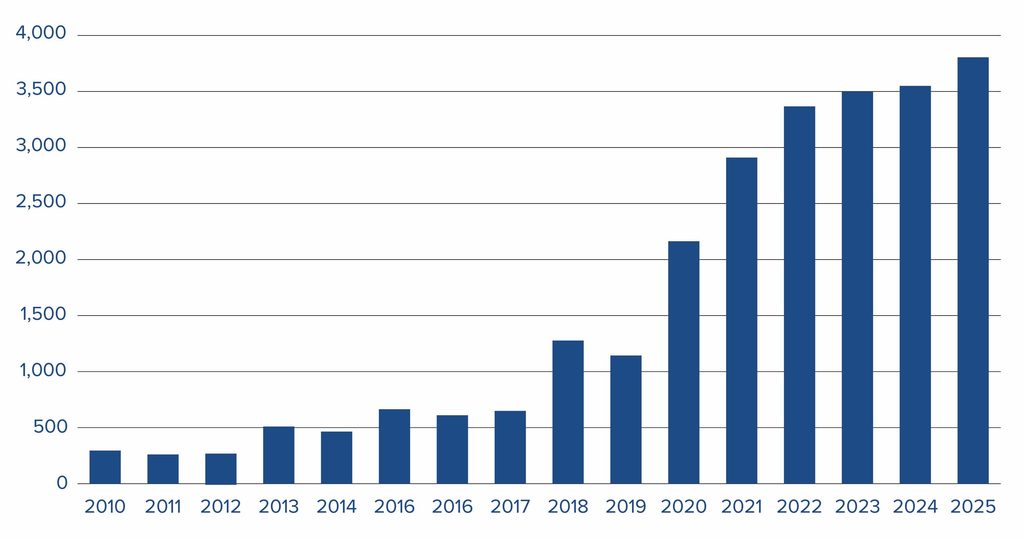
When government officials, investors, policymakers, and academics gather in Bangkok on October 12 for the 2026 Annual Meetings of the International Monetary Fund (IMF) and World Bank, they will confront a global economy markedly changed since their 2023 meeting in Marrakesh. Heightened by geoeconomic competition, protectionism, tariffs, and economic and military conflict, the global trade, investment, and supply chain maps are being redrawn, and a new global order is in the making. Against this backdrop of increasing global fragmentation, the main challenge facing the Bretton Woods Institutions (BWIs) is preserving international economic cooperation and coordination as the issues facing member economies and their populations become ever more global and transnational in scope.
Trade, investment, technology, finance, energy, and critical minerals are increasingly intertwined with national security. The United States, China, the European Union, and a growing number of middle powers are using tariffs, subsidies, export controls, investment restrictions, industrial policy, and supply-chain strategies to protect domestic industries and secure strategic advantage. Production networks are being reorganized around resilience and political alignment, while global imbalances are widening. At the same time, developing countries are facing extraordinary pressure from conflict, high debt, fiscal strain, climate risks, demographic change, and rapid technological transformation (namely AI and datacenters). Globalization is not ending—it is becoming more contested and fragmented.
Figure 1. Number of new harmful trade policy interventions
This shift presents a fundamental challenge for the IMF and World Bank. Both institutions were established on the belief that international economic integration, backed by major powers, could generate shared benefits when accompanied by macroeconomic stability, development finance, and international rules. That consensus has largely frayed. The institutions’ largest shareholders increasingly pursue economic policies shaped as much by strategic competition as by growth, while developing countries often bear the consequences of decisions over which they have limited influence and responsibility, such as climate change, trade disruptions, high interest rates, and rapid AI developments.
The chapters in this volume illustrate the scale of this shift. Rising members are challenging the traditionally Western-oriented governance structure of BWIs. Global current-account imbalances are growing and becoming more structural and increasingly tied to global value chains, industrial policy, and international investment positions. The World Bank, meanwhile, confronts a jobs crisis: Roughly 1.2 billion young people in developing economies are expected to reach working age over the coming decade, while only about 420 million jobs are likely to be created, leaving around 800 million people unemployed. Developing countries must also compete for capital in an investment environment dominated by technology-intensive sectors and advanced economies, while AI threatens to deepen disparities in infrastructure, skills, computing capacity, and productive capabilities.
These challenges are strongly linked. A more fragmented trading system makes it harder for poorer countries to follow the export-led industrialization strategies that transformed much of East Asia. Strategic industrial policies can redirect investment toward economies already embedded in global supply chains. High debt-service costs constrain spending on infrastructure, education, health, climate resilience, and digital investment. Those constraints, in turn, make it harder for lower-income economies to capture the productivity gains of AI and other emerging technologies. Countries that fall behind technologically may become less attractive to private capital, widening the development gaps the World Bank was created to narrow.
The BWIs face a challenge that is simultaneously economic, institutional, and geopolitical. Their traditional instruments are still necessary, but they are no longer sufficient. For the IMF, this requires rethinking surveillance in a world where some of the largest sources of systemic risk originate in economies that have little need for IMF financing and therefore limited incentive to follow its recommendations. The United States, China, and Europe generate much of the world’s external imbalances, yet the IMF’s leverage remains asymmetric: Countries that depend on IMF support face considerable reform pressure, while systemically important economies can more easily disregard its guidance. Effective surveillance requires more than sharper forecasting—it requires greater candor and consistency in assessing major economies’ policies, including fiscal deficits, industrial subsidies, exchange-rate policies, tariffs, and other measures with major cross-border spillovers.
At the same time, any reform effort must recognize the practical limits of what the IMF can achieve. Many of today’s imbalances reflect structural differences in savings and investment, demographics, global value chains, industrial policy, and accumulated international assets and liabilities. Macroeconomic adjustment alone cannot resolve them. The IMF must therefore be clearer and more realistic about where it has leverage and where it does not, and it must distinguish between cyclical imbalances that standard policy tools can address and structural, geoeconomic imbalances that require sustained international coordination.
For the World Bank, the challenge is different yet equally fundamental. Its development model hinges on the assumption that domestic reforms enable countries to attract investment, integrate into global markets, boost productivity, and create jobs. However, capital is no longer allocated solely according to market fundamentals. Industrial policy competition among the United States, China, and Europe increasingly influences where strategic investment flows, which supply chains expand, and which countries are included or excluded. Investment-climate reform, regulatory simplification, and de-risking remain important, but these tools were designed for a world in which capital sought developing markets but encountered domestic obstacles. These instruments are less powerful when geopolitical strategies executed by the world’s largest economies determine the course of capital flows.
This shift makes the World Bank’s growing focus on employment particularly important. Putting job creation at the center of development strategy represents a significant institutional departure from the assumption that economic growth automatically boosts employment. But the success of this strategy depends on whether developing economies can gain access to markets, investment, technology, infrastructure, and productive global value chains. Job creation can no longer be viewed primarily as a domestic development challenge. It is increasingly a geoeconomic issue with global ramifications, such as the recent migration surges across the EU and the United States.
The same is true of technology and development finance. The growing influence of multinational companies (MNCs), sovereign wealth funds (SWFs), and other private investors means governments and multilateral institutions no longer command anything close to a monopoly over the capital, technology, infrastructure, or expertise shaping development. SWFs alone manage over $15 trillion dollars in long-term capital, while private companies increasingly control strategically important technologies and infrastructure. AI raises the stakes further. Semiconductors, computing capacity, data centers, electricity, critical minerals, skilled labor, and digital connectivity are becoming drivers of economic competitiveness, yet their distribution is starkly uneven across World Bank membership. Low-income and developing economies with inadequate power systems, weak digital infrastructure, limited human capital, and insufficient investment are at risk becoming consumers of new technologies rather than producers or meaningful participants in the value chains they create.
Consequently, the IMF and World Bank need deeper, more sophisticated engagement with private capital, MNCs, sovereign investors, and fellow development institutions. But mobilizing private capital is not the ultimate goal. Its true value lies in whether it expands productive capacity, creates jobs, facilitates technology transfer, strengthens local value chains, and enables developing economies to capture a greater share of the gains generated by rapid technological change.
Reform must focus on effectiveness as much as scale. While expanding lending capacity is essential, especially as debt burdens and development financing needs rise, simply deploying more resources without greater institutional effectiveness will not restore confidence in multilateralism. The IMF needs stronger surveillance, better program design, more effective debt-resolution mechanisms, and greater willingness to confront policies in major economies that cause systemic spillovers. The World Bank needs faster, more flexible financing, stronger private-capital mobilization, a deeper commitment to job creation and productive transformation, and instruments suited to an era shaped by industrial policy, technological competition, and fragmented supply chains. Both the IMF and World Bank must insulate themselves from political influence, guard against mission creep, and sharpen their focus on core mandates. This means grounding decisions in economic and development priorities rather than the interests of individual shareholders, while resisting the pressure to expand into areas where they lack a clear comparative advantage. Greater institutional independence, accountability, and focus would strengthen their effectiveness and, equally important, their credibility and legitimacy among member countries.
Moreover, governance and legitimacy remain vital imperatives. The BWIs cannot sustain their effectiveness if emerging and developing economies feel sidelined in decisions that directly affect them. The BWIs’ governance structures still reflect an economic order that has changed considerably since they were created, making greater representation both necessary and overdue. However, expanding representation cannot be considered apart from institutional effectiveness and financial capacity. Advanced economies, particularly Western shareholders, continue to provide much of the financing, technological expertise, and institutional support on which these institutions depend. The challenge, therefore, is not simply to redistribute influence, but to strike a workable balance: making the BWIs more representative and legitimate while preserving the resources, expertise, and political support they need to act effectively.
The four chapters that follow assess these challenges from different lenses:
Martin Mühleisen’s chapter examines how geopolitical fragmentation and China’s growing influence are reshaping the IMF and World Bank. He calls for stronger governance, surveillance, lending, and debt resolution while navigating the delicate trade-offs between institutional effectiveness, representation, and legitimacy.
Hung Tran’s chapter analyzes the resurgence of global imbalances, emphasizing their increasingly structural roots in shifting investment patterns, industrial policy, and global value chains. He highlights the IMF’s central role in addressing policy-driven imbalances and the limits of its conventional macroeconomic tools.
Nicole Goldin’s chapter assesses the World Bank’s growing focus on job creation against a hostile global landscape. She argues that trade fragmentation, weaker and rerouted investment flows, and disrupted supply chains are compounding the developing world’s already formidable employment challenge.
Finally, Nisha Narayanan’s chapter explores how AI, MNCs, SWFs, and private capital are reshaping development finance. She posits that the BWIs must adapt to help developing economies secure the technology, infrastructure, skills, and investment required to compete in emerging global value chains.
Taken together, these contributions point to a shared conclusion: The IMF and World Bank remain indispensable precisely because the global economy, trade, and finance are becoming more fragmented. No other institutions possess their combination of near-universal membership, financial capacity, technical expertise, convening power, and ability to align national policies with global economic challenges and outcomes. But indispensability is not the same as adequacy. Institutions created at a time of expanding economic integration must now adapt to an era of geopolitical rivalry and fragmentation.
The upcoming meetings in Bangkok must be more than another checkpoint in the evolution of the BWIs. They present an opportunity to confront the widening rift between the world these institutions were built for and the one they face today. The objective is not to reinvent their core missions, but to make them better able to fulfill them: less politically driven, more candid in surveillance, faster and more disciplined in lending, more effective in debt resolution, more responsive to developing-country priorities, better able to mobilize productive private investment, and more attuned to how technology, industrial policy, security, and geopolitics are reshaping development.
The central question in Bangkok is therefore not whether the IMF and World Bank still matter, but whether they can adapt quickly enough to remain effective in a world that needs multilateral cooperation more than ever, even as that cooperation becomes harder to achieve.
Why the West must retain leadership of the IMF and World Bank—and make them work better
by Martin Mühleisen
Geopolitical fragmentation has moved from a forecasting risk to an operational reality, even as diversified supply chains have so far absorbed the worst shocks of the Iran war. The IMF’s April 2026 World Economic Outlook, “Global Economy in the Shadow of War,” highlights worsening fragmentation and Middle East conflict as the principal risks to global growth.
Compounding those risks is a factor that predates the current conflict: China’s push for technological dominance and export-driven employment. This strategy has exerted deflationary pressures on global competitors and raised concerns about deindustrialization in advanced economies. At the same time, Beijing has used part of its external surplus to finance direct investment and development loans that extend its global reach into strategic infrastructure and critical commodities.
These policies have contributed to an unresolved paradox: Even as global supply chains have withstood a range of recent shocks, China is actively trying to concentrate control over the raw materials and infrastructure nodes supporting these supply chains—refining, for example, more than 90 percent of global rare earths. In pursuing a geostrategic advantage, Beijing is undermining the very resilience that has kept the world economy afloat.
For the IMF and World Bank, these developments have raised new challenges. The central policy challenge is twofold: Western shareholders should preserve their effective control over the IMF and World Bank, but they should use that control to make the institutions more credible, more representative, and more operationally effective.
Expanding on an earlier paper presented before the 2023 IMF-World Bank meetings in Marrakesh, this chapter focuses on four priorities: completing the next quota round, improving program performance, strengthening IMF surveillance, and using the Annual Meetings in Bangkok to show that Western leadership remains responsive to the wider membership.
What is at stake
China’s growing influence extends to the institutions that govern the global economy, most notably the UN. Because decisions in these bodies are typically reached on a one-country, one-vote basis, Beijing can leverage its relations with developing countries to advance its strategic goals. For example, China has built durable technical and personnel influence inside bodies that set international norms and standards. These organizations play a key role in determining specifications for next-generation technologies, such as telecommunication and quantum computing.
The IMF and World Bank present a striking contrast, because voting power in both institutions remains predominantly with advanced economy majority shareholders. IMF loans are denominated in special drawing rights (SDRs) but paid out overwhelmingly in dollars, euros, and yen. As a result, Western shareholders, who issue those currencies, have a clear interest in ensuring that the two institutions remain financially sound and continue to advance their initial objectives.
If Bretton Woods voting shares were to be rebalanced toward China and emerging markets more broadly, it is likely that the institutions would face pressure to extend more loans to developing countries, providing a de facto bailout mechanism for Chinese and other overextended lenders. The United States, Europe, and Japan would surely reduce their financial backing for IMF and World Bank loans under such circumstances.
At the same time, Western contributions to subsidized loan trusts would also decline, reducing interest subsidies for low-income countries and jeopardizing training and technical assistance programs that have supported global financial stability behind the scenes for decades. Taken together, the IMF and World Bank would stand to lose considerable influence, with negative consequences for most of its members. And it would deprive the West of a highly effective geopolitical instrument over which it still has control.
Legitimacy matters
The opposite risk also warrants serious attention: These institutions risk losing traction over time if the fast-growing populations in emerging and developing countries remain under-represented and underserved.
Moreover, as the United States and Europe respond to China’s export offensive, they have also diverged from the open, rules-based trade model they once endorsed. The sometimes erratic imposition of unilateral tariffs, economic sanctions, and selective industrial policies may in some cases seem unavoidable, but these measures have imposed heavy costs on producers and consumers around the world.
Mitigating risks to the legitimacy of the Bretton Woods institutions is therefore essential. As long as doing so by means of capital allocation is not advisable, it at least requires adequate representation of nationals from emerging and developing countries among the institutions’ leadership. Most of all, however, the IMF and World Bank must deliver on their mandates. The key issue is not necessarily how much capital is dispensed, but how effectively it is used to transform recipient countries’ productive capacity and improve their employment prospects.
Quota reform
The immediate priority is for the United States and other shareholders to ratify the IMF’s decision on the 16th General Review of Quotas, putting its lending capacity on a more permanent footing while decoupling the process from the more contentious issue of voting-share realignment.
Notably, despite earlier rhetoric about a multilateral “liberation day,” the Trump administration has in practice warmed to both institutions. Treasury Secretary Scott Bessent has backed the quota revamp while pushing the World Bank toward more efficient financing models. This pragmatic, interest-based re-engagement offers a foundation to build on while ensuring the institutions reform along the lines proposed by both Democrat and Republican administrations in recent years.
The longer-term challenge is to accommodate market-based democratic economies whose economic weight has grown—such as India—without ceding the West’s controlling position outright. That process, formally launched with the 2026 Diriyah Guiding Principles, will at best proceed in small stages until China is prepared to play a more responsible and transparent role in the world economy.
Better program performance
Apart from governance issues, Western democracies can best compete with China’s development finance juggernaut through superior loan and program quality. The US-backed Argentina program, recently bolstered by a twenty-billion-dollar Treasury swap arrangement, illustrates how IMF and bilateral tools can work together to support a strategically important economy undergoing a major transition. Ukraine’s program further demonstrates the institutions’ capacity to sustain allied crisis lending, even when fiscal and governance benchmarks are hard to meet under active wartime strain. From a geostrategic standpoint, these examples underscore that Western shareholders should indeed treat the blending of IMF programs with bilateral financial and political instruments as a template, not an exception.
The Ukraine program shows how the institutions have learned from Cold War missteps, when poorly designed IMF and World Bank loans flowed to African countries whose (often corrupt) rulers were fighting communist insurgencies. Those loans yielded little economic benefit and contributed to a major low-income country debt crisis that took until the mid-2000s to resolve. By contrast, Ukraine’s program includes robust conditionality, with war-related risks backed by financial assurances from allies to shield other Bretton Woods shareholders from financial spillovers.
In this context, it is ironic that the IMF and World Bank are once again grappling with a low-income country debt crisis. China’s official loans to emerging and developing markets already rivaled those of the World Bank by the mid-2010s, and debt service payments to China accounted for 15 percent of the total owed by the most heavily indebted low-income countries in 2025.
To relieve countries of their crippling debt burden, international partners must maintain pressure on Beijing and other creditors to offer lending terms that poor countries can genuinely afford. The IMF’s Lending into Arrears policies already enable the institution to disburse funds while bilateral creditor negotiations with Beijing remain stalled. Using this mechanism more assertively, rather than as a last resort, could accelerate debt resolution.
Western shareholders must therefore rely on multilateral institutions to provide adequate policy prescriptions while supporting IMF programs by offering targeted financial assistance, bilateral market access, and financing on favorable terms.
Improved surveillance
Another priority for the IMF is to provide earlier warning signals and more tailored policy advice to its member countries. From the perspective of smaller members, when the institution soft-pedals its assessments of larger shareholders, the IMF not only loses credibility but also fails to provide its broader membership with timely warnings about systemic risks to the global economy. Moreover, a recent paper about the IMF’s World Economic Outlook forecast performance highlighted—yet again—overly optimistic projections and internal inconsistencies in the fund’s published forecasts.
To be sure, the IMF membership as a whole will be encouraged to pursue low fiscal deficits and balanced current accounts at the forthcoming IMF-World Bank meetings in Bangkok. However, the IMF has been too reluctant to address the largest risks to the global economy publicly. For example, it remained silent on mounting inflation risks during the COVID-19 pandemic; it failed to forcefully address China’s mercantilism or harmful U.S. trade policies; and pointing out the threat posed by adverse debt dynamics in the United States, France, and Italy has largely been left to technical staff. To stay relevant and fulfill its mandate, the IMF must use the forthcoming Surveillance Review to prompt changes in how it formulates and communicates its policy advice on economic issues.
What Western shareholders should do
The changes described above would continue to anchor the IMF and World Bank more firmly in the camp of Western democracies as they counter China’s state-directed economic model. Achieving this, however, will require integrating the two institutions more deeply into deliberations at the G7 and other multilateral forums. Leading shareholders will need to engage more frequently with the institutions, ensuring that senior officials can collaborate closely with their counterparts in major central banks and finance ministries.
The Bangkok meetings offer a crucial opportunity to show that Western leadership does not entail neglecting the priorities of emerging and developing economies. Listening to Asian participants will be critical, as their geographic proximity to China imposes even more complicated trade-offs than those faced by the West. Securing their buy-in will be essential for a strategy that preserves the advantages of trading with China while pushing back against policies that continue to shift industrial capacity and geopolitical leverage to Beijing.
Ultimately, this approach should enable the IMF and World Bank to deliver more effective programs, credible debt restructurings, and better policy guidance, so that emerging and developing countries choose to partner with Western-anchored institutions out of conviction rather than necessity.
Right strategy, rough odds: The World Bank’s jobs agenda in a fractured global economy
by Nicole Goldin
Let’s start with a number: 800 million. That is the projected gap between the 1.2 billion young people who will reach working age in developing economies over the next decade and the roughly 420 million jobs expected to be created. This is a development statistic on the one hand, and a geoeconomic one on the other. A fault line that, left unaddressed, will shape economic growth, global stability, and social dynamics across the Global South and beyond.
The World Bank, to its credit, understands this. Under President Ajay Banga, the institution has undergone a genuine reorientation, elevating jobs from a thematic priority to an organizing principle. In 2023, he signaled this shift during his Annual Meetings debut in Marrakech, further solidifying it by 2024. Launched in 2025, Country Growth and Jobs Reports put employment at the center of country diagnostics. Meanwhile, a new Jobs Indicator, rolled out at this year’s Spring Meetings, tracks not just positions created directly through bank projects but broader supply chain effects and upward wage mobility. For those of us who have watched the bank navigate this agenda for years—and pushed both from the inside and out for this kind of structural commitment well before it became institutional doctrine—the shift is real and welcome.
The problem is timing. The geoeconomic environment in which the bank is executing this agenda has moved in the wrong direction on nearly every dimension that the strategy implicitly depends on.
A long time coming
It is worth reflecting on how the World Bank got here because the current moment represents a significant break from a long institutional default. For most of its history, the bank treated employment as an outcome of growth—as the byproduct of the right macroeconomic conditions. Social protection absorbed much of the political demands of the work agenda, and the assumption was that growth would take care of jobs.
The 2013 World Development Report on Jobs marked an inflection point, establishing employment as a development goal in its own right rather than a byproduct of GDP. The following year, IDA17 formalized this shift by recognizing labor markets as a transmission mechanism between growth and inclusion—and in doing so, elevated jobs to a “special theme” with its own results indicators and policy commitments.
However, bridging the distance between naming a priority and building the evidence base to act on it proved challenging. The launch of Solutions for Youth Employment (S4YE) in 2014—a multistakeholder coalition housed at the World Bank within what was then the Social Protection and Labor practice—was a response to that challenge. The practice’s eventual renaming to Social Protection and Jobs was a small but telling marker of where things were heading. The 2015 baseline report, which I led, was, in part, an attempt to establish what was actually known about what works, for whom, and at what scale. The honest answer then? Not enough.
Over the IDA17, IDA18, and IDA19 cycles, the bank continued rounding out the jobs agenda incrementally, adding diagnostics, value chain interventions, and a growing focus on labor demand rather than just labor supply. Portfolio data from that period show 177 projects—nearly 70 percent of the IDA portfolio—incorporating labor demand interventions.
But the agenda remained, for most of this period, additive rather than transformative. Jobs sat alongside the bank’s other priorities—climate, poverty alleviation, human capital, fragility—rather than as an organizing principle. When Banga arrived in 2023, the shift was not merely rhetorical. He brought a private sector notion that job creation at scale requires fostering conditions for firms to grow, not just improving workers’ competencies. Reconciling the “math”—the 800 million jobs gap—became the driving principle behind reordering the bank’s priorities.
The investment picture
The jobs agenda was built, at least implicitly, on a set of background conditions: that private capital would flow toward labor-abundant developing economies, that global value chains would continue to deepen, and that trade would remain broadly open. Yet we don’t see any of those assumptions fully holding today.
In 2023, foreign direct investment (FDI) to developing economies fell to $435 billion, its lowest level since 2005. Accounting for just 2.3 percent of GDP, this share was roughly half of its peak in 2008. The World Bank’s chief economist blamed public policy: Governments have erected barriers to investment and trade at precisely the moment when demographic expansion demands the opposite. It’s a fair critique, but it overlooks the fact that many of the biggest barriers do not originate in developing countries. Instead, they emerge from Washington, Brussels, and Beijing, driven by industrial policy competition, domestic political economy concerns, national security imperatives, and deliberate efforts to redirect supply chains toward politically aligned partners.
The bank’s toolkit for attracting private investment—investment climate reform, regulatory simplification, de-risking instruments—is designed for a world where capital wants to flow south but needs encouragement. It is less equipped for a world in which capital is actively redirected by the major powers, and where the countries best positioned to capture supply chain shifts are those already embedded in existing networks, not those on the periphery. This tension was palpable at the 2025 Annual Meetings, where both the World Bank and the IMF were converging on jobs as the macro-critical variable while the environment for creating them grew increasingly hostile.
The trade disruption
The 2025 tariff escalation crystallized this reality in ways that were both predictable and painful. Participation in global value chains has consistently been shown to accelerate productivity growth and create higher-paying jobs, making trade openness one of the most reliable correlates of employment gains over time. Tariff increases run directly counter to that evidence.
Under Banga, the bank’s response was pragmatic: Strike rapid deals with Washington, lower trade barriers, deepen regional integration. While strategic in the near term, this approach is insufficient to alter the structural trajectory. The fragmentation of the global trading system is foreclosing, not just slowing, the export-led industrialization pathway that drove some of the most dramatic poverty reductions of the past fifty years. Meanwhile, South Asia’s own tariffs on intermediate inputs, currently twice as high as those in other emerging markets, compound the problem from within.
The distributional picture is uneven. Vietnam, Mexico, and India—already embedded in existing supply networks—have captured meaningful shares of redirected manufacturing investment. Bangladesh’s garment sector, which employs over four million workers and accounts for more than 80 percent of export earnings, faces direct displacement from tariff structures that favor friend-shored alternatives. Ultimately, the countries with the youngest populations and the largest jobs deficits are rarely the ones positioned to win.
From diagnosis to delivery
Notably, the World Bank’s jobs agenda has moved beyond diagnosis into operational execution, prioritizing five sectors with the greatest near-term job-creation potential: infrastructure, healthcare, agribusiness, tourism, and value-added manufacturing. For example, AgriConnect—launched at the 2025 Annual Meetings—commits $9 billion annually by 2030, alongside $5 billion in partner mobilization, to transform smallholder farming into an engine of employment and food security. Agriculture sits at the intersection of rapid demographic growth and existing comparative advantage in Africa and parts of South Asia. Health Works, launched in October 2025 with Japan and the World Health Organization, explicitly frames investments in health systems as a job creation strategy. The initiative aims to deliver quality, affordable care to 1.5 billion people by 2030 while driving employment across health workforces and local supply chains—supported by a statistic showing that one health sector job generates 3.4 jobs in other sectors.
Sitting above both initiatives is the High-Level Advisory Council on Jobs, co-chaired by Singapore President Tharman Shanmugaratnam and former Chilean President Michelle Bachelet, which gives the agenda a political convening architecture missing from prior replenishment cycles.
The geoeconomics grind
Despite these advances, the World Bank—like other international institutions—now must grapple with the decisions of the geoeconomic actors whose actions will largely determine whether its jobs agenda succeeds. The industrial policy competition among the United States, the European Union, and China is reshaping global investment flows and supply chains, isolating countries left outside trusted networks. The externalities of that competition fall disproportionately on the economies least able to absorb them—the same places where the 800-million-job shortfall is most acute.
This is uncomfortable terrain for a multilateral institution. The bank’s legitimacy depends in part on remaining neutral in great- (or increasingly middle-) power competition. But neutrality carries its own costs. When 3.4 billion people—nearly half the world’s population—live in countries spending more on debt service than on health or education, and when the FDI and trade flows that might help open that fiscal space are being redirected by policy choices made in a handful of wealthier capitals, the bank’s ability to deliver on its jobs mission is materially constrained by forces it may be reluctant to engage. While the Jobs Council offers helpful governance for challenges the bank can directly influence, it was not designed to address forces it cannot control. Four adaptations could help the bank to adapt to this reality. First, its Country Growth and Jobs Reports could explicitly model geoeconomic risk—for example, by mapping how trade policy shifts, FDI redirection, and supply chain realignment affect each country’s near-term job creation outlook, not just domestic constraints. Second, where export-led strategies are structurally constrained, the bank could lean harder into domestic and regional demand—strengthening intra-regional trade corridors, local value chains, and services-sector employment that are less exposed to great-power trade dynamics. Third, the bank should target opportunities in artificial intelligence and the digital economy, and double down on the digital demographic dividend potential. Fourth, the bank could use its convening power to name and quantify the adverse impacts major economies’ industrial policies have on the job markets in emerging and developing economies and the migration pressures they generate. By doing so, it can make visible a cost that is currently absorbed silently by the countries least able to bear it.
The 2026 Annual Meetings in Bangkok offer a timely opportunity to refine this agenda in a region that embodies both its promise and its contradictions. Southeast Asia holds one of the world’s most significant demographic dividend windows. With tens of millions of young workers entering the labor force over the next decade, ASEAN economies are poised to capture supply chain redirection resulting from geoeconomic fragmentation. However, employment outcomes have been uneven, and the region’s smaller, less integrated labor forces risk being bypassed entirely. At the same time, several ASEAN economies are aging; for them, a complementary strategy of upskilling and reskilling mid-career workers, expanding entrepreneurial pathways, and investing in workforce health could unlock a second demographic dividend driven by productive longevity. Bangkok is a credible stage from which the World Bank could make the case—using country diagnostics, sectoral data, and the convening weight of the Annual Meetings—that the job-market consequences of geoeconomic realignment demand a coordinated multilateral response, not just country-level adaptation.
Ultimately, the jobs agenda is the right bet, but the odds are getting worse. Addressing that second reality is increasingly the more urgent imperative.
Growing global imbalances pose new challenges to the IMF
by Hung Tran
Global imbalances have increased recently, nearing their highest levels in 150 years. The issue was deemed important enough to place a report by a group of prominent economists on the agenda of the G7 Summit this past June. According to the International Monetary Fund (IMF) External Sector Report in July 2026, global imbalances—measured by combining the absolute values of current account surpluses and deficits—rose from a low of about 2.4 percent of world GDP in 2019 to about 3.6 percent in 2025—reversing a multiyear decline from their 2008 high of almost 6 percent.
Recent developments suggest that global imbalances could become more complex and difficult to tackle. The imbalances consist of four layers, each driven by specific factors that vary significantly in the degree to which they respond to policy intervention—with some proving entirely resistant.
First, cyclical trade flow imbalances can be adjusted using appropriate fiscal and monetary policies to manage domestic demand.
Second, structural imbalances—rooted in domestic saving and investment habits shaped by economic traditions—can only be shifted gradually through structural reforms.
Third, the primary income balance driven by yields on a country’s net international investment positions—NIIP has expanded. As a result, these stock imbalances increasingly outpace flows of trade—or flow imbalances—in determining current account positions.
Fourth, bilateral trade imbalances embedded in global value chains—facilitated by state industrial policies aimed at economic security—can make global imbalances even more intractable.
At the same time, structural constraints limit the IMF’s ability to persuade many member states to adopt its policy recommendations. Major economies, such as the United States, China, and Europe, account for half to two-thirds of global imbalances, yet because they do not need IMF financing, they can ignore its advice. The United States alone accounts for 40 to nearly 50 percent of global current account deficits, driven by its persistently large fiscal deficits and facilitated by the dollar’s position as the world’s reserve currency. China, meanwhile, accounts for 30–35 percent and Europe 20-25 percent of current account surpluses.
Adjustment efforts have been asymmetric: Deficit countries that need external financing—excluding the United States—face greater pressure to modify their economic policies than surplus countries. This asymmetric approach—compounded by excluding the largest deficit country—has proven insufficient to resolve global imbalances. Consequently, there has been a disconnect between diagnosis and policy recommendations and implementation and outcomes.
Structural roots of global imbalances
At its core, the gap between domestic gross saving and investment equals net exports—or the current account imbalance. More than an accounting identity reconciled ex-post by capital flows and exchange rate shifts, this discrepancy reflects basic economic behaviors driven by cyclical and structural factors embedded in an economy.
Fundamentally, a country’s saving and investment patterns are deeply rooted in its economic structure, institutions, global supply chain configurations, demographic trajectory, and cultural traditions. Differences between saving and investment determine current account imbalances.
To bolster economic and national security, governments are increasingly pursuing industrial policies, including subsidies and regulatory forbearance, to support strategic sectors such as AI and digital technology. Their goal is to embed themselves in global value chains (GVC) to secure access to critical inputs and outputs. In particular, bilateral trade imbalances driven by GVC arrangements where countries have established roles as net exporters or importers are difficult to change once in place, making global imbalances more intractable.
Fundamental versus policy-induced external imbalances
The IMF estimates that structural factors (macroeconomic norms) drive 55-60 percent of global imbalances, while policy gaps and distortions (excessive imbalances) account for the remaining 40-45 percent. Fundamentally driven global imbalances can be beneficial on balance—redistributing savings from capital-rich to capital-scarce countries to help meet their long-standing social and economic needs. In any event, macroeconomic norms are slow to change and will likely grow in importance. That leaves excessive imbalances, caused by policy gaps, as the primary focus for macroeconomic policy changes.
The IMF can be effective in advising member states to adopt counter-cyclical policy measures to reduce the portion of external imbalances caused by policy misalignment—an approach entirely within its mandate. However, doing so would address the smaller component of current account imbalances.
Structural reforms could reshape fundamentally driven external imbalances, but they often meet resistance from countries that view IMF “structural reform” recommendations as intrusive. Moreover, such reforms typically take a long time to yield results.
The IMF has even less impact on industrial policy, reflecting its ideological differences with many member states. While the fund has shifted from free-market skepticism to cautious acceptance of industrial policy to address market failures, it continues to warn that such measures yield mixed economic results. This stance contrasts with the more enthusiastic embrace of industrial policy by many countries, with some willing to prioritize economic resilience and national security over efficiency gains, especially in the face of heightened geopolitical tensions.
Stocks of external assets or liabilities becoming more important
Over time, NIIPs—the accumulated stocks of external assets and liabilities—have played an increasingly important role in driving current account imbalances through the positive or negative primary income flows generated by these capital stocks.
Notably, valuation effects—such as shifts in security prices and exchange rates—can alter a country’s NIIP more than trade flows and cumulative trade imbalances do. For an increasing number of countries, primary income generated by NIIPs has become the main driver of external imbalances, regardless of trade flows. In other words, stock imbalances (external investment) will probably grow in importance compared to flow imbalances (trade) in determining global current account positions.
Countries with substantial NIIPs—such as Japan, China, Germany, the Netherlands, Norway, and the Gulf Cooperation Council (GCC) member states—generate substantial primary income. For example, Germany and Japan have high positive NIIP/GDP ratios of 85.5 percent and 78.8 percent, respectively. In particular, Japan recorded a primary income surplus of 6.5 percent of GDP in 2024, exceeding its current account surplus of 4.8 percent and more than offsetting its shrinking trade surplus.
By contrast, the United States has a massive negative NIIP—estimated at $21.27 trillion or 66.7 percent of GDP in the first quarter of 2026. Despite this substantial deficit, the United States has maintained a net primary income surplus until recently because returns on US external assets (composed largely of equities and direct investment) exceeded those on foreign holdings of US assets (skewed toward lower-return US Treasuries). However, that return gap has narrowed recently as foreign investment has shifted toward US equities (currently estimated at $22 trillion)—exceeding foreign holdings of US Treasuries at $8 trillion—both up from about $6 trillion in 2015. Consequently, the US negative NIIP has begun generating, which will likely become an important factor in driving the country’s current account deficit.
Bilateral imbalances embedded in global value chains
Geopolitical tensions have triggered a reconfiguration of global value chains as countries pursue re-shoring and friend-shoring to promote economic resilience and national security. In particular, the China+1 strategy has prompted both international and Chinese companies to diversify production to so-called “connector” economies, using them as assembly hubs for export. For example, Vietnam has attracted foreign direct investment and imported inputs from China to assemble final products for export, most importantly to the United States. As a result, Vietnam has run large trade deficits with China and large trade surpluses with the United States. While these positions offset each other, leaving Vietnam’s multilateral trade imbalance modest, they lock the three countries in an established value chain that is difficult to change and heightens trade tensions. This is a clear example of a triangular trade and value-added disconnect—a problem that warrants deeper IMF analysis.
Policy can change factors driving global imbalances
Economic, social, industrial, and structural policies can alter behaviors and activities that give rise to global imbalances. However, these behaviors and activities show varying degrees of responsiveness to policy measures.
Currency policy, such as foreign exchange market intervention, can change nominal exchange rates and relative prices of imported and exported goods compared to their substitutes. While this would change trade imbalances through a price effect, the impact would be temporary: Inflation rates in trading countries would adjust and restore the real exchange rates, which exert more influences on import and export behaviors.
Macroeconomic policies—namely fiscal and monetary interventions—can have more substantial and lasting impacts on saving and investment. For example, under the Mundell-Flemming framework, combining tight fiscal policy with more expansionary monetary policy can reduce current account deficit through both a price effect (depreciation driven by monetary easing) and income effect (reduced consumption and import demand from declines in fiscal stimulus). By contrast, combining a stimulative fiscal policy with a restrictive monetary policy would expand the current account deficit.
It is important to note that appropriate changes in fiscal and monetary policies help reinforce and prolong the effects of exchange rate changes. For example, successful joint efforts such as the Plaza Accord of 1985 combined foreign exchange market interventions to move nominal exchange rates with coordinated changes in macroeconomic policies of participating countries.
Structural policies, such as expanding social safety nets, can diminish the need for precautionary saving, freeing household income for immediate consumption. However, because this behavioral shift occurs gradually, it is ill-suited to managing cyclically driven external imbalances. Industrial policies, on the other hand, facilitate the reconfiguration of global value chains, thereby helping to change trade balances across economies.
Limits of the IMF in addressing global imbalances
Given the dominant role of fundamental, or non-cyclical, factors and stock imbalances in driving external imbalances, this brief review of policy tools reveals the IMF’s limitations in helping countries mitigate global imbalances.
In sum, the IMF can be helpful in addressing external balances triggered by policy gaps or misalignments, but it has far less leverage to change fundamental drivers of global imbalances. Furthermore, the fund is practically powerless to tackle expanding stock imbalances (NIIPs) within a reasonable time frame, as shifting these positions would require reversing trade imbalances over decades.
At its joint Annual Meetings with the World Bank in Bangkok in October 2026, the IMF should focus its efforts on encouraging countries to adopt macroeconomic policies that reduce external imbalances caused by policy gaps. Hosting the meetings in Asia should draw attention to the region’s high saving rates and export-driven growth model, which continue to generate massive trade surpluses. Any coordinated strategy to address global imbalances must pair lower savings in Asia with fiscal consolidation in the United States.
At the same time, the IMF needs to clearly articulate the potential limits of such policy measures in the face of persistent imbalances caused by fundamental factors, GVC configurations, and net investment stock imbalances. The fund should emphasize that fundamentally driven imbalances could be beneficial to the countries involved if they engage cooperatively with mutual trust.
In conclusion, global imbalances are likely to persist and expand, increasingly driven by fundamental, non-cyclical factors. When grounded in structural fundamentals, these imbalances can be mutually beneficial to countries under the right strategic circumstances. Otherwise, persistent imbalances could exacerbate geopolitical friction at a time of heightened mistrust and declining international cooperation.
The AI imperative: Capital, technology, and a new agenda for Bretton Woods institutions
by Nisha Narayanan
Although the economic impacts of the COVID-19 pandemic have largely subsided, developing countries face new obstacles stemming from heightened geopolitical tensions, regional conflicts, trade disputes, and macroeconomic uncertainty from high interest rates and inflation. These pressures continue to hinder efforts to achieve sustainable economic development at a time when additional financing is required to maintain growth. According to the World Bank, growth in emerging market and developing economies is set to slow, while per capita income growth remains sluggish. At the same time, the global sustainable development financing gap has widened significantly, reaching several trillion dollars annually.
Meanwhile, the private sector’s performance has beat expectations—despite the backdrop of economic and geopolitical uncertainty—expanding rapidly over the past decade, particularly in technology-driven industries. Many of the world’s most valuable multinational companies (MNCs) are concentrated in sectors linked to artificial intelligence (AI), digital infrastructure, semiconductors, cloud computing, and advanced manufacturing. By 2026, the combined market capitalization of the world’s largest corporations had reached peak levels, with technology companies accounting for a significant share of the global equity market. Nvidia ranked as the world’s most valuable company, with a market capitalization of $4.8 trillion, followed by Apple ($4.3 trillion) and Google parent Alphabet ($4.2 trillion).
At the same time, other quasi-private-sector actors, such as sovereign wealth funds, continue to amass record levels of assets under management, channeling capital to strategic sectors—particularly technological innovation—that shape long-term economic development. Global foreign direct investment (FDI) flows rose 6 percent in 2025; however, 80 percent of this capital went to developed countries while least developed countries—primarily resource-rich economies—received just 2.7 percent. Global FDI has shifted its focus toward key sectors such as technology, energy-transition industries, and critical minerals—with AI-related digital infrastructure attracting a growing share of capital. And, as investment becomes increasingly technology-intensive and policy-driven, many developing economies face challenges competing for capital due to weaker infrastructure, smaller markets, lack of skilled labor, and limited integration into global value chains.
To help close the financing gap and ensure a sustainable path for long-term economic growth, the World Bank and International Monetary Fund (IMF) continue to provide financial support, technical assistance, and policy guidance—while stressing the need to mobilize private capital and strengthen partnerships with MNCs, sovereign wealth funds, and other non-state actors. For example, the World Bank Private Investor Lab has launched long-term development finance projects based on private sector feedback. However, as the investment focus shifts toward innovative technology and digital infrastructure, both institutions must adapt their mandates to keep pace with evolving demand.
AI and global implications
As technological innovation reshapes the global economy, AI has emerged as one of the most transformative forces driving productivity, competitiveness, and economic growth. The investment case for AI extends beyond productivity gains—such as automation, improved decision-making, and lower operating costs. It encompasses the entire supporting value chain, including advanced semiconductors, data centers, digital infrastructure, and the critical minerals required for these technologies. As a result, AI is creating new markets and trade flows, expanding productive capacity, and generating new streams of cross-border income throughout global value chains.
However, the economic benefits of AI are distributed unevenly. Many of the world’s largest technology firms driving AI development and commercialization are headquartered in advanced economies and generate substantial revenues for those countries. At the same time, the production networks supporting AI are highly globalized. East Asia plays a dominant role in the semiconductor and electronics supply chain, with economies such as South Korea, Japan, and Taiwan providing critical components, manufacturing capacity, and technological expertise. In addition, demand has surged for minerals such as copper, cobalt, nickel, lithium, and rare earth elements because these materials are essential for data centers, batteries, electronics, and advanced computing systems. China remains a major processor and supplier of many of these inputs, while countries such as the Democratic Republic of Congo and other resource-rich economies are major suppliers of the underlying raw materials.
Capturing the benefits of AI requires substantial financial capacity to invest in core technologies, supporting infrastructure, and human talent. Countries integrated into AI-related supply chains—through exports of technology, components, or raw materials—can offset these costs through stronger export revenue and economic growth. Conversely, net importers of AI technologies face mounting trade and financing pressures unless they can modernize and expand their domestic industries to sustain long-term investment in the technology. As AI adoption accelerates, how the benefits and costs are distributed worldwide will hinge on each country’s position in the global value chain.
As AI and digital innovation become central drivers of economic growth, the ability to channel private capital toward inclusive and sustainable development outcomes will become increasingly important for both advanced and developing economies.
AI risks to development
Integrating AI technology into long-term economic growth can generate sustainable productivity gains and accelerate income growth, but significant hurdles in producing, deploying, and adopting AI threaten the fair distribution of benefits. At the domestic level, World Bank and IMF assessments indicate that many developing economies lack what’s needed to adopt and scale AI, including data-center infrastructure, electricity grid capacity, technical expertise, digital connectivity, and local-language data. The IMF further warns that economies of scale in computing power, data, and AI model development may reinforce “winner-take-most” dynamics, concentrating economic gains among a small number of firms and countries while widening the existing digital divide.
AI value chains also reveal stark disparities in how economic benefits are distributed. Semiconductor manufacturing is controlled by a handful of economies, mostly in the Asia-Pacific region (China, Japan, and South Korea), while many developing countries, particularly across Africa, participate primarily as raw-material suppliers. Rising geopolitical and macroeconomic risks, including regional conflicts, trade restrictions, and tariffs, present a strategic challenge for countries seeking AI inputs. As demand for these resources continues to grow, ensuring that resource-rich countries receive a more equitable share of the economic benefits while establishing appropriate control over the process will be critical for promoting inclusive and sustainable development.
This widening divide is clear in the distribution of global data-center facilities, which remains heavily concentrated in advanced economies. This imbalance restricts developing countries from accessing critical resources required to participate fully in the AI economy and build sustainable revenue streams. Data centers demand substantial investment in infrastructure, communication networking, power grids, and specialized human talent, driving up financing demand for both public and private sectors. Because the majority of equity and capital sits in wealthier countries, such as the United States and China, many low-income countries are automatically eliminated from the AI-related wealth generation.
At the same time, while AI models offer cross-border opportunities for capital-constrained economies, developing and maintaining these models requires a specialized labor force and advanced education. This talent requirement risks creating a greater divide between advanced economies with established human capital and lower-income countries that will need to develop a new pool of skilled labor.
Overall, the rise of AI presents both opportunities and risks. Without targeted investments in infrastructure, skills, institutions, and value-added industries, developing countries could find themselves increasingly marginalized in an AI-driven global economy, while the largest gains accrue to countries and firms that control technology, data, computing resources, and advanced manufacturing capabilities. According to World Bank Chief Economist Indermit Gill, “the AI revolution could widen rather than narrow the gap between rich and poor countries.” He goes on to say, “Developing economies lack the conditions needed to benefit from the technology” due to “the lack of computing infrastructure, technical expertise, and local-language data.” These economies, Gill adds, “account for less than one-quarter of global data-center capacity and the world’s 24 poorest economies account for less than one-tenth of 1 percent.”
Bretton Woods institutions and AI’s role in global growth
The Bretton Woods institutions are increasingly recognizing both AI’s opportunities and risks. The World Bank has integrated AI into its development agenda through its AI Working Group, which examines how governments can use the technology to improve public service delivery, enhance efficiency, and strengthen policy implementation. At the same time, the initiative seeks to address challenges that could exacerbate inequality, including limited digital skills, inadequate digital infrastructure, and low levels of AI awareness. Co-chaired by Estonia and Nigeria, the working group convenes thirty-five member governments, private-sector organizations, think tanks, and international institutions to support inclusive and responsible AI policies.
The World Bank has emphasized that more than two billion people remain offline, while many others lack access to affordable devices, reliable connectivity, and digital skills. As a result, it advocates for “Small AI”—practical, low-cost solutions designed to run on everyday devices and address local development challenges in environments where infrastructure and technical capacity are limited. Examples include smartphone-based tools that help farmers identify crop diseases, portable diagnostic devices that support tuberculosis screening in remote communities, and AI tutoring systems that improve educational outcomes. These applications demonstrate how AI can be adapted to meet the needs of developing economies while expanding access to essential services.
Beyond AI adoption, international development institutions also have a vital role in ensuring that developing countries benefit more fully from AI-related global value chains. The African Continental Free Trade Area offers a framework to strengthen the continent’s leverage in critical mineral trade negotiations while supporting greater regional integration. By expanding domestic refining, processing, and manufacturing capabilities—rather than relying primarily on raw material exports—African countries could capture greater value from their mineral wealth. According to the Overseas Development Institute, multilateral development banks such as the World Bank and the African Development Bank can support this transition by financing critical infrastructure, including energy, transportation, and logistics networks. These investments are essential for developing higher-value manufacturing industries and expanding Africa’s role in the AI economy.
Despite these constraints, technological innovation—specifically AI—is emerging as a major source of economic opportunity. Investment in AI-related technologies has helped sustain growth even in the face of geopolitical uncertainty and macroeconomic headwinds. Development institutions, governments, NGOs, and private investors are collaborating to support innovation ecosystems, digital infrastructure, and workforce development in emerging markets. However, the rapid expansion of AI introduces new risks, including cybersecurity vulnerabilities, data governance challenges, financing constraints, infrastructure bottlenecks, and concerns about the unequal distribution of economic gains. The World Bank and IMF must adapt their development frameworks to a global economy increasingly shaped by technology companies, sovereign wealth funds, and technological innovation, specifically AI. Achieving inclusive and sustainable development will depend on broadly sharing the benefits of AI-driven growth while effectively managing its risks.
Hosting the 2026 IMF–World Bank Annual Meetings in Bangkok provides a key platform for Thailand and the wider ASEAN region to attract new investment to the rapidly expanding AI industry—a sector that can fuel growth for countries facing risks from global political and economic uncertainty. Under the theme “Thailand’s New Horizons: Empowering People, Building Resilience,” the country aims to demonstrate how digital and AI transformation can drive inclusive and resilient growth by enhancing public services. Ranking second worldwide in AI growth momentum after South Korea, Thailand is particularly well positioned to draw foreign direct investment for data centers, semiconductors, sustainability technologies, and health innovations. A key priority for Thailand is to strengthen public-private cooperation, with the Ministry of Finance encouraging brainstorming and innovation sessions to generate actionable policy recommendations. Given that neighboring ASEAN economies already play key roles in the AI and semiconductor supply chain—and are emerging as prime destinations for AI and data-center investment, Thailand has a prime opportunity to turn regional momentum into cross-border collaboration and investment.
Conclusion
From institutional intent to tangible impact
by Amin Mohseni-Cheraghlou
The 2026 Annual Meetings in Bangkok take place at a consequential moment for the IMF and World Bank. The world is rife with challenges, yet it suffers from a deficit of institutions capable of coordinating effective responses.
Each of the four chapters in this volume illuminate a distinct facet of that problem. Geopolitical fragmentation is changing the conditions under which international institutions operate. Global imbalances are becoming more structural and intertwined with industrial policy, investment positions, and global value chains. The World Bank is confronting an extraordinary jobs challenge just as trade and investment fragmentation makes employment-intensive development more difficult. At the same time, AI, multinational corporations, sovereign wealth funds, and private capital are reshaping centers of economic power and how development opportunities are distributed. None of these developments fit neatly within the mandate established for the World Bank and IMF eight decades ago. The solution is not to abandon Bretton Woods Institutions (BWI), nor to expand their agenda without strengthening their ability to deliver. It is to equip these institutions to provide what the contemporary global economy requires from them.
For the IMF, that means stronger and more even-handed surveillance, particularly of systemically important economies; clearer recognition of the limits of conventional macroeconomic tools in addressing structural imbalances; better-designed lending programs; and faster, more credible approaches to sovereign debt distress. The institution’s legitimacy ultimately depends on applying scrutiny consistently rather than demanding adjustment primarily from countries that need its financing.
For the World Bank, reform means connecting development finance more directly to productive transformation. Jobs, infrastructure, energy, human capital, digital connectivity, technological capabilities, and access to global markets must be viewed as elements within the same development challenge. The bank must mobilize substantially more private capital, but it must also be more discerning about what that capital accomplishes. More than simply boosting volume, mobilization should yield productive investment, stronger domestic firms, higher-value jobs, technological diffusion, and greater resilience.
Both institutions must also partner more effectively with non-state and non-traditional actors that increasingly drive global economic development. Big Tech, institutional investors, sovereign wealth funds, development finance institutions, and multinational corporations command capital and capabilities on a scale that cannot be ignored. The challenge for the BWI is to harness those resources without allowing market returns to dictate development priorities.
Finally, institutional reform must strengthen legitimacy by giving emerging economies a meaningful voice in shaping policies that affect their development prospects. However, representation alone is insufficient. Countries will evaluate the IMF and World Bank by whether they help them prevent and solve problems: resolving debt crises faster, directing investment to countries that need it, creating jobs, building infrastructure, narrowing technology gaps, enhancing resilience, and shielding against economic shocks.
In a fragmented world, legitimacy does not automatically attach to legacy; it is earned through execution. What is ultimately at stake in Bangkok is also the BWI’s greatest challenge: the gap between the scale and complexity of today’s crises and the institutions’ capacity to respond. Closing that gap must be at the heart of their reform. Either they adapt to current realities or risk obsolescence in a world that demands agile, effective partners built for today’s global economy.
about the authors
Amin Mohseni-Cheraghlou is a macroeconomist with the Atlantic Council’s GeoEconomics Center, a senior lecturer in economics at American University, and a faculty affiliate at Columbia University. Previously he served as a Senior Advisor to Executive Director at the IMF and as a Research Economist at the World Bank.
Martin Mühleisen is a former International Monetary Fund (IMF) official with decades-long experience in economic crisis management and financial diplomacy. He is a nonresident senior fellow at the Atlantic Council’s GeoEconomics Center, focusing on questions of global economics and multilateral institutions.
Nicole Goldin is a nonresident senior fellow with the Atlantic Council’s GeoEconomics Center and public, private, philanthropic sector advisor. Previously, she was head of equitable development at United Nations University Centre for Policy Research, lead economist at the World Bank, and senior advisor State Department and USAID.
Hung Tran is a nonresident senior fellow at the Atlantic Council’s GeoEconomics Center and senior fellow at the Policy Center for the New South. Formerly, he was an executive managing director at the Institute of International Finance and deputy director at the International Monetary Fund.
Nisha Narayanan is a senior fellow at the Atlantic Council’s GeoEconomics Center and is the head of country risk at State Street, a global financial institution. She has over fifteen years of experience in the financial services industry, specializing in anti-money laundering, sanctions, trade finance, and geopolitical and macroeconomic risks.
related reading


Explore the program

At the intersection of economics, finance, and foreign policy, the GeoEconomics Center is a translation hub with the goal of helping shape a better global economic future.
Image: Shutterstock.