From eastern Ukraine to the Persian Gulf, it is now abundantly clear that drones are transforming the way modern wars are fought. As countries around the world scramble to update national defense doctrines, this is creating opportunities for Ukraine to leverage its unique drone warfare experience and consolidate its position among Europe’s top militaries.
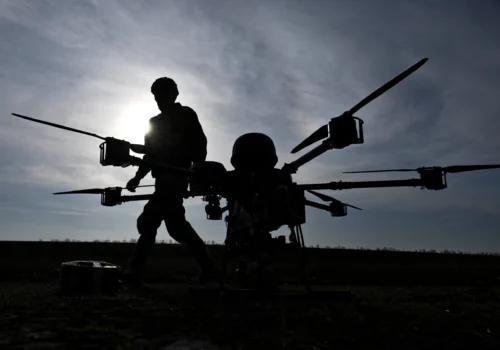
Ukraine’s emergence since 2022 as a world leader in drone warfare has been a matter of necessity. Faced with Russia’s often overwhelming advantages in manpower and conventional firepower, Kyiv has turned to drone technologies as a cost-effective and sustainable solution.
The results have been stunning. In just four years, Ukraine has built a domestic drone industry that is capable of producing millions of drones annually while upgrading and innovating on a daily basis. Along the front lines of the war, at sea, and deep inside Russia, drones have allowed Ukraine to stem the tide of Putin’s invasion and strike back powerfully.
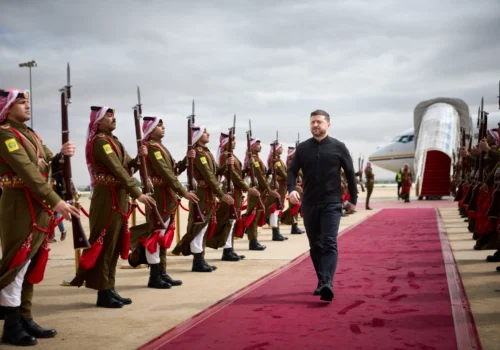
This is now creating diplomatic opportunities that Ukrainian President Volodymyr Zelenskyy is deftly exploiting. The Ukrainian leader embarked on a high-profile tour of the Gulf region in early spring, signing security partnerships with Saudi Arabia, Qatar, and the United Arab Emirates. A number of similar pacts are reportedly under discussion as well.
These visits were a textbook example of military diplomacy, or in Ukraine’s case, drone diplomacy. Traditionally, the use of military cooperation as a tool of statecraft has been seen as the exclusive preserve of major powers, who use military training, technology transfer, and security commitments to win over smaller states.
By using its drone technologies and expertise to engage larger and wealthier nations, Ukraine is now reversing this model entirely. There is no doubt that Ukraine has much to offer. The question is whether Kyiv can convert its unique technologies and drone data into long-term geopolitical gains that outlast the war with Russia.
Stay updated
As the world watches the Russian invasion of Ukraine unfold, UkraineAlert delivers the best Atlantic Council expert insight and analysis on Ukraine twice a week directly to your inbox.
With the US seeking to reduce its transatlantic security role, Europe is now rearming at a pace not seen since the Cold War. The industrial and doctrinal decisions currently being made will define the continent’s security architecture for a generation. Ukraine’s strategic imperative is to embed itself into that architecture before the window closes.
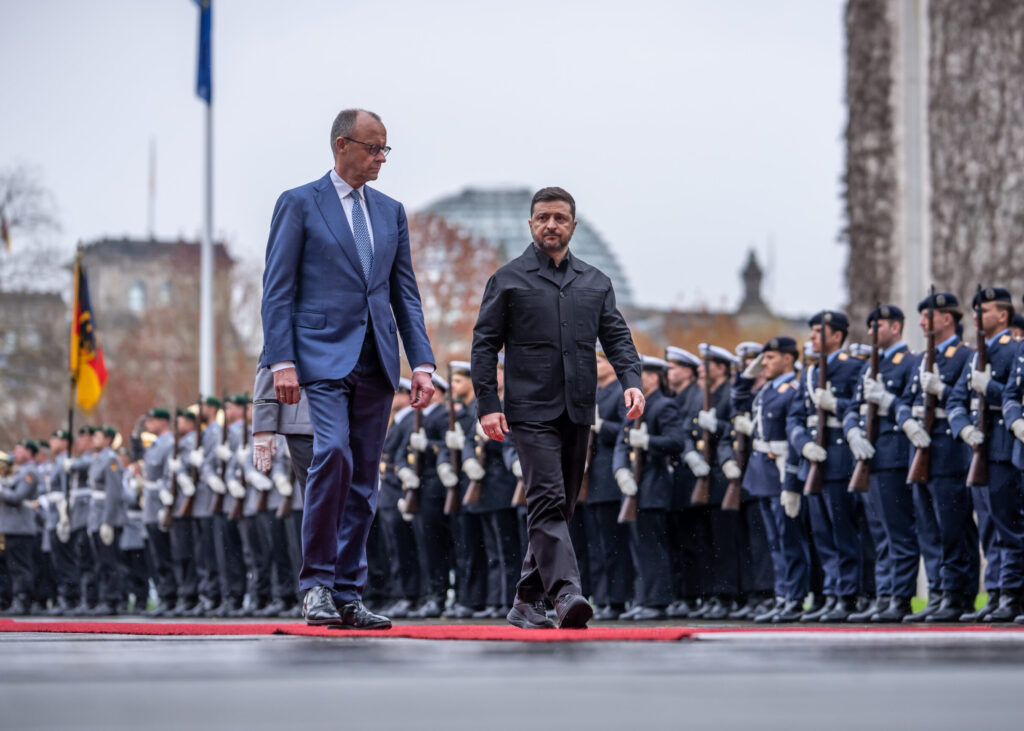
Drone diplomacy can help Kyiv achieve that goal. This week, Zelenskyy signed a series of agreements deepening defense sector cooperation with Germany and Norway, with an emphasis on Ukraine’s drone warfare expertise. Meanwhile, Ukrainian drone companies are moving to establish joint production in a number of European countries, including Denmark, Britain, and Germany.
Ukraine’s drone diplomacy also extends to providing training for allies. Germany recently became the latest country to reach an agreement with Kyiv for Ukrainian instructors to teach German military personnel the realities of modern drone warfare. “Nobody in NATO has more combat experience than Ukraine. We must utilize that,” a German army official told Der Spiegel.
This is a remarkable role reversal. Until recently, Ukrainian troops had routinely received training from their NATO counterparts, while Ukrainian military planners focused on adopting and incorporating NATO standards. Due to the dramatic changes of the past four years, Kyiv is now in a position to make itself indispensable for Europe’s future security.
Eurasia Center events

For the Gulf states, Ukraine offers immediate and strategic opportunities. In the short term, Ukrainian interceptor drones are the ideal solution to the challenges presented by Iranian drone attacks. In a broader sense, Ukraine’s defense industry represents an attractive alternative to cooperation with major Western powers, which often comes with political strings attached.
Ukraine also has much to gain from closer ties with the Gulf states. Kyiv hopes to receive everything from stable energy supplies to scarce interceptor missiles for Patriot air defense systems. There is also widespread anticipation of significant Middle Eastern investment in Ukraine’s booming defense tech sector. For a country whose survival has depended overwhelmingly on a single axis of Western support, this diversification is not a diplomatic footnote; it is a strategic necessity that can transform Ukraine’s security outlook and postwar prospects.
Ukraine’s drone diplomacy with the United States is equally ambitious. Zelenskyy has invested much time promoting the idea of a multi-year drone deal with the Trump administration. This initiative has the potential to transform the defense relationship between the two countries. Meanwhile, cooperation is already intensifying between Ukrainian drone producers and the US defense industry.
There is no doubt that drone diplomacy is a highly effective tool for Kyiv, but it also has a potentially short shelf life. Technology cycles in drone warfare are measured in months rather than years. As international defense companies catch up, the value of Ukraine’s battlefield data and experience will inevitably diminish. This places the onus on Kyiv to make best use of the favorable current security climate and lock down long-term defense cooperation agreements.
The world is beginning to recognize that Ukraine is a potentially valuable partner rather than a geopolitical problem. But this recognition is not a guarantee of future security. Unless Ukraine is able to move beyond technology transfer toward institutional integration, it risks becoming a laboratory for others to prepare for the wars of the future.
William Dixon is a senior associate fellow at the Royal United Service Institute specializing in cyber and international security issues. Maksym Beznosiuk is a strategic policy analyst whose work focuses on Russia, Ukraine, and international security.
Further reading

The views expressed in UkraineAlert are solely those of the authors and do not necessarily reflect the views of the Atlantic Council, its staff, or its supporters.


The Eurasia Center’s mission is to enhance transatlantic cooperation in promoting stability, democratic values, and prosperity in Eurasia, from Eastern Europe and Turkey in the West to the Caucasus, Russia, and Central Asia in the East.
Follow us on social media
and support our work
Image: Michael Kappeler/dpa via Reuters Connect