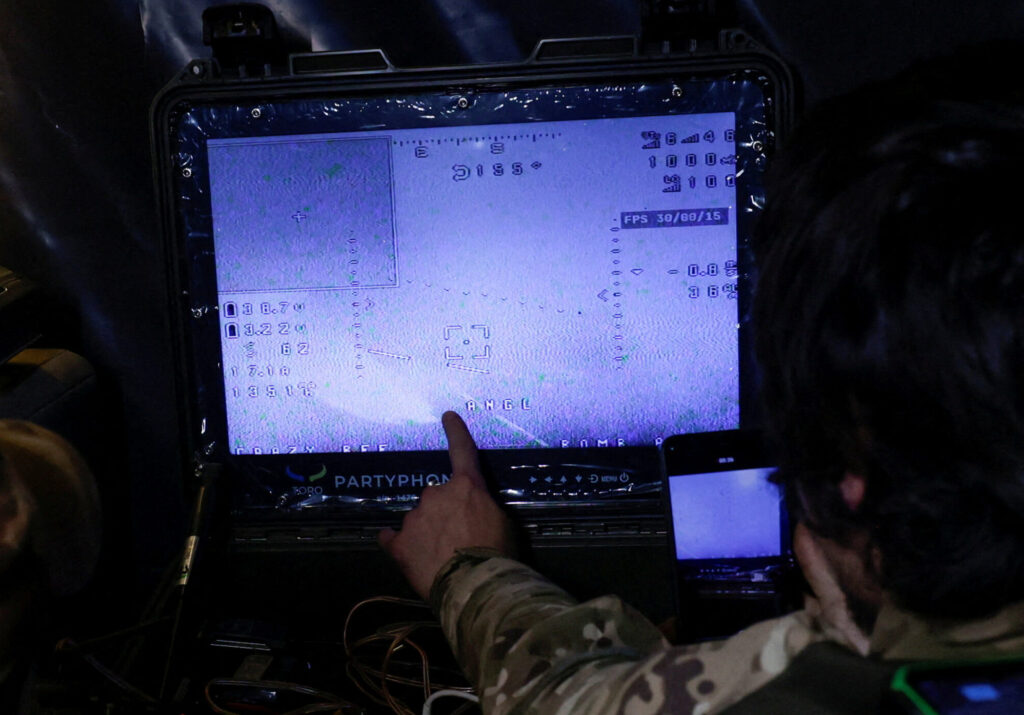
The recent dismissal of tech-savvy Ukrainian Defense Minister Mykhailo Fedorov has underlined the importance of innovation to the Ukrainian war effort. Fedorov’s removal has been met with widespread dismay and sparked a wave of protests across the country as Ukrainians worry that his departure could weaken the country at a moment when the tide of the war appeared to be turning in Ukraine’s favor.
Ukrainian concerns reflect the fact that thirty-five-year-old Fedorov is closely associated with the country’s defense tech innovations, particularly in the realm of drone warfare. He was removed due to a clash with Ukrainian Commander-in-Chief Oleksandr Syrskyi, who is widely viewed as representing an older generation shaped by the Soviet past. There are now fears that ousting Fedorov will undermine Ukraine’s innovative edge over Russia.
A May 2026 profile published by the New York Times underscored how Fedorov sees advanced military technologies as crucial to his country’s survival. “The future of warfare is being written in Ukraine and Fedorov, a technology evangelist who is four months into his job, is one of its authors,” the article declared.
This reputation helps to explain the anger and alarm expressed by many Ukrainians over recently announced changes at the Ministry of Defense. However, the decision to replace Fedorov is only one of a number of factors that are currently threatening to erode Ukraine’s fragile innovation advantage over Russia.
Stay updated
As the world watches the Russian invasion of Ukraine unfold, UkraineAlert delivers the best Atlantic Council expert insight and analysis on Ukraine twice a week directly to your inbox.
The technological gap between Ukraine and Russia is narrowing in part due to Moscow’s own efforts to adapt in response to battlefield experience and to scale its domestic drone industry. Just like their Ukrainian colleagues, Russian commanders are learning important lessons from the world’s first full-scale drone war and have produced a number of innovations.
They are also able to pick up valuable pointers from the detailed information on military strategy that Kyiv’s NATO allies often share publicly. Meanwhile, a recent Reuters report claimed that China has provided drone warfare training to hundreds of Russian soldiers. Some of those who received instruction in China have apparently since returned to the front lines in Ukraine.
Ukraine is also struggling to maintain the element of surprise that helped secure an edge during the initial years of Russia’s full-scale invasion. For example, nobody anticipated the naval drones that Ukraine unleashed so effectively against Russia’s Black Sea Fleet, while Moscow military planners were unprepared to defend against the long-range strike drones developed by Ukraine’s vibrant defense tech industry.
Eventually, however, initial surprise leads to countermeasures. In many instances, Russia has adopted approaches that have earlier worked for Ukraine. For example, the Kremlin has built a one hundred thousand strong drone force that is modeled on Ukraine’s own Unmanned Systems Forces. When both sides are able to adapt and innovate rapidly in response to each other, the cycle eventually stabilizes. Surprise gives way to absorption, and industrial depth begins to matter more.
Eurasia Center events

The first half of 2026 brought a series of Ukrainian successes that led many to believe Kyiv may have regained the initiative in the war. Ukraine’s front line drone defenses succeeded in reducing Russian battlefield advances to a bare minimum, while escalating Ukrainian drone-led air offensives targeted logistics in Russian-occupied Crimea and deep inside Russia itself.
Amid a wave of optimistic media coverage, some senior Ukrainians are now warning against complacency. In early July, former Ukrainian army commander-in-chief Valerii Zaluzhnyi published an opinion piece dismissing talk of impending Russian defeat as premature, while stressing that technological advances have dramatically reduced the chances of battlefield breakthroughs.
“The decisive question is not who captures the next village or destroys the next ammunition depot. It is which society can continue to bear the economic, military, and psychological burden of a prolonged conflict, while maintaining the international support necessary to sustain it,” wrote Zaluzhnyi. “That, rather than any individual tactical success, will determine how and when this war ends. Too many analysts remain focused on the daily movement of the front line. They risk missing the larger strategic reality.”
In order to stay ahead of Russia in the race to innovate, Ukraine should focus on maintaining adaptation discipline and operational unpredictability. Adaptation discipline means sustaining a cycle of testing, fielding, and replacing defense tech innovations faster than Russia can replicate. Operational unpredictability means refusing to let successful methods harden into visible routines that make it easier for Russia to anticipate Ukraine’s most likely next steps.
In Kyiv, it is widely understood that Ukraine’s innovative edge represents the country’s best chance of defending itself against an adversary that enjoys overwhelming advantages in terms of manpower, resources, and conventional firepower. Following last week’s dismissal, Fedorov vowed to continue his efforts “to defeat the enemy through asymmetry and the speed of innovation.”
Russia also recognizes the potentially decisive role played by innovation in the current war. Indeed, it came as no surprise that many Russian commentators cheered the news of Fedorov’s removal and predicted his departure would provide a boost to their country’s ongoing invasion.
Ukraine must now take steps to ensure that the current political crisis does not become a turning point in the wider war. There are likely to be further changes in the country’s defense sector leadership in the coming days, but the need to prioritize technological innovation should already be crystal clear.
Miro Sedlák is an associate research fellow at the Institute for Central Europe and a security and defense studies doctoral candidate at Slovakia’s Armed Forces Academy of General M. R. Štefánik.
Further reading


The views expressed in UkraineAlert are solely those of the authors and do not necessarily reflect the views of the Atlantic Council, its staff, or its supporters.


The Eurasia Center’s mission is to enhance transatlantic cooperation in promoting stability, democratic values, and prosperity in Eurasia, from Eastern Europe and Turkey in the West to the Caucasus, Russia, and Central Asia in the East.
Follow us on social media
and support our work
Image: Servicemen of the 66th Separate Mechanized Brigade named after Prince Mstyslav the Brave control a Darts middle range strike unmanned aerial vehicle which flies toward Russian troops in a front line, amid Russia's attack on Ukraine, in Donetsk region, Ukraine December 16, 2025. REUTERS/Sofiia Gatilova/File Photo