Featured analysis

Latest analysis

Econographics

Apr 26, 2023

Why emerging markets are stocking up on gold

By Phillip Meng

Financial stability concerns, sanctions, and inflation contributed to the largest net purchases of gold in over seventy years last year—raising questions about its potential role in de-dollarization.

Africa
Americas

Econographics

Apr 24, 2023

Practice makes perfect: What China wants from its digital currency in 2023

By Ananya Kumar

The e-CNY network has expanded over the last year, and China’s goals have only become clearer. Domestically, the People’s Bank of China is still in test-and-learn mode, globally, China is more focused on setting defining international standards.

China
Cybersecurity

Econographics

Apr 20, 2023

The US is relying more on China for pharmaceuticals—and vice versa 

By Niels Graham

US China trade of pharmaceutical and active pharmaceutical ingredient (API) is rapidly increasing. Supply chain mapping will be key to risk management

China
Economy & Business

Econographics

Apr 18, 2023

US trade agreements: Out with old and in the with new?

By Sahra English

As the United States moves ahead with a new approach to trade with the Indo-Pacific Economic Framework for Prosperity (IPEF), should it really abandon the old model of trade agreements? Or should it consider adapting the new approach to the old model?

Economy & Business
Indo-Pacific

Econographics

Mar 30, 2023

Chinese banking’s SVB resilience 

By Niels Graham, Josh Lipsky

Silicon Valley Bank’s collapse has rippled across evert major banking hub except for China’s. This is because of China’s unique banking structure which emphases heavy state oversight and control while minimizing cross border connections with advanced economies

China
Economy & Business

Econographics

Mar 27, 2023

Loss of investor confidence and the banking crisis 

By Hung Tran

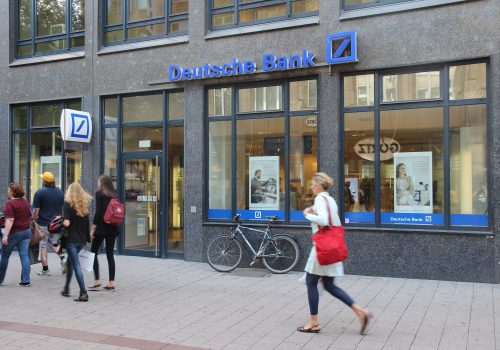
Despite the best efforts of financial authorities following the most recent banking crisis, selloffs of bank shares and capital contingent bonds have persisted. After the sale of Credit Suisse, the most poignant example of investor concerns is the market pressure on Deutsche Bank (DB).

Economy & Business
European Union

Econographics

Mar 24, 2023

Global Sanctions Dashboard: What to do with sanctioned Russian assets

By Kimberly Donovan, Maia Nikoladze

Immediate steps for seizing the sanctioned Russian oligarch assets; concerns with the confiscation of Russian sovereign assets; Georgia’s proposed foreign agent law.

Europe & Eurasia
European Union

Econographics

Mar 21, 2023

Snapshot: Which countries have made the most progress on CBDCs so far in 2023

By Alisha Chhangani

Despite only being three months into 2023, these 18 countries have made significant progress on central bank digital currencies.

Digital Currencies
Economy & Business

Econographics

Mar 20, 2023

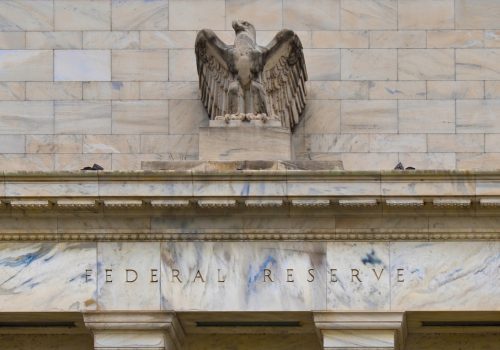
The Federal Reserve’s dilemma: Choosing between monetary policy and financial stability

By Barbara C. Matthews

The monetary-policy challenge that the Fed faces now cannot be overestimated.

Economy & Business
Europe & Eurasia

Econographics

Mar 20, 2023

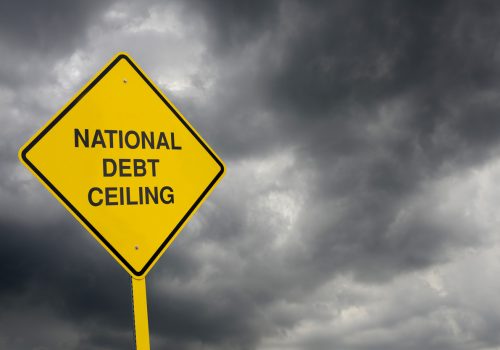
The US debt limit is a global outlier

By Mrugank Bhusari

Debt limits are not the norm in public finance. But countries that have adopted them do not let them cause economic chaos.

Economy & Business
Europe & Eurasia

Content

EconoGraphics

Oct 7, 2016

Europe′s Fiscal Burden in Focus

By Filippos Letsas

The European Union’s (EU) Stability and Growth Pact requires Eurozone countries to annually lay out their fiscal plans for the following three years. The European Commission (EC) then compares the member states’ reports with its own projections and those produced by independent bodies, such as the International Monetary Fund (IMF), to evaluate whether the member states are on track to reach their Medium-Term Budgetary Objectives (MTOs).

Economy & Business
European Union

EconoGraphics

Sep 30, 2016

Myanmar: Post-Sanctions Landscape

By Filippos Letsas

On the occasion of Myanmar’s State Counselor Aung San Suu Kyi’s recent visit to the United States (U.S.), President Obama announced that executive sanctions on Myanmar would soon be lifted. This will grant Myanmar greater access to the U.S. market and encourage U.S. companies to invest in the country. Trade between the two countries remains at relatively low levels (i.e. $225 million in 2015), with U.S. investment to Myanmar accounting for only 0.2% of the country’s Foreign Direct Investment (FDI).

Economy & Business
Financial Sanctions and Economic Coercion

EconoGraphics

Sep 13, 2016

TTIP = So (Ger)Many Benefits

By Filippos Letsas

As the most export-driven major economy in the European Union (EU), Germany stands to benefit greatly from a robust Transatlantic Trade and Investment Partnership (TTIP) agreement.

Economy & Business
European Union

EconoGraphics

Jul 12, 2016

Taking Stock of European Banks: Improvements Amid Challenges

By Nathaniel Rome

Since the British referendum, Europe’s banking sector has come under renewed scrutiny from financial markets as well as European Union officials and finance ministers. A primary focus is on Italy - which has accumulated $400 billion in gross bad loans - and the EU-Italy talks about how to recapitalize the weak Italian banks.

Economy & Business
European Union

EconoGraphics

Jun 29, 2016

Econographics – TTIP

By Nathaniel Rome

The United Kingdom’s (UK) vote last week to leave the European Union (EU) has raised questions about the future of the Transatlantic Trade and Investment Partnership (TTIP). TTIP is a trade agreement currently being negotiated by the United States (US) and the EU that will eliminate tariffs, reduce red tape, and set a new standard for international trade agreements. Following the Brexit vote, US Trade Representative Michael Froman and European Commissioner for Trade Cecilia Malmström released statements reaffirming their commitment to TTIP.

Economy & Business
European Union

Bremain vs Brexit

Jun 21, 2016

London Riches Falling Down

By Nathaniel Rome

London is the undisputed financial capital of Europe, and is rivaled only by New York City for the top spot worldwide (Global Financial Centers Index). When competing on a level playing field, London outperforms other major European financial centers because of the superior human capital, infrastructure, and regulatory environment of the city. London dominates 78 percent of European FOREX trading and generates a trade surplus worth tens of billions of pounds (UK Office of National Statistics).

Economy & Business
European Union

Bremain vs Brexit

Jun 9, 2016

Britannia, Rule the Trade!

By Nathaniel Rome & TK Spandhla

The decades following World War II experienced an explosion of global trade. The annual growth rate of global exports averaged 8 percent in the 1950s, 9 percent in the 1960s, and 20 percent in the 1970s (World Trade Organization). During this boom of global trade, the volume of UK exports grew in absolute terms. However, up until the mid-1970s, the UK trade growth lagged behind the global average.

Economy & Business
European Union

EconoGraphics

Jun 1, 2016

Not The Time to Falter: Economic Sanctions Against Russia

By Alvaro Morales Salto Weis

As the European Union (EU) prepares to unanimously extend its economic sanctions on Russia when they expire on July, it is a good opportunity to take a closer look. After Russia´s illegal annexation of Crimea and interference in Eastern Ukraine, the U.S. and the EU enacted economic sanctions in a coordinated manner, which were followed by other Allies and partners like Canada and Australia.

Economy & Business
Europe & Eurasia

EconoGraphics

Apr 13, 2016

Europe’s Path to Budget Equilibrium

By Alvaro Morales Salto Weis & TK Spandhla

The European Union’s 28 member nations are required by Stability and Growth Pact to keep their budget deficits to within 3 percent of GDP. According to the European Commission forecast (as of winter 2016) six countries will exceed this level in 2016: the U.K., France, Spain, Greece, Croatia and Portugal. Romania will post a deficit at the threshold. This is an improvement from 2009 and 2010, when no fewer than 22 EU countries overstepped the deficit limit.

Economy & Business
European Union

EconoGraphics

Apr 1, 2016

The European Refugee Surge: Transforming Challenges into Opportunities

By Alvaro Morales Salto Weis & TK Spandhla

Asylum applications to the European Union (EU) set an all-time record in 2015, more than doubling the 2014 figure, according to EUROSTAT. After the recent agreement between Turkey and the EU, the influx of refugees is expected to decrease significantly.

Afghanistan
Europe & Eurasia