Stay updated

Subscribe to our daily newsletter to receive the best expert intelligence on world-changing events


Explore our unique analysis

Content

New Atlanticist

Oct 29, 2008

Stuck in Time: The Next President Needs a New Worldview

By Derek Reveron

The American recession and global financial crisis have largely displaced foreign policy in the U.S. presidential campaign. Regardless, President Obama or President McCain will inherit a Bush foreign policy that has 160,000 troops in Iraq and rising demand for NATO forces in Afghanistan. As the next president-elect assembles his team, he needs to be careful […]

United States and Canada

New Atlanticist

Oct 28, 2008

Restoring the German Army’s Auftragstaktik

By Florian Broschk

The German parliament has extended the Bundeswehr’s mission in Afghanistan for another fourteen months. A discussion is now needed on what goals the German army can realistically be expected to achieve and which strategy will offer the best hope for success.

Afghanistan Germany

New Atlanticist

Oct 28, 2008

Iraq Training Mission Shows NATO’s Future

By David Capezza

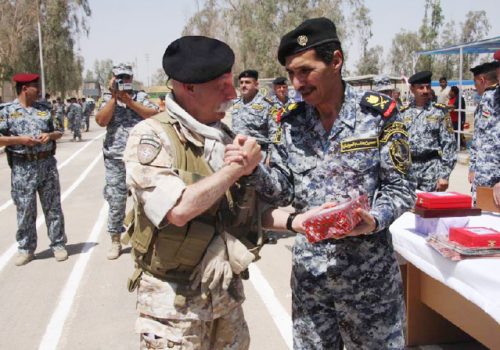
At the request of the provisional Iraqi government in 2004, NATO began providing training, assistance, and equipment to the Iraqi Security Forces to assist with the creation of a democratically led and enduring security sector.  This mission has grown from planning and training security forces to include advising and mentoring of security forces, both in […]

NATO Security & Defense

New Atlanticist

Oct 27, 2008

Preconditions, Preparations, and Posturing

By James Joyner

Nick Burns, a career diplomat who recently retired after a quarter century of service as the number three ranked official in the State Department, has a long piece in Newsweek declaring “We Should Talk to Our Enemies.”  It pointedly takes John McCain to task for his repeated hammering at Barack Obama for pledging to negotiate […]

New Atlanticist

Oct 27, 2008

Sneak Preview of the Future: Who Makes New Rules?

By Robert Manning

Don’t look now, but much about last week’s Asia-Europe Summit (ASEM) – from its remedies for the financial meltdown to its obscurity in the U.S. – spoke volumes about emerging multipolarity and the historic shift in global power.  Was America watching?

New Atlanticist

Oct 27, 2008

Business as Usual with Russia

By David Smith

There was good and bad news last week about western efforts to end Russian aggression against Georgia.  Good was that international donors pledged $4.5 billion to help repair the damage Russia inflicted upon Georgia during the hot phase of the war.  Bad was that the European Commission and the French Presidency of the European Union […]

European Union International Organizations

New Atlanticist

Oct 24, 2008

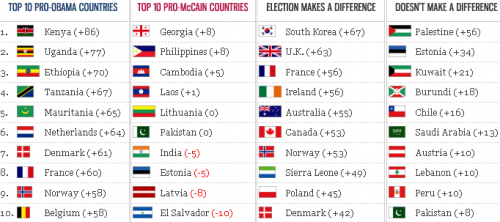
World Prefers Obama: It’s Unanimous

By James Joyner

Foreign Policy commissioned Gallup to conduct a worldwide poll about the U.S. presidential election as part of its “If the World Could Vote” series. 

United States and Canada

New Atlanticist

Oct 24, 2008

Russia and Iran’s Proposed Gas Cartel

By Neil Leslie

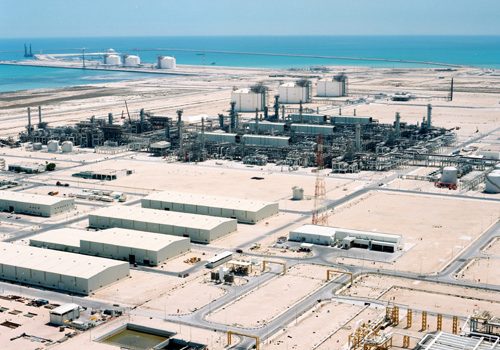
Russia’s Gazprom recently announced plans for the formation of a ‘gas troika’ along with Iran and Qatar. Initially proposed by Iran’s Supreme Leader Ayatollah Ali Khamenei in 2007, the development has raised fears in the West that a gas cartel will destabilize energy supplies and pose a security threat to Europe.

Energy & Environment Iran

New Atlanticist

Oct 23, 2008

Russia Still a “Major Player”

By Peter Cassata

Russia in Global Affairs editor Fyodor Lukyanov recently proclaimed, “[O]ur long effort to integrate with Western institutions, to become part of the Western system, is over.  The aim now is to be an independent power in a multi-polar world in which Russia is a major player.” 

European Union International Organizations

New Atlanticist

Oct 22, 2008

Republican Foreign Policy Establishment, R.I.P.?

By James Joyner

Ilan Goldenberg, policy director for the National Security Network, argues that Colin Powell’s endorsement of Barack Obama for president sounds the death knell for “the Republican foreign policy establishment as we know it. The final break between traditional pragmatic foreign policy conservatives and Neocons.”