Content

Issue Brief

Mar 21, 2016

Train, hone, deter

By Matt Brand

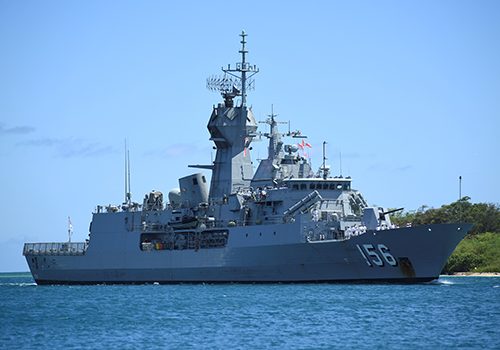
NATO exercises play a vital role in ensuring that Alliance forces can respond to any contingency quickly and effectively. Not since the early 1990s has NATO’s exercise program drawn as much attention from NATO’s national leaders as it does now, due in large part to Russia’s increasingly aggressive misbehavior. The NATO exercise program provides the vital functions of keeping the member states’ forces interoperable by integrating new technologies into the force, practicing new doctrine, and validating units for their rotation into contingency roles, like the NATO Response Force.

Europe & Eurasia
NATO

Issue Brief

Mar 14, 2016

Why the Congo matters

By Gérard Prunier

With a population of almost 80 million people and unparalleled natural resources, the Democratic Republic of the Congo (the DRC or the Congo) is a country of tremendous potential—but only that. One of the most violent places on earth, its people suffer from the brutality of armed groups and political instability. Now, President Joseph Kabila’s […]

Africa
Corruption

Issue Brief

Mar 10, 2016

US oil export outlook

By Amrita Sen

In December 2015, a forty-year ban on US crude oil exports lifted. Rapid advancements in US shale oil production played a crucial role in lifting this ban. What are the realities facing US oil exports?

Energy & Environment
Oil and Gas

Issue Brief

Feb 10, 2016

Enhanced Defense Cooperation

By Johan Raeder

Read the Publication (PDF) In recent years, the ambitious Russian military build-up, coupled with revanchist Russian rhetoric and increasingly aggressive behavior, has made it clear that the security environment in the Baltic Sea region has changed. This situation is likely to last for a long time, emphasizing the need for a coherent response and deeper […]

Issue Brief

Feb 9, 2016

Post-sanctions economic opportunities and risks in Iran

By Robert D. Hormats

On January 16, 2016, the International Atomic Energy Agency verified that Iran had implemented key measures under the Joint Comprehensive Plan of Action. As a result, nuclear-related sanctions previously imposed by the United Nations, the European Union, and the United States were lifted. The removal of these sanctions opens up a wide range of possibilities […]

Issue Brief

Feb 3, 2016

The renewed Russian nuclear threat and NATO nuclear deterrence posture

By Matthew Kroenig

Over the past decade, Russia has made nuclear weapons a predominant element of its national security strategy and military doctrine, while NATO has consciously de-emphasized its nuclear posture.

NATO
Nuclear Deterrence

Issue Brief

Jan 29, 2016

Harnessing Communications and Public Diplomacy

By Mark Seip

Read the Issue Brief (PDF) Largely neglected after the end of the Cold War, the use of information and public diplomacy to influence audiences and help achieve national objectives is making a comeback. This comeback however is not from the United States, but from actors such as ISIS, Russia, and China, whose objectives often run […]

Issue Brief

Jan 11, 2016

Nigeria’s oil revenue crunch

By Aaron Sayne and Aubrey Hruby

As oil prices fall to their lowest in decades, Nigeria's oil revenue has plummeted nearly $2 billion since the start of 2014. What is the impact of falling oil prices and increased competition on the economy and stability in Nigeria?

Africa
Corruption

Issue Brief

Dec 3, 2015

ISIS war game III: The final phase

By Bilal Y. Saab

September 2015 marked the one-year anniversary of President Barack Obama’s speech outlining the administration’s strategy to “degrade and ultimately destroy” the Islamic State of Iraq and al-Sham (ISIS). Yet, ISIS celebrated in June its own first-year anniversary of setting up a state by conducting three nearly simultaneous terrorist operations in three different countries—France, Tunisia, and […]

Iraq
Middle East

Issue Brief

Dec 1, 2015

Renewable energy’s coming of age: A disruptive technology?

By Robert A. Manning

The eyes of the world are on the United Nations Climate Conference, also known as COP21, as leaders from around the world are gathered in Paris in an effort to combat the effects of climate change. It's one of the best chances we have to mitigate these harmful effects are renewable technologies, so what is the future of adopting renewable energy?

Climate Change & Climate Action
Energy & Environment