Content

Issue briefs and reports

Nov 19, 2026

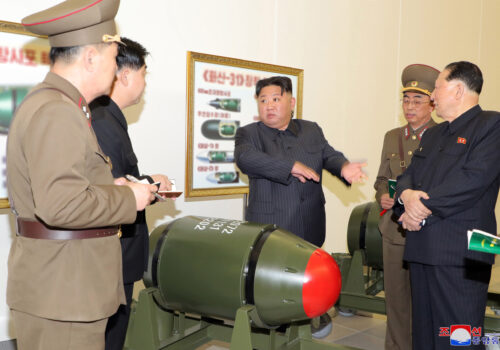
Toplines: Why and how the United States and its allies should prepare for a limited nuclear attack

By Markus Garlauskas, John Park, Kyoko Imai

How should the United States and its allies prepare for a limited nuclear attack, and why? An expert tabletop exercise gaming out scenarios in which North Korea might launch such an attack offered insights.

Indo-Pacific Korea

Report

Nov 16, 2026

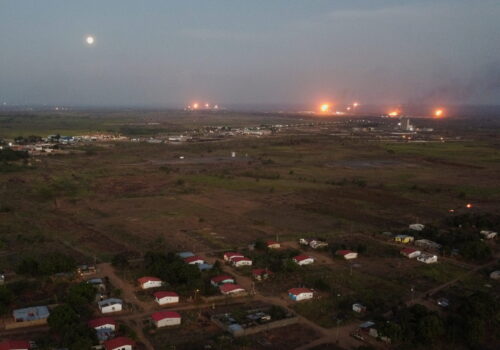
Why Venezuela’s oil recovery depends on fixing its natural gas market

By Liliana Diaz

Venezuela has vast natural gas reserves, yet flares or vents half of what it produces. The core failure is market design, not the law.

Energy & Environment Energy Markets & Governance

Report

Nov 15, 2026

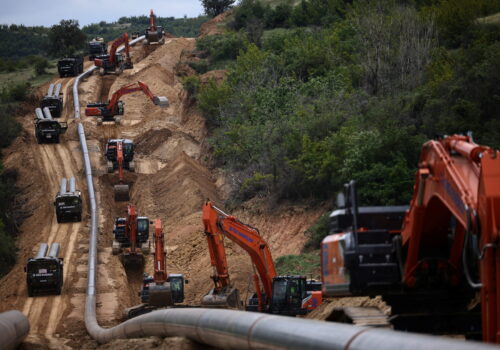
A new vision for the Vertical Corridor: European energy security through infrastructure optimization

By Benjamin L. Schmitt and Uliana Certan

Europe's Vertical Corridor region is well positioned to reverse its historical Soviet infrastructure legacy and natural gas dependency, while supporting broader European energy security.

Eastern Europe Energy & Environment

Report

Nov 12, 2026

Seeking the source: Biological attribution from anthrax to AI

By the Bipartisan Commission on Biodefense at Atlantic Council

Attribution can be imprecise, since it oftentimes relies on a combination of science, intelligence, and investigatory evidence.

National Security

Report

Nov 10, 2026

Water infrastructure at the Mediterranean’s inflection point: Financing resilience for an industrializing, digitalizing region

By Hassan Tolba Aboelnga

Increasing demand, driven by industrialization and digital infrastructure, requires a region-wide rethinking of water planning and financing mechanisms.

Climate Change & Climate Action Egypt

Report

Nov 3, 2026

Religion as statecraft: What a decade of research reveals about the geopolitics of religious soft power

By Peter Mandaville

The post-Cold War assumption that international politics was converging toward a secular liberal framework in which religion would play at most a marginal role has not survived contact with the evidence. From China to Turkey to Saudi Arabia and Russia, states are integrating religion into their foreign policy in strategically significant ways.

China India

Report

Oct 26, 2026

Pakistan’s changing development assistance landscape: Manifestations, implications, and opportunities

By Leon S. Waskin, Imran Shauket

Pakistan’s development assistance landscape is undergoing a major structural shift. Western bilateral aid is declining, multilateral development bank (MDB) financing is increasing to compensate, and non-Western bilateral and philanthropic flows are growing steadily.

Pakistan South Asia

Report

Oct 26, 2026

Bangladesh’s changing development assistance landscape: Manifestations, implications, and opportunities

By Leon S. Waskin, Jon F. Danilowicz, Imran Shauket

Bangladesh is absorbing one of the most severe aid shocks in its history while simultaneously benefiting from an unprecedented surge in remittances and multilateral development bank lending.

Bangladesh South Asia

Report

Oct 20, 2026

The European Union as a compound power in Cold War 2.0

By Piotr Arak and Velina Tchakarova

Contrary to the prevailing narrative, the European Union has the economic power and strategic vision to act as a credible major power. Willingness to act is the missing piece.

Defense Industry Energy Transitions

Report

Oct 15, 2026

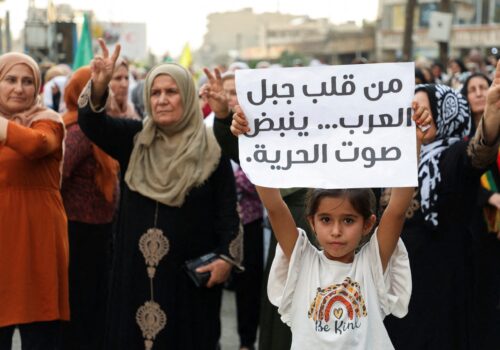
How Syria can avoid the trap of ethno-sectarianism

By Marie Forestier, Arthur Quesnay

In postwar Iraq and Lebanon, power-sharing agreements allocated top government jobs based on ethnic and religious affiliation. Political deadlock and violence followed. As Syrians rebuild after decades of dictatorship and war, they should avoid making the same mistake.
Civil Society Democratic Transitions