Our programs and centers deliver in-depth, highly relevant issue briefs and reports that break new ground, shift opinions, and set agendas on public policy, with a focus on advancing debates by integrating foundational research and analysis with concrete policy solutions.
When major global news breaks, the Atlantic Council’s experts have you covered—delivering their sharpest rapid insight and forward-looking analysis direct to your inbox.
Reports from the front lines of global policy—by the experts shaping it.
A weekly column by Atlantic Council President and CEO Frederick Kempe, Inflection Points focuses on the global challenges facing the United States and how to best address them.
UkraineAlert is a comprehensive online publication that provides regular news and analysis on developments in Ukraine’s politics, economy, civil society, and culture. UkraineAlert sources analysis and commentary from a wide-array of thought-leaders, politicians, experts, and activists from Ukraine and the global community.
MENASource offers the latest news from across the Middle East, combined with commentary by contributors, interviews with emerging players, multi-media content, and independent analysis from fellows and staff.
Econographics provides an in-depth look at trends in the global economy utilizing state-of-the-art data visualization tools.
Translate this site
Translate the page or open accessibility tools from the same menu.
Choose a language for this page.
No matching languages found.
Current language: English
Adjust text size, contrast, link visibility, and motion from the same menu.
Accessibility tools are set to default.
MENASource
By David Daoud
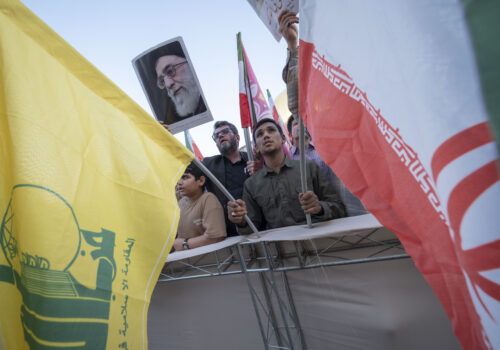
As wave after wave of Israeli jets continue to strike Iran, Tehran's proxy on Israel’s northern border remains quiet.
By Atlantic Council experts
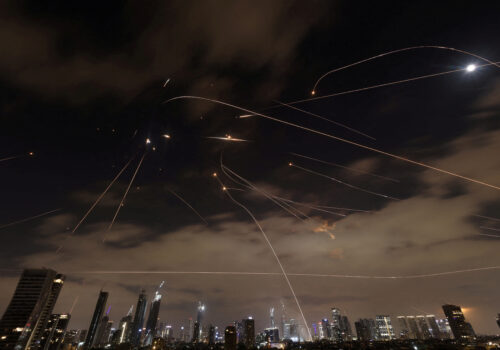
The escalation between Israel and Iran has raised many important questions about a region already facing crises on multiple fronts.
By Leonardo Jacopo Maria Mazzucco
While the Gulf remains central to China’s long-term maritime aspirations, its near-term military footprint is likely to stay limited.
By Muhsen al-Mustafa
With the end of Western sanctions, Syria faces a rare opportunity to address the imbalances of the post-conflict period.
By Sheila Paylan
Clinching peace between Armenia and Azerbaijan offers the US and Israel a rare chance to tilt the balance of power in the South Caucuses.
By Shermine Serbest
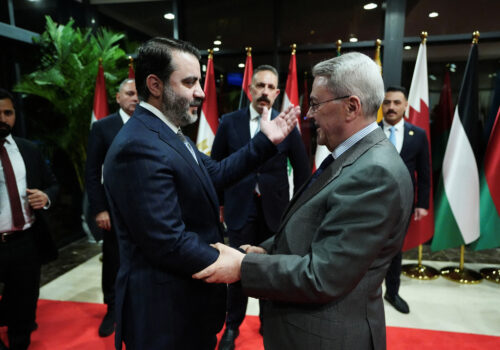
Iraq's position on the Syria transition is split between two camps: the official government, and that of the powerful non-state actors.
Municipal election results did not demonstrate the militant group’s dominance over Lebanon’s Shiites, but Hezbollah nevertheless retains popularity.
By Jonathan Fulton
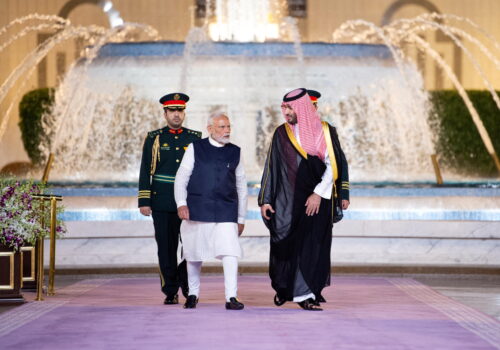
The depth of Indian-Gulf relations creates a strong foundation for increased India-Middle East integration over the coming decades.
By Alissa Pavia and Maayan Dagan
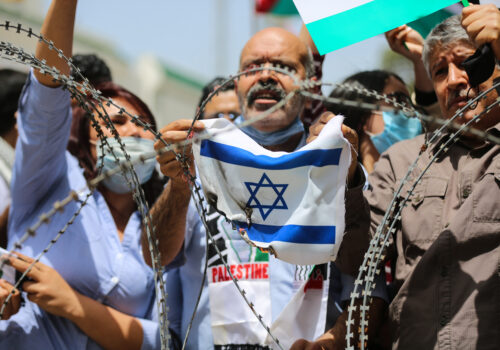
The potential for normalization may seem farfetched, but there are many strategic benefits for Tunisia and Israel beyond what meets the eye.
By Gregory Waters and Kayla Koontz
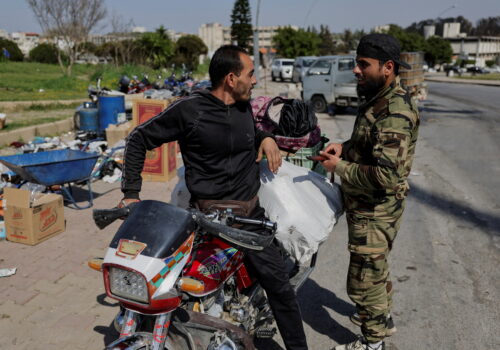
Since Assad’s December ousting, Syrians have struggled to sift the truth from fake claims about security incidents across the country.
Fellow
Nonresident Senior Fellow, North Africa Program
Rafik Hariri Center & Middle East programs
If refreshing the page doesn't resolve the issue you could try clearing the sites browser cache.
LIVE: The 2026 Atlantic Council Global Citizen Awards