
BUCHAREST and WASHINGTON—Recent diplomatic tensions involving Iran and Romania reveal more than a temporary geopolitical episode. They illustrate the increasingly complex strategic environment facing NATO allies on Europe’s eastern flank. Romania’s decision to authorize additional US military capabilities on its territory reflects a long-standing commitment to the transatlantic alliance. But it also highlights the delicate balancing act Bucharest must perform: reinforcing its strategic partnership with Washington while maintaining cohesion with European partners that are navigating a more uncertain transatlantic relationship.
The developments began when the United States requested temporary access to Romanian military infrastructure to support operations in the Middle East. Romania’s Supreme Council of National Defense approved the US request to deploy several capabilities, including aerial refueling aircraft and satellite communication systems serving a defensive role. Romania’s Parliament then endorsed the decision, reaffirming the legal framework that governs US access to Romanian bases under bilateral agreements and NATO commitments.
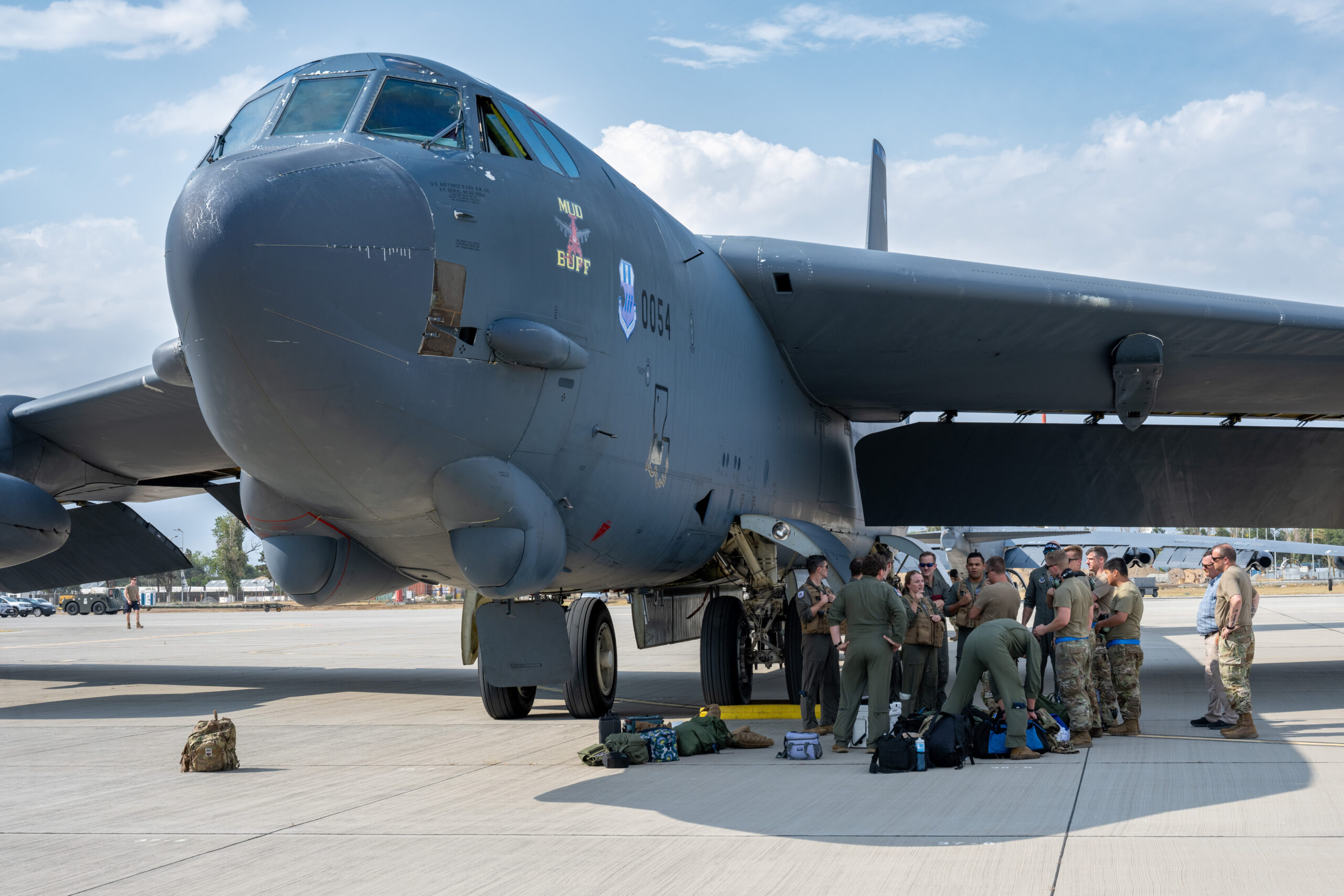
Soon after the approval, the first visible signs of this deployment appeared. According to Romanian media reports, three US Air Force KC-135 Stratotanker aerial refueling aircraft landed at the 90th Air Base near Otopeni. While these aircraft are not combat platforms, they are among the most critical enablers of modern air operations. By allowing fighter jets and surveillance aircraft to refuel midair, tanker aircraft extend operational range and endurance, effectively expanding the geographic reach of allied airpower. Their presence in Romania strengthens the logistical backbone supporting US and NATO operations across multiple theaters.
Iran’s reaction followed quickly. A spokesperson for the Iranian foreign ministry warned that allowing US forces to operate from Romanian territory could be interpreted as participation in military aggression. Bucharest responded to Tehran’s threats with notable restraint. Romanian officials emphasized that the country is not involved in any conflict with Iran and reiterated that the deployment of US assets is defensive and conducted under existing bilateral agreements. The Romanian foreign ministry also stressed that the missile defense infrastructure hosted by Romania serves purely defensive purposes and operates within NATO’s collective security framework.
When Iranian Foreign Ministry spokesman Esmail Baghaei warned that hosting US aerial refueling tankers would make Romania a participant in military aggression, he was not making a legal argument so much as a threat intended to deter US partners. Tehran’s objective is to ensure that each US partner—including Romania, Greece, Italy, and the United Kingdom—concludes that the risk is not worth bearing alone and quietly declines. If enough partners hesitate, then the coalition Washington is trying to consolidate never fully materializes, improving Iran’s strategic position without requiring direct military confrontation.
Iran has pressed Gulf states and European partners separately, issuing warnings calibrated to each country—threatening Gulf states with strikes on energy infrastructure while warning European governments of legal consequences and damage to bilateral ties. The logic is consistent: Make the cost of cooperation feel personal and isolating, in the hope that no partner feels confident enough in collective backing to hold firm. The approach works when partners deliberate alone; it is far less effective when they coordinate openly and signal unity.
Romania has strong grounds to hold firm on its position. The 2005 US-Romania Defense Cooperation Agreement established the framework for US military access to multiple joint-use facilities, including the Mihail Kogălniceanu Air Base. Together with the NATO Status of Forces Agreement and the 2011 Joint Declaration on Strategic Partnership for the 21st Century, this creates a comprehensive legal basis for US operations on Romanian soil—one that has been ratified by the Parliament and upheld consistently for two decades. Iran’s invocation of potential damage to bilateral relations underscores the limits of its leverage. Romania-Iran ties are sufficiently limited that their deterioration carries minimal strategic cost for Bucharest.
The energy dimension reinforces this asymmetry. Iran does not export natural gas to Romania and has no infrastructure or contractual mechanism through which it could exert pressure. Meanwhile, Romania’s energy sector is expanding, positioning it to become a major European gas producer. Tehran therefore lacks meaningful economic leverage over Bucharest in the energy domain.
On the military side, Romania has approved the deployment of support assets rather than strike capabilities. After weeks of sustained military pressure on Iranian infrastructure, Tehran’s ability to project force into southeastern Europe is constrained, though not eliminated. More importantly, US forces are present on Romanian territory. Any direct attack on facilities such as the Mihail Kogălniceanu Air Base would involve US personnel, raising the stakes significantly and triggering a bilateral response that would not depend on full NATO consensus.
However, Iran has a documented history of covert operations across Europe, and Romania’s role as a host for US forces increases its exposure to malign activities. While real, this threat remains limited by Iran’s current operational constraints and the escalation risks associated with targeting a NATO member hosting US troops.
That said, Romania’s position also brings into focus one of NATO’s most sensitive strategic assets: the ballistic missile defense installation at Deveselu. Operational since 2016, the Aegis Ashore system forms part of NATO’s broader missile defense architecture designed to intercept ballistic threats originating outside the Euro-Atlantic area. While the system is purely defensive, its presence places Romania at the center of ongoing geopolitical debates and makes it a frequent target of criticism from both Russia and Iran.
Asked about Iran’s warnings on March 19, NATO Secretary General Mark Rutte emphasized Alliance unity, stating that “Romania is safe; we will defend every centimeter of allied territory,” while highlighting Romania’s key role in strengthening security on the eastern flank. This reassurance reflects the broader strategic importance of Romania within NATO’s deterrence posture, particularly in the Black Sea region.
Even more recent developments—including Iran firing missiles toward the Diego Garcia military base and threatening to attack power generation across the Gulf—point to the regime’s willingness and capability to strike beyond its immediate neighborhood. In recent days, several European countries have put their security services on heightened alert. Reports by the Romanian news site HotNews that Iran may be activating operational networks in Europe have increased the relevance of NATO’s missile defense shield. The Aegis Ashore site at Deveselu increasingly represents not only a defensive buffer but a front line in the protection of major European capitals against evolving ballistic threats.
At the same time, the episode highlights a broader debate within the Alliance. While Romania continues to rely heavily on the United States as the cornerstone of its security guarantees, discussions in Europe increasingly emphasize strategic autonomy. Proposals such as expanding France’s nuclear deterrence to cover European allies reflect concerns about the long-term reliability of US security commitments. Romania’s response has been cautious: open to deeper European cooperation but firmly committed to NATO as the central pillar of deterrence.
Meanwhile, the current tensions among NATO allies over the Iran war may ultimately strengthen allied cohesion despite short-term turbulence. As Iulian Chifu, a former advisor to the president of Romania on strategic affairs, put it, the war has “exposed the limits of unilateral action, forcing the United States to rediscover the strategic necessity of allied coordination and reinforcing NATO as the central framework for collective security.”