
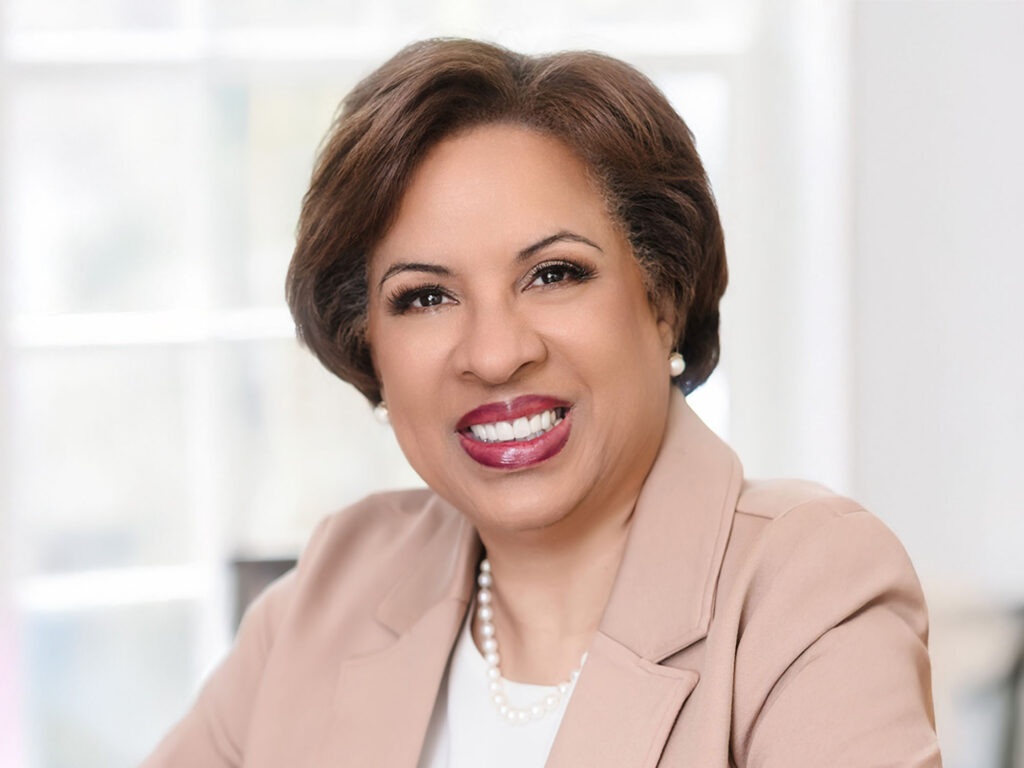

Clementine G. Starling-Daniels is a nonresident senior fellow in the Forward Defense initiative of the Atlantic Council’s Scowcroft Center for Strategy and Security. Starling-Daniels is the former director of the Atlantic Council’s Forward Defense program. In her role, she shaped the Center’s US defense research agenda, led Forward Defense’s team of ten staff and forty fellows, and produced thought leadership on US security strategies and the evolving character of warfare. Her research focused on long-term US thinking on issues like China’s and Russia’s defense strategies, space security, defense industry, and emerging technology.
Prior to launching the Forward Defense program at the Atlantic Council, Starling-Daniels served as the deputy director of the Atlantic Council’s Transatlantic Security team, specializing in European security policy and NATO. From 2016, she supported NATO’s Public Diplomacy Division at two NATO summits (Brussels and London) and organized and managed three senior Atlantic Council Task Forces on US force posture in Europe, military mobility, and US defense innovation adoption.
During her time at the Atlantic Council, Starling-Daniels wrote numerous reports and commentary on US space strategy, deterrence, operational concepts, coalition warfare, and US-Europe relations. Starling-Daniels regularly served as a panelist and moderator at public conferences, and her analysis and commentary have been featured in Defense One, Defense News, Real Clear Defense, the National Interest, Space News, NATO’s Joint Air & Space Power Conference, the BBC, National Public Radio, ABC News, and Government Matters, among others.
Starling-Daniels was named the 2022 Herbert Roback scholar by the US National Academy of Public Administration. She also served as the 2020 Security and Defense fellow at Young Professionals in Foreign Policy.
Originally from the United Kingdom, Starling-Daniels previously worked in the UK Parliament focusing on technology, defense, Middle East security, and Ukraine. She also supported the Britain Stronger in Europe campaign, championing for the United Kingdom to remain within the European Union.
She graduated with honors from the London School of Economics with a Bachelor of Science in international relations and history and she received her Master of Arts in Security Studies from Georgetown University’s School of Foreign Service.