
When innovation becomes security: Finland’s innovation ecosystem in transition
Bottom lines up front
- Finland is increasingly aligning its innovation ecosystem with security objectives.
- Dual-use technologies are accelerating the convergence of economic and security priorities.
- Finnish innovators are finding new pathways to NATO’s innovation ecosystem through NATO DIANA.
Introduction
The fragmentation of the world order and increasing geopolitical conflict have strengthened the role of security concerns in political and economic decision-making.1Nina Græger, “High Politics and Everyday Practices at the Border: Emerging Communities of Practice in the High North,” Global Studies Quarterly, vol. 4, no. 1, 2024, https://academic.oup.com/isagsq/article/4/1/ksad075/7602886. Russia’s 2022 invasion of Ukraine has been a significant turning point, accelerating security-related decision-making and expanding the scope of security concerns into new policy domains, including innovation and technology policy.2Oliver P. Richmond and Sandra Pogodda, “Peacemaking and the Maintenance of International Order: Alignment under Hegemony Versus Multipolar Misalignment,” Global Studies Quarterly, vol. 5, no. 1, 2025, https://academic.oup.com/isagsq/article/5/1/ksae094/8005166. It is argued that innovation has become a geostrategic factor shaping the international security environment and the global balance of power.3Christian Haddad, Dagmar Vorlíček, and Nina Klimburg-Witjes, “The Security-Innovation Nexus in (Geo-) Political Imagination,” Geopolitics, vol. 29, no. 3, 2024, https://www.tandfonline.com/doi/full/10.1080/14650045.2024.2329940.
Dual-use technologies are central to the shift in securitized innovation ecosystems. In the European Union (EU) regulation, “dual-use items” are defined as “items, including software and technology, which can be used for both civil and military purposes”.4European Union, “Regulation (EU) 2021/821 of the European Parliament and of the Council of 20 May 2021 Setting Up a Union Regime for the Control of Exports, Brokering, Technical Assistance, Transit and Transfer of Dual-Use Items (Recast),” European Union, November 15, 2025, https://eur-lex.europa.eu/eli/reg/2021/821/oj/eng.
By allowing—or directly steering—innovation ecosystems toward dual-use applications, the innovation ecosystems might also contribute rapidly to the military domain. This is a key response to the situation, where there is a need to access existing and emerging commercial technology and capacity more rapidly.5Thomas McSorley et al., “Allies Bridging the Valley of Death: How NATO’s Defence Innovation Accelerator for the North Atlantic Will Help Maintain NATO’s Technological Edge,” Government Contractor, vol. 67, no. 1, 2025, https://papers.ssrn.com/sol3/papers.cfm?abstract_id=5092438.
As security and innovation have become increasingly intertwined across political rationalities, innovation ecosystems are not only sites of growth but arenas of geopolitical positioning.6Christian Haddad, Dagmar Vorlíček, and Nina Klimburg-Witjes, “The Security-Innovation Nexus in (Geo-) Political Imagination,” Geopolitics, vol. 29, no. 3, 2024, https://www.tandfonline.com/doi/full/10.1080/14650045.2024.2329940.
Finland’s path toward security-aligned innovation policy
Finland is undergoing a gradual but consequential shift to integrate security considerations into its innovation governance. This process does not replace the economic logic of innovation but extends it. A government report on Finnish foreign and security policy noted that technological capability, economic competitiveness, and social and ecological resilience are among the key prerequisites for safeguarding Finland’s security.7Finnish Government, “Government Report on Finnish Foreign and Security Policy,” June 20, 2024, https://julkaisut.valtioneuvosto.fi/server/api/core/bitstreams/6fd3dcd6-b479-40a1-bb5c-63953a15d4b6/content.
Finland has held the top ranking for several years in the European Commission’s Digital Decade reports.8European Commission, “Finland in the Digital Economy and Society Index,” 2022, https://digital-strategy.ec.europa.eu/en/policies/desi-finland. These reports identified Finland’s strengths as digitally agile enterprises, skilled citizens, and a strong semiconductor industry.9European Commission, “Digital Decade 2025: Country Reports,” June 16, 2025, https://digital-strategy.ec.europa.eu/en/library/digital-decade-2025-country-reports.
The advantage of Finland’s digital innovation scheme lies in its structure, continuity, coordination, and institutional trust.10Organisation for Economic Co-operation and Development (OECD), “Government at a Glance 2025: Finland,” June 19, 2025, https://www.oecd.org/en/publications/government-at-a-glance-2025-country-notes_da3361e1-en/finland_664d6807-en.html. Over time, Finland has carefully constructed an ecosystem in which policy domains, funding mechanisms, and organizational actors’ functions align.
Finland’s digital innovation ecosystems are characterized by strong research capabilities and a dense network of start-ups, deep-tech firms, universities, and public innovation actors. Finland has been a pioneer in the development of advanced connectivity technologies, including fifth-generation (5G) and sixth-generation (6G) networks and excels today in critical and emerging technologies such as artificial intelligence (AI), semiconductor technologies, high-performance computing (including hosting the Large Unified Modern Infrastructure (LUMI) supercomputer, one of ten fastest supercomputers in the world), quantum technologies, space technologies, and cybersecurity.11Technology Industries of Finland, “Critical Digital Tech from Finland: Driving Growth and Security in Europe,” May 20, 2025, https://teknologiateollisuus.fi/wp-content/uploads/2025/05/CriticalDigitalTechfromFinland-2025.pdf.
Digitalization has not been treated as a standalone policy objective but is deeply embedded across education, industrial policy, and public administration. Finland’s Digital Compass frames digitalization through a whole-of-society approach covering skills, public services, enterprises and infrastructure development.12Valtioneuvosto, “Government Report: Digital Compass,” February 12, 2022, https://julkaisut.valtioneuvosto.fi/items/9f271f4a-6af5-4f46-b21f-0a19505c8203. Finland has implemented several initiatives to build digital ecosystems, including the Finnish Artificial Intelligence 4.0 Programme, connecting public administration, academia and private sector.13Ministry of Economic Affairs and Employment of Finland, Artificial Intelligence 4.0: Finland as a Leader in the Twin Transition – Final Report of the Artificial Intelligence 4.0 Programme, Publications of the Ministry of Economic Affairs and Employment 2022:63, December 2022, https://julkaisut.valtioneuvosto.fi/server/api/core/bitstreams/665ed417-4ea6-4ca6-96ef-3df28201a4e0/content.
At the center of innovation ecosystems is a sustained commitment to R&D. Prime Minister Petteri Orpo’s government program positions R&D as a driver of productivity and economic renewal.14Finnish Government, “A Strong and Committed Finland—The Government’s Vision,” 2023, https://valtioneuvosto.fi/en/governments/government-programme#/. This commitment is reinforced through legislation: the Act on Research and Development Funding 2024–2030 establishes a multiannual funding framework and a clear objective of raising total R&D expenditure to 4 percent of gross domestic product (GDP).15Finnish Government, “Government Adopts Multiannual Plan for Research and Development Funding—Plans Aim for More Ambitious R&D Activities and Stronger Cooperation,” June 13, 2024, https://valtioneuvosto.fi/en/-/government-adopts-multiannual-plan-for-research-and-development-funding-plan-aims-for-more-ambitious-r-d-activities-and-stronger-cooperation.
This commitment is reflected in Finland’s R&D investment levels. Finland’s R&D expenditure reached approximately 3.2 percent of GDP in 2024, significantly above the EU average of about 2.2 percent. Just as important is that enterprises account for approximately 68 percent of total R&D expenditure, indicating a system in which innovation is driven by private investment.16Statistics Finland, “Research and Development,” accessed June 4, 2026, https://stat.fi/en/statistics/tkke; Eurostat, “EU Spending on R&D Exceeded €403 Billion in 2024,” December 4, 2025, https://ec.europa.eu/eurostat/web/products-eurostat-news/w/ddn-20251204-2; Statistics Finland, “Share of Research and Development Expenditure of Gross Domestic Product 3.2 Per Cent in 2024,” press release, October 23, 2025, https://stat.fi/en/publication/cm1hodtec1v2o07w7dkuagc8y.
Finland’s defense spending reached 2.9 percent of GDP in 2025
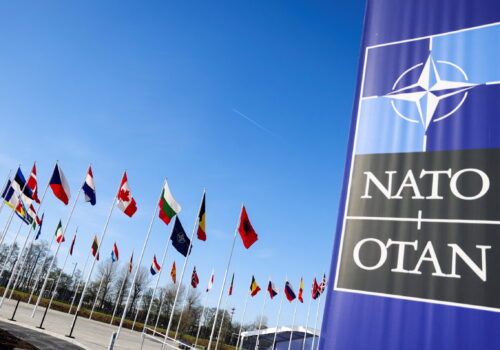
After almost thirty years of close partnership with NATO, Finland joined the Alliance on April 4, 2023.17NATO, “Relations with Finland,” October 3, 2024, https://www.nato.int/en/what-we-do/partnerships-and-cooperation/relations-with-finland. Finland’s foreign and security policy emphasizes safeguarding Finland’s independence, its territorial integrity, and the functioning of society.18Finnish Government, “Government Report on Finnish Foreign and Security Policy,” June 20, 2024, https://julkaisut.valtioneuvosto.fi/server/api/core/bitstreams/6fd3dcd6-b479-40a1-bb5c-63953a15d4b6/content. Following NATO membership, Finland maintains a strong national defense capability while contributing as a capable and reliable ally to NATO’s collective defense and deterrence.
As a NATO member, Finland is committed to the Alliance’s collective objective of increasing defense expenditure to 5 percent of GDP by 2035, with core defense spending accounting for 3.5 percent of the target and the remaining 1.5 percent allocated to defense‑related expenditure such as civil preparedness, infrastructure, and cybersecurity.
In 2025, Finland’s defense spending rose to 2.9 percent of GDP.19Finnish Government, “Debt Management Annual Review 2025,” 2025, https://www.treasuryfinland.fi/annualreview2025/operating-environment. In April 2025, the Finnish government announced the allocation of an additional 3 billion euros to defense, strengthening research, development, and innovation in the defense sector.20Ministry of Defence of Finland, “Finland to Raise Defence Spending to at Least Three Percent of GDP,” press release, April 1, 2025, https://valtioneuvosto.fi/en/-/236553176/finland-to-raise-defence-spending-to-at-least-three-percent-of-gdp.
Defense spending is expected to remain elevated in the coming years, reflecting the continued implementation of Finland’s fighter replacement programme, under which the country has procured 64 F-35A Lightning II fighter aircraft, with deliveries scheduled between 2026 and 2030.21Ministry of Defence, “The Lockheed Martin F-35A Lightning II Is Finland’s Next Multi-Role Fighter,” Finnish Government, December 10, 2021, https://valtioneuvosto.fi/en/-/236553176/the-lockheed-martin-f-35a-lightning-ii-is-finland-s-next-multi-role-fighter.
Finland’s participation in NATO’s DIANA framework
Finland’s participation in NATO’s Defence Innovation Accelerator (DIANA) framework exemplifies how technological development, funding priorities, and ecosystem coordination increasingly align with security-oriented objectives. Participation in NATO DIANA is deeply anchored in Finland’s national innovation infrastructure. The VTT Technical Research Centre of Finland hosts NATO DIANA in Finland, in collaboration with Aalto University and the University of Helsinki.22VTT Technical Research Centre of Finland, “NATO DIANA in Finland,” accessed June 4, 2026, https://www.vttresearch.com/en/nato-diana-finland. In addition, Finland hosts two DIANA test centers.
- The 6G Test Centre, hosted by the University of Oulu, provides controlled laboratory environments and Arctic testing conditions. The test center operates within a broad industrial ecosystem including companies such as Nokia, Bittium, Patria, and Airbus.23University of Oulu, “6G Test Centre’s Strategic Role—Pioneering Dual-Use Innovation Within NATO DIANA,” February 18, 2026, https://www.oulu.fi/en/news/6g-test-centres-strategic-role-pioneering-dual-use-innovation-within-nato-diana.
- The Otaniemi Test Centre in Espoo, hosted by VTT and established in 2026, focuses on quantum technologies, space systems, and secure connectivity.
To date, NATO DIANA has accepted five Finnish companies into the innovation acceleration program. In the 2025 cohort, Finnish participants included ElFys, Winse Power and Kelluu. Their technologies span areas in which civilian and defense needs overlap: ElFys develops photonic sensors and detectors, Winse Power focuses on laser-based power-by-light communication and energy solutions, and Kelluu—selected for Phase 2—works on hydrogen-powered airships for security and infrastructure intelligence.
For the 2026 cohort, Finland contributed two additional companies: Aboa Space Research (ASRO), which develops autonomous handheld microscopes for rapid field diagnostics, and SEATOM Technologies, which focuses on long-endurance subsea microreactors for naval applications.24NATO, “NATO Defence Innovation Accelerator Announces Largest-Ever Cohort of 150 Innovators to Work on Ten Defence and Security Challenges in 2026,” December 10, 2025, https://www.nato.int/en/news-and-events/articles/news/2025/12/10/nato-defence-innovation-accelerator-announces-largest-ever-cohort-of-150-innovators-to-work-on-ten-defence-and-security-challenges-in-2026.
The NATO DIANA program is highly selective. In 2025, more than 2,600 applications resulted in seventy-three selected companies, with only fifteen companies advancing to Phase 2. In 2026, 3,680 applicants competed for 150 places, corresponding to a current acceptance rate of approximately 4 percent.
“Finland is the birthplace of ‘New Defence’ with the emergence of numerous new innovative companies. Finland implements the Whole-of-Society Security Model, harnessing all available resources to support national defence. ‘Sisu’ (grit), the world’s highest personal willingness to defence the country and the advanced technical capability combine quantity with quality.”—Sauli Eloranta, vice president, VTT Technical Research Centre of Finland25Sauli Eloranta in discussion with the author, April 2026.
Business Finland and Finland’s evolving innovation priorities
Business Finland is one of the key players in the Finnish innovation ecosystem as a government organization for innovation funding, trade, investment promotion, and internationalization. It operates under the Finnish Ministry of Economic Affairs and Employment and provides grants, loans, and advisory services to support companies in developing new technologies, scaling their business, and entering global markets.
Over time, Business Finland has emphasized export-driven civilian innovation, but today Finland’s government directs Business Finland to promote dual-use technologies. The 2025–2028 performance agreement between the government and Business Finland states that, amid growing geopolitical uncertainty, Business Finland should advance critical technologies, defense, and dual-use innovations.26Business Finland, “Työ- ja elinkeinoministeriön ja Innovaatiorahoituskeskus Business Finlandin välinen tulossopimus vuosille 2025–2028,” 2025, https://www.businessfinland.fi/globalassets/finnish-customers/about-us/tulosohjaus/tulossop25-28.pdf. In practice, the concept of dual-use innovations acts as a bridge, supporting investments that enhance national security while remaining commercially scalable in civilian markets.
In addition, Business Finland currently runs a dedicated program to assist dual-use innovation ecosystems, especially in cybersecurity, digital defense, critical communications, and situational awareness technologies.27Business Finland, “Defense and Digital Resilience,” November 3, 2025, https://www.businessfinland.fi/en/services/Programs-and-ecosystems/Programs/defense-digital-resilience/. This program explicitly supports companies developing solutions applicable to both civilian and military use.
Venture capital and the rise of dual-use innovation
According to the Nordic Defence Tech Report, Finland captured approximately 85 percent of Nordic defense and dual-use venture capital investment in 2025.28Dealroom.co and Danske Growth, Nordic Defence Tech Report 2025 (November 2025), Nordic defence tech report 2025; Yle, “Finnish Startups Raise Record Funding as Defence Technology Attracts Investors,” March 12, 2026, https://yle.fi/a/74-20214896. Venture capital investment in the Nordic defense and dual-use tech ecosystem has more than doubled since the previous year, driven by IQM, a leading Finland-based company developing superconducting quantum computers for research centers and industrial applications.
Finnish Industry Investment (Tesi) is a state-owned investment company and a central public investment actor supporting the Finnish venture capital and private equity ecosystems. Operating under the Ministry of Economic Affairs and Employment, Tesi invests directly in companies and indirectly through venture capital and private equity funds to promote economic growth, innovation, industrial renewal, and international competitiveness. Tesi has increasingly emphasized deep-tech, defense, and dual-use technologies as strategic investment areas in response to geopolitical developments.29Keith Bonnici, “Time to Look at Defense Technology with Fresh Eyes,” Tesi, June 17, 2024, https://tesi.fi/en/blog/defense-technology/.
Tesi also published a market study (2024) listing dual-use companies among the fastest-growing and most investment-friendly segments.30Tesi, “Defence: Market Study on Finnish Military Product and Dual Use Companies,” September 26, 2024, https://tesi.fi/wp-content/uploads/2024/09/Tesi-Defence-Study-240902.pdf. Venture capital has been steered to C4 (command, control, communications, computers and intelligence) activities, with sensing, connectivity, and cybersecurity as the most prominent subcategories.
The increase in defense and security-related projects driven by geopolitical developments has also been noted by Finnish Business Angels Network (FiBAN). FiBAN data show an extremely rapid increase in defense, security, and dual-use start-up initiatives in recent years.31Ivan Helin, “FIBAN Startup Pulse: Startup Applications Double—Surge in AI and Defense Technologies,” Finnish Business Angels Network (FiBAN), July 1, 2025, https://fiban.org/news/fiban-startup-pulse_startup-applications_double/. From a marginal niche of only a handful of actors before 2023, defense and dual-use start-ups now form a visible and rapidly expanding segment of the deal flow. AI applications continue to dominate the deal flow, with nearly 30 percent of all applications coming from start-ups leveraging AI.
The growing funding demands of the defence sector and dual-use start-ups have led FiBAN to launch DECOI (Defence Ecosystem of Innovators), one of Europe’s largest defence start-up events, held alongside Slush, the annual investor and start-up conference in Helsinki, Finland.
Localization: Riihimäki to host NATO’s new Deployable CIS Module
The localization of security-driven innovation is particularly tangible in the Finnish city Riihimäki, where security dynamics intersect with regional development strategies. On March 6, 2026, Finnish Minister of Defence Antti Häkkänen announced plans to locate NATO’s Deployable CIS Module (DCM) in Riihimäki.32Ministry of Defence of Finland, “Minister of Defence Antti Häkkänen: A NATO Deployable CIS Module Will Be Established in Riihimäki,” March 9, 2026, https://defmin.fi/en/-/minister-of-defence-antti-hakkanen-a-nato-deployable-cis-module-will-be-established-in-riihimaki. The module, expected to begin operations in early 2027, will provide communication and information system services for NATO forces operating in Finland and across the northern region.
At the same time, Riihimäki is the host for Defence Innovation Network Finland (DEFINE), which functions as an institutional connector, linking companies, research institutions, and public actors into a coordinated ecosystem. By facilitating collaboration, enabling participation in NATO-related exercises such as Innovation Range, and connecting actors to international defense innovation frameworks, it embeds Finnish companies and research organizations into a broader operational network and contributes to the Alliance with new innovations and capabilities.33NATO, “NATO Innovation Range Advances Defense Technology Integration in Finland,” press release, December 17, 2025, https://lc.nato.int/media-center/news/2025/nato-innovation-range-advances-defense-technology-integration-in-finland.
In addition, Finland has introduced a specialised ICT conscript training programme at the Finnish Defence Forces’ C5I School in Riihimäki, which specializes in command, control, communications, computers, cyber, and intelligence (C5I) training. The programme is designed to strengthen software development and digital capabilities within the Defence Forces by training conscripts to develop practical technological solutions for operational military requirements.34Finnish Defence Forces, “Information and Communication Technology Services,” Intti.fi, accessed June 15, 2026, https://intti.fi/en/information-and-communication-technology-services; Hive Helsinki, “Finnish Defence Forces x Hive Helsinki: Training ICT Conscripts,” June 8, 2026, https://www.hive.fi/news/finnish-defence-forces-x-hive-helsinki-training-ict-conscripts/.
Discussion and conclusion
Finland’s innovation environment is undergoing a structural transformation. Innovations are no longer considered only a driver of growth and competitiveness but are increasingly treated as a strategic capability. Innovations are governed through a security lens as economic and security objectives become more tightly intertwined amid rising geopolitical tensions. While retaining its economic core, Finland’s innovation ecosystem is rapidly being repurposed as a coordinated, high-trust system aligning with security priorities.
This trajectory is also reflected in Finland’s advanced capabilities in dual-use domains, including secure communications, advanced sensing, space-based data, and critical infrastructure resilience. Finnish start-ups captured 85 percent of Nordic venture capital investment in defense and dual-use technologies in 2025, underscoring the country’s growing role in security-aligned innovation.
Yet as innovation ecosystems become more data-driven and security-oriented, accountability, systemic risk, and the balance between openness and control become more critical—a dynamic that Finland is positioned to navigate as its innovation system continues to adapt amid geopolitical change.
Acknowledgements
This issue brief was made possible by support from the Jenny and Antti Wihuri Foundation.
About the author

Related content
Explore the program
The Transatlantic Security Initiative aims to reinforce the strong and resilient transatlantic relationship that is prepared to deter and defend, succeed in strategic competition, and harness emerging capabilities to address future threats and opportunities.
Image: A robotic hand reaching into a digital network on a blue background, symbolizing AI technology.