
Recent analysis

Programs

The Global Energy Center develops and promotes pragmatic and nonpartisan policy solutions designed to advance global energy security, enhance economic opportunity, and accelerate pathways to net-zero emissions.

Events

Issue Brief

Jan 9, 2020

Election 2020: What’s at stake for energy policy?

By David L. Goldwyn, Andrea Clabough

As the US presidential election in November 2020 draws nearer, the energy policy platforms—including domestic energy, climate change, foreign, and trade policies—from the Democratic candidates, as well as the energy policies of a potential second Trump Administration, have become increasingly clear.

Energy Markets & Governance
Energy Transitions

Global Energy Forum

Jan 9, 2020

European energy diversification: How alternative sources, routes, and clean technologies can bolster energy security and decarbonization

By Richard L. Morningstar, András Simonyi, Olga Khakova, Irina Markina

The European Union’s efforts to achieve a carbon-neutral economy present a unique and timely opportunity to strengthen European energy security. What is the EU currently doing to meet its decarbonization goals, address the role of natural gas in Europe’s low-carbon future, and explain the potential for new gas sources, alternative gas routes, and clean energy technologies to reduce carbon emissions? And how can this be done while simultaneously increasing European energy security and opportunities for transatlantic cooperation?

Energy Markets & Governance
Energy Transitions
Manufacturing facility

Global Energy Forum

Jan 9, 2020

The Saudi Aramco-SABIC merger: How acquiring SABIC fits into Aramco’s long-term diversification strategy

By Private: Jean-François Seznec

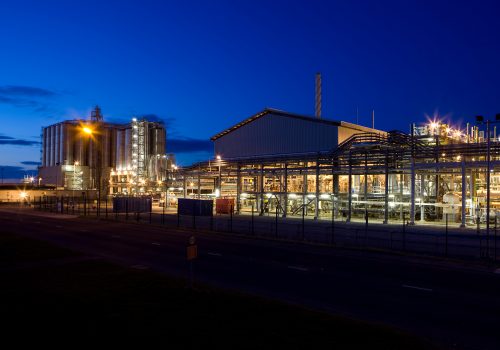
Throughout 2019, financial markets have watched the planned Saudi Aramco initial public offering (IPO), which was finally launched in December. A quieter, but no less significant, story was the Saudi oil company’s acquisition of SABIC. Saudi Aramco strove to have a successful IPO, especially through increased transparency and diversification, and the SABIC acquisition was a key element of Saudi oil company’s diversification strategy. Going forward, what does the merger mean for both companies, what is the new relationship between Saudi Aramco and SABIC, and what are the merger’s implications for the intricate relationship between the various bureaucracies and leadership in Saudi Arabia?

Energy Markets & Governance
Energy Transitions

Content

In the News

Nov 2, 2020

Hasik cited in the Space Review

By Atlantic Council

On November 2, an article in the Space Review titled "The Green New Deal for space" cited Forward Defense Nonresident Senior Fellow James Hasik's report on “The Precision Revolution: GPS and the Future of Aerial Warfare." The article outlines how space is an essential element of the Green New Deal, specifically referencing GPS capabilities in this domain.

Defense Technologies
Economy & Business

Global Energy Forum

Oct 27, 2020

Enhancing US-Japan cooperation on clean energy technologies

By Reed Blakemore, David Yellen

Japan’s pledge to reach net-zero emissions by 2050 presents an opportunity to expand the robust US-Japan energy partnership into additional clean energy areas. But with a stark divide on energy policy in the United States, how can the US-Japan energy partnership appeal to disparate visions of the energy transition and is politically durable? In the wake of Japan's net-zero announcement, the Global Energy Center is launching this new report, "Enhancing US-Japan cooperation on clean energy technologies," which explores how the United States and Japan can increase the politically durable foundation for clean energy cooperation to their already robust energy partnership.

Energy & Environment
Energy Transitions

EnergySource

Oct 19, 2020

Eastern Europe remains an opportunity for US exports and cooperation

By Evan Sieradzki

While the road to greater European energy independence from Russia is long, it leads through Eastern Europe. Eastern European countries like Ukraine and Belarus are eager for energy autonomy, and the United States has the capacity to meet Eastern European energy demand while expanding American LNG and nuclear energy markets.

Eastern Europe
Energy & Environment

UkraineAlert

Oct 14, 2020

Political pressure threatens Ukraine’s gas sector reforms

By Aura Sabadus

The early October resignation of American citizen Amos Hochstein from the Naftogaz supervisory board is sparking alarm over the future direction of the state-owned Ukrainian energy sector giant.

Energy Markets & Governance
Energy Transitions

EnergySource

Oct 14, 2020

Artificial intelligence can protect all companies in the energy transition from cyberattacks

By Leo Simonovich

The operational and information technologies responsible for running energy systems today were never engineered to be secured in a digital environment, posing a technical challenge tough to solve and difficult for small and mid-sized operators to afford. New developments in artificial intelligence-based solutions can help all energy companies put defenders ahead of attackers, while adapting to the changing energy landscape.

Cybersecurity
Energy & Environment

New Atlanticist

Oct 9, 2020

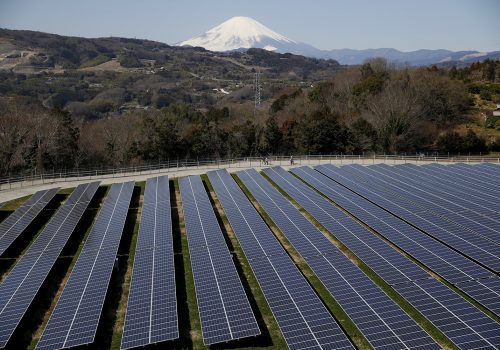
Rising solar: Investing in Japan’s energy transition

By Alexis Crow

The ability to invest in renewable energy assets in Japan—and thus to contribute to the country’s energy transition—also presents a significant opportunity for long-term capital from around the globe

Climate Change & Climate Action
Energy Transitions

Elections 2020

Oct 1, 2020

The surprise debate topic: Climate change

By Margaret Jackson

Chris Wallace unexpectedly deviated from his agenda to ask pointed questions about the science and economics behind each candidate’s respective climate plans, reflecting a recognition that, more so than in 2016, public pressure is forcing climate action to be a central issue in this year’s election.

Climate Change & Climate Action
Elections

EnergySource

Sep 29, 2020

The global climate crisis and the clean energy transition in the Asia-Pacific region: Implications for the next US administration

By Robert F. Ichord, Jr.

Even with major emissions reductions in the United States and EU, the world has little chance of achieving global net-zero emissions by 2070, much less 2050, without significant changes to the Asia-Pacific energy mix. The next US administration should pursue a well-funded “whole of government” presidential initiative to work with Asia-Pacific countries on viable clean energy strategies and projects within a revived US multilateral trade, aid, and investment approach.

Energy & Environment
Energy Transitions

New Atlanticist

Sep 25, 2020

The ‘big three’ now rule the global energy market, says Daniel Yergin

By Katherine Golden

Pulitzer Prize winner and energy expert Daniel Yergin's insights into the progress of the energy transition worldwide are pivotal with the 2020 elections around the corner and the pandemic that has disrupted the energy industry.

China
Coronavirus

Elections 2020

Sep 17, 2020

Five big questions as America votes: Energy

By Global Energy Center

As the US presidential election looms, the oil and gas industry has suffered from demand shocks during the COVID-19 pandemic, climate change is increasingly in the list of top concerns of US citizens, and there is little overlap between the likely policies of the two presidential candidates.

Climate Change & Climate Action
Coronavirus

Experts