
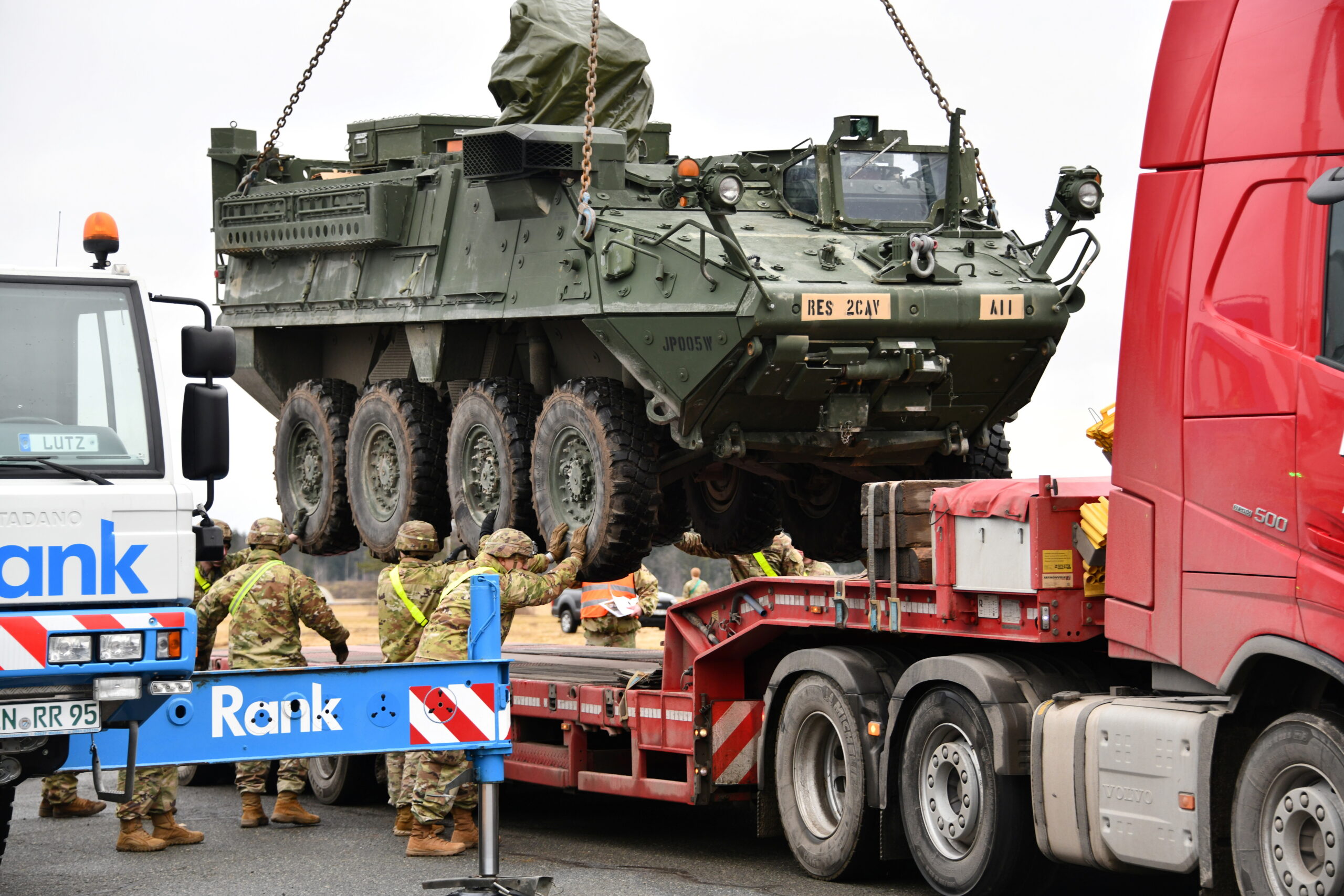
In my nearly two decades of military service, I have learned that stuff tends to break just when you need it most. To make matters worse, I have encountered instances of mission degradation and increased risk because our maintainers or technicians were not allowed to make needed repairs to systems because the equipment had intellectual property (IP) restrictions and contractual constraints. In many cases today, units either rely on a contracted field service representative or must troubleshoot problems over a hotline and ultimately ship the item back to the manufacturer to make essential repairs.
A growing number of US decision makers have recognized the threat these constraints pose to combat readiness and have advocated “right to repair” laws. Right to repair provisions are intended to provide warfighters access to the necessary technical data, tools, manuals, and permissions needed to make timely field repairs to their advanced equipment and technologies themselves. Ultimately, right to repair is about allowing servicemembers to get their equipment back in the fight more quickly. However, US policymakers have yet to implement this necessary reform.
This past December, right to repair provisions were removed from the National Defense Authorization Act, despite their reportedly having had the support of US President Donald Trump, Pentagon officials, and members of the House and Senate from both parties. As the character of modern conflict evolves, the right to repair is no longer a cost or convenience issue—it’s a combat readiness imperative. A better balance must be struck between the necessities of protecting corporate IP and the military’s ability to sustain a warfighting advantage in dynamic contested environments.
The debate over right to repair
US innovation is the backbone of its military edge. Software-defined capabilities play an increasingly vital role in modern warfare, and data is crucial for sustaining them. That data is not some peripheral concern—it is the oxygen of military maintainers, logisticians, and end-use operators. Without access to this data, the services are paying for critical warfighting capabilities they cannot assure will be at full operational capability or even available at the time of critical need. The importance of data has deepened the US military’s dependency on corporations that have effectively monopolized the sustainment tail through contractual agreements. This model may have worked in more permissive environments such as Iraq and Afghanistan, where the United States had large sustainment bases and faced low-tech threats. But the future challenges of much smaller, distributed military operations against high-tech enemies in often austere and disrupted, degraded, intermittent, and low-bandwidth environments demand a new look at the sustainment ecosystem. Those warfighters at the edge need and deserve the opportunity to troubleshoot and repair critically needed systems in the field.
Opponents of right to repair, such as former US Secretary of the Army Eric Fanning, are right to call for the Pentagon and Congress to address the many problems that plague defense sustainment, including personnel, funding, infrastructure, and supply chain issues. The United States has been working toward solving those issues for decades, yet military readiness continues to languish. The shortage of military maintainers would not be solved simply by adding more personnel who are still contractually barred from repairing equipment that they could under right to repair provisions.
Chronic underfunding for defense sustainment compounds when new warfighting technologies are rapidly fielded, yet their only repair solution remains a costly contracted one. Infrastructure bottlenecks intensify when systems must be shipped to limited proprietary depots simply because the military maintainer is forbidden from opening a panel or running diagnostics without violating the terms of IP regulations. Supply chains are strained because units must wait for contractor-only replacement assemblies when any competent military technician could make a field-level repair if they had the documentation and authority. This could make the difference between simply replacing a $15 control knob and having to pay for a complete $47,000 aircraft screen assembly.
Developing the technical workforce, increasing sustainment funding, expanding depot infrastructures, and capitalizing supply chains for defense corporations and the industrial base are all necessary steps. But to not also enable the military’s ability to repair its fielded systems deepens the Pentagon’s corporate dependencies and does little to ensure sustained combat capabilities at the tactical edge. System readiness in warfighting units is struggling not because they have incapable maintainers, but because current regulations disempower them.
The field service representatives I have worked with on multiple deployments and assignments abroad are all great Americans—many of whom are veterans that decided to continue to serve in a different way. Those technicians, often working solo or in pairs, put in tireless effort to support units comprised of hundreds. They are essential members of the team and mission. But they were usually among the first to be pulled out of the field by their companies following an increased threat, an ordered departure, or a noncombatant evacuation order. There was often no backfill except for a tech support hotline to call someone thousands of miles away. In these cases, no one was left onsite with the technical data, tools, manuals, or authorities to troubleshoot and make repairs at the time that system is likely needed most.
The way forward
When it comes to the challenges the US military is likely to face in the future, this constraint on repairs could lead to several disastrous scenarios: A ship in a contested region of the Indo-Pacific without a critical command-and-control suite; a ground movement in Syria without an operational electronic counter-improvised explosive device or remotely operated weapon station systems; a littoral force on an isolated island without the ability to resolve a datalink communications error; an airfield in eastern Europe without its integrated counter-drone system; or a fifth-generation fighter grounded because the software says it cannot fly.
No one wants to undermine the defense sector and industrial base that delivers the tools the US military relies on, but protecting corporate innovation and IP cannot come at the expense of sustainment, survivability, or combat effectiveness. Right to repair should not be viewed as a threat to innovation, and it does not mean simply handing over defense technology breakthroughs to the government without any IP protection. The information security controls that currently safeguard sensitive and classified technical information could be refined to protect the defense industry’s IP while also enabling US military forces to sustain their systems and equipment themselves.