WASHINGTON—For years, Russia has operated a so-called “shadow fleet” of sanctions-evading oil tankers, which have provided revenue for the Kremlin to continue its war against Ukraine. For nearly as long, Western maritime policy toward this fleet has been reactive, legalistic, and ultimately permissive.
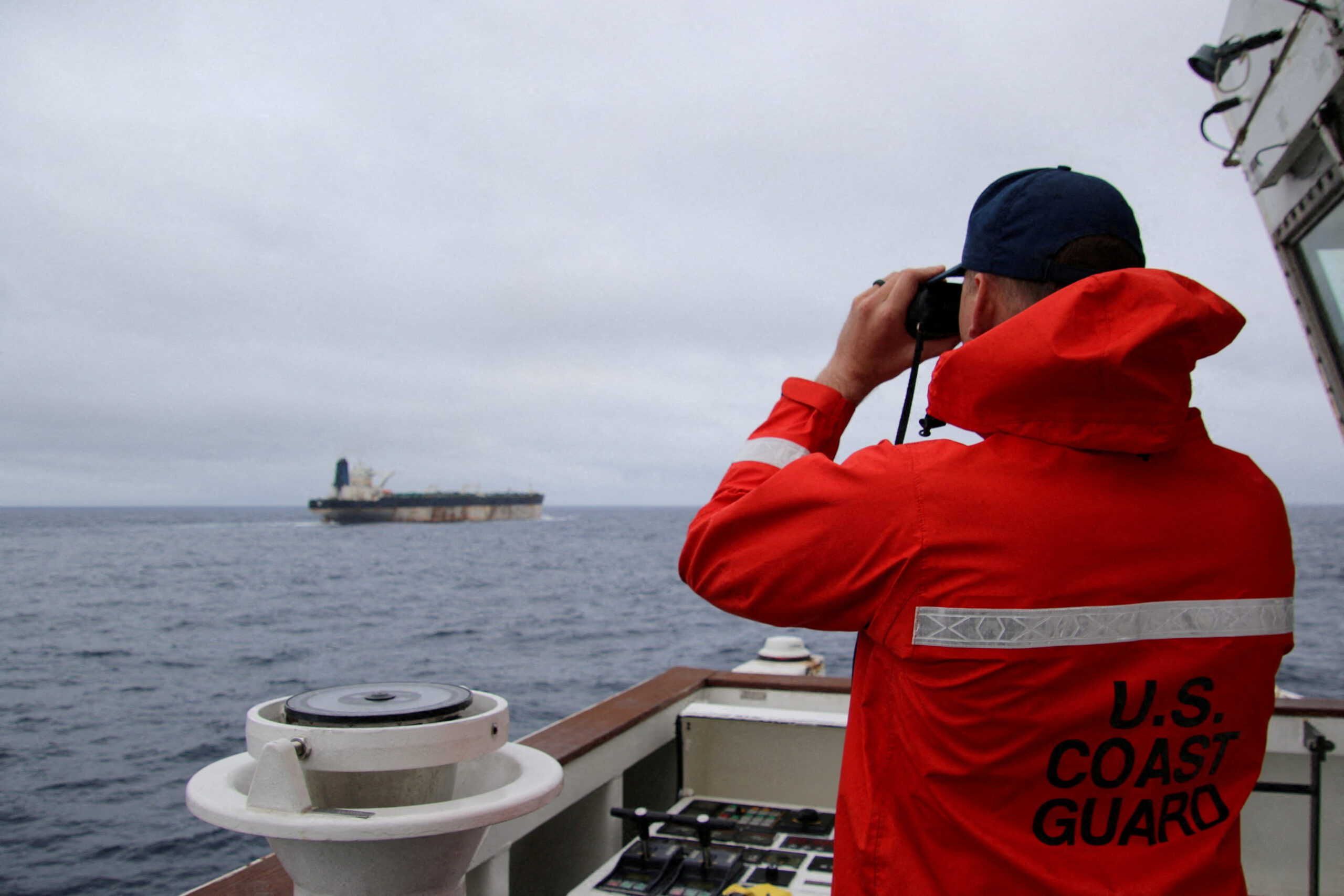
That changed late last year, when the Trump administration started taking bold action against the shadow fleet to enforce its blockade of Venezuelan oil exports. By targeting the vessels, logistics, and enablers of this opaque maritime network, the United States flipped the initiative. Instead of allowing Russia to exploit legal gray zones and Western restraint, Washington forced Moscow into a defensive crouch—raising costs, increasing uncertainty, and signaling that abuse of maritime norms would no longer be consequence-free.
This matters well beyond oil tankers. Strategic initiative is not about a single sanctions package or interdiction; it is about shaping the overall operating environment. By introducing ambiguity over what it will tolerate, the United States demonstrated that Russia’s shadow fleet is not an untouchable fact of life but a vulnerability. European states—especially the Baltic and Nordic states—should recognize that this is precisely the approach they should have applied long ago in the Baltic Sea.
Russia’s “shadow fleet” is a malign actor in the Baltics
Russia’s shadow fleet is an instrument of state power operating under civilian cover. In the Baltic Sea, its malign activity has taken several forms.
First, the tankers help Russia evade sanctions. Shadow tankers—often uninsured, aging, and operating under flags of convenience—have become essential to sustaining Russian energy exports in defiance of international restrictions. Their opaque ownership structures, frequent flag-hopping, and noncompliance with safety and reporting standards create systemic risks in one of the world’s most congested and environmentally sensitive maritime spaces.
Second, the shadow fleet poses a threat to undersea critical infrastructure. The Baltic Sea hosts a dense web of pipelines, power cables, and data links essential to European security and economic life. The presence of poorly regulated, state-directed vessels with unusual loitering patterns near such infrastructure has rightly raised alarm. Several pipelines and cables under the Baltic Sea, including the Balticconnector gas pipeline and Estlink 2 power cable connecting Estonia and Finland, as well as fiber-optic cables between Lithuania and Sweden, and between Finland and Germany, have been damaged between October 2023 and December 2024. Even when direct attribution is difficult, the pattern is unmistakable: Russia has both the capability and the incentive to use maritime assets to map, probe, and potentially sabotage critical seabed infrastructure.
Third, the shadow fleet increasingly functions as a platform for hybrid operations. There are growing concerns that shadow fleet vessels serve as launchpads, logistical nodes, or intelligence enablers for drone and electronic operations. Incidents involving unidentified drones near critical sites, including major airports near Copenhagen and Oslo, underscore how maritime proximity can be exploited to project disruptive capabilities ashore while maintaining deniability.
Taken together, the shadow fleet’s actions go well beyond commerce. They are committing acts of hybrid warfare at sea.
Europe’s self-imposed restraint
Europe has taken important initial steps to address Russia’s shadow fleet. To date, the European Union has imposed sanctions on hundreds of vessels, subjecting them to port access and servicing bans. Some European countries—Finland, Estonia, Germany, and France—have boarded some suspicious vessels in the past months but have claimed a lack of sufficient grounds under international maritime law to justify permanent seizure. Most recently, French President Emmanuel Macron announced that the French navy intercepted and boarded a sanctioned Russian-linked tanker in the Mediterranean, reiterating that such operations are necessary to enforce sanctions and disrupt the shadow fleet’s role in financing Russia’s war effort.
Despite these positive steps, European nations have been unable to stop the vast majority of shadow fleet vessels from transiting the Baltic Sea, even though it is known that Russia transports around 60 percent of its seaborne oil exports using this illicit sanctions-evasion network, with many of the tankers crossing the Baltic Sea. The primary justification for this reticence to apply stronger sanctions enforcement is often legal: the United Nations Convention on the Law of the Sea (UNCLOS) and the principle of freedom of navigation. These are important norms—but Europe has turned them into a strategic straitjacket.
UNCLOS was adopted in 1982, in a radically different security environment. It was designed for an era when maritime threats were largely military-to-military and when civilian vessels were not routinely weaponized as tools of sabotage, coercion, and deniable attack. Today’s maritime actors possess a vastly expanded toolkit: drones, cyber capabilities, seabed interference, and hybrid operations that deliberately exploit the protections afforded to civilian shipping.
More importantly, the legal restraint is one-sided. Russia does not respect the spirit—or often the letter—of the rules Europe clings to. Shadow-fleet vessels routinely operate without proper insurance, obscure their ownership, falsify registries, and sail in conditions that would not be tolerated for legitimate commercial shipping. These practices alone raise serious questions about seaworthiness, environmental safety, and compliance with international law. Europe is not defending UNCLOS by tolerating such behavior; it is hollowing it out. A legal regime that is systematically abused by hostile actors cannot be treated as sacrosanct if it undermines the security of those who follow it in good faith.
Time to join the momentum
By moving decisively against the shadow fleet, the United States, having never ratified UNCLOS but operating largely in accordance with its provisions as customary international law, has established the very strategic ambiguity Europe has long advocated. The US seizure and boarding of the illicit tankers demonstrate that states can reassert deterrence in the hybrid domain when they are willing to broadly interpret UNCLOS’s provisions on boarding and seizing ships, thus defending the intent—not just the letter—of maritime law.
Baltic and Nordic countries are uniquely positioned to act. They possess exceptional maritime domain awareness, capable coast guards and navies, and dense legal and regulatory ecosystems. This enables them to broadly interpret UNCLOS’s legal authority to board and seize shadow fleet tankers, especially as they violate Article 92 of UNCLOS by engaging in flag-hopping and operating without proper insurance. Coordinated pressure can raise the operational and financial costs of shadow-fleet activity and make the Baltic Sea inhospitable to Russia’s illegal and dangerous maritime practices.
By stepping up its measures against shadow fleet vessels, Europe can seize this moment to make a substantive contribution to the reform and modernization of the UNCLOS framework. This does not mean abandoning UNCLOS but interpreting its provisions broadly to uphold the values underpinning it—above all, the obligation to ensure safety at sea. The convention was never designed for a world in which civilian vessels are routinely applied to dual-use purposes. Nor did it anticipate today’s vast networks of undersea critical infrastructure, now central to national security and economic resilience.