
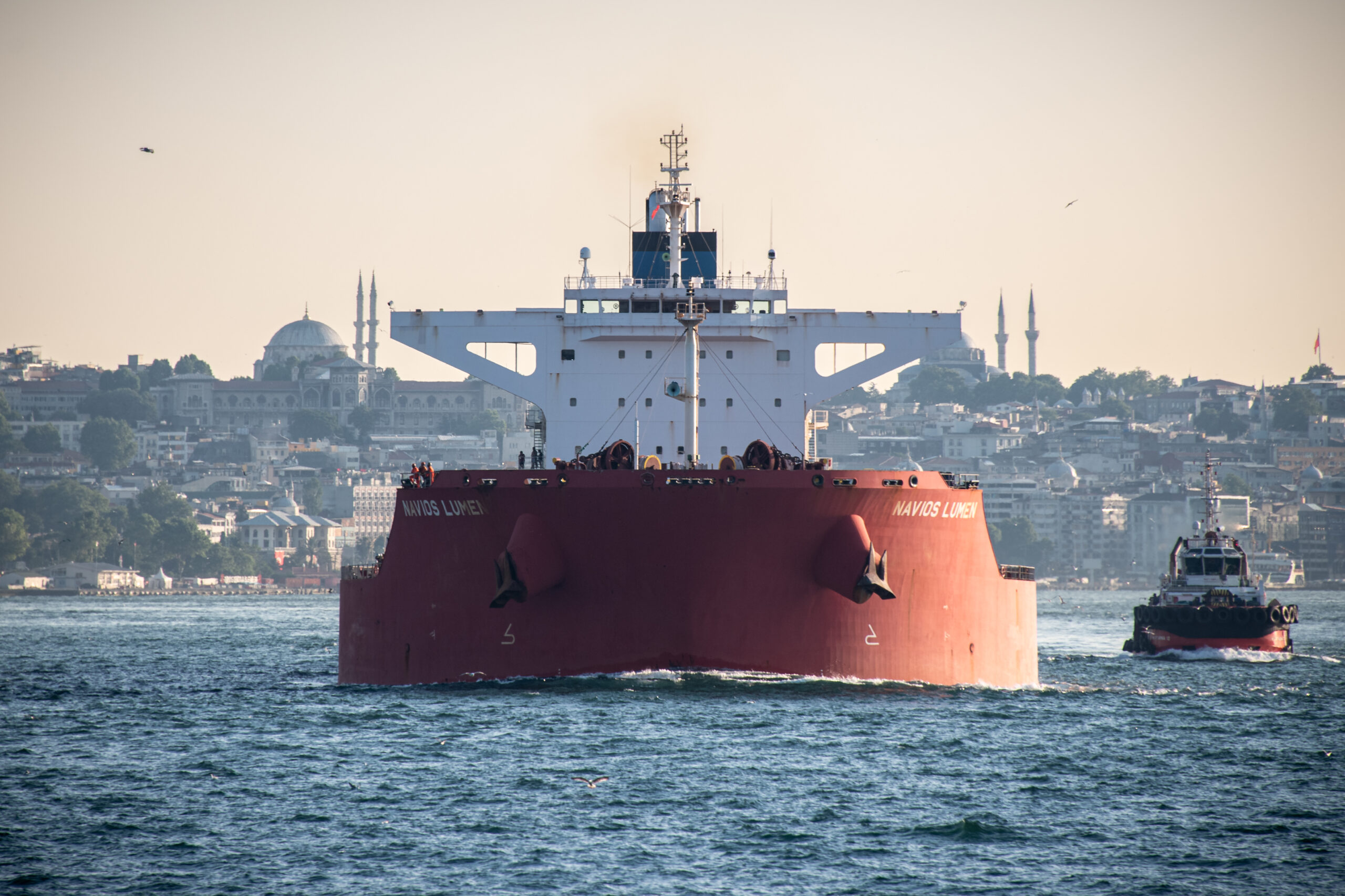
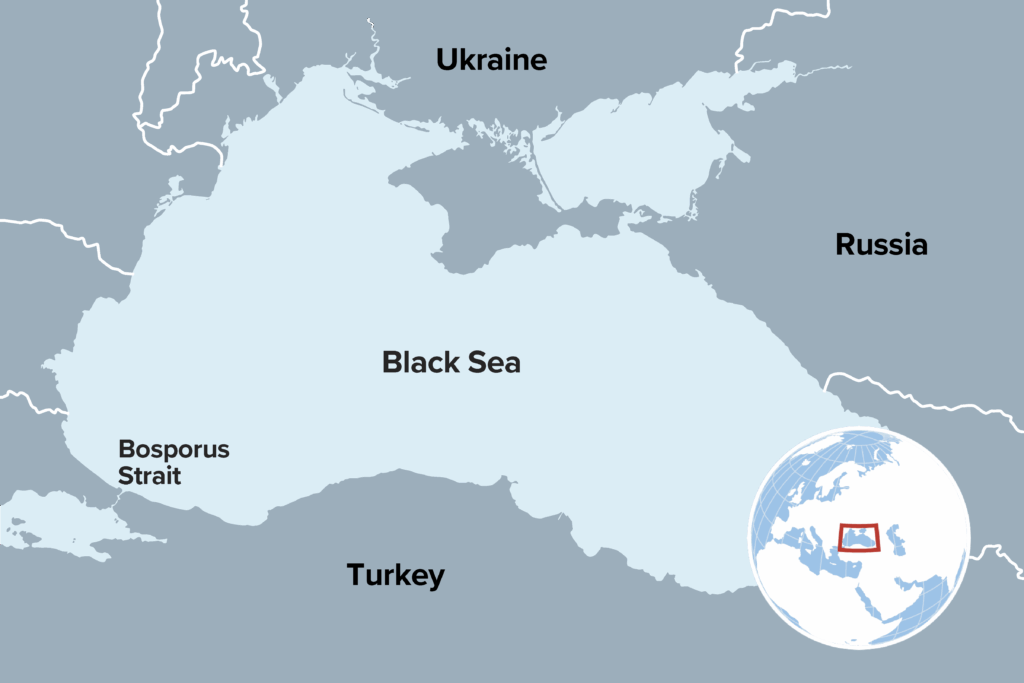
LONDON and WASHINGTON—US liquefied natural gas (LNG) exports to Ukraine via the Black Sea would provide Washington and its allies with a new lever of influence in the pursuit of peace—one that strengthens Ukraine’s resilience and directly pushes back against Russia’s malign activities in the western Black Sea. By encouraging Turkey to change its current prohibitions on large-scale traffic of US LNG through the Bosporus Strait, US President Donald Trump can extend Western economic and strategic presence into one of the most contested theaters of the conflict.
Russia’s ability to finance and sustain its war against Ukraine is already under real pressure. Coordinated US and European actions targeting Moscow’s shadow fleet of oil tankers are constraining the Kremlin’s capacity to move its crude oil, generate revenue, and project power. Applying similar competitive pressure through US natural gas would shift the balance further against Moscow—converting US energy dominance into an additional instrument of strategic leverage.
Trump can do exactly that by acting at the NATO Summit in June—using the moment to broker a three-party agreement between Washington, Ankara, and Kyiv to unlock LNG exports to Ukraine. To do so, the United States will need to ensure that Turkey, which will need to forgo current restrictions on LNG traffic through the Bosporus, emerges a winner too.
At a moment when Russia continues to test NATO’s resolve through drone incursions, maritime harassment, and intimidation across the Black Sea, LNG can serve as more than a commodity. It can become a strategic asset for peace. Delivering US LNG to Ukraine would reshape the regional balance by further reducing Russia’s energy leverage, hardening the resilience of Ukraine’s battered energy sector, and anchoring Western interests in a domain Moscow has long held exclusive influence over.
Despite sustained Russian attacks, Ukraine has kept its energy system functioning. Its electricity grid has been synchronized with the European Union’s since 2022. Its gas transmission system spans more than 38,000 kilometers—one of the largest in the world—and its underground gas storage capacity, approximately 32 billion cubic meters, is the largest in Europe. These facilities already serve European utilities and traders as a seasonal balancing and hedging platform. Integrated with a Black Sea LNG entry point, they would become a strategic buffer for Ukraine and its partners, strengthening security of supply while stabilizing regional markets, complementing other import routes through Slovakia, Poland, Romania, and Hungary.
The principal obstacle to this vision is political, not technical.
For years, Ankara has restricted the transit of most US LNG tankers through the Bosporus. While smaller LNG cargoes have been approved, prohibitions on vessels longer than two hundred meters make shipping natural gas to markets in the Black Sea costly and difficult to scale. Most US LNG is carried on tankers measuring roughly 290 to 300 meters in length, effectively limiting access under current rules.
Importantly, there is no legal prohibition on transporting LNG through the Bosporus under international law. The 1936 Montreux Convention, which governs passage through the Turkish Straits, guarantees freedom of transit for merchant vessels in peacetime, “under any flag and with any kind of cargo,” and it affirms that this principle applies without time limitation. LNG transit through the Bosporus is legally allowed but operationally constrained, politically sensitive, and commercially fragile due to insurance, liability, and risk-management considerations. Turkey has regulatory authority over maritime safety procedures in the strait, and it therefore makes the decisions on what is allowed through.
In discussions with us in recent months, several veteran diplomats in the United States and Europe insist that changing Turkish President Recep Tayyip Erdoğan’s position on the Bosporus is unrealistic, arguing that the policy is entrenched and immovable. But this assessment underestimates the power of Trump-style diplomacy. From the Abraham Accords to breakthroughs between Azerbaijan and Armenia, Trump has repeatedly demonstrated an ability to strike deals where conventional approaches have stalled.
As the self-proclaimed “peace president,” Trump now has an opportunity to apply that approach to the Black Sea.
A three-party agreement between Washington, Ankara, and Kyiv—bringing together Trump, Erdoğan, and Ukrainian President Volodymyr Zelenskyy—could unlock LNG exports to Ukraine while ensuring Turkey emerges a clear winner. Structured correctly, such an agreement would align incentives, transforming a long-standing constraint into a shared strategic asset.
For its part, Turkey could potentially secure engineering, procurement, and construction contracts to build and operate LNG import and regasification infrastructure, anchoring its role as a guarantor of Black Sea stability and reinforcing its strategic relevance within the Alliance. Ukraine would gain a durable source of energy security at a moment when its infrastructure remains under constant attack. Through a new US-protected maritime energy security corridor via the Bosporus, Trump would help open a new strategic LNG market, converting energy dominance into lasting economic and geopolitical relationships.
Concerns about safety in the Bosporus, often raised in public debate, should be placed in context. LNG has an exceptional global safety record and routinely transits some of the world’s most important waterways, including the Panama and Suez canals. The Bosporus already accommodates far more hazardous cargo, including crude oil and chemicals, while also authorizing small-scale shipments of LNG. The objection to larger LNG vessels transiting the strait is therefore less technical than political—and political barriers can be overcome when leadership aligns interests and incentives.
For NATO, the payoff is substantial. A Black Sea LNG corridor tied to US supply would create a stronger buffer against Russian aggression in the western Black Sea—one Moscow would be highly reluctant to challenge directly. Russia may harass, probe, and intimidate smaller European states, but it is unlikely to risk escalation against infrastructure and shipping linked to US energy interests.
That is what makes the NATO Summit in June—hosted in Turkey—the opportune moment to alter the status quo in Black Sea security. With all the necessary leaders at the same table and allied attention already focused on the region, the summit creates a natural diplomatic deadline for the White House to concentrate political will on the issue.