Standardizing carbon accounting worldwide with a single, robust, cost-effective system
Bottom lines up front
- Developed economies aren’t just underinvesting in the climate transition—they are missing the mark by an order of magnitude. Because green financing is often characterized as underperforming, the capital they do deploy rarely reaches the projects or regions where it’s needed most.
- But decarbonization doesn’t have to be a synonym for “high risk.” The key to unlocking high-impact, high-return investment lies in better risk management. Measuring a project’s carbon footprint with greater accuracy will mitigate the guesswork that keeps capital on the sidelines.
- The authors advocate for the Climate Club, an intergovernmental decarbonization forum, to select a single, robust, and cost-effective method for computing products’ carbon footprint. The framework would provide the rigor required to significantly scale climate finance and drive energy security.
Carbon accounting has gained traction in recent years as the mechanism through which companies and countries can unlock competitive forces to drive innovation in decarbonization and energy availability. However, most emissions tracking today still occurs through a patchwork of carbon disclosure systems rather than through a true accounting framework.
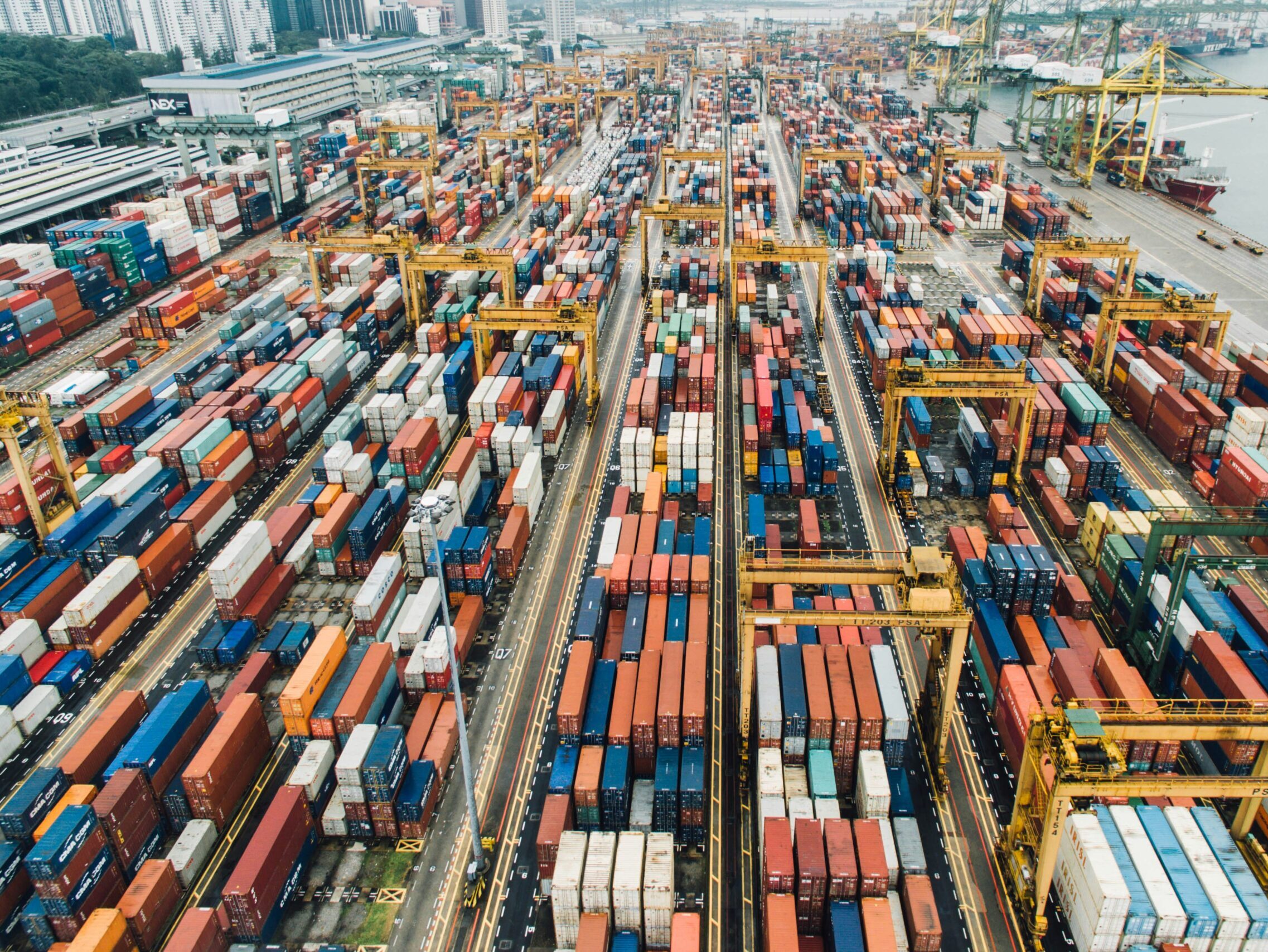
The limitations of today’s carbon disclosure systems are increasingly consequential as governments adopt trade and procurement policies that require accurate emissions data. For example, emerging carbon border tariff policies, such as the European Union’s mandatory Carbon Border Adjustment Mechanism (CBAM) that is aimed at encouraging trade in low-emissions products, require that each transaction be linked to a specific emissions footprint. Yet existing disclosure systems cannot consistently provide such granular and comparable information across borders or complex supply chains. To implement the tariffs, jurisdictions have resorted to simplified, partial accounting methods that cover only a narrow set of upstream, easy-to-measure products while excluding many downstream goods. This workaround, in turn, can create inadvertent deindustrializing effects and adds confusion and unnecessary compliance costs in the economy.
Market and policy developments suggest that there is an urgent need for a single, comprehensive, robust, and cost-effective carbon accounting system worldwide: one that identifies low-emissions production across all products and services and across all jurisdictions and consistently over time.
This issue brief proposes a concrete and achievable first step toward such a global carbon accounting system: for a group of proactive member countries in the intergovernmental Climate Club to launch a call for tender to select a single, robust, and cost-effective method for computing the carbon footprint of all products (and, by extension, companies) worldwide.
A common, trusted carbon accounting system would unlock several critical levers in the race to drive decarbonization while meeting global energy demand. It would enable finance to flow more efficiently toward high-impact, high-return decarbonization investments, allow governments to steer foreign trade and public procurement toward lower-emissions options, and support credible carbon labeling for customers seeking “greener” purchasing options.
Together, these mechanisms would accelerate decarbonization while strengthening economic security, energy resilience, and international competitiveness.
view the full issue brief
about the authors

Vincent Aussilloux is an economist at the European Commission’s Directorate General for Trade. Just prior to his current position, he served as special adviser to the general commissioner of France Stratégie, a public think tank responsible for anticipating major challenges for the country, evaluating public policies, and informing and improving the quality of public debate. He served as the director of its economics department between 2014 and 2023. Aussilloux was also general rapporteur for the French National Productivity Council, a member of the cabinet of two ministers, and served in the Office of the Secretary of State for Foreign Trade and the Directorate General of the Treasury in France. He holds a doctorate in economics from the University of Montpellier.

Yann Coatanlem is an economist and the president of Club Praxis, a multidisciplinary think tank that promotes the use of big data in policymaking, in particular in revamping the tax and welfare system. His work has won multiple awards, including the special prize of the political economy, statistics, and finance section of the Académie des sciences morales et politiques. He spent most of his research career at Citigroup as managing director and head of multiasset quantitative analysis. He is also a co-founder of GlassView—the inventors of Neuro-Powered MediaTM—and a member of the board of the Paris School of Economics. He co-authored Capitalism against Inequalities, with a postface from Nobel laureate Philippe Aghion, and was awarded the Prix Turgot and the Prix Louis Marin. He graduated from the École nationale supérieure d’informatique et de mathématiques appliquées and the École des hautes études commerciales de Paris. He is a recipient of the French National Order of Merit, the Gold Medal of La Renaissance Française, and the Médaille d’honneur des Conseillers du commerce extérieur.
Karthik Ramanna is a professor of business and public policy at the University of Oxford’s Blavatnik School of Government and a fellow at St John’s College. He teaches at the Blavatnik School on managing organizations in polarized times, which led to his 2024 book, The Age of Outrage. He also serves as principal investigator and co-founder of the E-ledgers Institute, a nonprofit organization advancing rigorous greenhouse gas accounting practices. From 2023 to 2025, Ramanna was on partial public-service leave from Oxford to advise the US Public Company Accounting Oversight Board, an “auditor of auditors” in global markets. From 2016 to 2023, he was director of the school’s master of public policy program. Ramanna has also taught at the Harvard Business School in both the MBA and senior executive-education programs. His scholarship has won numerous awards, including the Journal of Accounting and Economics Best Paper Prize, the Harvard Business Review McKinsey Award for “groundbreaking management thinking,” and the international Case Centre’s prizes for “outstanding case-writing.” He has a doctorate from MIT’s Sloan School of Management.
stay connected
Sign up for PowerPlay, the Atlantic Council’s bimonthly newsletter keeping you up to date on all facets of the energy transition
related reading

explore the program

The Global Energy Center develops and promotes pragmatic and nonpartisan policy solutions designed to advance global energy security, drive economic opportunity, and foster a sustainable energy future.
Image: Photo by ChutterSnap on Unsplash (https://unsplash.com/photos/aerial-photo-of-cargo-crates-fN603qcEA7g)
