During periods of heightened uncertainty, the most important function of regulators and policymakers is to ensure that investors have access to liquidity and that markets remain orderly. Fortunately, financial markets are generally adept at pricing risk, including complex forms such as event risk, natural disasters, geopolitical tensions, and sovereign instability. Across traditional asset classes, rates, credit, foreign exchange, commodities, and equities, investors have a wide range of tools to hedge exposure, including credit default swaps, rate locks, options, short selling, insurance wraps, and other instruments. These mechanisms allow markets to incorporate adverse outcomes into pricing, typically through higher discount rates and wider risk premiums.
The greater challenge, however, lies not in managing what then US Secretary of Defense Donald Rumsfeld described as “known unknowns,” but in confronting “unknown unknowns,” risks that defy anticipation, resist modeling, and exist outside established frameworks of probability and policy planning. In conceptual terms, they resemble the null set in mathematics: not simply unknown values, but the absence of definable parameters altogether.
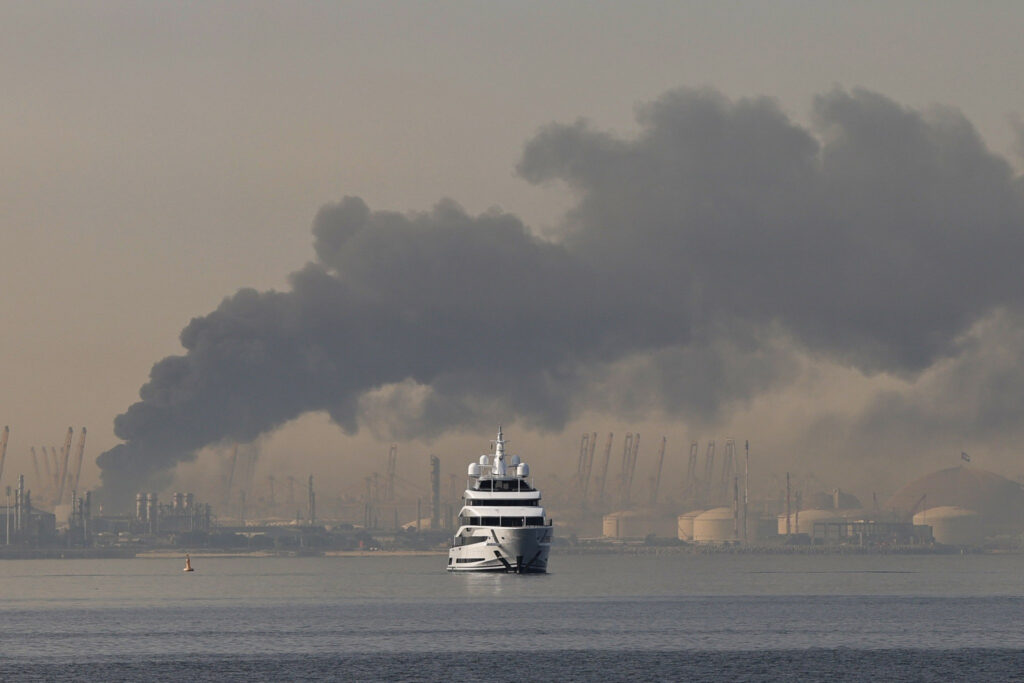
For policymakers in the Gulf Cooperation Council (GCC), transparency, policy clarity, and credible communication will therefore be critical litmus tests for markets as they reopen following the recent escalation involving US and Israeli military action against Iran and Iran’s subsequent response affecting GCC nations. To keep the unknowns in the realm of the known, markets, for example, would welcome detailed updates on hydrocarbon production, capacity, constraints, and operational continuity. Equally important is the normal functioning of domestic capital markets and visible stability across the financial sector.
Market reaction will likely begin with Asia’s opening sessions on Monday morning. One early indicator will be the behavior of the US dollar. Despite the dollar’s traditional safe-haven status, recent months have seen episodes of capital rotation away from it. Given current uncertainty surrounding Iran’s internal stability, global demand for dollars may not spike as sharply as in past crises. Gold and, in some cases, currencies such as the Swiss franc or Australian dollar may instead benefit as investors seek perceived stores of value amid geopolitical instability.
It is also worth noting Iran’s role in global energy supply. Iran is the Organization of the Petroleum Exporting Countries’ (OPEC’s) fourth-largest producer, at 12 percent of the cartel’s total, according to Bloomberg data based on monthly production figures for December 2025.
Energy markets, therefore, will be closely watched. Prices will likely rise, though perhaps without the same degree of panic seen in earlier conflicts, as global supply conditions were relatively strong entering this episode. Neal Shear, founder of Morgan Stanley’s commodities platform and former head of sales and trading, told me: “China, for example, may be able to offset disruptions to Iranian crude exports by drawing on its strategic reserves, thereby mitigating immediate supply shocks. Natural gas markets could prove more sensitive, particularly given Iran’s shared fields with Qatar, where any operational disruption could have regional implications.”
Ultimately, the central question is not whether Iran can match US military capabilities—it cannot compete on air or maritime dominance—but whether it can exert asymmetric pressure on global energy flows, particularly through shipping routes such as the Strait of Hormuz. It is this uncertainty, rather than conventional military balance, that markets will be watching most closely.
Khalid Azim is the director of the MENA Futures Lab at the Atlantic Council’s Rafik Hariri Center for the Middle East.
Related Reading
Image: A yacht sails past a plume of smoke rising from the port of Jebel Ali following a reported Iranian strike in Dubai on March 1, 2026.