Despite Turkey’s hopes and efforts to mediate prior to the outbreak of hostilities, Ankara is being increasingly drawn into the US and Israeli war against Iran. Turkey aimed to publicly distance itself from the conflict as much as possible in its initial statements, condemning both the strikes on Iran as well as Tehran’s strikes against regional countries. Notably, Turkey was not included in the long list of countries targeted in Iran’s retaliatory strikes early on despite housing US forces at the Incirlik Air Base in the country’s south. Turkish officials were quick to underline that Turkish airspace and assets in the country were not to be used to attack Iran.
However, on Wednesday, March 4, two developments shattered the illusion of Turkey’s ability to steer clear of the conflict. First, NATO shot down an Iranian ballistic missile “directed at Turkish airspace.” Second, there was widespread reporting that the CIA was working to arm Kurdish forces to foment rebellion in Iran.
It was unclear what the Iranian missile was targeting or even whether it was aimed at Turkey or elsewhere in the Eastern Mediterranean, such as Cyprus. But even if it was aimed in error, Turkey takes violations of its airspace very seriously. Simply ask Russia, whose jet Turkey shot down in October 2015 after straying into Turkish airspace during a Russian bombing campaign in Syria.
Turkey limited its response to the violation from Iran to formal diplomatic channels, summoning the Iranian ambassador in Ankara and holding a private call between the two nations’ foreign ministers. Meanwhile, public pronouncements from Turkish government officials underscored the state’s commitment to protecting its sovereignty. There was no indication that the missile would trigger NATO’s Article 5 mutual defense clause—Alliance officials quickly poured cold water on the notion and it’s not clear Turkey would even want or seek it in this circumstance.
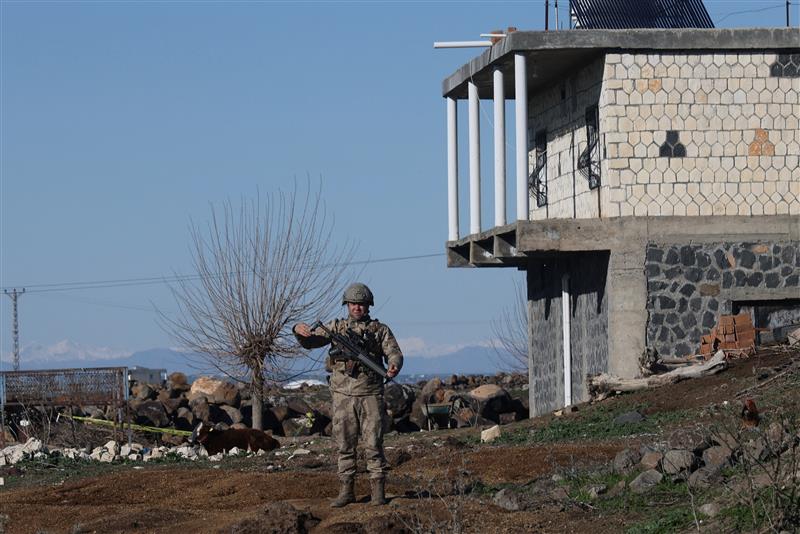
But on March 9, NATO intercepted a second Iranian missile over Turkey, creating new complications for Ankara. The debris of the second missile fell over the inland province of Gaziantep, in contrast to the first, which hit Hatay, located on the coast. The second missile strike to breach Turkish airspace is therefore less easily explained as an error than the first, and it is likely that one or both of them were aimed at Incirlik.
US intelligence appears to be lining up behind this assessment. On Monday, the US State Department raised its warning for southeast Turkey, the region nearest the Iranian border, to “do not travel,” the highest risk level. And nonessential staff were ordered to leave the US consulate in Adana. The second missile also led to a more direct and targeted rebuke from Turkish President Recep Tayyip Erdoğan, who said Tehran continues to take “wrong and provocative” steps and that Turkey has issued the necessary warnings to Iran.
Meanwhile, the news that the CIA was arming Kurdish forces to combat Iran set off alarm bells in Turkey, which has been burnt badly by previous partnerships between the United States and auxiliary Kurdish ground forces. Most notably, there have been Turkish tensions with the United States over US support for the People’s Defense Units (YPG), a Syrian affiliate of the Kurdistan Workers’ Party (PKK), which is designated as a terrorist organization by the United States, the European Union, and Turkey. With US support, the YPG was effective in combatting and curtailing the Islamic State of Iraq and al-Shams (ISIS) starting in 2014, but the group also precipitated a diplomatic crisis with Turkey that the US-Turkish bilateral relationship is only now beginning to recover from. The prospect of a similar scenario repeating itself in Iran was raised at a recent event the Atlantic Council’s Turkey program hosted on US-Turkey cooperation in Syria.
Moreover, the emboldening of the transnational Kurdish nationalist movement in Syria also played a key role in the breakdown of the peace process between Turkey and the PKK in 2015. Now in 2026, Turkey is once again moving toward resolving the PKK issue, under the “terror-free Turkey” initiative. Regional spoilers or irritants to this very delicate and choreographed process could once again threaten to derail the conclusion of the almost fifty-year conflict between Turkey and the PKK, which has claimed the lives of tens of thousands.
Fortunately, based on US President Donald Trump’s messaging over the weekend and signals that the Kurdistan Regional Government of Iraq was not keen to put itself more into the crosshairs, it looks as if Turkey’s fears of a Kurdish uprising in Iran aligned with the PKK will be avoided.
But the fact that support for such an insurgency was being considered underscores the lack of clarity on the goals and endgame of the conflict, which is particularly concerning for states like Turkey that neighbor Iran. Given its experiences with the Syrian civil war and the war in Iraq, Turkey is deeply averse to the potential of regional disintegration and power vacuums at its border. The specter of terror organizations with freedom to operate on its border is something Turkey cannot help but be vigilant against, as would any country in its position.
In this context, Turkey is adopting a delicate balancing act, seeking to protect its territory, security, and economic interests. Despite significant concerns over the war in Iran, Turkey has invested heavily in its outreach to the Trump administration, working to turn its bilateral relationship with the United States around from historic lows. Thus far, Turkey has crafted public messaging aiming to avoid criticizing the United States and drawing Trump’s ire.
But much in the same way Turkey approaches Russia, Ankara views Iran as a fact of life to be managed simultaneously through cooperation when possible and competition when it is not. An irony is that Turkey has been one of the largest beneficiaries of the severe degradation to Iran and its regional proxy network wrought mainly by Israel since the Hamas attack on October 7, 2023. Since then, Turkey’s influence in Syria, the South Caucasus, and Iraq has increased while Iran’s has decreased.
But when it comes to the US and Israeli war against Iran, the risks are greater and the outcomes more uncertain. Any actions Turkey considers taking to respond to Iran’s missiles or to protect its borders are calibrated against the inevitability that it will need to deal with whatever Iran is left standing after the conflict ends—and the regional fallout that results. For now, that means Turkey is, to the extent possible with war raging next door, seeking to avoid escalating in both kinetic and rhetorical terms.
Grady Wilson is a deputy director at the Atlantic Council Turkey Program.
The views expressed in TURKEYSource are solely those of the authors and do not necessarily reflect the views of the Atlantic Council, its staff, or its supporters.
Related Reading

Image: A Turkish soldier stands guard as army and security personnel search a field after a piece of ammunition fell following the interception of a missile launched from Iran by a NATO air defence system, in Diyarbakir, Turkey, on March 9, 2026. (REUTERS/Sertac Kayar)