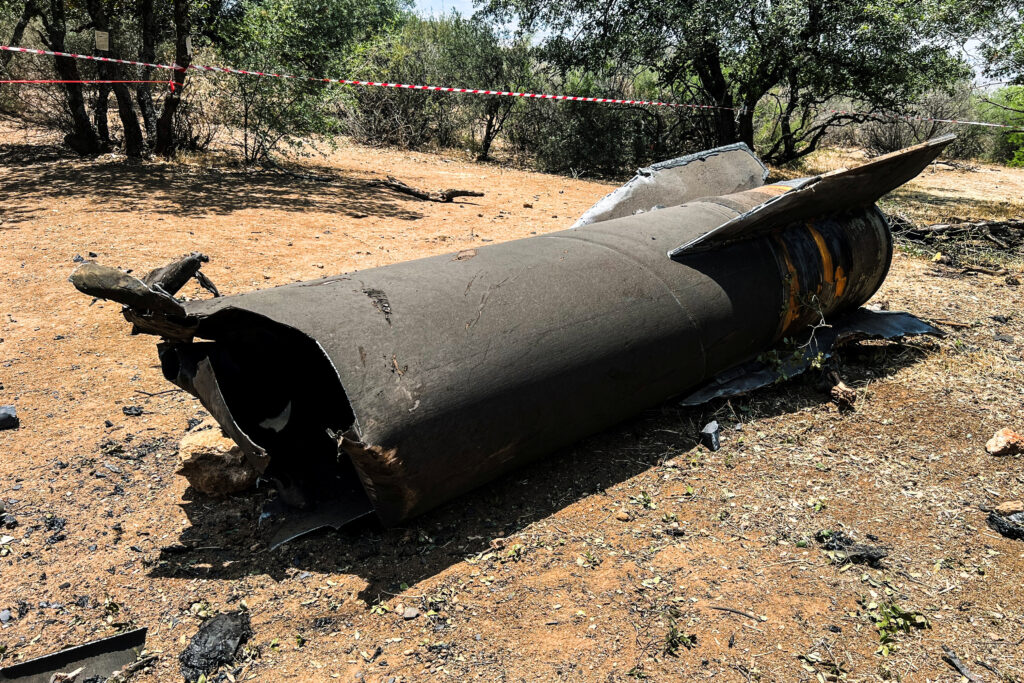
The US-Israeli war against Iran has not bypassed Turkey. Since the beginning of the conflict, NATO air defenses intercepted three ballistic missiles fired from Iran toward Turkish airspace, according to Turkish officials. This included an incident that produced an explosion near Incirlik Air Base. Turkey has asked Tehran for clarification, while Iran has denied deliberately targeting Turkish territory. The result is a strategically sensitive reality: A NATO ally has found itself exposed to direct spillover from a regional war it is trying hard not to enter.
The implications extend well beyond Turkey. These incidents are testing NATO’s credibility under modern conditions, where threats often fall into the gray zone between peacetime nuisance and full-scale armed attack. In such cases, the Alliance faces a genuine strategic dilemma. It must reassure an exposed ally and preserve deterrence while also avoiding an impulsive response that could widen a regional war and create a far more dangerous confrontation. Turkey’s current predicament shows that the future of NATO will be shaped not only by whether its members can fight together in a worst-case scenario, but by whether it can respond credibly to dangerous cases that fall short of one.
At first glance, the obvious question is whether this is an Article 5 moment. But Article 5 of the North Atlantic Treaty was never designed to operate as a mechanical trigger. The treaty states that an armed attack against one ally shall be considered an attack against all, while also leaving each ally to take “such action as it deems necessary.” NATO’s own explanation of collective defense and Article 5 makes the same point: Solidarity is firm, but the form of assistance remains up to member states’ political and strategic calculations rather than being automatically triggered. That is why Alliance leaders were able to keep Article 5 off the table after the first incident without suggesting indifference to Turkey’s security.
That should not be read as passivity. Turkish officials said explicitly that NATO air defenses shot down the missiles, with the interceptions carried out by Alliance assets in the Eastern Mediterranean. Ankara also announced on March 10 that the Alliance reinforced Turkey’s air defenses by deploying a US Patriot system near the Kürecik radar site in Malatya, a key NATO facility for missile tracking and early warning. These steps show that the Alliance is already doing what modern deterrence increasingly requires: Reinforcing defenses, reducing vulnerability, and containing escalation before it gets out of hand.
Still, restraint by itself does not fully answer the credibility question. Alliance credibility today cannot rest only on treaty language or quiet military measures. It also depends on whether exposed allies and potential adversaries can see that attacks affecting NATO territory produce visible political seriousness. If repeated incidents on allied territory are met in a way that feels too muted, too improvised, or too private, uncertainty begins to grow around what solidarity actually looks like in practice. NATO does not need to escalate militarily every time a missile or drone crosses into allied airspace. It does, however, need to show more clearly that pressure on member territory is noticed, discussed, and answered with coordinated resolve.
Turkey is an especially important test case because it sits on NATO’s southern flank, where Alliance challenges have often looked different from those on the eastern flank. Much of NATO’s recent debate has focused, understandably, on Russia’s war against Ukraine and the defense of eastern Europe. But NATO has long insisted that its commitment extends to threats “from all directions” under a 360-degree approach. If that language is to carry strategic weight, the Alliance has to show that the security of a southern ally under regional pressure is treated as part of the same collective credibility problem, even when the source of danger is different.
Turkey’s own behavior also deserves careful attention. Ankara has not sought Article 4 consultations, and Turkish officials have signaled that they do not want to be pulled more deeply into the Iran war. That caution is understandable. A government can view an incident as serious while still deciding that a formal Alliance process is not the wisest next step. This is precisely what makes the Turkey case so revealing. Modern Alliance management depends not only on what NATO is willing to do, but also on what an exposed ally wants NATO to do, and when. At times, an ally may prefer reinforcement and quiet coordination to a dramatic collective declaration. However, even if Turkey demurs from direct requests or consultations, NATO offering these things still benefits the Alliance’s reputation in Ankara and among the general public in Turkey.
At the same time, caution should not obscure a larger institutional lesson. Turkey has turned to NATO consultation mechanisms before during regional crises, especially in 2012, when violence spilling over from Syria led Turkey to seek Article 4 consultations and later prompted NATO’s deployment of Patriot batteries to help protect Turkish territory. The current moment therefore fits into a broader pattern: Turkey periodically reminds NATO that the southern flank can become a front line with little warning, and NATO periodically rediscovers that credibility is not only an eastern-flank question. The difference today is that the surrounding international environment is even more polarized, making calibrated responses more difficult and more important.
This is also part of a wider pattern of pressure on Alliance boundaries. In recent years, Russian drones and missiles have repeatedly entered or threatened NATO airspace, prompting calls for a more coordinated response. Alliance commanders have argued that firm responses to Russian incursions have helped deter further violations. The pattern is becoming clear: NATO is increasingly being tested not only by invasion scenarios, but by limited, ambiguous, and politically complicated actions that probe its thresholds without crossing them in the clearest possible way. Turkey’s experience with Iranian missiles now belongs in that same category of Alliance stress test.
For NATO, the challenge is to prevent these gray-zone incidents from producing a credibility gap. If every incident below the level of a major attack is treated as too minor for a serious political response, adversaries may conclude that there is broad space to pressure Alliance members without triggering meaningful consequences. If, on the other hand, every such incident is treated as a trigger for dramatic escalation, deterrence risks becoming recklessness. The future of the Alliance depends on avoiding both errors. What is needed is a stronger middle ground, one in which NATO pairs strategic restraint with visible solidarity, rapid consultation, and practical defensive action.
That is why the Alliance now needs a clearer framework for military incursions that fall short of open war. Drones, missile overflights, limited strikes, airspace violations, and similar coercive acts no longer belong to the margins of Alliance security. They are becoming part of its daily strategic environment. NATO should therefore develop more explicit procedures for what happens when members’ territory is exposed to repeated sub-threshold attacks. Such a framework would not replace Article 5, nor would it commit the Alliance to automatic escalation. It would instead clarify the menu of responses available below that threshold: immediate consultations, public statements of solidarity, temporary defensive deployments, intelligence coordination, air and missile defense reinforcement, and clear diplomatic signaling toward the source of the incident. In today’s security environment, credibility requires that allies and adversaries alike understand that NATO has a plan not only for full-scale war, but also for the increasingly common forms of aggression that fall below it.
That means several steps should now be considered. NATO should become more comfortable using consultation mechanisms quickly and flexibly when allied territory is repeatedly exposed to missile, drone, or airspace incidents, even when Article 5 is not under discussion. The Alliance should make defensive reinforcement more visible, especially on the southern flank, where reassurance has often been quieter than on the eastern one. It should also improve public signaling. Even where NATO chooses restraint, it should communicate that limited attacks on allied territory are neither being normalized nor ignored. These steps would not make the Alliance more escalatory. They would make it more credible.
Turkey’s recent missile incidents therefore reveal something important about NATO’s future. The Alliance’s credibility in this challenging period will not be judged only by whether it can invoke Article 5 in the most dramatic scenario. It will also be judged by whether it can handle repeated, dangerous, sub-threshold challenges without appearing passive, divided, or uncertain. In that sense, the attacks affecting Turkey are not just a regional security story. They are a warning that NATO’s next great test may come not from a single unmistakable attack, but from the accumulation of smaller crises that force the Alliance to prove that prudence and credibility can still go together.
Ali Mammadov is a PhD researcher at George Mason University’s Schar School of Policy and Government focusing on global stability, alliance formation, and rising powers. You can find him on X.
The views expressed in TURKEYSource are solely those of the authors and do not necessarily reflect the views of the Atlantic Council, its staff, or its supporters.
Further reading

Wed, Mar 18, 2026
The unspoken yet growing synergy in Turkey–Spain relations
TURKEYSource By
Spanish-Turkish defense cooperation could help normalize Turkey as a security actor within the Euro-Atlantic perimeter.
Thu, Mar 12, 2026
Turkey has weathered regional instability before. But the war in Iran poses greater risks to Ankara than past conflicts.
TURKEYSource By Grady Wilson
Turkey is seeking to limit fallout from the US and Israeli war against Iran but threats to national security increasingly threaten its position.

Sun, Mar 1, 2026
Experts react: How the US war with Iran is playing out around the Middle East
Dispatches By
What happens in Iran doesn’t stay in Iran. The consequences of the US-Israeli military campaign launched on Saturday will radiate across the region and the world.
Image: Remains of a ballistic missile lie on the ground following missile attacks by Iran on Israel, amid the Iran-Israel conflict, in northern Israel, June 23, 2025. REUTERS/Avi Ohayon