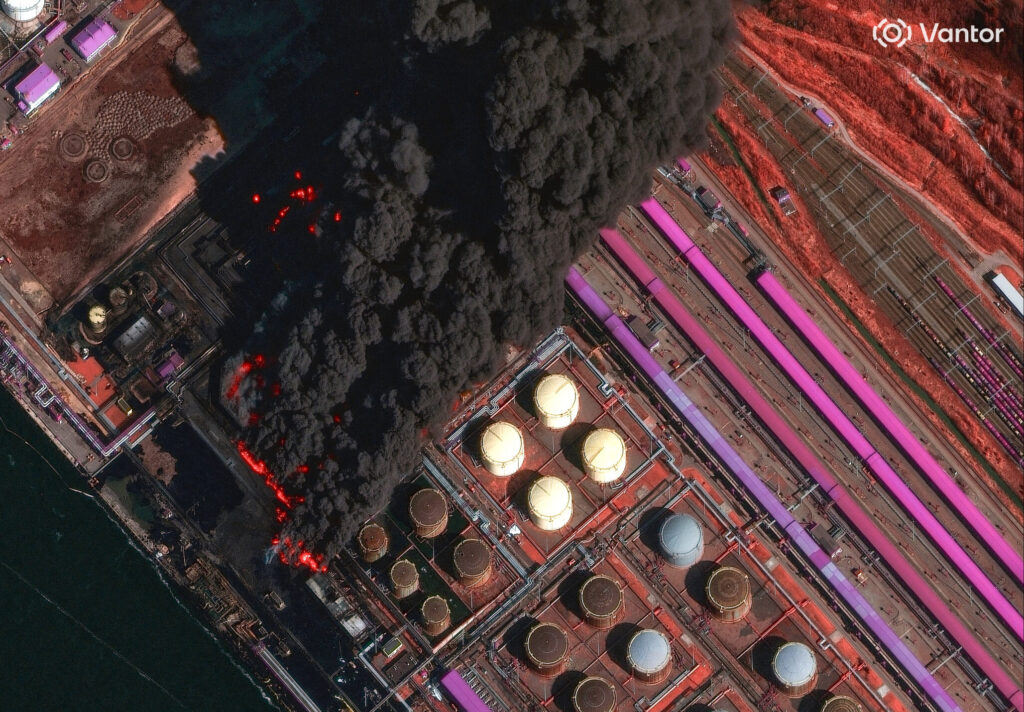
Ukrainian President Volodymyr Zelenskyy says some of the country’s partners have called on Kyiv to scale down strikes on Russia’s oil sector as global energy prices surge amid the ongoing Iran War. These international appeals underline the impact of Ukraine’s most recent long-range attacks, which have reportedly reduced Russia’s oil export capacity by at least 40 percent.
Zelenskyy did not specify which of Ukraine’s allies had requested a pause in the country’s current air offensive. In recent weeks, the United States has temporarily relaxed some sanctions on Russian oil exports in a bid to ease mounting pressure on international energy markets due to the closure of the logistically crucial Strait of Hormuz.
Speaking on Monday in Kyiv, the Ukrainian leader indicated that he would only stop targeting Russian oil exports if Moscow also agrees to end its attacks on Ukraine’s civilian energy infrastructure. “We are open to discussing any type of ceasefire; a full ceasefire, an energy ceasefire, a food security ceasefire. We have already proposed all of this and we are still open. If the Russians are ready, let them suggest any time frame,” he stated.
Stay updated
As the world watches the Russian invasion of Ukraine unfold, UkraineAlert delivers the best Atlantic Council expert insight and analysis on Ukraine twice a week directly to your inbox.
Zelenskyy’s comments come following some of the most significant Ukrainian airstrikes of the entire war. In recent days, Ukrainian long-range drones have repeatedly struck Russia’s main oil export terminals on the Baltic Sea, causing extensive damage and disrupting one of the Kremlin’s most important economic lifelines.
These Baltic drone raids came just as rising global oil prices linked to the outbreak of hostilities in the Middle East threatened to produce a major economic windfall for the Kremlin. By hitting the most critical elements of Russia’s oil export infrastructure, Ukraine is seeking to limit Putin’s ability to translate higher oil prices into increased wartime revenue.
This tactic appears to be working. Speaking to the Current Time media outlet, independent oil and gas industry analyst Boris Aronshtein described the recent series of Ukrainian strikes as “the most serious threat to exports of Russian oil” since the onset of Moscow’s full-scale invasion in 2022. “The thoughtfulness, the scale and direction of the attacks, as well as the timing of their execution; all this together produced an effect that I personally cannot recall in the four-plus years of the war,” he commented.
Eurasia Center events

Ukraine’s recent attacks on Baltic Sea oil terminals are part of a strategic bombing campaign to weaken Putin’s war machine by targeting the ports, refineries, and associated infrastructure that drive Russia’s economically crucial energy industry. This has been made possible thanks to Kyiv’s decision during the initial phase of Russia’s invasion to prioritize the development of domestically produced long-range strike drones and cruise missiles. As more drones and missiles become available, the scale of Ukraine’s strikes is steadily increasing.
Zelenskyy has repeatedly emphasized that Ukraine’s expanding long-range strike capability is critical for the current war effort and equally important as a deterrent against future Russian aggression. While long-range weapons provided by Kyiv’s partners often come with limitations on how they can be deployed, there are no such restrictions on the use of domestically produced drones and missiles.
Kremlin officials have certainly noticed Kyiv’s growing reach. In recent weeks, former Russian defense minister and current Security Council secretary Sergei Shoigu warned that Ukraine’s domestic drone program had now advanced to the point where no Russian region is safe from attack.
Ukraine’s ability to conduct large-scale airstrikes deep inside Russian territory has sparked vocal criticism from within Russia’s influential war blogger community, while also generating widespread concerns over the effectiveness of the country’s anti-drone defenses. Many have questioned how slow-moving drones could pass through multiple Russian regions to hit targets often located more than one thousand kilometers from the Ukrainian border.
In fact, the stage for Ukraine’s recent successes was set by efforts to methodically eliminate Russian air defenses and create corridors for long-range strikes. This approach looks set to continue. With much of the Kremlin’s existing air defense capacity already deployed along the front lines in Ukraine or being used to protect major Russian cities along with the palaces of Putin and his cronies, there is now thought to be little left in reserve to counter the growing Ukrainian drone threat.
The scale and frequency of Ukrainian strikes on oil and gas infrastructure will likely continue to increase in the coming months as Kyiv seeks ways to bring Putin’s invasion home to Russia. The Ukrainian authorities are hoping these attacks can help bring the end of the war closer by depriving the Kremlin of vital funding and threatening the foundations of Russia’s economic stability.
So far, Putin has rejected calls for a compromise peace. However, he may finally be forced to rethink his invasion if confronted with the prospect of dangerous destabilization on the home front. The Kremlin dictator remains determined to achieve his goal of erasing Ukrainian statehood, but he is also haunted by fears of a new Russian collapse to mirror the catastrophes of 1917 and 1991.
David Kirichenko is an associate research fellow at the Henry Jackson Society.
Further reading


The views expressed in UkraineAlert are solely those of the authors and do not necessarily reflect the views of the Atlantic Council, its staff, or its supporters.

The Eurasia Center’s mission is to enhance transatlantic cooperation in promoting stability, democratic values, and prosperity in Eurasia, from Eastern Europe and Turkey in the West to the Caucasus, Russia, and Central Asia in the East.
Follow us on social media
and support our work
Image: A satellite near-infrared image shows smoke rising from Russia's Baltic port of Ust-Luga after a Ukrainian attack in Ust-Luga, Leningrad Oblast. March 27, 2026. (Vantor/Handout via REUTERS)