
Reversing Mexico’s economic and democratic decline
Bottom lines up front
- Mexico is now classified as a “low freedom” country on the Freedom and Prosperity Indexes.
- The institutional foundations that support sustainable prosperity have eroded to levels that should sound the alarm for anyone concerned about Mexico’s long-term growth and prosperity.
- Mexico faces policy trade-offs that can only be assessed through dialogue grounded in shared facts about where the country stands.
table of contents
Introduction
Mexico’s public discourse has become a battleground of conflicting narratives. On one side, the government presents a story of social vindication and economic resilience: Multidimensional poverty has fallen, with the share of people living in poverty declining from 42 percent in 2018 to 30 percent in 2024, reflecting increases in real minimum wages and social transfers. On the other side, critics point to an unsustainable increase in public debt, rising from 43.2 percent to 54.7 percent of GDP since 2018; institutional erosion through the elimination of autonomous agencies; and a judicial reform that has effectively subordinated the courts to political control. These competing narratives leave little room for the constructive dialogue that policymaking requires.
This polarization is not unique to Mexico. It reflects a global trend where political discourse increasingly splits into parallel narratives, each with its own facts, truths, diagnoses, and solutions. Yet if we aim to build more prosperous and successful societies, we must bridge these extremes. To do so requires a shared understanding, open dialogue, and consensus. That process must begin with a sensible, analytical framework grounded in facts.
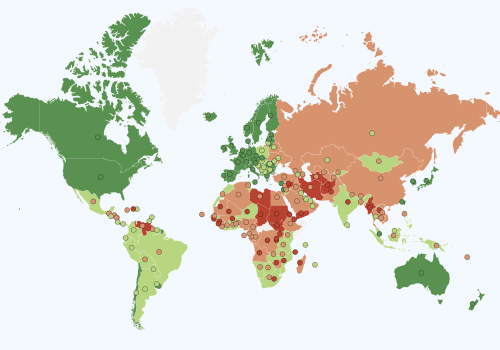
The Freedom and Prosperity Indexes provide a useful toolkit for such an analysis, offering a much-needed steppingstone toward bridging polarization. By offering systematic, longitudinal data across 171 countries over three decades, the Indexes allow us to move beyond competing narratives and examine objective evidence about institutional quality, economic outcomes, and social progress. It enables comparisons not just within a country over time but across peer nations facing similar development challenges. Most importantly, the indexes provide a common empirical foundation upon which people of different political viewpoints can build dialogue, even if they ultimately disagree on specific interpretations or policy responses.
For Mexico, the data offer particularly revealing insights. Over the past two years, I have documented Mexico’s institutional trajectory through this framework. In 2024, I warned that while the country maintained its freedom classification de jure, a de facto deterioration was clearly underway through political appointments to autonomous institutions, a budgetary austerity that undermines basic state functions, concentration of power, and militarization of strategic economic activities. It was apparent that no investment commitments would materialize if the institutional framework for doing business was continuously eroded through these reforms. By 2025, the outlook reported by the index darkened considerably, with Mexico reclassified from “mostly free” to “low freedom”—a categorical shift reflecting systematic institutional erosion. The warnings became reality: Judicial reform was rushed through, autonomous agencies were eliminated, and power was centralized at unprecedented levels. This context placed Mexico at a crossroads between strengthening rule of law or deepening an authoritarian shift. While both paths remained open, the choice was narrowing.
In 2026, the evidence suggests Mexico has made its choice and the practical impact is now measurable. The country’s Freedom Index accelerated the steady decline that began in 2018, falling to 104 out of 164 countries—its lowest standing in three decades. More concerning than the absolute drop is Mexico’s relative trajectory. While the nation once significantly exceeded the G20 emerging-markets average across freedom dimensions, Mexico now lags far behind its peer countries on both political freedom and the rule of law.
The institutional foundations that support sustainable prosperity—rule of law, judicial independence, regulatory predictability, protection of property rights—have eroded to levels that should alarm anyone concerned about Mexico’s future, regardless of where they stand on the political spectrum. Building a more prosperous Mexico requires a foundation that the country’s current trajectory of institutional erosion simply cannot support. Research by the Atlantic Council demonstrates a causal link between freedom and prosperity, with the effects of institutional deterioration on economic outcomes emerging over five to twenty years. Mexico is already experiencing the initial effects of that deterioration, with annual economic growth collapsing to just 0.8 percent since 2018, compared to an average of 2.6 percent over the previous decade. The nearshoring opportunity that could have powered transformational development is being squandered as institutional uncertainty deters the precise long-term commitments Mexico needs.
Mexico faces policy trade-offs that can only be assessed through dialogue grounded in shared facts about where the country stands, how it compares to its peers, and what paths forward have worked elsewhere. The Freedom and Prosperity Indexes provide that factual foundation. The analysis that follows uses this toolkit to examine Mexico’s institutional and economic trajectory, compare it with peer G20 emerging market countries, and identify policy options that could reverse troubling trends. Mexico faces a choice between institutional backsliding that will undermine prosperity and rebuilding those foundations that can sustain prosperity and distribute it more broadly.
Evolution of freedom
In 2025, Mexico’s Freedom Index decreased marginally to 58 (out of 100), after falling more than 3 points in 2024. As a result, Mexico dropped to 104 out of 164 countries, its lowest ranking in three decades. In categorical terms, Mexico transitioned from “mostly free” in 2023 to “low freedom” in 2024—a reclassification that reflects not only numerical decline but also a qualitative shift in the nature of the country’s governance. This is the institutional erosion I have documented since 2024, now captured in systematic comparative data that allows us to see both the magnitude and velocity of Mexico’s deterioration relative to peer nations.
The contrast with G20 emerging markets is particularly revealing (see Figure 1). The average Freedom Index of these countries—Argentina, Brazil, India, Indonesia, Saudi Arabia, South Africa, and Turkey—has remained relatively stable, around 60 points, since 2018, while Mexico has moved in the opposite direction. Where Mexico once stood approximately 10 points above this peer group average, reflecting hard-won democratic gains since the 2000s, that advantage has evaporated. Mexico now scores below the G20 emerging-markets average, and that downward trend is accelerating. Even more concerning, on political freedom and legal freedom, Mexico now falls substantially below the peer average, marking a historic reversal of its position as a regional leader in institutional quality.
Figure 1. Freedom Index in Mexico and G20 emerging markets, 1995-2025
This deterioration is neither gradual drift nor the inevitable consequence of global trends affecting all emerging markets equally. It is the result of specific, deliberate policy choices made in a compressed timeframe. The sharpest declines are in legal and political freedoms—precisely the institutional foundations that support sustainable economic growth and the areas I highlighted in my previous analysis (see Figure 2). The 2025 data confirms that what was once a troubling pattern has now consolidated into a systematic dismantling of institutional checks and balances.
Figure 2. Freedom Index subindexes in Mexico and G20 emerging markets, 1995-2025
The most alarming evidence appears in the legal freedom subindex, where Mexico’s score plummeted to 39.7 in 2024 and continued to decline in 2025, placing the country at 137 worldwide—outranking only Turkey among G20 emerging markets. This represents a drop of more than 10 points since 2018, and Mexico now ranks almost 14 points below the G20 emerging-markets average of 53.7. This is the single most important indicator of Mexico’s institutional crisis because rule of law is the foundation upon which all other institutional functions rest. Without it, property rights are threatened, contracts lose enforceability, regulatory frameworks become unpredictable, and domestic and foreign investors avoid long-term commitments due to uncertainty.
The decline in Mexico’s legal freedom subindex has been most pronounced in clarity of law and judicial independence and effectiveness. In 2024, these two scores plummeted 8.6 and 9.1 points and lowered the country’s global ranking to 145 and 129, respectively. Mexico’s clarity of law score improved in 2025 but remains well below its 2018 peak, and the judicial independence and effectiveness score dropped further in 2025, causing it to fall to 139 in the global ranking. The clarity of law deterioration reveals a pattern of arbitrary regulatory application and abrupt legal framework changes without adequate transition. Mexico’s regulatory predictability has deteriorated as state priorities override contractual commitments and property rights. This trend is illustrated by the 2018 cancellation of the Mexico City International Airport—which severed over $5 billion in private investment—the 2023 railway seizures and port expropriations, and the March 2025 statutory reversal of the 2013 energy reform. In addition, legislative amendments that favor state entities PEMEX (Petróleos Mexicanos, the state-owned petroleum company) and CFE (the state-owned electric utility) without providing clear implementation guidelines have further eroded business confidence.
The precipitous fall in judicial independence and effectiveness stems from the September 2024 reform, which mandated the popular election of approximately 7,000 judges and was fast-tracked through Congress with extraordinary speed. The June 2025 elections, with a voter turnout of barely 13 percent, installed Morena-affiliated candidates in all major posts, displacing half of the appointed judges and all nine Supreme Court justices. Since taking office in September 2025, the restructured court has been more aligned with the government’s rhetoric and executive priorities. What was once an imperfect but relatively independent judiciary—capable of striking down unconstitutional legislation—has been stripped of its autonomy. Mexico is now the only major economy in the world to elect its entire judiciary by popular vote, a distinction that reflects institutional collapse rather than democratic progress.
The fallout is measurable across several key indicators. New foreign direct investment accounted for 18 percent of total inflows in 2025—a slight rebound from 2024’s historic low—it remains well below its historical participation of approximately 40 percent since the early 2000s (see Figure 3). Even more revealing, capital expenditure (capex) intentions surveyed by INEGI plummeted after the September 2024 judicial reform, mirroring the deterioration in legal certainty. In response, gross fixed capital formation has declined sharply since its 2022-23 peak (see Figure 4). These outcomes show the impact of a lack of predictability in the institutional framework on investment decisions, stalling projects while investors reassess the degree to which Mexico’s legal certainty has changed for large-scale, long-term commitments.
Figure 3. Share of foreign direct investment in Mexico by type, 2001-25 (%)

Figure 4. Gross fixed investment and capex intentions, 2017-26 (INEGI score)

Note: Information through March 2026 for capital expenditure (capex) intentions and through January 2026 for gross fixed capital formation. Base year 2018 represents a score of 100 for gross fixed income. The neutral score for capex intentions is 50, indicating that any score below 50 represents a pessimistic investment climate.
Mexico’s political freedom subindex registered similarly dramatic deterioration, falling nearly 15 points since 2018 and 5 points in 2024 alone. After historically maintaining a substantial lead over other G20 emerging-markets countries, Mexico now scores below the G20 emerging-markets average on political freedom. The single-year decline in 2024 was most pronounced in legislative constraints on the executive, which fell 9.8 points, and in civil liberties, which fell 4.6 points—pushing both to 30-year lows of 24.3 (rank 134) and 61.9 (rank 110), respectively. Since 2018, the cumulative erosion has been even more severe: Legislative constraints have plummeted 30.5 points, political rights have declined 15.8 points, elections have declined 7.8 points, and civil liberties have dropped 5.1 points. Mexico now ranks 109th globally in the political freedom subindex, and the trend suggests the country could fall further below the G20 emerging-markets average as the full impact of recent institutional changes materializes.
In the first year of President Claudia Sheinbaum’s administration, Morena’s congressional supermajorities approved forty-eight constitutional and statutory reforms—the highest first-year total for any president since 2000—consolidating power within the executive branch to levels last seen in the 1990s. At the same time, Sheinbaum formally dissolved six autonomous regulatory agencies in 2025 and transferred their functions to executive branch entities. The energy regulators (CRE and CNH) were absorbed into a new National Energy Commission (CNE) in May, and the telecommunications (IFT) and antitrust (COFECE) functions were reassigned to cabinet-level ministries. The transparency institute (INAI) and social policy evaluator (CONEVAL) were eliminated entirely, shifting Mexico toward a regulatory regime governed by political discretion rather than technical independence.
The decline in civil liberties reflects a complex security landscape with persistent structural violence. Mexico remains the world’s second most dangerous country for journalists, behind Gaza, according to Reporters Without Borders. In 2025, the deadliest year of the past three, nine journalists were killed in Mexico. The country also accounts for twenty-eight disappeared journalists, second only to Syria’s thirty-seven. More broadly, while overall homicide rates have decreased under Sheinbaum—her administration reversed the previous government’s “hugs, not bullets” strategy—the number of missing persons has surged from 8,200 in 2022 to 12,000 in 2025. This evidence suggests that crimes may be increasingly misclassified in official records, raising doubts that the decline in violent crimes is an accurate measure of genuine security gains.
As a result of an ongoing offensive against electoral institutions through 2025 and into early 2026, the index’s elections component, which fell to 84.8 points in 2024, ranked Mexico 86th in the world—a drop of 22 positions since 2023. Sheinbaum formally initiated the reform process in August 2025, establishing a commission to draft a proposal and solicit public input. After consultations from October through December 2025, the commission presented its proposal in early 2026. In March, the proposal was rejected when Morena’s coalition partners sided with the opposition to vote against it. Sheinbaum then submitted a revised “Plan B” that removed elements unfavorable to smaller parties. Congress passed the modified reform in April 2026 and twenty state legislatures ratified it days later. The government framed the changes as promoting austerity and reducing political privileges through measures such as banning consecutive terms and prohibiting nepotism, but the reform fails to address critical electoral issues such as control of party financing and political violence—which claimed the lives of 288 officials and politicians in 2025. Instead, the reform weakens the National Electoral Institute (INE) through budget cuts and salary reductions for councillors and magistrates, which could limit INE’s operational capacity ahead of the 2027 midterms. The 2025 Freedom Index data will likely show a decline in the elections component as these institutional changes take effect, completing the erosion across all political freedom dimensions.
Mexico’s economic freedom subindex remained stable at 75.2 points in 2025, significantly above the G20 emerging-markets average of 63.1 points—the only freedom dimension where it holds a significant advantage over its peers. Since 2018, trade freedom has improved to 88.6 points (rank 40)—after the US-Mexico-Canada Agreement (USMCA) was ratified—while property rights fell to 50.9 points (rank 82). However, developments in 2025 and 2026—particularly regarding US trade policy and the USMCA review process—will determine whether that stability persists or begins to show signs of the institutional erosion evident in other dimensions.
Trade freedom’s resilience has been tested and reinforced through several channels. Mexico responded to “Liberation Day” tariff threats more successfully than other G20 emerging markets. China, India, Indonesia, and Brazil face higher US tariffs even after the US Supreme Court ruled that the International Emergency Economic Powers Act did not authorize Trump to impose country-specific tariffs. Mexico’s preferential position stems from USMCA compliance: The share of Mexican exports entering the United States under the agreement—and therefore duty-free—has increased significantly to nearly 90 percent, reducing effective tariff rates on Mexican products relative to competitors. This dynamic helped push Mexican exports to the United States to $534.9 billion in 2025, allowing Mexico to surpass Canada and China to become the United States’ largest trading partner. Yet there is still room for further improvement, as a Banxico survey showed that while 58 percent of companies apply USMCA preferences to all their exports and 25 percent to selected products, 17 percent do not use the agreement at all. That disparity suggests that additional compliance gains could further reduce effective tariff rates and strengthen Mexico’s competitive position.
The USMCA joint review process, scheduled for July 1, 2026, is another source of policy uncertainty for Mexico’s economic freedom outlook. The process began informally in September 2025 with the review focused on three issues: strengthened rules of origin for non-automotive industrial goods requiring trilateral coordination, economic security measures limiting Chinese participation in critical sectors through tariff alignment and investment screening, and country-specific irritants. For Mexico, those irritants are primarily related to energy policy and customs procedures—the same areas where institutional erosion has created a less predictable environment.
Mexico has nonetheless positioned itself more favorably than Canada in the review process. The Sheinbaum administration has reportedly effectively addressed virtually all 54 non-tariff trade barriers identified by the United States and has proactively addressed transshipment concerns through its January 2026 tariff package. The package imposed duties ranging from 5 percent to 50 percent across more than 1,400 product classifications. It strategically targets China—which accounts for nearly half of Mexico’s non-FTA imports. By levying the steepest increases on textiles, footwear, and vehicles, the policy shields domestic industries vulnerable to Chinese overcapacity. Meanwhile, it leaves machinery and electrical components largely unaffected to protect Mexico’s export manufacturing base. This selective tariff structure aligns with Washington’s economic security priorities while advancing Mexico’s industrial policy objectives, and China has notably refrained from forceful retaliation. The Mexico–US bilateral track has become the lead negotiating channel, progressing more rapidly than Canada–US discussions. Mexico hosted the US Trade Representative Jamieson Greer on April 20, followed by two additional rounds of negotiations in May and June, and a further round scheduled for July 20. The talks have focused on stricter rules of origin, value-added requirements, and transshipment controls. Renewal requires either trilateral agreement or the triggering of a review process—annual, biannual, or longer—beginning in July 2027, with ten such reviews to follow. Trilateral renewal remains the most likely outcome, since no major US constituency opposes the agreement, though the revised terms will tighten requirements, and Section 232 duties on steel, aluminium, and copper apply regardless of USMCA compliance, meaning the threat of unilateral tariffs will persist even after any renewal.
Evolution of prosperity
Mexico’s Prosperity Index stands at 66.9 points—90th in the world—which puts the country barely above pre-COVID levels and just 1.5 points above the G20 emerging-markets average of about 65.4 points. This marginal advantage represents a dramatic erosion considering that Mexico held a significant prosperity advantage over the G20 emerging-markets average in the early 2000s (see Figure 5). This change is largely due to the absence of progress in components such as income, environment, and human capital dimensions (health and education)—areas that depend on sustained economic growth, productive investment, and effective public policy.
Figure 5. Prosperity Index, 1995-2025
In the income component, Mexico has progressed much more slowly than other G20 emerging-markets countries since 2018. While G20 emerging markets grew an average of 2.6 points between 2018 and 2025, Mexico grew less than 0.1 points over the same period. This slow growth widened the GDP per capita gap between Mexico and the rest of the G20 emerging markets at the same time as a sharp decline in the country’s legal and political freedoms (see Figure 6). Ultimately, Mexico’s stagnation illustrates how a lack of clear, predictable institutional frameworks translates directly into lost prosperity and diminished public welfare. Many factors contribute to this stagnation, although investment is an especially important component and the most sensitive to policy uncertainty. Private gross fixed capital formation has been stagnant since 2018, with Mexico’s total investment-to-GDP ratio reaching just 22.5 percent in 2025—1 percentage point less than 2018 levels and nearly 10 percentage points below the G20 emerging-markets average of 33.1 percent.
Figure 6. GDP per capita in Mexico and G20 emerging markets, 2010-25

Note: Index 2018=100, constant prices, purchasing power parity (PPP) international dollars; the G20 emerging markets index is the GDP-weighted average of Argentina, Brazil, India, Indonesia, Saudi Arabia, South Africa, and Turkey.
The environment component, which sits at 72.9 points, is still higher than the G20 emerging-markets average of 70.8 points, but the gap has narrowed considerably from previous decades—due in large part to the absence of an adequate framework for promoting renewable investments. Carbon emissions surged over 9 percent in the last five years, with electricity generation accounting for 20 percent of the total. This surge occurred despite an abundance of renewable energy resources, including solar, wind, and geothermal, that remain largely underutilized. Mexico’s share of electricity generated from renewables was 18.7 percent in 2024, well below G20 emerging market peers such as Argentina (39.1 percent) and Brazil (88.1 percent). Regulatory changes since 2018 have systematically deterred private investment in renewable energy. These changes include suspending long-term auctions in 2019 and a series of attempted reforms favoring CFE, the state-owned utility, over private sector participants. Although the newly established National Energy Commission was ostensibly designed to have technical and operational autonomy, its placement within the Energy Ministry risks undermining its perceived regulatory independence and impartiality, which are crucial for fostering investor confidence. Achieving renewable energy targets demands restoring the predictable regulatory frameworks and transparent procurement mechanisms that institutional erosion has dismantled.
Mexico’s health score is marginally better than the G20 emerging-markets average, but its education score remains well below the average. This reveals how fiscal rigidity constrains human capital investment. The lack of economic growth limits revenue increases that could otherwise fund greater public spending on health and education—both of which remain well below the standards of the Organisation for Economic Co-operation and Development (OECD). The consequences of this funding shortfall are measurable: 40.8 percent of 25- to 34-year-olds in Mexico have completed less than an upper-secondary education, compared to an average of 12.7 percent across OECD member countries. Results from the Programme for International Student Assessment show many students leave secondary school without mastering basic competencies, limiting their ability to secure formal employment. This creates a vicious cycle: Limited skills lead to low productivity, which confines workers to low-paying informal jobs that offer little opportunity to upgrade their skills and or increase their incomes.
The income inequality component has shown notable improvement, rising from 53 points in 2018 to 58.4 points in 2025 and placing Mexico above every other G20 emerging-markets country except Argentina. Multidimensional poverty fell from 42 percent to 30 percent between 2018 and 2024. However, this achievement rested on an unsustainable policy mix: real minimum wage increases of 135 percent driven by legal decrees rather than productivity improvements, and social program spending surging from $8 billion to a project $59 billion for 2026. Moreover, these programs lack adequate targeting; they distribute cash transfers broadly across the population rather than focusing resources on the most vulnerable. This approach merely redistributes existing income rather than generating sustainable economic opportunities. It achieves short-term gains at the expense of long-term fiscal sustainability while failing to address structural productivity constraints.
Mexico’s prosperity rests on fragile foundations that are being actively undermined by institutional erosion. Its loss of historical advantage over other G20 emerging markets reflects specific policy failures, including economic stagnation driven by regulatory unpredictability, environmental lack of progress caused by the deterrence of renewable energy investment, and underinvestment in human capital due to an inflexible federal budget. The divergence between a sharp drop in freedom and a modest boost in prosperity—temporarily supported by unsustainable fiscal transfers—cannot endure in a low-growth, high-uncertainty equilibrium. As Atlantic Council research demonstrates, economic fallout from institutional deterioration usually lags by five to twenty years. Mexico’s path to higher prosperity cannot rely on the inertia of a decades-old growth model; it depends on deliberate and sustained policy action.
The path forward
The Freedom and Prosperity Indexes document a stark reality: Mexico has experienced some of the fastest institutional backsliding among G20 emerging markets, falling from a regional leader in legal and political freedom to levels comparable to authoritarian regimes. However, if this diagnosis stops at criticism without offering concrete solutions, it risks deepening the very polarization it aims to overcome. The question is not simply what is wrong, but what can be done about it—and whether there are policy options that could garner support across Mexico’s fractured political landscape by appealing to shared priorities rather than opposing other positions.
Growth needs to be revitalized. Its consistent slowdown and downward trend have been cited by credit rating agencies as a core reason behind recent downgrades and outlook changes. Labor reforms went too far, too soon—especially the increase in the minimum wage, which resulted not from productivity gains but from annual decrees, causing negative shocks to jobs and formality. While a catch-up in the minimum wage was needed, its magnitude has proven disruptive and extreme.
The path forward requires addressing Mexico’s fiscal reality while preserving social gains. The country’s deficit was 4.9 percent of GDP in 2025, down from 5.8 percent in 2024 but still high. These large deficits have contributed to an increase in Mexico’s debt-to-GDP ratio, which has inched upward to its highest levels in decades. Given the significant public spending needed for priority areas such as education, health, and crime prevention, future fiscal consolidation should rely primarily on increasing revenue. Mexico collects just 17 percent of GDP in taxes, the lowest in the OECD. Although far from structural, property tax reform offers an opportunity. Mexico’s property tax revenue has averaged 0.2 percent of GDP over the past 15 years, far below the OECD average of 1.5 percent and trailing most of its Latin American peers. This shortfall stems from outdated cadastral records and weak enforcement—two areas where the newly created Digitalization Agency can play a role. According to OECD estimates, updating registries using satellite technology, linking valuations to market prices, and ensuring the interoperability of the National Cadastral Platform across all three levels of government could increase annual tax collection by 1.2 percentage points of GDP. PEMEX continues to serve as a massive drain on the federal budget. Any additional government support should be strictly conditional on reforming its business strategy and governance structure, with the goal of limiting further fiscal costs.
Restoring legal predictability represents the most fundamental institutional challenge. Popular election of judges does not address several long-standing challenges such as the backlog of cases across federal and local courts, limited enforcement capacity of court rulings, weak protections for vulnerable groups, and insufficient investment in digital and administrative infrastructure. Effective courts require merit-based selection using verifiable professional competencies, budgetary autonomy to prevent political manipulation, tenure protections except for proven serious causes, and competitive salaries that attract high-quality talent. A hybrid model could ensure citizen participation through social validation of meritocratically pre-selected candidates while restoring professional competence foundations. Moreover, eliminating autonomous regulatory agencies, such as INAI, COFECE, IFT, CRE, CNH, and CONEVAL, concentrated power in the executive, creating conflicts of interest and eliminating technical checks. These functions must be re-established in genuinely autonomous entities characterized by budgetary independence, conflict-of-interest prohibitions, and commissioners who serve staggered terms that outlast the presidential cycle. Restoring the transparency institute (INAI) is particularly important for civil society to regain access to government information necessary for accountability.
Private investment in infrastructure and energy requires systematic prioritization through rigorous cost-benefit analysis. Using Plan Mexico as the blueprint, this approach can foster stronger collaboration with the public sector. Recent policy moves suggest that Sheinbaum is willing to break from Morena’s more doctrinaire wing to promote growth through energy policy changes that should revive private investment after years of being crowded out. The reopening of the fracking debate is the clearest signal yet that the administration has reframed a politically sensitive issue as part of a broader energy sovereignty strategy aimed at reducing Mexico’s dependence on natural gas imports from the United States. While the move would help to mitigate the risks of the global energy crisis, it also shows a greater willingness to revisit ideological constraints when they are deemed to limit economic growth. The same attitude is visible in the new infrastructure investment framework, which aims to support strategic projects in sectors such as energy and communications.
Transitioning to a cashless economy serves multiple objectives simultaneously: expanding financial inclusion, increasing tax compliance, reducing corruption, and constricting operational space for organized crime. Banxico data shows circulation of high-denomination bills rose from 4.8 percent of GDP in 2018 to 7.8 percent in 2025. Because cash usage for large payments simultaneously declined, the trend suggests these bills are increasingly being used to store value outside the formal financial system. Brazil’s PIX shows the transformative potential of a digital payment system: Launched November 2020, it captured 150 million users in under two years. Mexico should develop a similar system to enable instant, free transfers between any account or wallet using phone numbers or QR codes.
These recommendations do not require abandoning social protections, privatizing state enterprises wholesale, or pivoting to models the current government might deem politically unfeasible. Instead they require acknowledging that sustainable prosperity relies on strong institutions, effective redistribution depends on a growing economy to draw from, and concentration of power—even when democratically legitimate—becomes self-defeating when it undermines the rule of law and regulatory predictability that support investment and innovation. This is where bridging political polarization through facts-based analysis becomes essential.
The Freedom and Prosperity Indexes prove that a country’s successful development depends on the integrity of its institutions. Nations with strong rule of law, independent judiciaries, and autonomous regulators consistently outperform on prosperity measures. The link is between institutional quality and prosperity, not between a particular economic model and success. The window for course correction in Mexico may be narrowing but it has not yet closed. The June 2025 judicial elections installed politically aligned judges, but future selections could introduce modified criteria. Autonomous agencies were eliminated, but functions could be re-established with stronger independence protections. Fiscal deficits are high, but revenue reforms could stabilize them without socially damaging cuts.
One thing is certain: There will be tense times ahead. But there is also opportunity. Mexico remains the United States’ largest trading partner. The USMCA review, while challenging, could help restore business confidence if Mexico shows a commitment to institutional predictability. The Sheinbaum administration has taken a pragmatic approach on some fronts, such as reversing Andrés Manuel López Obrador’s passive security approach and engaging constructively on trade. The question is whether the government can extend this pragmatism to institutional reconstruction, as the Freedom and Prosperity Indexes prove that a country’s successful development depends on the existence and the integrity of its institutions.
Sheinbaum has made her choice on the political front; now her primary challenge is economic. Can a model emerge where concentrated political power coexists with the institutional predictability necessary to attract investment? That remains to be seen. What is undeniable is that the current path—institutional erosion combined with fiscal constraints and significantly less investment relative to needs and potential—is unsustainable.
Mexico stands at a crossroads. The question is whether there is sufficient political will and societal mobilization to rebuild institutions before the damage becomes irreversible. The answer will emerge in 2026 and 2027 and determine Mexico’s ability to restore freedom and drive long-term prosperity.
about the author
Vanessa Rubio-Márquez spent twenty-five years in Mexico’s public service. A former senator, she also served as deputy minister in three different capacities—in foreign affairs, in social development, and as the first woman to head the Undersecretary of Finance and Public Credit. She has represented Mexico at the United Nations, the G20, the World Bank, the International Monetary Fund, the Inter-American Development Bank (IDB), and every multilateral bank of which Mexico is part. Based in London, she has written extensively on economics, finance, geopolitics, and trade. She is currently a professor and an associate dean at the School of Public Policy at the London School of Economics (LSE), an associate fellow of the Royal Academy of International Affairs of the United Kingdom, Chatham House, and she serves on the Advisory Council and management committees of the Freedom and Prosperity Center of The Atlantic Council, The Marshall Institute, and the LSE-Bloomberg European City Leadership Initiative.
explore the data
explore the program
The Freedom and Prosperity Center aims to increase the prosperity of the poor and marginalized in developing countries and to explore the nature of the relationship between freedom and prosperity in both developing and developed nations.
Image: A rally in Mexico City's Zocalo square in support of Andres Manuel Lopez Obrador, Mexico's president from 2018 to 2024. REUTERS