
“Even in the best case, there will be no neat and clean return to the status quo ante,” said International Monetary Fund (IMF) Managing Director Kristalina Georgieva at a curtain-raiser event for the Spring Meetings of the IMF and World Bank.
As finance ministers and central bank governors gather in Washington, DC, they must contend with an unprecedented global energy shock caused by the Iran war and the closure of the Strait of Hormuz. As Georgieva emphasized, the impacts of the conflict will persist far into the future regardless of the outcome of the uneasy cease-fire and efforts to reopen the strait for global shipping.
We sent our experts to IMF and World Bank headquarters to gather insights into how the international financial institutions are navigating this uncertain moment for the global economy.
the latest
What the global economy needs most: A ‘great burst of creativity’
Twin tales about AI show what may come for emerging and developing economies
What the IMFC statement tells us about what to watch next
The World Bank’s Lisandro Martín on job creation
Barbados’s finance minister on his country’s economic outlook
Romania’s Dragoș Pîslaru on his country’s investment agenda
Bahamas’ Central Bank Governor John Rolle on how small states are weathering global shocks
The US Treasury secretary once again calls for the IMF and World Bank to go ‘back to basics’
A roadmap for IMF-Venezuela reengagement
The IMF’s Venezuela announcement is significant—but the path forward is a long one
Catch up on everything happening on the last day of Spring Meetings
Watch all our conversations with central bank governors, finance ministers, and experts

APRIL 17 | 6:15 PM ET
What the global economy needs most: A ‘great burst of creativity’
We’ve come to the end of another IMF World Bank Spring Meetings. And as we sit here and have our eyes toward Thailand for the annual meetings, I’m left thinking about what I heard in the hallways and in all our events at the Atlantic Council this week.
There were a lot of questions. We heard question after question about tariffs, about energy, about the crisis. What we didn’t hear nearly enough of were answers. There were simply not enough solutions being presented throughout the week. And it’s understandable.
I believe the ministers and governors are experiencing what I would call “shock fatigue.” They have gone through COVID, Ukraine, Liberation Day, crisis in the Gulf, and they feel that they don’t know what will come next, what the next crisis will be, and whether they can weather it. And I think there’s frustration around it, because, as they weather crisis after crisis in each meeting, they can’t deal with the fundamental challenges of the decade. They can’t deal with AI. They can’t deal with debt. They can’t deal with transformative technology, which is reshaping people’s lives.
And so they come to another meeting and ask themselves, “are we just in mitigation mode, or are we actually solving the problems we are supposed to be doing when we convene as guardians of the global economy?” But what I want to say is this is not supposed to be easy.
It was not easy in 1971, when President Nixon suspended convertibility into gold and broke the first Brenton Woods system. It was not easy in 1944, when the creators of this system first met, many of whom had lost family members and friends weeks before in the invasion of Normandy, and yet met to rebuild and restructure the global economy.
The difference between that era and this era is that that era had what Henry Kissinger called a “great burst of creativity.” In 1944, they built the IMF and the World Bank and the predecessor to the WTO and the United Nations. In 1971, they reinvented what international finance meant and made sure that it could focus on stability and helping countries didn’t go into debt distress. Where is our “great burst of creativity” today?
Yes, the problems are real. Of course, they are significant. Of course, multilateralism is fraying. Everyone can see that, that is not new. But where is the new plan, the new agenda on the issues that will shape the decade, from climate to debt sustainability to technology?
These ministers have a responsibility to the citizens they serve and the aspirations of millions to help find those answers, because they inherit a legacy. We all inherit a legacy that was given to us by the founders of this system. It is our responsibility to build on that system, to improve on that system, to protect that system, and, yes, when necessary, to reinvent that system. And it should not be a controversial point to say so. It simply is the obligation of the time we live in.
And it may not be what the ministers and governors here wanted when they signed up for these jobs. And it may not be what they expected several years ago when they were appointed to these positions. But it is the time that is given to them and the time that is given to all of us. And it is time for all of us to stop looking back at the past and time to reinvent the future with the “great burst of creativity” our predecessor showed us is possible even during crisis. That is what we will be committed to at the Atlantic Council in the days, weeks, months ahead. And we look forward to joining all of you in that effort. And we’ll see you in Thailand.
Watch the remarks
APRIL 17 | 5:42 PM ET
Twin tales about AI show what may come for emerging and developing economies

As we predicted on Monday, artificial intelligence (AI) loomed large over (official and unofficial) conversations at the IMF–World Bank Spring Meetings. That’s the case because AI has already begun reshaping growth prospects, labor markets, and state capacity, particularly across emerging and developing economies. But there wasn’t a single AI storyline. There were two: One focused on transformational promise, the other on profound risk.
On the upside, AI offers a powerful productivity and inclusion dividend. In countries constrained by limited fiscal space and human capital shortages, AI-enabled tools—when applied to everything from precision agriculture and digital health diagnostics to tax administration and social protection targeting—can help governments do more with less. For firms, especially small and medium-sized enterprises, AI-enabled platforms lower entry barriers to global markets, improve logistics, and unlock new forms of entrepreneurship. If harnessed well, AI could help developing economies leapfrog legacy systems, boosting growth and accelerating progress toward the United Nations Sustainable Development Goals.
Multilateral development institutions have a critical role to play here: financing digital public infrastructure, supporting data governance frameworks, and building skills pipelines that prepare workers for AI-augmented jobs rather than AI-displaced ones. Several discussions this week underscored that AI readiness—connectivity, data availability, institutional capacity, interoperability—is becoming as central to development as roads or power grids.
Yet the downside risks are equally stark. Without intentional policy intervention, AI could widen existing global and domestic inequalities. High-income countries and large firms dominate AI model development, data ownership, and compute power, raising the risk that value creation concentrates in the hands of these countries, while developing countries become mere consumers of imported technologies. Labor markets are especially exposed: The IMF predicts that nearly 40 percent of global employment will be complemented or replaced by AI. Routine jobs in services, back-office functions, and manufacturing face disruption, often in economies with limited social protection and reskilling systems.
There are also macroeconomic and governance risks. Productivity gains could fail to materialize, or AI-driven capital deepening could exacerbate jobless growth; algorithmic decision-making could reinforce bias in credit, policing, or welfare delivery; and weak regulatory environments may struggle to manage data privacy, cybersecurity, AI use for illicit finance, and cross-border spillovers. For low-capacity states, these risks can undermine trust and social cohesion.
The real policy challenge, highlighted repeatedly at the meetings, is not whether to embrace AI but how. AI is neither a silver bullet nor an inevitable threat. Its economic and development impact will be shaped by policy choices and partnerships made now—on education, competition, data governance, digital infrastructure, international cooperation, and private sector engagement. The twin tales of AI remind us that technology amplifies intent. For the global development community, the task is to ensure that AI amplifies inclusion, resilience, and shared prosperity rather than division and exclusion.
APRIL 17 | 5:30 PM ET
What the IMFC statement tells us about what to watch next

If you read through the International Monetary and Financial Committee Chair Statement—agreed but not endorsed by all IMFC members—you’ll clearly get a sense of the concerns that policymakers share about the state of the world economy. You’ll also see lots of vague language about policy commitments and the common will to “work together to address excessive global imbalances and trade tensions.”
But read further, and you get a sense of what the members expect from the IMF over the next six months—a homework checklist for the IMF Board that is expected to be completed by the time of the Annual Meetings in Bangkok in October. These points are worthy of attention.
One of the main workstreams is the review of the Low-Income Country Debt Sustainability Framework, which governs how the IMF assesses the debt-carrying capacity of its poorer members. The review could be consequential if it were to reduce the leeway for providing additional multilateral funds to already over-indebted countries. This could result in earlier and more timely restructurings, helping to arrest the continuing debt increase in low-income developing countries.
The IMFC is also looking forward to reviews of surveillance work as well as conditionality and program design, that is, the IMF’s two major strands of country work. Here, the Fund would do well to empower its staff to provide clear and, if necessary, unpopular advice or conditionality on its members, aimed at limiting the buildup of economic imbalances and vulnerabilities.
At the bottom of the statement, the IMFC endorsed a set of principles for ongoing negotiations about members’ quotas (that is, capital shares) and votes in the institution. These were endorsed by IMFC deputies in Saudi Arabia earlier this month.
The principles should be viewed as soft guardrails for the quota review currently underway, complementing a mathematical formula for quota shares that has been a longstanding guidepost. The underlying issue here is, of course, whether advanced economies are willing to cede voting rights to emerging markets and, most of all, China.
Agreement on these principles doesn’t mean that quota changes have become more likely, but the sentence that “quota and governance reforms should be pragmatic, gradual, transparent, inclusive, widely acceptable, and reflective of the interests of the entire membership” could open the door for a more consensual way forward.
APRIL 17 | 4:56 PM ET
The World Bank’s Lisandro Martín on job creation
APRIL 17 | 4:25 PM ET
Barbados’s finance minister on his country’s economic outlook
APRIL 17 | 3:34 PM ET
Romania’s Dragoș Pîslaru on his country’s investment agenda
APRIL 17 | 3:20 PM ET
Bahamas’ Central Bank Governor John Rolle on how small states are weathering global shocks
APRIL 17 | 2:30 PM ET
The US Treasury secretary once again calls for the IMF and World Bank to go ‘back to basics’

The International Monetary and Financial Committee (IMFC) plenary meeting concluded today with this message: Even if the conflict in the Middle East ends tomorrow, long-lasting damage to the global economy has already been done.
The war’s effects on the global economy have been immense: the destruction of infrastructure destruction and oil and gas supply disruption are raising inflation expectations and tightening financial conditions. And as always, the poorest countries are bearing the brunt. As the IMFC chair, Saudi Finance Minister Mohammed Al-Jadaan, whose country received strongest downgrade in the World Economic Outlook, noted, these shocks are coming at a time when fiscal space has tightened and the international system has eroded.
So, what should the world do against this backdrop? The IMF’s Global Policy Agenda aims to provide answers: Fiscal policy, due to high global public debt, needs to be targeted, it says. Governments can’t afford broad tax cuts, subsidies on the scale as those passed during the COVID-19 pandemic, and export controls, which are costly and could drive inflation. According to the Global Policy Agenda, the IMF must be laser-focused on the core price stability mandate, carefully calibrating to avoid monetary tightening at too fast or too slow a pace. But most importantly, the IMF wants to, and should, step up its work on debt sustainability and global imbalances, which will continue to be major issues for the global economy regardless of how long the ongoing global conflicts last.
But the United States takes issue with some of this approach, as well as the direction of the World Bank. In his IMFC statement, US Treasury Secretary Scott Bessent once again criticized the IMF for what he called “mission creep,” repeating his argument that the IMF’s work on climate and social issues are taking resources away from its core mission of macroeconomic surveillance and balance-of-payments support.
Bessent had a more mixed reaction to the World Bank’s approach. He praised the World Bank’s jobs agenda, with its focus on growth and building local human capital. However, Bessent urged the World Bank to drop its target of devoting 45 percent of its annual financing to climate-related projects, arguing that this is inefficient and detracts from its core mission of reducing poverty.
While Bessent was harder on the IMF than he was on the World Bank, his message for both was clear: the Bretton Woods institutions need to go back to basics.
APRIL 17 | 2:12 PM ET
A roadmap for IMF-Venezuela reengagement
The IMF (and soon after, the World Bank) announced that it would resume dealings with Venezuela. This comes twenty-two years after the last Article IV consultation with Venezuela, which means the last time the IMF got a full picture of the country’s economic health was back in 2004.
Reengagement with the Bretton Woods institutions provides Venezuela with a chance to access technical assistance to boost its economic governance and data reporting systems, and to eventually engage in programs that could help raise living standards and return the country to a sense of economic normalcy. However, Venezuela still faces significant debt in arrears to private and official creditors—a central obstacle to reestablishing a sustainable financing position.
Given these circumstances, Venezuela’s large balance of payments, and its institutional needs, the IMF and Venezuela should take an approach to reengagement that involves three stages:
The first stage should focus on establishing conditions for reengagement. Venezuela will have to demonstrate or build the institutional capacity for program engagement as well as reestablish normal data reporting channels to the IMF. A credible public debt audit would also be needed to clarify the extent of Venezuelans’ external obligations and identify different creditor classes and types of claims. Moreover, the government would need to put in place safeguards at the central bank and key economic institutions, ensuring that any funds received would be used for intended purposes.
The second stage could focus on fast-track or targeted programs to prepare Venezuela for a full program. Any short-term liquidity needs could be met by a rapid financing instrument, coupled with an Article IV consultation and the hiring of a debt advisor to initiate an overdue debt restructuring.
Moreover, a Staff Monitored Program (SMP) could help build a track record of policy implementation, strengthen data reporting, and support technical assistance. There would be no money involved, but SMPs have been helpful in many countries to refine the macroeconomic picture and demonstrate readiness for a full program.
The third stage would ultimately focus on transitioning to a full-scale program. The Fund could move to an upper credit tranche (UCT)-quality arrangement, most plausibly under an Extended Fund Facility, given the protracted nature of Venezuela’s balance of payments needs and the depth of structural reforms required. Such an arrangement would require several conditions to be in place in Venezuela, including a credible debt restructuring process and additional assurances on data integrity and transparency.
All this in mind, the path ahead looks difficult and could take many months, especially because the debt situation looks inordinately complex. But with the reengagement announced yesterday, the countdown has at least begun.
APRIL 17 | 10:12 AM ET
The IMF’s Venezuela announcement is significant—but the path forward is a long one

The IMF and World Bank announced the resumption of dealings with Venezuela yesterday. After seven years of paused relations, the IMF can now formally engage with the Venezuelan authorities. The significance of this for Venezuela’s reentry to the international community and its future macroeconomic stability cannot be overstated. The World Bank traditionally follows the IMF in terms of recognition, and both institutions are now able to formally engage with a Venezuelan government.
The path toward an IMF program, however, remains a lengthy one. Things to watch moving forward: First, the IMF should move quickly to bring a staff team to Caracas and start the process of building relationships with the authorities. Second, the quality of Venezuelan data remains an open question and will drive the timeline for lifting the IMF’s censure of Venezuela as well as an Article IV consultation. Third, Venezuela is about to embark on one of the most complicated debt restructurings in the history of sovereign debt restructurings, but a path toward debt sustainability must be charted for an IMF program to proceed. All of these things are prerequisites for a program and will take time to complete. But most importantly, the speed at which the IMF can progress its discussions will depend heavily on the cooperation of the Venezuelan authorities and their ability to engage productively with IMF and World Bank staff on core issues such as data, debt, and a proposed reform package.
APRIL 17 | 9:32 AM ET
The IMF and World Bank are resuming dealings with Venezuela. It’s a signal for what should come next.

It was a matter of when, not if, the IMF would restart its dealings with Venezuela. In just over three months, Venezuela has gone from a pariah to a country that receives increasing focus from the US government, which is looking to accelerate investments in the Latin American country, particularly in the oil and gas sector. Venezuela is inching back into the global economic system, but a question about the timing of a political transition still lingers. IMF reengagement is a signal to other multilateral institutions. Already, the World Bank has followed with a similar announcement.
Two days prior to the IMF announcement, the US Treasury Department issued a general license to allow financial transactions with Venezuela’s central bank and a handful of other banks.
The Treasury decision was necessary to facilitate the flow of oil-sale dollars into Venezuela. With the Venezuelan people increasingly demanding tangible results from the economic opening, it is essential to ease financial flows—and of course dismantle the corruption embedded in the Venezuelan government—to ensure the management of oil revenues is transparent.
The IMF announcement reflects the crossing of a new political recognition threshold, with economic decisions now forthcoming. Next up will be determining how and under what conditions Venezuela can regain access to its Special Drawing Rights, which are valued at approximately five billion dollars. And it’s been eight years since the IMF censured Venezuela for its failure to provide macroeconomic data. That data needs to flow for investors to have some confidence in the broader economic situation—and to advance along Washington’s three-phase plan.
But ultimately, sustainable long-term investment will require respect for the rule of law, an independent judiciary, and a host of other conditions that are also needed for the full plan to be implemented. Chief among them is a transition in the political system, so that in elections, all candidates can run and the wishes of voters are respected.
APRIL 17 | 8:30 AM ET
Catch up on everything happening on the last day of Spring Meetings
LIVE NOW | #ACDailyBrief: Day 5 of #SpringMeetings2026 is underway. The Atlantic Council’s Ohimai Amaize and @ACGeoEcon’s Jessie Yin break down today’s top events, key speakers, and what’s ahead after the meetings. https://t.co/4e7e97gGKs
— Atlantic Council (@AtlanticCouncil) April 17, 2026
day four
As buffers shrink, an economic reckoning looms
Spain’s Carlos Cuerpo on Washington’s embargo threats
A high-stakes week for Ukraine as reform conditions pose a hurdle to IMF funds
East Asia and Pacific outlook with World Bank’s Carlos Felipe Jaramillo
How risk perception is keeping Africa from reaching its economic potential
The World Bank’s pivot to jobs is still in progress—for good reason
Even as multilateralism is on the wane elsewhere, momentum for European enlargement is growing
What to watch as finance leaders meet to tackle global debt challenges
The world’s financial leaders are experiencing ‘shock fatigue’ after years of global crises
Catch up on everything happening at the Spring Meetings on day four
APRIL 16 | 5:44 PM ET
As buffers shrink, an economic reckoning looms
Over the course of the week, an unofficial theme has emerged at the IMF–World Bank Spring Meetings: The world is rapidly running out of economic and fiscal buffers.
This was the warning IMF Managing Director Kristalina Georgieva issued on Tuesday, when she said countries are “less prepared to respond to a major economic downturn.” And it’s what the policy leaders gathered here in Washington are wrestling with, as they quietly acknowledge that, with the Iran crisis dragging on, their options to shield economies from a hit are narrowing by the day.
But the dynamics at play run well beyond the war in the Middle East. Fiscal space in major economies has been shrinking for years because of adverse demographics, higher defense spending, and—in the case of China—the need to deal with a real estate collapse. After responding to a host of crises in recent years, governments around the world are finding their room to maneuver on fiscal policy increasingly constrained. Sure, they are still billing new tax and spending packages as one-off measures. Yet policies to reduce deficits over the medium term remain elusive, and higher inflation will also tie the hands of central banks further.
For now, bond markets are still holding up—partly due to the savings of a retiring baby boom generation—and the prospect of AI-related productivity gains is keeping growth at a reasonable level. But there’s a distinct sense that the day of reckoning may be drawing closer. Increasing financial market volatility is flashing warning signals. Add to that China’s reliance on manufacturing exports, US tariff policy, and the revival of national industrial policies, and economies—especially the poorest ones—are left with a volatile mix of financial and geopolitical risk.
Will all of this be solved before the Spring Meetings draw to a close tomorrow? Of course not. But it will be telling to see what tools the IMF and World Bank have left at their disposal to cushion the fallout.
APRIL 16 | 4:15 PM ET
Spain’s Carlos Cuerpo on Washington’s embargo threats
APRIL 16 | 3:40 PM ET
A high-stakes week for Ukraine as reform conditions pose a hurdle to IMF funds
As a Ukrainian delegation led by Prime Minister Yulia Sviridenko arrived in Washington for the Spring Meetings, the week began with good news for Ukraine. Hungarian Prime Minister Viktor Orbán’s electoral defeat on Sunday removes one of the final obstacles to a 90 billion euro European Union (EU) loan for Ukraine, which Kyiv can treat as a grant. Half of this will go toward purchasing weapons for Ukraine, including some made in the United States, and the other half will fund core government activities.
But even after this EU loan is secured, joint estimates by the Ukrainian government and the IMF would still put the 2026-29 financing gap above roughly $80 billion. This is a conservative estimate, as the cost of repairs and reconstruction shot up faster than expected given the particularly cold winter, during which Russia continued to target critical energy and transport infrastructure.
So the stakes have been high for the Ukrainian delegation’s meetings this week. Ukrainian readouts from meetings with US Treasury Secretary Scott Bessent and Export-Import Bank Chairman John Jovanovic suggest that no new grants or loans from the United States are under discussion. Washington’s role in economic aid to Ukraine is now limited to the year-old Ukraine–United States Mineral Resources Agreement. Still, Group of Seven (G7) capitals saw Bessent’s decision not to renew waivers on Russian oil sanctions and Ukraine’s inclusion in their Wednesday meeting as positive signs.
The Ukrainian delegation’s visits with the IMF were perhaps the most crucial. The IMF’s extended arrangement under the $8.1 billion Extended Fund Facility, approved in February, won’t close Ukraine’s funding gap. But the facility’s importance extends beyond that headline figure because other providers of loans and aid to Ukraine are closely watching the conditions the IMF sets out for the funds’ disbursement.
The Rada, Ukraine’s parliament, has become very reluctant to pass the reforms the IMF has made conditions for the funds, some of which are unpopular. Ukraine has missed all three of the Q1 structural benchmarks under the facility: state-owned bank board nominations, a tax package abolishing VAT exemptions, and the appointment of a permanent State Customs Service head via competition. This week, after meetings between the IMF and the Ukrainian delegation, it was decided to push the first review to June, so the next tranche of $686 million cannot be disbursed until then. This could have knock-on effects for the status of the next 4 billion euro tranche from the EU’s Ukraine Facility, too.
Nobody disputes the case for conditionality on funds for Ukraine. But we should also recognize that, four years into the war, it is also creating uncertainty for Ukraine’s cash flow. The 90 billion euro loan won’t fully resolve this, and it hasn’t yet become clear when its first disbursements will come.
APRIL 16 | 3:27 PM ET
East Asia and Pacific outlook with World Bank’s Carlos Felipe Jaramillo
APRIL 16 | 2:36 PM ET
How risk perception is keeping Africa from reaching its economic potential
Africa’s potential remains largely untapped. And this isn’t just a regional opportunity for the continent; it has global implications. With its natural resources, strategic geography, access to open trade routes, proximity to European and Middle Eastern markets, and young, expanding workforce and consumer base, Africa could become a major engine of long-term global growth. That’s especially important since global growth has been losing steam over the past two decades, weighed down by factors such as aging populations, rising energy and food costs, and increasing geoeconomic fragmentation.
To put Africa’s potential in perspective:
- Today, roughly one in four people under the age of fourteen lives in Africa. By 2050, the continent is expected to account for about a quarter of the world’s total population.
- Africa holds nearly 30 percent of global mineral and rare-earth reserves, along with about 40 percent of the world’s gold.
- It is also home to around 12 percent of global oil reserves and 8 percent of global natural gas reserves.
- With about 60 percent of the world’s best solar resources, Africa has extraordinary renewable energy potential.
Which raises a familiar question: if the opportunity is so significant in Africa, why isn’t investment flowing into the continent at the scale it should?
At today’s Investing in Africa Forum hosted by the Atlantic Council on the sidelines of the Spring Meetings, Nigerian businessman Aliko Dangote gave a straightforward answer: perception. As the founder and CEO of the Nigerian multinational industrial conglomerate Dangote Group argued, many global investors perceive Africa as far riskier than it truly is, which continues to suppress foreign direct investment (FDI) in the continent.
Closing that gap will take deliberate effort. One key step, as Dangote emphasized at the forum, is for African investors themselves to lead, building confidence from within and helping recalibrate global investors’ risk perceptions over time. Multilateral development banks also have a role to play by offering clearer, more frequent risk assessments across sectors and countries and deploying innovative guarantee instruments to help de-risk private investment.
Taken together, these efforts could help level the FDI playing field for Africa and unlock the scale of investment needed for Africa to realize its full potential. And given the scale of Africa’s potential, this would benefit not just the continent, but the entire global economy.
APRIL 16 | 2:00 PM ET
Even as multilateralism is on the wane elsewhere, momentum for European enlargement is growing

From Ukraine and Moldova to the Western Balkans, there is a growing recognition in Brussels as well as Washington of the strategic, economic, and security imperatives for enlargement of the European Union (EU). Indeed, as Marta Kos, the European commissioner for enlargement, told the Atlantic Council this week, the EU has made more progress on the accession of new members in the past year-and-a-half than in the previous fifteen years. Speaking with Europe Center Senior Director Jörn Fleck on the sidelines of the Spring Meetings, she said this is because “the member states have decided—and the European Commission—that this is a priority.”
The international economic incentives for enlargement are clear. The economies of post-2004 member states grew significantly after they joined the EU. There are already signs in the Western Balkans that regional economic integration, including the Single Euro Payments Area, are bringing tangible benefits to the lives and livelihoods of the region’s citizens. At a moment of waning multilateralism and global cooperation on the world stage, this momentum is significant.
But challenges remain on the path ahead. At the Atlantic Council, Kos addressed emerging discussions on implementing a “two-tier” accession for new members. This would mean that when a new member first joins, they would be allowed to partially integrate into EU institutions like the Schengen area and internal market but would not have full veto powers in Brussels or the ability to appoint European commissioners. “There is no membership-lite,” Kos said at the Atlantic Council event. “You can be a member, then you get all the rights, or you’re not a member, and you don’t get the rights.”
The commissioner’s argument for the urgency of European enlargement and the importance of sustained transatlantic engagement on this issue during her visit to Washington sends an important message to candidate countries in Europe’s eastern neighborhood, as well as the bloc’s allies and partners around the world.
APRIL 16 | 1:14 PM ET
The World Bank’s pivot to jobs is still in progress—for good reason
The World Bank’s mission is written on the walls of its Washington headquarters: “End poverty.” For decades, it measured success by one number—the share of people living in extreme poverty. In 1981, that figure stood at 47.1 percent. Today, that number is around around 10 percent. But Ajay Banga, who took over as World Bank president in 2023, has been asking a different question: is the job done? And if not, what should follow?
His answer has been becoming increasingly clear across several meetings, and the key word is jobs. For the past two years’ IMF-World Bank Meetings, the theme was formalized as “Jobs: The Path to Prosperity.” And today at this year’s Spring Meetings, the World Bank convinced other multilateral development banks to agree on a common framework for measuring job creation across borders.
By decade’s end, 1.2 billion people in developing economies will enter the job market. Only 400 million positions are projected to exist by then. This gap carries consequences beyond economics—without opportunity, Banga has argued, fragility and instability follow.
But the more significant development on Thursday was the attention to job quality. Counting jobs is not the same as counting good ones. Roughly 60 percent of global employment is informal—that means roughly two billion people work without contracts, safety nets, or protection. A strategy that ignores this risks papering over the problem. Quality means fair wages, security, and the prospect of advancement— not just work, but work that moves people forward.
The World Bank has made nine target metrics for its anti-poverty initiatives publicly trackable in real time. Its efforts at accountability on job creation are genuine. The execution is harder. The World Bank has shifted its north star; whether it can successfully navigate toward it is a question that will define global economic developments for years to come.
APRIL 16 | 12:10 PM ET
What to watch as finance leaders meet to tackle global debt challenges
Debt has once again been a defining fault line of this year’s Spring Meetings. While everyone knows the system of global debt is strained, the question now is whether it is beginning to adapt. Yesterday’s Global Sovereign Debt Roundtable (GSDR) and the launch of the Borrower’s Platform offer an early read on whether long‑running debates on sovereign debt are moving from diagnosis to delivery.
The GSDR discussions reinforced a reality that has been building for several years: Debt distress is growing broader, more complex, and more politically charged. It increasingly affects middle‑income and low‑income countries alike, with creditor landscapes that now span traditional bilaterals, new official lenders, and private markets. While expectations for the GSDR were measured, it did produce an updated Restructuring Playbook and a new Liability Management Organization Manual. The meeting also appears to have sharpened the focus on three practical constraints: slow restructuring timelines, uneven transparency, and persistent ambiguity around whether borrowing countries are being treated comparably. The signal here is incremental but important: alignment is growing on the problem, even if solutions remain contested.
The Borrower’s Platform, formally launched yesterday by a coalition of sovereign debt borrowing countries, is a more structural response to these frictions. The Borrowers’ Platform reflects a recognition that coordination among creditors has outpaced coordination among borrowers—and that this imbalance carries real economic costs. If members achieve their objectives, the Borrowers’ Platform could help borrowing countries share best practices and strengthen their collective voice, which could lead to more informed and predictable processes and negotiations with creditors and actors across the sovereign debt architecture.
But whether the Borrowers’ Platform becomes a bridge to faster, improved debt and cost-of-capital outcomes will depend in part on the amount of buy-in it receives from borrowing countries. As with the GSDR, it is important to watch whether diplomatic momentum translates into meaningful further implementation. In a shock‑prone world, the credibility of these initiatives will be determined not by the wording of their communiqués but by whether they can provide debt relief and ease uncertainty sooner rather than later.
APRIL 16 | 11:05 AM ET
The world’s financial leaders are experiencing ‘shock fatigue’ after years of global crises

A strange feeling has rippled across Washington this week as finance ministers huddle in small conference rooms on 19th street. Call it shock fatigue. From the COVID-19 pandemic to Russia’s invasion of Ukraine to trade wars and now the energy crisis, the world’s financial leaders have faced a series of shocks that are testing the limits of resilience. A range of economies have come to the IMF this week and said they will need economic support. A week ago, it looked like five countries may need help, but now that number has gone up to twelve and climbing. The World Bank is also seeing an uptick in its estimates for how much it will need to mobilize and over how long of a period it will provide this support. When World Bank President Ajay Banga visited the Atlantic Council for an event last week, he said that $25-30 billion in funding may be needed to help. Yesterday, he said it could be up to $100 billion over the next fifteen months. That’s a bad trend line for one week.
It would be easy to say the impact of the war in the Gulf is what is weighing on everyone most—and that’s certainly true in the immediate sense. But the frustration among finance ministers and central bank governors goes beyond that. Every single time these ministers have met in the past four years, there has been some geopolitical, health, or economic crisis to address. In October 2023, the meetings opened one day after the terrorist attacks of October 7 and the beginning of the war in Gaza. In October 2024, Iran was shooting missiles into Israel just as the ministers gathered. In 2025, US President Donald Trump’s “liberation day” tariff announcement came just a week before the Spring Meetings. And the frustration I sense is not only about the costs to lives and livelihoods, it’s that the constant string of immediate crises means they can’t address the long-term challenges of the decade—including debt, artificial intelligence, and climate change. Each meeting has become a crisis-fighting meeting, with little or no progress on the issues that will determine the future of the people the ministers represent.
No one quite knows how to break the dynamic—and all of it is leading these ministers to ask what will come next and how much more the global economy can handle.
APRIL 16 | 8:30 AM ET
Catch up on everything happening at the Spring Meetings on day four
LIVE NOW | #ACDailyBrief: Day 4 of #SpringMeetings2026. Join the Atlantic Council’s Ohimai Amaize and @ACGeoEcon’s Jack Muldoon for a look at today’s top events, key speakers, and the global economic trends to watch.https://t.co/IpvhWb8SoC
— Atlantic Council (@AtlanticCouncil) April 16, 2026
day three
Brace for a remittance squeeze
Neglecting gender equality issues risks harming global economic growth
The window is narrowing for debt reduction, warns the IMF’s new Fiscal Monitor
A look inside the Atlantic Council’s IMF-World Bank Spring Meetings studio and content hub
Catch up on everything happening at the Spring Meetings on day three
APRIL 15 | 6:10 PM ET
Brace for a remittance squeeze
We’re midweek, and remittances are quietly but unmistakably back on the agenda at this year’s IMF–World Bank Spring Meetings. Why? Because a growing stack of global shocks is making their macroeconomic role—and their function as a microeconomic lifeline—hard to ignore.
Yesterday’s release of the IMF’s World Economic Outlook gave us a first indication that this would be the case. Though the report doesn’t single out remittances with standalone tables or forecasts, the issue is called out and woven into its growth analysis, downgrades, and vulnerability assessments.
But what exactly is going on? In short: The Iran war, combined with persistent oil price volatility and tighter global financial conditions, is disrupting labor markets in key host economies for migrant workers. That matters because remittances are tied to jobs, not markets. When uncertainty rises, projects are delayed, investment slows—and migrant-intensive sectors such as construction, transport, and services are typically hit first. And even without large‑scale layoffs, reductions in working hours, wage arrears, and stalled contracts can quickly chip away at migrant workers’ ability to send money home.
For emerging markets and lower-income countries—where remittances often finance everyday consumption from food to housing, health care, and education—the growth impact is immediate. When inflows slow, domestic demand contracts almost in real time, with direct effects on domestic tax revenue for already cash-strapped and debt-burdened governments.
To make matters worse, the situation is compounded not only by dramatic declines in foreign aid but also by the current energy crisis. Just when the remittance buffer is eroding, higher oil prices are sending food and fuel costs soaring.
What will the policy response look like? There appears to be an emerging consensus that the IMF’s focus on macroeconomic stabilization is insufficient. To protect households, sustain social spending, advance the jobs agenda, and keep remittances flowing—while also lowering their transaction costs—it will need to be complemented by World Bank action, as well as a broader push for cooperation with multilateral development banks, the United Nations, the private sector (we’re looking at you, blockchain and digital payments players), and civil society.
Now that remittances are at the fore of the global financial resilience debate, this is where they should stay.
APRIL 15 | 4:41 PM ET
Banque de France Governor François Villeroy de Galhau: ‘Europe and America will either win together or fall together’
APRIL 15 | 12:41 PM ET
Neglecting gender equality issues risks harming global economic growth

In the latest World Economic Outlook (WEO) released by the IMF this week, the word “gender” wasn’t mentioned once. In fact, gender was excluded from every WEO since 2024. This is indicative of a broader deprioritizing of gender equality and issues impacting women and girls from governments around the world. According to the Women, Peace and Security Index, thirteen of the Group of 20 (G20) member countries experienced backsliding on women’s issues from 2021 and 2025. Across measures of inclusion, justice, and security, progress has stalled or even reversed in many places, with governments and international organizations around the globe dropping gender equality from the agenda.
More than just a wording choice in the WEO, this omission is representative of a trend that is likely to have tangible consequences—from setbacks in girls’ education to challenges in maternal health and rising gender-based violence. Gender-based disparities risk blocking human capital growth, which has negative impacts on economic growth more broadly. The World Bank’s latest jobs agenda hopes to galvanize economies to close the global job shortage, and this will not be feasible without inclusive economic policies to improve conditions for women and girls. Because as the research has shown, when women thrive, businesses expand, families prosper, societies move forward, and economies grow.
APRIL 15 | 11:36 AM ET
The window is narrowing for debt reduction, warns the IMF’s new Fiscal Monitor
The IMF released its Fiscal Monitor today and the major takeaway, according to its executive summary, is that “the window for orderly fiscal adjustment is narrowing.” But what does this mean? It means that achieving the conditions necessary to reduce debt is getting harder and harder
Our research at the Atlantic Council’s Geoeconomic Center of the 151 fiscal consolidation attempts since 2000 shows that the rate of successful fiscal consolidations, meaning sustainable debt reduction over a period of three years, has fallen from 45 percent in the 2000s to 32 percent in the 2010s.
The Fiscal Monitor released today tells us that this global fiscal buffer has all but vanished. A decade ago, countries were, on average, running primary balances of more than 1 percent of gross domestic product (GDP) above the level needed to stabilize their debt. Governments are barely generating enough revenue to cover spending, let alone reduce debt. And the pressure is on: interest payments have jumped from 2 percent to nearly 3 percent of global GDP in just four years, as governments refinance old debt at higher rates.
APRIL 15 | 11:15 AM ET
A look inside the Atlantic Council’s IMF-World Bank Spring Meetings studio and content hub
APRIL 15 | 9:30 AM ET
Finance Minister Muhammad Aurangzeb the digital tools Pakistan is using in its response to the war’s economic effects
APRIL 15 | 8:30 AM ET
Catch up on everything happening at the Spring Meetings on day three
LIVE NOW | #ACDailyBrief: It’s day 3 of #SpringMeetings2026. Join Ohimai Amaize and @ACGeoEcon’s @alisha_chh for a quick look at today’s top events, key speakers, and the big issues driving the conversation. https://t.co/LV4Yi6R85o
— Atlantic Council (@AtlanticCouncil) April 15, 2026
Day two
With global growth set to decline, developing countries face mounting pressure
From the strait to the supermarket, the outlook is grim
The IEA’s Fatih Birol: Oil prices will soon begin “reflecting the severity” of the energy crisis
The debt comes due—but there is no one to pick up the tab
The World Economic Outlook paints a sobering picture of the global economy
Paschal Donohoe on the World Bank’s role in a changing world
Catch up with everything happening at the Spring Meetings on day two
APRIL 14 | 5:24 PM ET
The European Investment Bank’s Nadia Calviño: It’s imperative that Europe “stands on its own two feet” on defense
APRIL 14 | 5:15 PM ET
With global growth set to decline, developing countries face mounting pressure
According to April 2026 World Economic Outlook (WEO), global growth is expected to ease to 3.1 percent in 2026 and 3.2 percent in 2027, down from 3.4 percent in 2025, amid geopolitical tensions and an unusually high level of uncertainty. Advanced economies will continue to expand modestly, at 1.8 percent in 2026 and 1.7 percent in 2027, with the Middle East conflict hitting net energy importers the hardest.
Growth in emerging market and developing economies (EMDEs) is projected to slow to 3.9 percent in 2026. While this marks a sharper downgrade than in advanced economies, EMDEs remain the main engine of global growth. China (4.4 percent in 2026 and 4 percent in 2027) and India (estimated 6.5 percent in both years) continue to lead among the world’s largest ten economies. The top ten economies account for two-thirds of global output, driving a substantial share of global expansion
Low-income developing countries (LIDCs), however, face mounting pressure. Their combined growth outlook for 2026–27 has been revised down by 0.5 percentage points to 4.8 percent, largely due to elevated food and energy prices. Sub-Saharan Africa is projected to grow by 4.3 percent in 2026, but many economies, especially those without significant natural resources, are being squeezed by higher, conflict-driven costs. Despite growing faster than advanced economies, these rates are far from sufficient to meet a more urgent challenge: job creation.
In Sub-Saharan Africa, over 40 percent of the population is under fourteen, and nearly two-thirds are under thirty-five. Generating enough jobs for this rapidly expanding, young workforce remains a critical, yet unrealized, priority. This highlights a deeper divide. While global growth revisions may appear modest, their impact is far more severe for vulnerable, import-dependent economies, particularly LIDCs, which are already struggling to absorb millions of new workers each year.
At the same time, the rapid rise of artificial intelligence (AI) is adding another layer of divergence. AI could lift global growth by up to 0.8 percentage points, but its benefits will depend on how well countries manage workforce transitions. For many low-income economies, limited access to basic infrastructure remains a major barrier: Over 75 percent of people in LIDCs lack internet access, and about a quarter still do not have reliable electricity. Without addressing these gaps, they risk being left behind in the AI revolution.
Sustaining strong and inclusive global growth in the decades ahead will ultimately depend on a clear priority: creating jobs and expanding essential infrastructure in low- and lower-middle-income countries, home to 60 percent of the world’s population under fourteen.
APRIL 14 | 4:24 PM ET
From the strait to the supermarket, the outlook is grim

The IMF-World Bank Spring Meetings kicked into gear today with the release of this year’s World Economic Outlook. The main takeaway is grim: Amid the Iran war, the Fund slashes its global growth forecast across three increasingly bleak scenarios. Yet buried deeper in the report is another disquieting projection: The WEO’s commodities team expects food prices to rise by 6 percent this year—a troubling outlook with serious implications for global food security.
Last month, in a warning that was cited by IMF Managing Director Kristalina Georgieva in her curtain-raiser speech, the World Food Programme (WFP) outlined what this could look like on the ground. The organization projects that forty-five million people are at risk of falling “into acute food insecurity or worse” because of the conflict. That comes on top of the 318 million people the WFP estimates are already experiencing food insecurity worldwide, particularly in Africa and South Asia.
According to the UN Food and Agriculture Organization, food prices have risen by 2.4 percent from February to March. That is partly driven by higher transport costs, which are affecting rural areas globally as farmers ship their produce to market and buy inputs for spring planting. On top of that, there are significant delays in WFP-donated food shipments after some were temporarily stuck in warehouses in the United Arab Emirates. These include emergency supplies for hundreds of thousands of Afghan children, which are now being transported by road through seven countries, instead of through the Strait of Hormuz.
And the fallout from the Iran war doesn’t end there: Since Tehran’s closure of the strait in late March, the world’s fertilizer trade, along with a significant share of LNG-derived feedstocks, has ground to a halt. While this has already pushed fertilizer prices sharply higher, the full impact is likely to be felt only later this year, when smaller harvests come in.
That adds yet another life-and-death issue hanging over ministers and central bank governors as they get down to business here in Washington.
APRIL 14 | 1:24 PM ET
The IEA’s Fatih Birol: Oil prices will soon begin “reflecting the severity” of the energy crisis

According to International Energy Agency Executive Director Fatih Birol, there is a “disconnect” between how markets are perceiving the energy crisis and the reality on the ground in the Middle East.
At an Atlantic Council Front Page event on Monday, Birol argued that oil prices, while high, are “not reflecting the severity of the problem” posed by the Iran war’s damage to infrastructure and the closure of the Strait of Hormuz.
However, he warned, oil prices will soon “converge” with the on-the-ground reality, knocking the global economy further into disarray.
“No country is immune to this,” he said. “Everybody will be touched.”
Birol spoke as part of the Atlantic Council’s programming around the International Monetary Fund (IMF)-World Bank Spring Meetings. As the meetings continue, Birol warned that if the Iran war drags on, “everybody, one after another, will revise their economic growth expectations. Inflation will get a strong push up in many countries.”
Read more

APRIL 14 | 12:37 PM ET
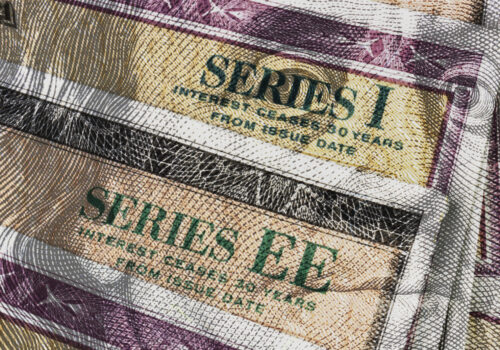
The debt comes due—but there is no one to pick up the tab
After IMF Managing Director Kristalina Georgieva delivered her opening statement for the 2026 IMF–World Bank Spring Meetings last week, the headlines soon followed: “IMF warns of lasting economic damage from the Iran war,” wrote Euronews, and “War to trigger demand for up to $50 bln in Fund support,” reported Reuters.
Yet amid the focus on the fallout of the Iran war, another key point in Georgieva’s speech largely went unnoticed. Toward the end of her remarks, the IMF chief noted: “Public debt is generally much higher than twenty years ago—including in most G20 countries—reflecting widespread neglect of fiscal consolidation in the periods when conditions permitted it.”
It was a sober assessment that may have sounded less urgent than her remarks on how to “cushion the Middle East war shock,” but it should have received just as much attention.
For over two and a half decades, advanced economies such as the United States, Europe, and Japan have invested heavily in expanding social safety nets. Meanwhile, emerging markets have been spending aggressively to catch up—building infrastructure and investing in human capital.
Although the environment for borrowing was favorable for much of that period—defined by relative peace, moderate growth, and strong employment conditions—the IMF recognized the risk of this trend as early as 2017. Back then, Georgieva’s predecessor, Christine Lagarde, warned: “Pleasant as it may be to bask in the warmth of recovery… the time to repair the roof is when the sun is shining.” But the world did not heed Lagarde’s advice. Instead of reducing debt burdens, countries kept spending beyond their means, gradually increasing the public debt-to-GDP ratio from around 30 percent to 100 percent.
Still, everything seemed just fine—until the biggest supply shock in modern history struck: the COVID-19 pandemic. What happened next is well known: To shield their economies, governments worldwide deployed extensive emergency packages, resulting in a $9 trillion fiscal expansion, roughly three times larger than during the 2008 global financial crisis. At the same time, the IMF provided $650 billion in reserve liquidity through a historic Special Drawing Rights allocation.
Paired with supply shortages, this led to the highest global inflation since the 1970s, peaking at 8.8 percent in 2022. Central banks stepped in, pivoting from loose monetary policy to tightening—and rates rose dramatically around the world.
Thus, the landscape for fiscal expansion has changed dramatically: from low to high interest rates, from relative stability to supply chain disruptions and heightened geopolitical tensions.
At the same time, the money spent over the last two decades has not necessarily translated into higher productivity and growth. With borrowing costs now much higher, global public debt-to-GDP stood at 94 percent in 2023.
Read more
APRIL 14 | 11:10 AM ET
The BOE’s Megan Greene on why the “risks to inflation” are “paramount” for her thinking on interest rates
APRIL 14 | 10:23 AM ET
The World Economic Outlook paints a sobering picture of the global economy
The IMF warned this morning that the global economy is losing momentum. It slashed its 2026 growth forecast to 3.1 percent in its closely-watched World Economic Outlook (WEO)—down from 3.4 percent projected in January—as conflicts engulfing the Middle East since late February sends shockwaves through energy markets and supply chains worldwide.
Released this morning at 9:00 am, the WEO paints a sobering picture of an economy that had shown surprising resilience but is now facing yet another consecutive test. The closure of the Strait of Hormuz—through which roughly one-fifth of the world’s daily oil supply flows—has sent oil prices surging over 20 percent and European gas prices up more than 60 percent since August. And the ripple effects are being felt around the world.
Among Group of Twenty (G20) economies, Saudi Arabia took the heaviest blow, its forecast cut by 1.4 percentage points to 3.1 percent. Britain performs weakest among advanced economies, downgraded by 0.5 points to 0.8 percent, with the IMF citing heavy exposure to gas markets and the Bank of England’s limited room to cut rates as inflation climbs back toward 4 percent.
There were winners, too. India edged up to 6.5 percent on strong economic momentum and a sharp reduction in US tariffs on Indian goods. Russia and Brazil both received upgrades of 0.3 percentage points as higher oil prices boosted export revenues.
The IMF nevertheless provides a stark warning: a prolonged conflict could tip the world toward its first global recession since the pandemic.
APRIL 14 | 9:32 AM ET
Paschal Donohoe on the World Bank’s role in a changing world
In this Impact Interview, World Bank Managing Director and Chief Knowledge Officer Paschal Donohoe joins the Atlantic Council’s Charles Lichfield for a conversation on the World Bank’s reaction to global crises.
APRIL 14 | 8:30 AM ET
Catch up with everything happening at the Spring Meetings on day two
LIVE NOW | #ACDailyBrief: Day 2 of the @WorldBankGroup and @IMFNews #SpringMeetings2026. Watch the Atlantic Council’s Ohimai Amaize and @ACGeoEcon’s @bart_piasecki preview the day’s top events and key speakers. https://t.co/q6VjVIyGqK
— Atlantic Council (@AtlanticCouncil) April 14, 2026
DAY ONE
This week’s events are anything but “routine meetings”
Amid the oil crisis, spare a thought for developing country debt
What to watch as the 2026 IMF-World Bank Spring Meetings get underway
A blockade of the global economy
Ajay Banga on responding to this economic crisis: ‘Focus on policies’ that ‘create jobs’
No IMF and World Bank spring meetings without a global crisis
In the Iran crisis, the IMF’s voice is urgently needed
APRIL 13 | 5:43 PM ET
This week’s events are anything but “routine meetings”

A global pandemic, Russia’s invasion of Ukraine, the war in Gaza—in recent years, the IMF-World Bank Spring Meetings have rarely taken place without a major global emergency looming in the background. This year will be no different. As policy leaders gather in Washington, the world appears to be on the verge of a “polycrisis.”
With the Iran war still unresolved, trade through the Strait of Hormuz disrupted, and tariff uncertainty hanging over the global economy, IMF and World Bank members are facing overlapping shocks that could soon amplify each other. And there’s another—not so widely publicized issue—that could have major medium-term implications: the re-emergence of global current account imbalances, which, after decades of steady decline, are widening again—from less than 3 percent in 2019 to between 3.5 and 4 percent in 2026.
What sounds like a secondary concern in the face of all-out war and geopolitical turmoil might, in fact, be the issue to watch in the months to come. This is particularly true given that a new IMF report suggests that expanding current account imbalances have been associated with lower-quality growth, triggered sectoral dislocations, and—most worryingly—preceded financial crises.
With all this and more on the agenda—from aid cuts affecting Sub-Saharan Africa to escalating trade tensions between the United States and Asia—it would be an understatement to say that it will be a busy and intense few days for finance ministers and central bankers. Not least because last week’s warning by IMF Managing Director Kristalina Georgieva will still be ringing in their ears as they discuss how to deal with the fallout of this polycrisis: “Even in the best case, there will be no neat and clean return to the status quo ante.”
APRIL 13 | 4:55 PM ET
Amid the oil crisis, spare a thought for developing country debt
In last week’s IMF-World Bank Spring Meetings curtain-raiser, IMF Managing Director Kristalina Georgieva urged her audience to “spare a thought” for the tiny island nations of the Pacific who are “wondering if fuel will still reach them” amid the Iran conflict. But the central bank governors and finance ministers gathered in Washington, DC, this week should also spare a thought for the looming debt crisis in developing countries brought on by the war.
That threat was delineated in some of the charts that dotted the managing director’s presentation. They showed that the poorest oil-importing countries—many of which already face debt-related problems—soon could face even harder times if the fuel cutoff continues. One chart from her presentation shows that the average ratio of interest expenses to government revenue for all low-income developing economies (including oil exporters) had risen above 15 percent as of 2025. And the flow of debt payments to foreign creditors will only become more burdensome as the dollar strengthens.
A heat chart compiled by the Center for Global Development provides a more granular view of the threat facing the countries most vulnerable to debt crises. It shows metrics such as debt service as a percentage of gross domestic product (GDP), the number of months of imports a country’s foreign-exchange reserves can finance, and net energy and fertilizer imports (much of it derived from Gulf natural gas) as a percentage of GDP.
Among the most vulnerable countries the chart highlights are Egypt, Sri Lanka and Zambia, heavily indebted countries that are all in IMF programs. Many of the other vulnerable countries are from the group of developing economies known as the “frontier markets”—countries that, among developing economies, are regarded as having better growth prospects and a track record of strong governance. But the distinctions that make them frontier markets may not be enough to save them from a prolonged energy crisis: A World Bank report released before the conflict pointed out that between 2020 and 2025, frontier markets “experienced more defaults than all other economies combined.”
For the past few IMF-World Bank Spring and Annual Meetings, engagement on the debt issue has centered on nuts-and-bolts discussions held at the Global Sovereign Debt Roundtable, whose next meeting is scheduled for Wednesday. But this forum is best suited for periods of low inflation and relatively stable growth. The above data show that the scale of developing countries’ debt, which are being compounded by the Iran war, may require a more proactive, all-hands-on-deck approach than this roundtable can provide.
APRIL 13 | 10:39 AM ET
What to watch as the 2026 IMF-World Bank Spring Meetings get underway
This year’s Spring Meetings feel like a stress test for equitable development and multilateralism. Global growth remains fragile, geopolitical fractures are hardening into structural features and development finance is under pressure to deliver—fast.
Beyond the headlines and high-level communiqués, five signals are worth watching closely. Each offers a clear read on how the development sector is adapting to constraints, recalibrating its priorities and redefining what effective multilateral cooperation looks like in a more fragmented and fiscally constrained global landscape.
From declarations to delivery on debt and development finance
An important question in Washington this year is whether long‑running conversations on development finance will finally turn into tangible alignment. Watch for real movement linking the post-Sevilla UN Financing for Development agenda with concrete reforms inside the Bretton Woods institutions. Signals will matter more than speeches: credible steps on debt restructuring speed and predictability, instruments for private capital mobilization, and enhanced coordination between Washington and New York on how sovereign debt, climate finance, and multilateral development bank balance sheets interact.
The expected launch of the Borrowers’ Platform—as called for in the Seville Commitment—is particularly notable. Its launch would suggest a shift from ad hoc debate toward a stronger, more informed collective voice among debtor countries, and a recognition that the current debt architecture is not fit for a world of overlapping shocks. The test across these developments is whether there is political will for implementation, beyond another roadmap.
Conflict moves from background risk to policy priority
At its highest levels since the end of World War II, conflict is no longer a tail risk; it is shaping the baseline. New IMF analysis released alongside the Spring Meetings makes this explicit. For conflict-affected economies, the macroeconomic costs are both immediate and persistent: output falls by about 3 percent at the onset of conflict and reaches cumulative losses of roughly 7 percent within five years, with economic scars still evident a decade later. These losses are larger and longer‑lasting than those associated with financial crises or severe natural disasters. Expect discussions to move beyond humanitarian framing toward harder trade‑offs: how conflict reshapes development prioritization, how defense spending crowds out social investment, and how instability undermines long‑term productivity.
Attention will also focus on how the conflict in Iran—and resulting oil shock—is already affecting economies and outlooks in lower-income countries, and whether conflict becomes embedded in macroeconomic surveillance and lending frameworks rather than treated as exogenous. If it does, that has implications for conditionality, for fragile‑state engagement and financing, and for how growth projections are constructed going forward. It could also impact the orientation and design of jobs initiatives and governance strategies.
This is an excerpt from an article originally published by the United Nations University Centre for Policy Research. Read the full article here.
APRIL 12 | 8:30 PM ET
A blockade of the global economy
The world’s finance ministers and central bankers are arriving tonight in Washington with more anxiety than at any point since the COVID-19 pandemic. That’s remarkable, considering that just a year ago they were confronting US President Donald Trump’s “Liberation Day” tariffs and a massive reordering of the global trading system.
But the data is clear: the current energy crisis stemming from the Iran war and the continued closure of the Strait of Hormuz is causing a major hit to global growth. No matter what happens with the new blockade, the IMF is forecasting long-lasting scars in the global economy. That’s because shipping insurance will remain high, supply chains will shift, and countries are now pricing in more geopolitical shocks—IMF-speak for armed conflict—in the months ahead.
These meetings weren’t supposed to be about oil and war. They were meant to focus on the impact of artificial intelligence on jobs, the alarmingly high level of public debt in the United States and around the world, and the stress in the private credit market that is keeping Wall Street up at night. They were also set to pay tribute to Federal Reserve Chair Jay Powell, who will be attending his last IMF-World Bank meetings after eight years of what his colleagues firmly believe is steady leadership amid a wave of challenges.
Now, the agenda has been derailed—and the ministers are meeting under the shadow of a global energy shock that is already affecting hundreds of millions of people. Their actions won’t decide the outcome of the war or when the strait fully reopens, but they can help mitigate the fallout. The decisions the ministers make about which resources go where, and which countries get emergency money first, will all have a tangible impact on people’s lives in the weeks ahead. And if they rise to meet the moment with action, they will be doing exactly what they are supposed to do: acting as guardians of stability in the global economy.
APRIL 7 | 12:30 PM ET
Ajay Banga on responding to this economic crisis: ‘Focus on policies’ that ‘create jobs’
Expect “some degree of high inflation and some degree of lower growth” due to the Iran war, World Bank Group President Ajay Banga warned at the Atlantic Council on Tuesday.
Banga spoke before the announcement of a two-week cease-fire in the conflict, in a curtain-raiser conversation ahead of the International Monetary Fund (IMF)-World Bank Spring Meetings. He told the packed audience at Atlantic Council studios that inflation could notch 0.9 percent higher and growth could fall 0.4 percent lower as a result of the Iran war and its impact on shipping and energy.
Banga said that he expects a lot of conversation at the IMF-World Bank Spring meetings to focus on how the Bretton Woods institutions can “help countries mitigate the impact.” He pointed to the World Bank’s Crisis Response Windows, which he explained allow countries to access up to 10 percent of the undisbursed value of their International Development Association projects.
Banga warned that “emerging markets are more stressed” by the economic effects of the Iran war, because “they already start from a more complicated fiscal and debt situation.”
He cautioned countries to “be careful” in responding to the economic crisis, to ensure that “you don’t end up using that moment to increase your fiscal challenges,” for example, by implementing “subsidies you could not afford.” That could “put your country into an even bigger problem downstream,” he said.
“A lot of the countries who are impacted by” the economic effects of the war in Iran “don’t control the conflict, but they can control other things,” Banga said. His recommendation: These countries should “focus on policies and reform that they can undertake,” primarily in order to “create jobs.”
Read more

APRIL 2 | 5:24 PM ET
No IMF and World Bank spring meetings without a global crisis
Once again, the spring meetings of the International Monetary Fund (IMF) and the World Bank Group—scheduled for April 13 through 18—will take place against the backdrop of a global economic and financial crisis. Triggered by the Iran war and the de facto closure of the Strait of Hormuz, global supply chains have been severely disrupted, threatening not only global energy markets but also the artificial intelligence (AI) investment boom, which has played a central role in driving global economic growth.
For the Bretton Woods institutions, the supply-side nature of the crisis poses a difficult challenge. Beyond preparing to provide financial support to member countries hit hardest by the Iran war, it remains unclear what policies they can recommend to key member states to manage the fallout. There is a risk that the IMF will produce rigorous analyses and conceptually sound policy recommendations—yet may still fall short of fully addressing the crisis at hand.
Read more

MARCH 20 | 3:34 PM ET
In the Iran crisis, the IMF’s voice is urgently needed
Three weeks into the most significant disruption to global energy markets since the 1973 oil embargo, the International Monetary Fund (IMF)—the institution created to safeguard the stability of the international monetary system—has yet to provide a clear, comprehensive view of the economic fallout.
Policymakers around the world, market participants, and the general public would all benefit from the IMF’s insights into the unfolding Iran crisis and the consequences of Tehran’s de facto blockade of the Strait of Hormuz. After all, the institution has unmatched access to financial markets, central banks, and finance ministries around the world.
So far, however, the Fund has issued only a few statements. On March 3, it said that it was “closely monitoring developments,” and Managing Director Kristalina Georgieva—speaking during a trip to Asia—urged countries to “think about the unthinkable and get ready for it.” Yesterday, an IMF spokesperson provided estimates for the impact of oil prices should they remain elevated for a year and raised concerns about economically vulnerable countries.
Read more
Related Reading
Image: IMF Managing Director Kristalina Georgieva delivers a speech ahead of the IMF/World Bank's spring meetings in Washington, DC, on April 9, 2026. (REUTERS/Ken Cedeno)