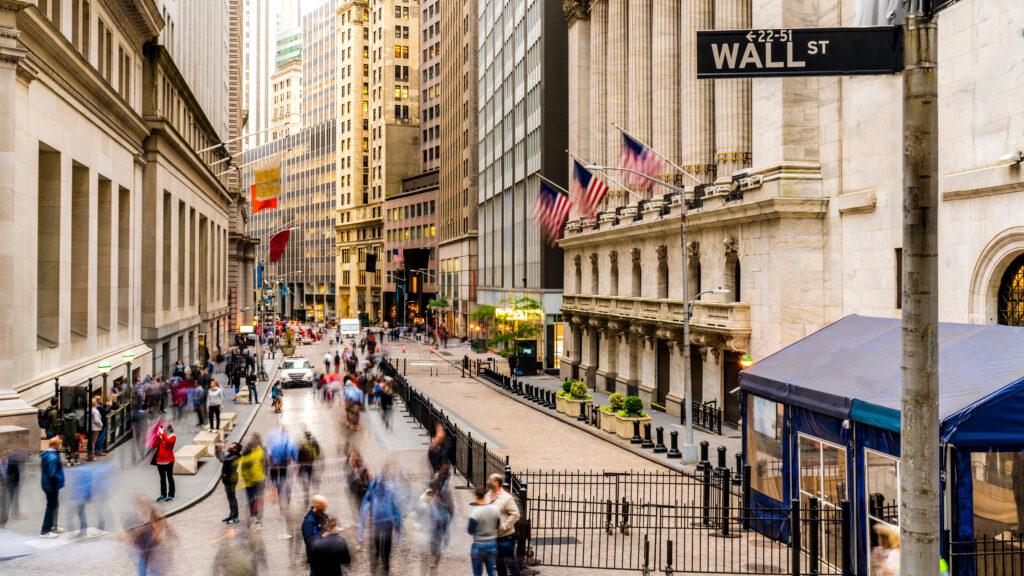
On Tuesday, stock and bond markets fell sharply—then rebounded on Wednesday and Thursday, following US President Donald Trump’s statements at Davos on Greenland. The first signs of stress this week, however, did not originate in Switzerland or the United States, but in the Japanese bond market. There, a snap election called by Prime Minister Takaichi Sanae sparked expectations of a spending spree, reviving debt sustainability concerns. That early tremor set the tone. By the time trading moved west, fears of a breakdown in the transatlantic relationship mounted, particularly after Trump threatened additional tariffs on countries unwilling to support a US acquisition of Greenland.
The S&P 500 dropped 2 percent, the dollar weakened, and Treasury yields rose to their highest level since September. While it’s rare for stocks and bonds to fall sharply on the same day, a similar pattern last emerged in April and was seen as one of the reasons why the Trump administration ultimately deferred its “Liberation Day” tariffs.
It was a stark contrast to last week, when we were scratching our heads as to why Wall Street barely reacted to escalating tensions involving Venezuela and Iran, or the Department of Justice’s investigation into Federal Reserve Chair Jerome Powell. There are plenty of reasons why this might be. For one, the capture of strongman Nicolás Maduro and protests in Iran, however dramatic politically, did not pose an immediate threat to global trade flows or major supply chains. Meanwhile, had Trump followed through on his tariff threats, it would likely have marked the end of the United States-European Union trade deal, which was only announced in July 2025 and has since become a partial model for other countries negotiating with the Trump administration.
Why markets have shrugged off most shocks
Over the past decade, markets have weathered a steady stream of geoeconomic shocks—Brexit, trade wars, sanctions, pandemics, and bank failures, to name only a few. And yet, nothing has truly shaken investor confidence. The chart below shows eight major shocks since 2016 and highlights in red the few that coincided with a market contraction of more than 20 percent, triggering a bear market in the United States.
The common thread among those truly market-shaking moments is that they posed a direct disruption to the global economy: supply chains seizing up, trade flows collapsing, or energy prices spiking. But once a credible signal of stabilization emerged—whether through vaccine rollouts or a temporary ninety-day tariff pause—Wall Street quickly went back to business. That is, in part, because markets have internalized a powerful lesson: look past the immediate headlines. Investors have learned that most shocks inflict far less lasting damage than initially feared. That belief has become a guiding heuristic.
This week, however, investors responded forcefully to the renewed risk of a trade war between the United States and the European Union. The transatlantic economic relationship is far denser than the ties between Washington and Caracas or Tehran, totaling roughly $1.5 trillion in goods and services trade in 2024. A sustained escalation would have struck at the core of global commerce. Had tensions continued to rise, there was a real risk that market reactions would have intensified. Instead, as Trump pulled back from his tariff threats on Wednesday, markets recovered swiftly.
The dangers of taking volatility for granted
The risk of the markets adopting a “nothing ever happens” mentality is that it lowers sensitivity to increased political volatility. There are plenty of reasonable explanations for why the Trump administration’s investigation of the Federal Reserve chair failed to move markets, while the prospect of economic conflict with the world’s largest trading bloc has. One reason may be that the issue of central bank independence in the United States has not yet crossed the threshold from concern to crisis, which investors seem to require for a reaction. But if the job of markets is to look ahead and price future risks, then Wall Street may be too complacent about the accumulating cost of shocks.
Jessie Yin is an assistant director at the Atlantic Council’s GeoEconomics Center.
Josh Lipsky is chair of international economics at the Atlantic Council and the senior director of the Council’s GeoEconomics Center. He previously served as an advisor at the International Monetary Fund.
This post is adapted from the GeoEconomics Center’s weekly Guide to the Global Economy newsletter. If you are interested in getting the newsletter, email SBusch@atlanticcouncil.org.
Further reading

Thu, Jan 22, 2026
As markets turn volatile, leverage is back in the spotlight
Econographics By Hung Tran
Market turmoil has returned, highlighting how rising leverage plays a part in making the global financial system more fragile and vulnerable to shocks.

Mon, Jan 19, 2026
Greenland, Davos, and a week that could redefine the transatlantic alliance
Dispatches By
This week’s World Economic Forum in Davos will play host to transatlantic leaders at a volatile moment following Trump’s tariff threats against Europe over Greenland.
Tue, Jan 13, 2026
Five trends to watch in the global economy in 2026
Dispatches By Josh Lipsky
In 2025, markets tried to see past the immediate news of economic shocks. That paid off; but 2026 may look very different.