The price of Brent crude oil continues to rise amid the escalating conflict between the United States, Israel, and Iran, reflecting a significant geopolitical risk premium as shipping through the Strait of Hormuz, the chokepoint for roughly 20 percent of global oil flows, is severely constrained and tankers have halted movement through the waterway. This is just one of several examples illustrating that geopolitics is now the dominant driver for price formation rather than fundamentals alone. Intervention strategies to mitigate short-term price spikes, including releases from strategic petroleum reserves, have also evolved, and, amid the heightened tensions of today’s crisis, lessons from the past few years underscore the importance of a measured, rather than reactive, approach.
Following Russia’s full-scale invasion of Ukraine, oil policy dynamics evolved into a pattern of competing price control mechanisms, with the Organization of the Petroleum Exporting Countries (OPEC) cutting output production to defend price floors and consumers led by the United States, deploying Strategic Petroleum Reserve (SPR) releases to cap prices. These opposing interventions amplified volatility, weakened market discipline, and, in many markets across the Middle East and beyond, undermined perceptions of US policy consistency and credibility as a reliable producing partner. However, as geopolitical risks play a growing role in price formation, if prices spike further due to the crisis in the Gulf Council Countries (GCC), repeated intervention risks reinforcing the concept that policy reacts to shock instead of shaping stability. This dynamic can complicate US–OPEC policy coordination and create uncertainty for US oil and liquefied natural gas (LNG) exporters that depend on stable price signals and predictable market expectations.
Rather than stabilizing markets, this pattern of intervention has contributed to what many analysts describe as an increasingly fragmented global oil order, where overlapping political constraints, sanction dynamics, and episodic risk premiums shape pricing more than fundamentals alone. In this context, the United States faces a strategic test: Whether to return to reflexive price management or to rebuild credibility by allowing market institutions and producer coordination to absorb shocks, reserving the SPR for genuine supply disruptions instead of reactive price smoothing. In the current escalation, restraint itself is a policy choice. Short-term price spikes driven by geopolitical risk premiums do not necessarily warrant immediate countermeasures.
From price manager to strategic stabilizer
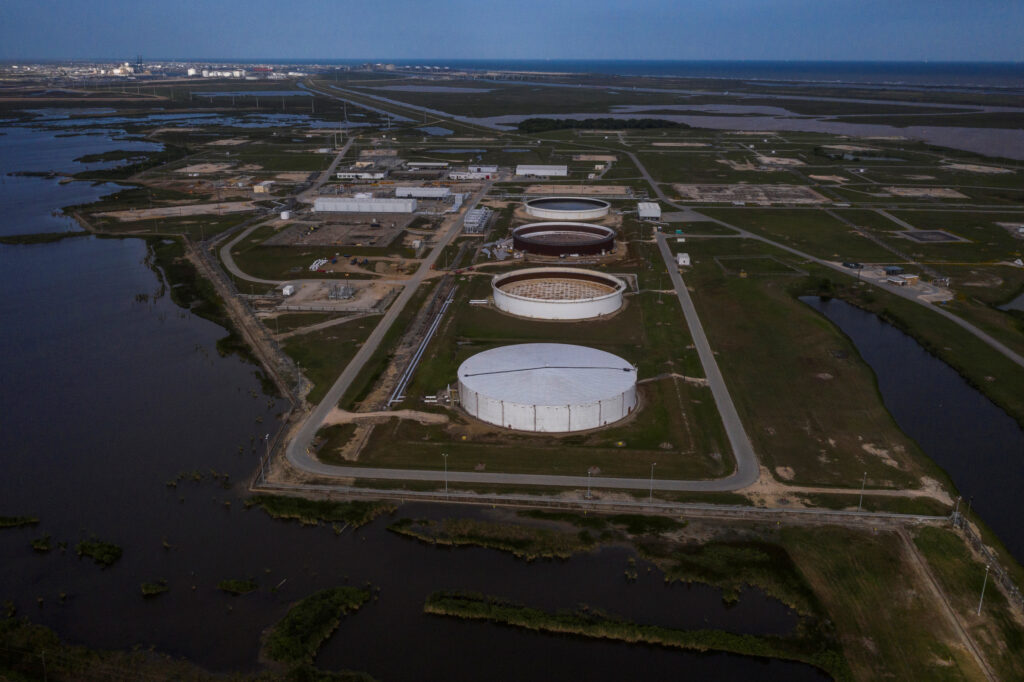
In the past few years, the United States appeared to step away from the role it played in 2022–2023 as an active price manager. During that period, more than 180 million barrels were released from the SPR to counter inflationary pressure amid an extraordinary convergence of shocks. The drawdown reduced inventories to their lowest level since the early 1980s and blurred the line between emergency response and price management.
Since then, the DOE shifted its emphasis to reserve refill as a long-term resilience strategy not a near-term price tool. That repositioning has carried strategic weight because emergency reserves function through expectations as much as through physical deployment. If used too frequently for price moderation, the SPR risks losing credibility as insurance against genuine supply disruptions.
A premature or unwarranted SPR release could also carry unintended consequences for US energy strategy. Frequent intervention risks dampening investment signals for domestic producers and reinforcing the perception that the SPR functions as a political price management tool rather than a strategic emergency buffer. At the same time, sustained geopolitical disruptions in the Middle East, particularly involving the Strait of Hormuz, could drive prices above $120 per barrel, fueling inflationary pressures in the United States and globally, and increasing risks to economic crisis and social instability. A balanced approach is therefore required, one that preserves the credibility of the SPR while retaining the flexibility to act if extreme price spikes begin to threaten broader economic resilience.
In the current environment of Gulf escalation and shipping disruptions, restraint is therefore deliberate. Short-term price spikes driven by geopolitical risk premiums do not automatically justify intervention. Market participants are already adjusting through inventories, rerouting, and demand recalibration. Immediate countermeasures by either OPEC or the United States could amplify instability rather than contain it. However, strategic restraint is conditional, not absolute. Should the crisis persist and prices move decisively above $120 per barrel in a sustained manner, generating broader inflationary pressure and threatening global economic resilience, a calibrated SPR release then would become appropriate. In that scenario, deployment would serve as a temporary stabilization bridge, not as an attempt to override producer policy, and would remain clearly tied to systemic risk rather than political discomfort with high prices.
This sequencing, therefore, is not intervention nor passivity but adaptation. As the oil market becomes more geopolitically exposed, leverage increasingly flows from strategic consistency and selective engagement rather than from attempts to suppress prices directly.
For OPEC producers, this situation signals institutional respect rather than confrontation. In periods of stress, collaboration between Washington and OPEC will matter more than competitive signaling and reinforces the view that instability should be absorbed through market mechanisms and producers’ coordination. This approach aligns with OPEC’s preference for predictable policy environments and limited political interference in price formation.
Toward conditional coordination in a fragmented oil order
Current restraint on reserve releases, with calibrated tolerance of incremental sanctioned supply, reshapes how OPEC production decisions interact with consumer policy. When output adjustments were no longer met by automatic countermeasures, the cycle of competitive price control begins to resolve. OPEC retains space to manage supply without provoking reflexive consumer intervention, especially in a crisis time, while in return, the United States preserve its emergency tools for real supply or inflationary stress.
In other words, the trade-off is clear. Restraint limits the ability to suppress prices during periods of geopolitical stress, particularly if OPEC production cuts coincide with geopolitical shocks. Short-term consumer relief is sacrificed in favor of restoring institutional credibility and investment confidence. Over time, predictable policy frameworks support capital allocation, upstream investment and supply security more effectively than episodic intervention.
However, credibility is not built on inaction alone. If sustained escalation pushes prices beyond systemic thresholds, coordinated stabilization becomes necessary. In such circumstances, a temporary SPR deployment aligned with producer dialogue would function as a crisis buffer rather than a competitive countermeasure. The objective would be to prevent inflationary spillovers and protect global economic resilience, not to undermine production discipline.
In a more fragmented and geopolitically exposed oil market, stability is no longer achieved through opposing acts of intervention than from conditional coordination. OPEC’s production discipline and US reserve policy now have to function less as tools of price control. In this environment, limited sanctioned supply would also serve as a marginal stabilizer, easing extreme price spikes without triggering renewed escalation in producer-consumer dynamics. By allowing market institutions to operate within clearer and more predictable boundaries, both producers and consumers can coordinate to reduce volatility, support investment, and preserve energy security without turning geopolitical risk into a competitive price management conflict.
Mahmoud Rashed is the assistant general manager of exploration studies with the Egyptian General Petroleum Corporation. He has more than 18 years of experience in Egypt’s petroleum sector, working at the intersection of upstream exploration, investments, petroleum agreements, and government energy policy.
The views in this article are his own.
stay connected
Sign up for PowerPlay, the Atlantic Council’s bimonthly newsletter keeping you up to date on all facets of the energy transition
related content

our work

The Global Energy Center develops and promotes pragmatic and nonpartisan policy solutions designed to advance global energy security, enhance economic opportunity, and accelerate pathways to net-zero emissions.
Image: The Bryan Mound Strategic Petroleum Reserve, an oil storage facility, is seen in this aerial photograph over Freeport, Texas, U.S., April 27, 2020. REUTERS/Adrees Latif