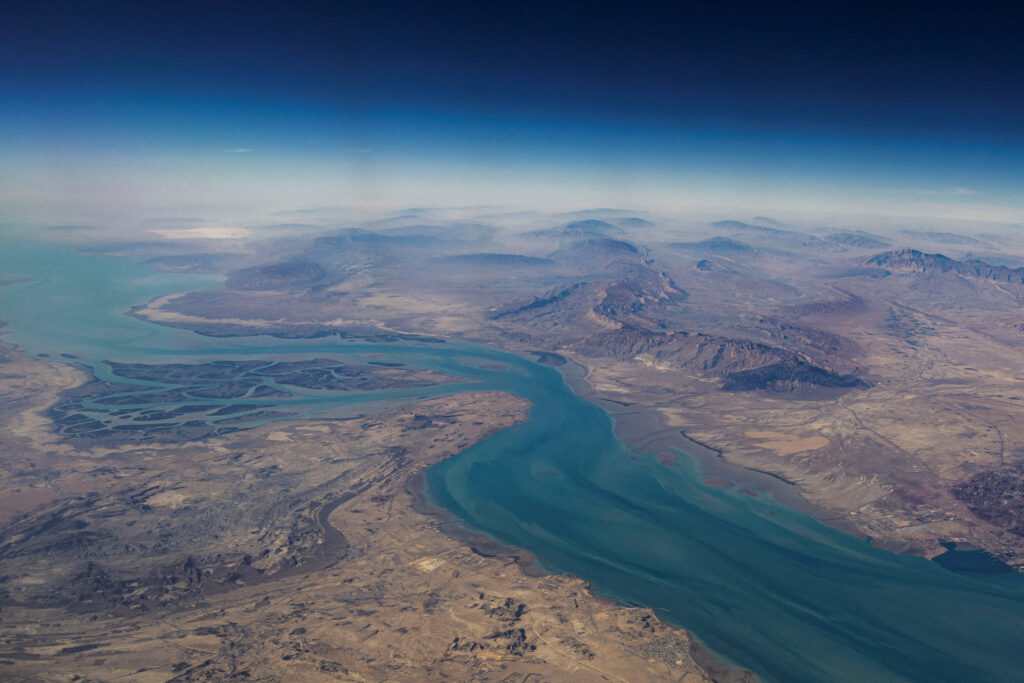
As Operation Epic Fury continues, a global energy crisis is unfolding in the Persian Gulf. With swift action, this crisis can be alleviated. If not, the world is likely to see economically devastating price spikes and shortages in crude oil, petroleum products, and natural gas across Asia and Europe, the primary importers of Gulf oil and liquefied natural gas (LNG). Though the United States remains relatively insulated from potential shortages due to a robust and dynamic domestic oil and gas industry, it is within the nation’s power to mitigate the emerging energy crisis.
Thus far, oil prices have not spiked to unreasonable levels—a testament to just how well supplied the global oil market was when the attack began and to the fact that attacks on oil infrastructure have been minimal. Iran has not—nor can it—close or physically block the Strait of Hormuz no matter what its politicians proclaim. However, several ships were reportedly hit by projectiles near the Strait and major marine insurers either cancelled their war-risk insurance policies or raised the rates from around $200,000 to as high as $1 million. As a result, marine traffic through the Strait of Hormuz has been at a standstill since March 1, and the world is standing at the precipice of a major energy crisis.
If tankers don’t start moving out of the Persian Gulf soon, crude oil prices will surge into the triple digits and many countries around the world will experience immediate shortages of gasoline, diesel, and natural gas. Some countries, like Iraq, lack extra storage facilities for crude oil and have already cut production by 1.5 million barrels per day (bpd) as a result. Barring a swift and decisive conclusion to the war, here are some steps the United States can and should take to avert a global energy crisis.
Access strategic petroleum reserves
Through the International Energy Agency, member countries can coordinate releases from their strategic petroleum reserves. Even countries that are not experiencing shortages should participate because the market can ensure that crude oil is efficiently rerouted to areas in need.
Mobilize additional oil production
President Trump can encourage US domestic oil producers to pump more oil, but producers will only invest in this if they believe doing so will be financially beneficial. If the price of WTI remains elevated and demand for US oil exports grows, frackers should be able to increase production rapidly. To provide additional—if limited—mitigation, Trump can also encourage OPEC+ to raise production quotas so that the producers with the ability to pump and move more oil can do so. Kazakhstan can produce and transport at least 500,000 bpd above its OPEC+ quota. Saudi Arabia and the United Arab Emirates also have spare capacity, but their export facilities outside of the Persian Gulf are limited. Even though Aramco can produce 12 million bpd of oil if needed, it can only export 7 million bpd from its Red Sea port of Yanbu. The UAE can increase oil production to 4 million bpd, but only 1.5 million bpd can flow through the Habshan-Fujairah pipeline to the port of Fujairah in the Gulf of Oman.
Mobilizing alternative sources of oil could provide some minor relief, but not nearly enough to make up for the 20 percent of the world’s crude oil and petroleum products that typically pass through the Strait of Hormuz. To prevent Asian and European economies from severe crisis, the Trump administration needs to get tankers moving through the Strait of Hormuz.
Military escorts for tankers
During the Iran-Iraq War, oil tankers from Kuwait were permitted to fly the US flag and received US military escorts to ensure their safety as they sailed through the Persian Gulf. If the US military has achieved naval superiority in the Gulf, it should offer physical protection to all non-sanctioned tankers leaving and entering the Gulf. On March 3, Trump indicated that he would direct the US Development Finance Corp. to offer reasonably priced political-risk insurance to all non-sanctioned tankers. He also said that the US Navy would escort tankers through the Strait of Hormuz, if necessary. It is likely that these military escorts will be a necessity for ships to accept the transit risk, even with lower insurance costs. As soon as naval escorts are available, Trump should arrange a demonstration of safe transit to encourage tankers to start crossing. The US, however, does not have the resources in the Persian Gulf to accompany every tanker through the strait. While resources can be pulled from other areas, the United States should coordinate with other naval powers, like the UK, to support tanker transit—albeit on a reduced schedule—through the strait.
Establish alternate shipping lanes in the Strait of Hormuz
Since 1979, ship traffic through the Strait of Hormuz has operated according to Traffic Separation Scheme (TSS) established by the United Nations International Maritime Organization. The TSS consists of two shipping lanes, one incoming and one outgoing. Each lane is two miles wide and are separated by a four-mile buffer zone. Both lanes take ships into Iranian territorial waters, less than ten miles from Iran’s shore. But the TSS is not the only navigable route through the Strait of Hormuz. There are other areas that are sufficiently deep to accommodate a fully laden, large-capacity crude oil carrier. In fact, before 1979, the main shipping channel ran through the Inshore Traffic Zone, which is south of the Omani island of Didimar. Oman usually restricts access to this zone to smaller vessels, but it could be used, with US military protection, for oil tankers to avoid entering Iranian waters
Remove Iranian military from islands in the Strait of Hormuz
There are three small islands in the Strait of Hormuz (Abu Musa Island and the Greater and Lesser Tunbs Islands) that frame the maritime shipping lanes and are strategically significant for controlling maritime traffic in the waterway. Iranian military forces occupied these islands in 1971 even though, in the case of Abu Musa Island, Iran and the UAE agreed to share sovereignty. The United States could, in agreement with the UAE, remove the Iranian military from the islands with the immediate goal of ensuring the safety of international shipping and the long-term goal of facilitating a resolution to the longstanding territorial dispute between Iran and the UAE. This option would require ground troops and coordination with Emirati forces, who would remain to secure Emirati presence on the islands until a negotiated agreement with the future Iranian government can be reached.
Conclusion
Unless a cease-fire or negotiated settlement is on the horizon, President Trump needs to take swift action to prevent oil prices from rising to economically detrimental levels. It is implausible to expect maritime traffic through the Strait of Hormuz to operate at normal rates when it is in the middle of an active warzone. However, there are actions the US can take to promote the safety and security of ships transiting the strait, so that shipping can restart at reduced levels. There is still time to prevent an oil energy crisis, but the clock is ticking.
Ellen Wald is a nonresident senior fellow with the Atlantic Council Global Energy Center
about the author

stay connected
Sign up for PowerPlay, the Atlantic Council’s bimonthly newsletter keeping you up to date on all facets of the energy transition
related work
our work
The Global Energy Center develops and promotes pragmatic and nonpartisan policy solutions designed to advance global energy security, enhance economic opportunity, and accelerate pathways to net-zero emissions.
Image: FILE PHOTO: An aerial view of the island of Qeshm, separated from the Iranian mainland by the Clarence Strait, in the Strait of Hormuz, December 10, 2023. REUTERS/Stringer/File Photo