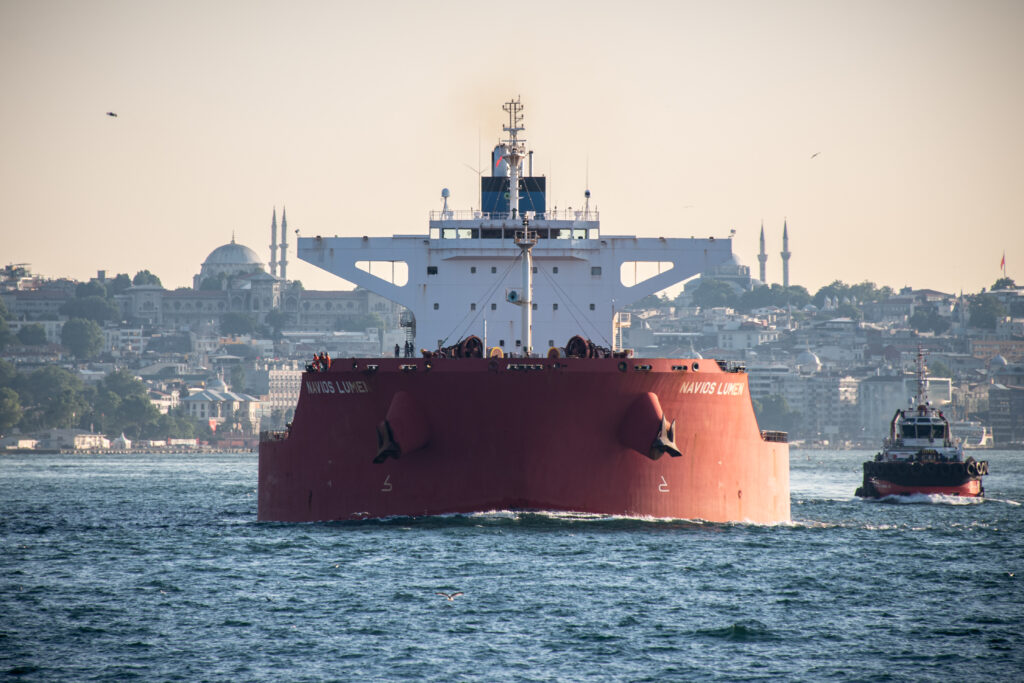
Turkey has much of what the United States wants from an economic-security partner, combining a strong manufacturing base with strategic geography and regional influence. Yet it faces a comparatively high tariff burden, and new risks stemming from its energy relationships with Russia and Iran.
The tension reflects a broader change in how Washington is using tariffs: not only to protect domestic industries, but to encourage trading partners to invest in the United States, align with US regulatory and economic-security priorities, and build more secure supply chains. The result is a trade system in which market access increasingly depends on a country’s contribution to US industrial and economic-security goals.
For Ankara, that means thinking beyond tariff relief. For Washingon, Turkey’s industrial capacity, strategic location, and access to important regional markets create the opportunity to turn a difficult trade relationship into an economic security partnership. A structured bargain linking tariff relief to greater bilateral trade, investment, and supply-chain security could advance the two countries’ longstanding $100 billion trade goal while deepening cooperation in strategically important sectors.
The evolution of US trade policy toward Turkey
During President Donald Trump’s first term, Section 232 tariffs on steel and aluminum, Section 301 tariffs on Chinese goods, and the renegotiation of the North American Free Trade Agreement into the United States–Mexico–Canada Agreement laid the foundation for an America First trade policy that, by the start of Trump’s second term, had evolved into a more integrated strategy linking trade policy with national security.
Turkey entered this environment through Section 232 of the Trade Expansion Act of 1962. In 2018, Turkish steel initially faced a 50 percent rate before reverting to 25 percent in 2019. In 2025, the United States expanded Section 232 coverage and raised the general steel and aluminum tariff rate to 50 percent before further restructuring the metals regime in 2026. Turkey exports more than $1 billion of steel annually to the United States, making steel a major source of friction.
Washington has since broadened both the legal authorities it uses and the objectives tariffs are intended to serve. In April 2025, a 10 percent tariff was imposed on Turkey as part of the initial “Liberation Day” tariffs under the International Emergency Economic Powers Act (IEEPA), then the lowest rate applied to any major US trade partner. After the US Supreme Court invalidated the IEEPA tariffs in February 2026, the White House imposed a temporary 10 percent import surcharge under Section 122 of the Trade Act of 1974. The administration then turned to a broader use of Section 301 of the Trade Act.
In July, the US Trade Representative (USTR) finalized tariffs under its forced-labor investigations covering sixty economies, including Turkey, for not having imposed and effectively enforced strong enough prohibitions on goods produced with forced labor. Economies that adopted, or committed to adopt, qualifying controls received a 10 percent rate. Turkey and most other investigated economies received a 12.5 percent rate. Notably, Turkey was not among the sixteen economies potentially subject to additional tariffs under a second Section 301 investigation into structural industrial excess capacity.
Turkey’s strategic value and economic security exposure
Several major US trade partners, including Japan, the European Union, South Korea, and Switzerland, have negotiated arrangements that cap their combined most-favored-nation and forced-labor Section 301 tariff burden at 10 percent or 12.5 percent. Turkey has no comparable arrangement.
Exposure also varies by product. Goods already covered by Section 232 are generally excluded from the forced-labor Section 301 tariffs, while products outside the Section 232 regime may instead fall under the new Section 301 tariffs. Ordinary customs duties and, for certain products, antidumping or countervailing duties can raise the final cost even further.
Furthermore, Turkey’s exposure increasingly extends beyond traditional tariff policy. The Sanctioning Russia and Iran Act of 2026 allows for tariffs of up to 100 percent on imports from certain major purchasers of Russian oil and natural gas, potentially including Turkey, in addition to other applicable tariffs.
Iran poses an additional challenge because Turkey has historically balanced its strong commercial and energy connections with Iran against US sanctions. On September 4, the Treasury Department sanctioned a Turkish financial institution and two affiliates, accusing them of helping Iran evade sanctions and manage oil revenue.
At the same time, Turkey’s industrial base and geography give it potential value to US economic security objectives. Its economy spans automotive production, machinery, aerospace and defense, steel, energy equipment, and advanced manufacturing, while its integration into European value chains gives Turkish firms experience in sophisticated production networks. Its location also provides commercial connectivity across the Black Sea, the Caucasus, Central Asia, the Middle East, and North Africa, positioning it as a potential partner in US efforts to diversify strategic supply chains and reduce dependencies.
That potential spans across sectors vital to Washington’s economic security agenda. Turkey could contribute in areas such as critical minerals, energy, defense, advanced manufacturing, infrastructure, and regional logistics. Closer economic ties would not eliminate Turkey’s strategic independence or ensure alignment with US policies, but they could deepen cooperation on shared priorities, including energy and trade routes, infrastructure, and regional economic projects.
The opportunity for a broader US–Turkey bargain
In 2025, US–Turkey goods trade reached about $36.8 billion, including a roughly $4 billion US surplus in 2025. Overall trade in goods and services has more than doubled since 2019, when Trump and Turkish President Recep Tayyip Erdoğan established a target of $100 billion in bilateral trade, but remains well short of that ambition.
Turkey has no reciprocal trade agreement that offers a clear path toward preferential tariff treatment or deeper economic cooperation. For Ankara, tariff relief should therefore form part of a broader negotiating agenda. Turkey could offer greater market access for US companies, address longstanding trade tensions, strengthen customs and supply-chain enforcement, and deepen regulatory cooperation in exchange for more predictable tariff treatment. An interim trade arrangement, potentially drawing on elements of US agreements with Taiwan and Indonesia, could provide a framework for addressing these issues while building toward a deeper economic relationship.
Turkey’s Digital Services Tax (DST) illustrates the potential bargaining space. USTR previously found the tax discriminatory and burdensome to US commerce, but Turkey later agreed to remove it once the Organization for Economic Co-operation and Development Pillar One framework entered into force, prompting USTR to terminate its planned retaliatory tariffs. With that process unresolved, Turkey has instead begun phasing down the tax, from 7.5 percent to 5 percent in 2026 and 2.5 percent in 2027.
Addressing the DST would not directly affect Turkey’s 12.5 percent forced-labor tariff, but could remove a source of friction in broader negotiations. USTR’s July 2026 Section 301 action against Brazil shows that digital trade concerns remain part of Washington’s reciprocal trade and enforcement agenda.
Washington, in turn, should consider what it can offer. Tariff accommodations (including on Section 232 steel tariffs) along with improved market access and targeted US financing and investment could draw Turkey more deeply into trusted US supply chains while encouraging domestic and allied sourcing.
The administration has already shown willingness to calibrate tariffs where they could undermine broader economic security objectives, including through exclusions for selected raw materials and domestically unavailable inputs. Targeted accommodations could similarly support US industrial and supply-chain objectives.
Turkey’s comparative advantage in such a bargain would not be in matching the scale of US investment pledges made by Japan or South Korea. It would be its industrial capacity, geographic reach, and ability to support diversification across strategically important regions.
Steel offers an obvious place to test that proposition, but any accommodation would also require confronting global excess capacity and transshipment risks. Turkey’s participation in the September 2026 Global Forum on Steel Excess Capacity provides a potential foundation for addressing those concerns alongside the United States and other major steel-producing economies.
Any deeper economic partnership could therefore be reciprocal, though not symmetrical. Turkey can offer greater market access, regulatory cooperation, supply-chain safeguards, sourcing transparency, and access to industrial and regional networks. The United States can offer capital, technology, financing, strategic investment, and potentially more favorable tariff treatment.
A structured US–Turkey economic security partnership could bring these elements together and provide a more concrete framework for their shared trade ambitions while lowering economic frictions, enhancing Turkey’s integration into US and allied supply chains, and reinforcing shared interests across strategically important regions.
Leo Ayala is a vice president for global trade and supply chains at a Washington, DC-based geopolitical advisory firm. He previously served as an international trade specialist in the Office of Europe and Eurasia at the US Department of Commerce. The views expressed are his own.
The views expressed in TURKEYSource do not necessarily reflect the views of the Atlantic Council, its staff, or its supporters.
Explore the program
Within the Atlantic Council’s longstanding commitment to strengthening the transatlantic relationship, the Atlantic Council Turkey Program conducts research, provides thought leadership, and offers a platform for strategic dialogue between the US, Turkey, and NATO allies to address the region’s toughest challenges and explore opportunities, including in the fields of energy, business & trade, technology, defense, and security.
Related Reading
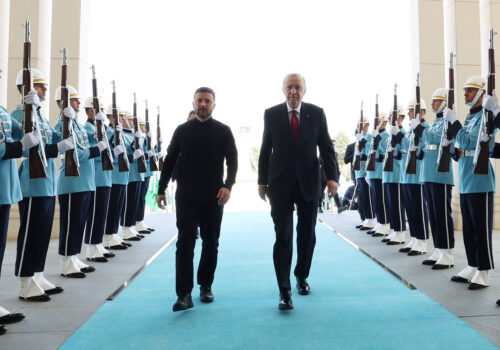


Image: A cargo vessel passes through the Bosphorus Strait near Istanbul, Turkey, on June 28, 2023. (Diego Cupolo via Reuters Connect)