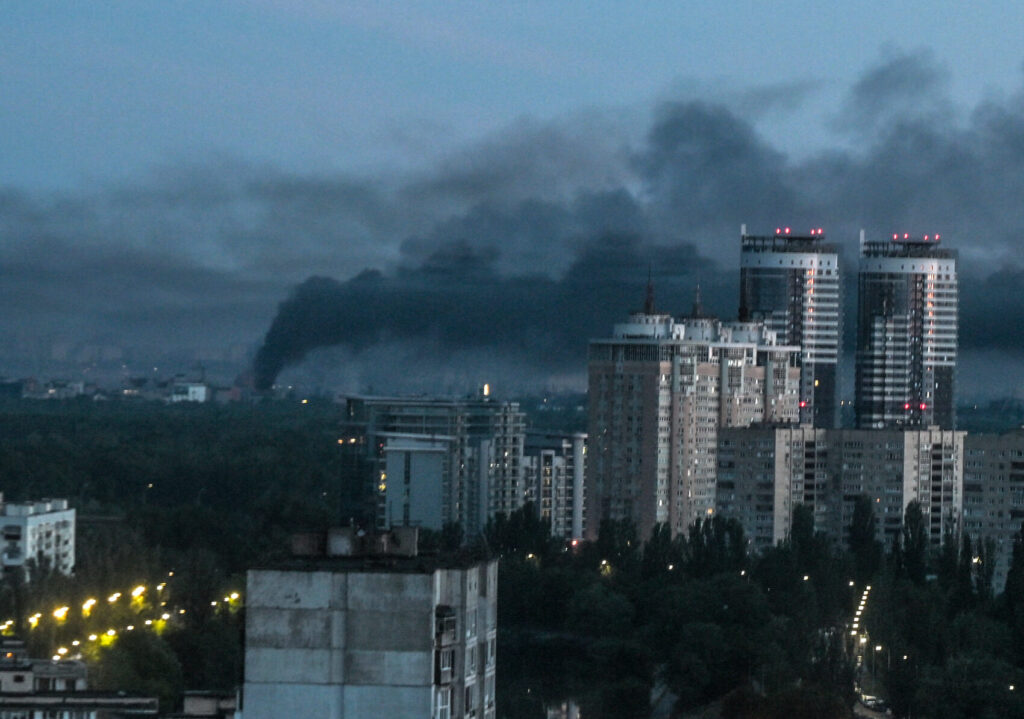
In recent months, Russia has dramatically expanded the bombardment of Ukraine, leading to a surge in civilian casualties. According to the latest United Nations data, at least 437 Ukrainian civilians were killed and 2,610 injured in July 2026, representing a 70 percent increase compared to the same period one year earlier.
Moscow has sought to frame this bombing campaign as “retaliation” for Ukrainian strikes inside Russia. Alarmingly, the Kremlin’s terminology has begun to creep into some international coverage of the war, with multiple prominent media outlets echoing the idea that Russia is “retaliating” rather than waging the largest European invasion since World War II. This false equivalence between the actions of Russia and Ukraine risks distorting perceptions of the war and obscuring Kyiv’s internationally recognized right to self-defense.
In reality, Russia has never needed an excuse to escalate its war of aggression. Moscow has been escalating from day one of the full-scale invasion, long before Ukraine developed the capacity to bring the war home to Russian soil. Since February 2022, Russian forces have destroyed entire Ukrainian cities and bombed countless residential buildings, hospitals, schools, energy facilities, shopping malls, and warehouses across the country. It is absurd and grotesque to suggest that these crimes are the result of some tit-for-tat conflict between two equally culpable adversaries.
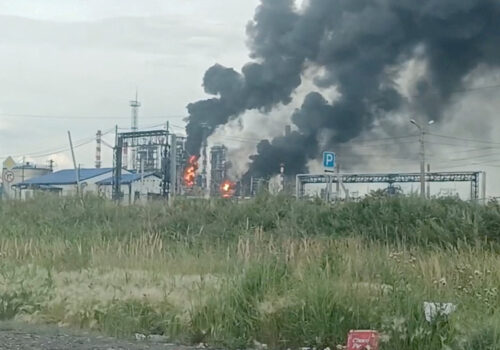
Kremlin claims of “retaliation” have been particularly vocal in relation to Ukraine’s current bombing campaign targeting Russia’s largest online retailer, Wildberries, with many in Moscow positioning a recent series of attacks on Ukrainian retail outlets and warehouses as payback. This ignores the inconvenient fact that Ukrainian strikes on Wildberries facilities did not begin until the middle of summer 2026, whereas Russia has been routinely bombing Ukrainian shopping centers and logistical hubs for over four years.
Stay updated
As the world watches the Russian invasion of Ukraine unfold, UkraineAlert delivers the best Atlantic Council expert insight and analysis on Ukraine twice a week directly to your inbox.
Too often, Wildberries is blithely described as “Russia’s Amazon” due to its dominance of the country’s online retail market. The company indeed serves roughly 80 million customers and is used by an estimated one million Russian sellers supplying a vast range of goods. But unlike Amazon, Wildberries heavily relies on large and highly concentrated logistics hubs rather than a more dispersed network of smaller warehouses. These facilities have become a key component of the Wildberries business model and a major source of its competitive advantage.
A recent investigation by independent Russian outlet Meduza found that these centralized logistics hubs have also made Wildberries an important informal supply channel funneling dual-use goods and military equipment to Russian soldiers involved in the invasion of Ukraine. Until late July, the Wildberries site featured an entire product category dedicated to the invasion, listing more than two hundred thousand military items including first-aid kits, radios, body armor, helmets, and drone components.
Some of these products were promoted as tested in Ukraine or labeled as popular among Russian soldiers participating in the invasion. Wildberries staff hastily deleted this incriminating product category from the company’s online platforms following the onset of Ukrainian strikes. However, many of the products are still reportedly available.
Ukrainian efforts to staunch the flow of supplies to the Russian military via Wildberries hubs have also destroyed large amounts of retail inventory unrelated to Moscow’s war effort, with Russian consumers and sellers left counting the economic cost of the company’s business model. Ukraine’s bombing campaign is ongoing and has already put a significant dent in Wildberries operations, with online retailers estimated to have lost as much as $5 billion since the attacks began.
The company also recently inked a strategic equity partnership with Russia’s second-largest bank, VTB, which is 90 percent owned by the state. This partnership exposes VTB to any drop in Wildberries revenues brought on by Ukraine’s attacks. Softer revenue projections for VTB, which has given preferential loans to Russian defense companies, could eventually send shock waves through Russia’s financial sector, piling further pressure on Putin’s wartime economy.
Eurasia Center events

The expanding air war between Russia and Ukraine is leading to rising civilian casualties on both sides, but Ukrainian losses remain far higher. Crucially, Russia also has the ability to end the carnage at any moment by ceasing hostilities and withdrawing its invasion force, whereas Ukrainians know that if they abandon efforts to defend themselves, they will likely lose their country.
The humanitarian situation in Ukraine is set to deteriorate further in the coming months as Russia looks to target the county’s critical civilian infrastructure ahead of the winter season. With Ukraine now running out of the interceptor missiles needed to guard against Putin’s ballistic blitz, the country’s limited air defense capabilities will not be enough to protect the civilian population. Instead, further strikes against the Kremlin war machine inside Russia will be vital.
Equating Ukraine’s defensive efforts with Russia’s systematic bombardment of Ukrainian cities and civilian infrastructure is misleading and dangerous. Ukraine is attempting to degrade Russia’s capacity to wage a war of aggression by targeting infrastructure with credible links to the Russian military and Putin’s wartime economy. In contrast, Moscow seeks to make large parts of Ukraine unlivable and force Kyiv’s capitulation.
These are fundamentally different campaigns launched for entirely different reasons. It is essential to recognize this difference in order to understand the true nature of the air war and avoid echoing Kremlin propaganda.
Zahar Hryniv is a program assistant at the Atlantic Council’s Eurasia Center.
Further reading


The views expressed in UkraineAlert are solely those of the authors and do not necessarily reflect the views of the Atlantic Council, its staff, or its supporters.


The Eurasia Center’s mission is to enhance transatlantic cooperation in promoting stability, democratic values, and prosperity in Eurasia, from Eastern Europe and Turkey in the West to the Caucasus, Russia, and Central Asia in the East.
Follow us on social media
and support our work
Image: June 2, 2026, Kyiv, Ukraine: Smoke from explosions and a large fire caused by missile strikes and falling debris during a Russian aerial attack on the capital rises into the night sky in Kyiv, Ukraine, on June 2, 2026 (Credit Image: © Yevhen Kotenko/Ukrinform via ZUMA Press Wire)