JUST IN
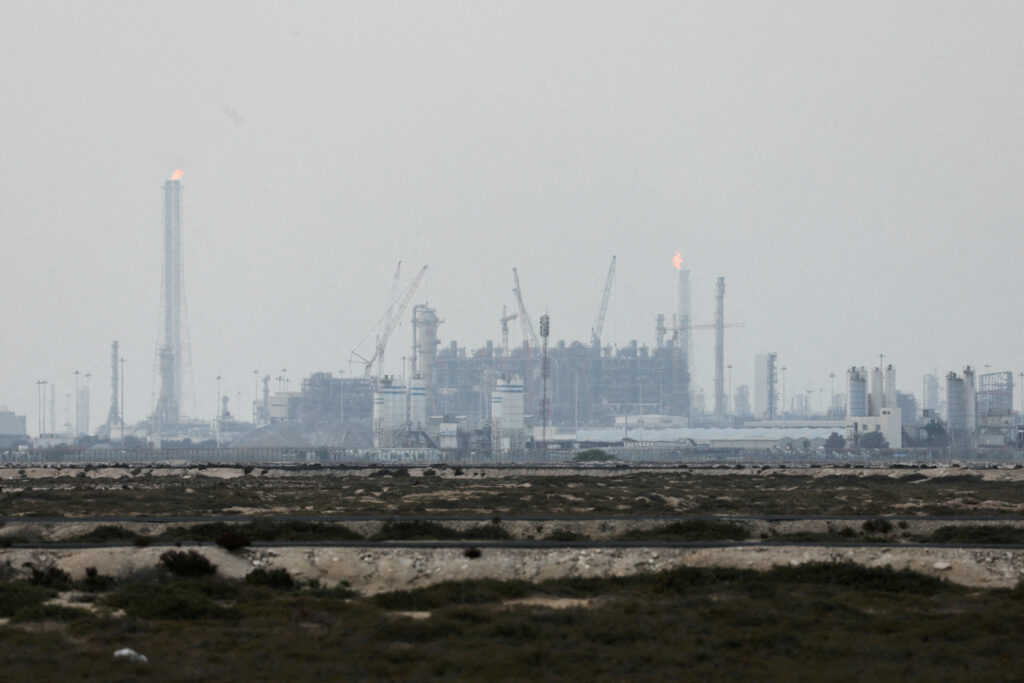
Call it a crude awakening. On Thursday morning, the price of Brent crude shot past $115 per barrel, up roughly 50 percent in the past month. This latest surge followed an Israeli strike on Iran’s South Pars gas field and an Iranian attack on a major Qatari gas hub, which raised fears that attacks would spread to other critical energy infrastructure in the region. All told it’s been a rollercoaster week for financial and energy markets, as Iran has maintained its chokehold on the Strait of Hormuz and the conflict in the region has spread and shown no signs of ending. Below, Atlantic Council experts identify the throughlines in the ups and downs—and forecast what to expect next.
TODAY’S EXPERT REACTION BROUGHT TO YOU BY
- Landon Derentz: (@Landon_Derentz): Vice president for energy and infrastructure at the Atlantic Council and former director for energy at the White House during the first Trump administration
- Lisa Basquel: Program assistant for European energy security at the Global Energy Center and former staffer with the Delegation of the European Union to the United States
- Khalid Azim: Director of the MENA Futures Lab within the Atlantic Council’s Middle East Programs and former global capital markets banker
- Josh Lipsky: (@joshualipsky): Chair of international economics at the Atlantic Council and former International Monetary Fund advisor
What’s happening?
- The Wednesday attacks on facilities at Qatar’s Ras Laffan Industrial City—a site that accounts for roughly 20 percent of global liquefied natural gas (LNG) supply—“have heightened market concerns that the conflict could spiral into a structural supply disruption,” Landon says. “Such a scenario would carry lasting consequences for global energy affordability, rather than proving a transitory shock that subsides once hostilities end and the Strait of Hormuz reopens.”
- The disruptions resulting from the extensive damage to Ras Laffan are hitting “just as Europe begins its critical summer storage refill season,” Lisa adds. There’s little prospect for prices to come down as long as Qatari supply remains offline and Europe and Asia compete for limited LNG cargos, she explains.
- “From a market perspective, the issue is uncertainty, both around the path forward and the duration of the shock,” Khalid tells us. “When the fear of loss outweighs the prospect of gain, capital starts to come off the table. Expect fund managers to lock in gains and increase hedges in the absence of clearer policy direction.”
- Khalid points to warning signs coming from leveraged private credit markets. “The risk is not the shock itself, but the point at which it forces adjustments across the most leveraged parts of the financial system,” he tells us.
- Yet markets are not in freefall. Josh interprets that reaction as many investors continuing to believe that Trump will find a way to resolve the crisis, possibly looking at his pullback from high tariff levels last year and resolution of the Greenland dispute this year as examples of the president’s nose for an offramp. “But it is also possible markets are mistaking geopolitical resilience for immunity,” he adds.
Sign up to receive rapid insight in your inbox from Atlantic Council experts on global events as they unfold.
What’s different about this energy shock?
- Since the 1970s, the world has experienced an energy supply shock at least every decade. But Josh offers one explanation for why the rise in energy prices is more severe now than during past shocks: “The concentration of energy exports through the Strait of Hormuz” is coinciding with “ongoing disruptions from Russia’s war in Ukraine,” which has prompted efforts to limit Moscow’s oil and gas exports.
- “Markets are starting to realize that a greater share of global energy production is involved in these conflicts than at any time since World War II,” Josh says.
- The eleven countries directly involved in the Iran war and the war in Ukraine, Josh notes, account for 51 percent of global crude oil production and 56 percent of global gas production—a larger share than during the first Gulf war.
What can be done?
- “Reopening the Strait of Hormuz is the single most consequential step coalition forces can take to stabilize energy markets,” says Landon. “Achieving this will require neutralizing Iran’s stockpile of anti-ship cruise missiles and its asymmetric drone capabilities—the latter also posing a significant threat to regional energy infrastructure.”
- Israel and the United States, Landon adds, are targeting drone-production sites and military installations along Iran’s coastline as they “seek to curtail Tehran’s ability to strike critical energy assets in the Gulf and disrupt international shipping through the strait.”
- With Gulf states already reducing oil production, Khalid notes, JPMorgan estimates that supply cuts could reach twelve million barrels of oil per day by the end of the week, accounting for around 10 percent of global demand.
- The adjustment mechanism for such a supply shock is reducing energy consumption, says Khalid. But in the short term “energy demand is highly inelastic.” Meaningfully reducing demand “requires a structural shift in consumer behavior,” he explains. And that, in turn, “takes time.”
Read more analysis on the Iran war’s energy and economic impact from Landon, Lisa, Josh, and Khalid.
Further reading
Tue, Mar 17, 2026
How the Iran war could trigger a European energy crisis
Dispatches By Lisa Basquel
Refilling Europe’s depleted gas storage—already a difficult task given the continent’s efforts to stop purchasing Russian gas—is even more difficult now with the Strait of Hormuz effectively closed.
Thu, Mar 19, 2026
The Iran war tests Taiwan’s energy resilience
EnergySource By
Taiwan's energy vulnerabilities are being sharply tested by supply disruptions from the conflict in Iran. Mitigating these risks will require both short-term crisis management and longer-term diversification of its energy mix.
Thu, Mar 12, 2026
By threatening the Strait of Hormuz, Iran turns geography into a global economic weapon
Econographics By
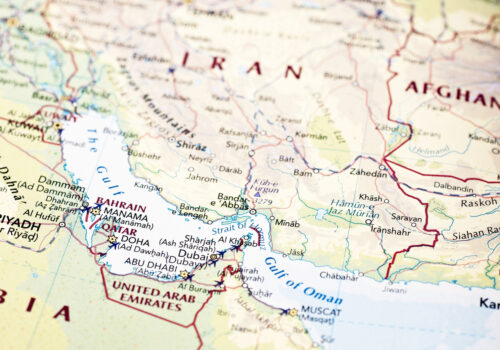
Iran’s threat to attack vessels in the Strait of Hormuz has effectively shut down one of the world’s most critical energy shipping routes, turning geography into a powerful economic weapon.
Image: QatarEnergy's liquefied natural gas (LNG) production facilities, amid the US-Israeli conflict with Iran, in Ras Laffan Industrial City, Qatar on March 2, 2026. (REUTERS/Stringer)