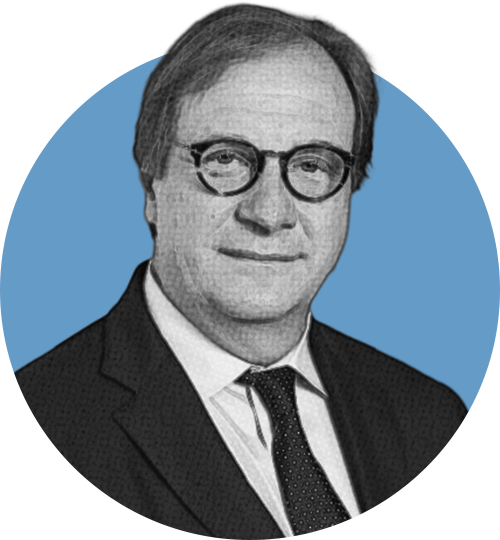


“This was a worst-case scenario,” Anwar Gargash, diplomatic advisor to the president of the United Arab Emirates (UAE), said of Iranian missile and drone attacks against his country and other Gulf states over the past two months and the diplomatic fallout they caused. Speaking to Atlantic Council President and CEO Frederick Kempe on the sidelines of the inaugural Europe Gulf Forum on May 16, Gargash explained that, prior to the conflict, every Gulf state had a “containment and outreach to Iran, whether it was mediation, whether it was formal agreements. In the case of the UAE, we thought that trade connections would actually create that web of connectivity where we have shared interests.”
“All that, in my opinion, has failed,” Gargash told Kempe, when Iran responded to the US and Israeli operations against it by attacking Gulf infrastructure and civilians. In the interview, Gargash also shared his views on why Iran has targeted the UAE more than other Gulf states, why he thinks the Gulf Cooperation Council has not done enough in response to Iranian aggression, what the conflict means for the Abraham Accords, and why deepening Europe-Gulf collaboration is a promising path forward.
The Europe Gulf Forum was hosted by the Antenna Group, in partnership with the Atlantic Council, in Costa Navarino, Greece, on May 15-17, 2026.
TRANSCRIPT
FREDERICK KEMPE: We’ve just ended a day of off-record sessions in the inaugural Europe Gulf Forum in Costa Navarino, beautiful Greece. I’m sitting down with Dr. Anwar Gargash, who I consider one of the most interesting strategic thinkers, not just in the Middle East, but really anywhere in the world. We can’t talk about the findings of the summit because, of course, it was off the record. But on the other hand, the discussions were so compelling, and they brought out so many interesting ideas, I wonder what you’re taking away from today’s conversations.
ANWAR GARGASH: Well, thank you, Fred. Thank you for the opportunity. I think the main thing is that this is a relationship where we are underperforming, and we can do a lot more, and it’s a very vital relationship on the European side and on the Gulf side. I think also a recognition that also with the multipolar world, changing conditions, et cetera, this is the opportunity to actually accelerate the trajectory of the relationship. That would be more or less encapsulating what I’ve heard. Specifically, I think we have seen a lot of European empathy and support with regards to the Iranian attack on the Gulf countries, and I think a shared concern also about what the future holds, and especially in terms of bringing back the Strait of Hormuz to the status quo ante, I think. I think that’s my big takeaway because I don’t want to go into the details of a privileged conversation.
FREDERICK KEMPE: But the relationship has underperformed. This is a crisis that can either bring people closer or not. What are the areas you would be most interested in getting the relationship to perform in a more robust manner?
ANWAR GARGASH: I think many, many areas, I think, Fred. Some of the areas are obvious areas. We’ve been negotiating a free trade agreement for a very long time with Europe. This is something that we would like to see it concluded, because that’ll make things much simpler actually, and the volume actually will go much higher in terms of trade. Other area is definitely in terms of technology. I think the Gulf is trying to be a trailblazer in technology. We’re working very hard with the United States in that area. I’m talking about the UAE here specifically, but I think this is an area also where we see a shared interest, interest on our side and interest on the European side.
I think also from the war, the Iranian attacks on the Gulf States, there are specifics that have become priorities right now. Maritime security, trade and energy security. The idea that for time immemorial, this waterway has been free for all nations and Iran is trying to change that, which is in the face of a really global agreement that the situation, the status quo ante has to go back. I think this also leads to various issues with regards to supply chains, with regards to logistical flow, let’s say, of trade and others.
And then you have to think also, Europe has an interest. If you just take the UAE, the UAE has about 300,000 to 350,000 European and UK citizens who are resident, and you have to take into account other countries in the Gulf. So there is also a clear interest in the safety of these people in their adopted homes. So the relationship is so diverse that there are so many areas that I think we can do a better job. The relationship is important to Europe, it’s important to us, but as I said, it can actually perform much better.
This is a war that we saw coming and worked very hard to avoid.
FREDERICK KEMPE: Thank you for that. So let’s look closer to home, meaning your home, the United Arab Emirates and the Gulf. You’ve been hit harder than anyone by Iran, in answer to a war that you did not start. Why do you think that’s the case, number one? And then number two, is this a hinge point in the region, and if so, in what manner? How is this war changing the nature of the Gulf and the way the UAE looks at its own situation?
ANWAR GARGASH: Well, I want to start by saying this is a war we did not want. This is a war that we saw coming and worked very hard to avoid. We gave Iran public assurances and private assurances that facilities in the UAE, and I’m sure other Gulf countries have also given the same assurances, will not be used in any potential war, but you have to look at the sequence of events. As soon as Iran was targeted, within an hour, all Gulf countries were targeted. So this was, in my opinion, already premeditated. It was planned many years earlier in terms of what if there is a full attack on Iran, how will Iran respond? And it’s very difficult to rationalize.
I’ve been reading a lot of reasons given by various observers about why was the UAE targeted more than other Gulf countries, indeed more than Israel? And to be honest, I don’t really want to rationalize that with an explanation, because it just does not make sense to me, and I think it is a total strategic failure for Iran to think in that way in many ways. But on the other hand, I think Iran also was surprised at the capabilities. This was always our worst-case scenarios. The Gulf always had a debate with regards to the theoretical or potential Iranian threat, and I’ve always said that that debate was between the hawks and doves, and the doves in the Gulf thought that reaching out to Iran will be our best guarantee. The hawks turned out to be right. This was a worst-case scenario. Every country had a containment and outreach to Iran, whether it was mediation, whether it was formal agreements. In the case of the UAE, we thought that trade connections would actually create that web of connectivity where we have shared interests.
All that, in my opinion, has failed. We have a new reality today, and as we move forward, I think I distinguish very clearly between the concept of trust and the concept of relations. Relations with Iran, I’m sure at some stage, some of it will return at various degrees, et cetera, but trust I think is broken and it will take a long time to earn it back. So in my view, going back to the original question of why was the UAE targeted, I don’t think it’s the Abrahamic Accords, because countries that did not sign the Abrahamic Accords were targeted. I don’t think it was any of the other reasons that have been promoted. I think it was just a very shortsighted strategic choice, where Iran’s frustration at a superior power attacking it was basically tactically used in order to let that frustration out, but in my opinion, with serious, serious strategic consequences.
I think the American role is seen as central by the United States, by the Iranians, and by the GCC countries.
FREDERICK KEMPE: Two final questions, one on the GCC and one on the path forward. You’ve expressed some disappointment in the GCC response to the situation right now. What does disappoint you? What would you like to see come out of this in terms of a relationship among Gulf countries?
ANWAR GARGASH: Well, again, historically, the GCC has had its strength and it’s also had its setbacks. But historically, the GCC has risen to the occasion when there was an existential threat, and that existential threat we had seen in the invasion of Kuwait and we have seen also in events connected to the Arab Spring. So my expectation was that the GCC collectively will actually rise to this unprecedented really, totally Iranian attack on the whole region. It did not.
Having said that, there was a good degree of cooperation, but I would not call it strategically rising to the threat. There were attempts to support logistically. There were attempts to do bilateral support between GCC countries, but in my belief, we should try and work out and do a better job. Even as we work on a national level, let’s say the UAE or any of the GCC other countries, the underperformance here of the GCC in the face of this historical challenge, I think, should be addressed with more attempts really at trying to get a more collective deterrence, so to speak. So the ability to build national capabilities.
FREDERICK KEMPE: So a security integration of some sort.
ANWAR GARGASH: More security integration, not to replace national capability, but to also be in parallel with national capabilities. And I have to say, you see some of our GCC partners, they fought—the attack on Bahrain is an example. They fought the Iranian attacks on them really ferociously, and I salute them for it.
FREDERICK KEMPE: So looking forward, I’ve heard some officials from your region make statements that the US has to see this through. Things can’t be left the way they are. How does this end and do you agree with that, and if so, what does that mean?
ANWAR GARGASH: Well, I think part of the Iranian quick fix strategic failure in addressing the attack on them by attacking the GCC, I think, has made the US’s role much more central, not less central. So the idea basically is in the coming period, every GCC country, I would assume, like we see it in the UAE, we see that the American role has become much more central. Again, America is not going to prioritize our priorities, but at the same time, when you have an ally such as the United States, and then you have an aggressive neighbor that has no compunction about using its capabilities to attack civilians and to attack energy infrastructure and civilian infrastructure and actually ordinary civilians, I think in this case, the US role becomes more important.
Now, what is essentially important here is that Iran traditionally sees itself as a regional power. So Iran, in its own perception of itself, has always wanted to negotiate with the United States, and as a result, Iran, for example, in one of the attempts in the negotiations where other regional states were invited to the negotiations recently in Turkey, Iran basically canceled that round and asked for the negotiations to be moved. So from that perspective, I think the American role is seen as central by the United States, by the Iranians, and by the GCC countries. So clearly, I think from our perspective, the first issue is that Iran should not gain geostrategically where it has actually been defeated militarily, and I mean here clearly the Strait of Hormuz. It has to go back to the status quo ante, and this is not really just because it is an interest of the Arab states of the Gulf. This is the interest of almost every trading country in the world, every manufacturing country in the world. You can’t change the history of hundreds of years of free flow of traffic in these straits.
I think the other issue, of course, is the nuclear issue. So clearly now, in terms also of the aggressive Iran that we have seen, and again, it wasn’t even hesitating at this total attack on all the GCC countries, I think the issue of Iran’s nuclear program has become even more alarming to the GCC than it was before.
FREDERICK KEMPE: Now that you see what they’re willing to do.
ANWAR GARGASH: What they are willing to do and seeing it perhaps as regime security, et cetera, and I think this is extremely dangerous threat. But then again, other issues are also important. As Iran publicly speaks about non-belligerence and as it publicly speaks about compensation, that’s actually our language also towards Iran. It’s not only Iran seeking these guarantees from the United States or this compensation for what happened to its infrastructure, but it’s the same language turned against Iran from a GCC perspective.
We did not see 7,000 Israeli projectiles hitting or targeting Gulf States. We saw 7,000 Iranian projectiles here.
FREDERICK KEMPE: So one last issue, since you raised the issue of the Abraham Accords, where does Israel fit into this picture? How does this situation change that? It’s been reported that the Iron Dome has been used, Israeli technology, to help defend UAE. That’s a step in a new direction. Where do you see that going? And beyond that, the Abraham Accords themselves, do they grow from here? How do they develop?
ANWAR GARGASH: I think there are two areas that I want to address here. I think the first area that I want to address is the part also of the strategic miscalculation of the Iranians in attacking the GCC states is further decoupling of what I see Arab security. So if Arab security is seen, let’s say in the countries surrounding Israel where Israel is seen as a threat from some of the countries that are around it and where Iran is seen as a secondary threat in these countries or vice versa, I think there is a certain decoupling here. Regardless of the rhetoric and ideology, we did not see 7,000 Israeli projectiles hitting or targeting Gulf States. We saw 7,000 Iranian projectiles here. So what happens here I think as we move forward is that the Iranian strategy, which was meant to undermine America’s presence in the region, has made it much more relevant, and I think it creates opportunities also for Israel in many ways.
FREDERICK KEMPE: From a changing threat perception?
ANWAR GARGASH: From a changing threat perception and from Israeli capabilities, et cetera. Now, with regards to the UAE, the UAE has a formal relationship with Israel. So everything that the UAE does with Israel is formal, above board. We don’t have to find secret channels to do that, and I feel that that relationship is going to be even stronger, and the Israeli relationship is more relevant and stronger, not only, but a large part of it also is because we have a neighbor like Iran that basically everybody now sees as a strategic threat, so as a result, also that relationship with Israel is becoming more relevant and stronger in many ways.
But again, coming to the UAE, when we signed the Abraham Accords, that was a sovereign strategic choice. We still believe in it. We still believe that the language in the region has to change, and that language to change, you have to have dialogue. We don’t agree with Israel on its policies with regards to how it sees the solution towards a Palestinian state, but it does not preclude us having that dialogue with Israel and having influence also as we have done where 45 percent of all humanitarian aid to Gaza come from the UAE. And we’ve been able to do that not because we are the most charitable, but also because we were able to negotiate the ability to institute that aid in Gaza.
For example, desalination plants established by the UAE next to the Gaza Strip basically quench the thirst of 600,000 Palestinians every day. These are part of the things that we are doing.
FREDERICK KEMPE: Dr. Gargash, thank you for taking this time for this conversation. Thank you for coming to the inaugural Europe Gulf Forum and being a guest of the Antenna Group and the Atlantic Council.
ANWAR GARGASH: Thank you, Fred. Thank you very much.