
WASHINGTON—The Iran war wasn’t their idea, and they may not like the way President Donald Trump is conducting it. But despite bullying rhetoric from Trump, the United States’ European allies might consider what they can reasonably do to support security around the Gulf rather than reject White House demands for it out of hand.
Building a coalition and preparing the battlespace for military action takes time and effort, especially when the conflict is in the Middle East. The United States sought and received significant military help from its allies in Iraq and Afghanistan, despite sharp political differences; help that grew over time. Failure in Afghanistan, mixed success in Iraq, and popular frustration over both wars have not made it easier for the United States to get help this time with Iran. The Trump administration’s approach has hurt too: Trump has swung from initially keeping allies in the dark about the operation to demanding allied military support, to then spurning such help as unneeded. The United States started out from behind after Trump’s public attacks on those allies who did fight alongside US troops in Iraq and Afghanistan. Moreover, Trump has denigrated Ukraine’s actual offers of drones and drone specialists to Gulf countries—a field in which the embattled country is arguably the world leader.
Trump’s March 17 social media post was another sharp rejection of European help: “[W]e no longer ‘need’, or desire, the NATO Countries’ assistance – WE NEVER DID!” That post also included another attack on NATO as a “one way street – We will protect them, but they will do nothing for us.” Given all this, it would be understandable for Europeans to slam Trump for starting a war without consulting with them, only to demand their military support when things start to look complicated.
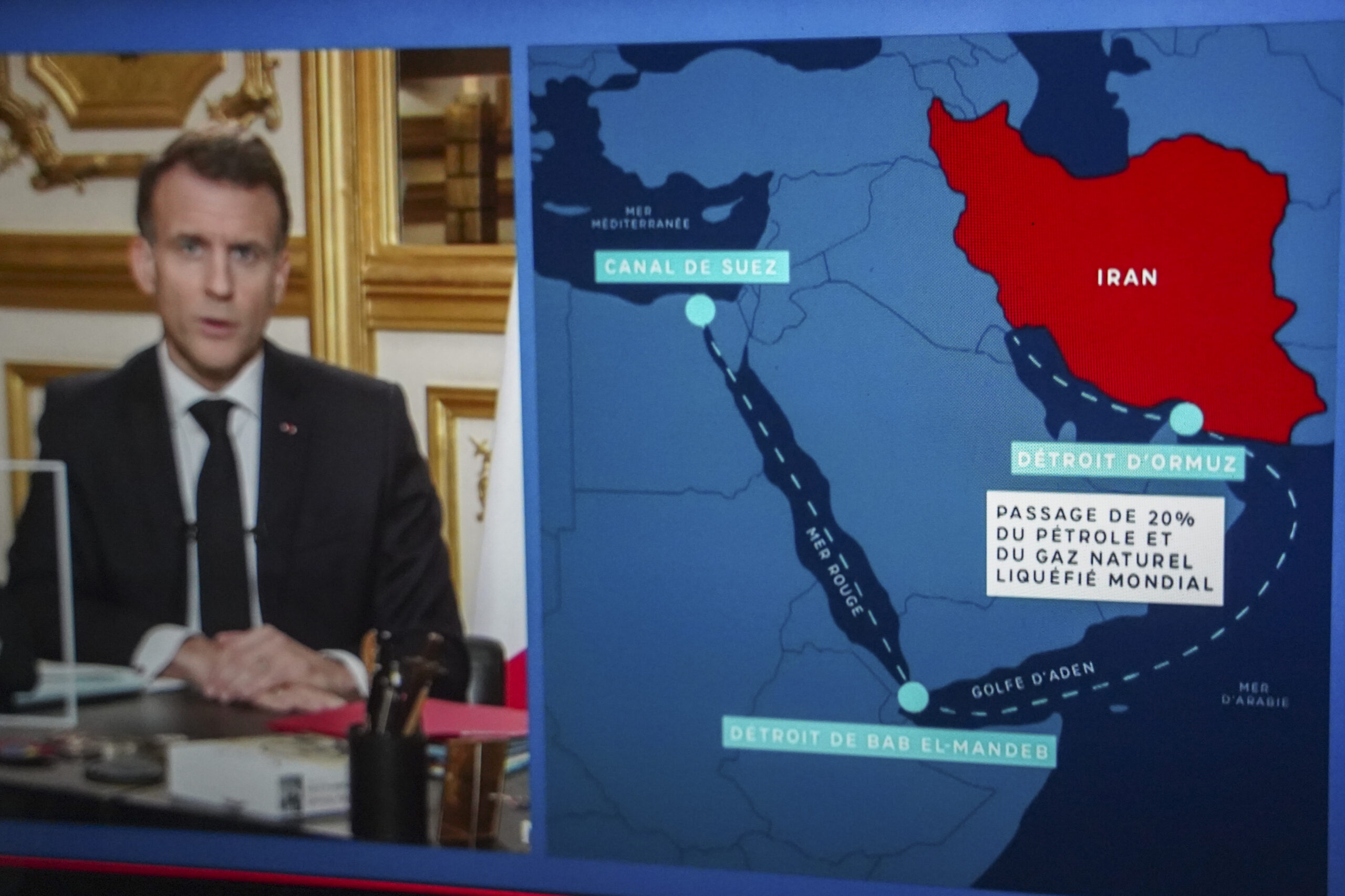
Nevertheless, European allies would be better advised to consider what they can do to help reopen the Strait of Hormuz and defend Gulf states under attack by Iran. They should do so not to assuage Trump or to help him out of a self-induced jam, but because Europe’s own critical interests are at stake in this conflict.
Why Europe should act
The spiking price of oil hurts the entire free world and has sent European governments scrambling for short-term fixes at the gas pump. Parallel surges in oil and gasoline prices have worsened an already bleak outlook for European industry, its competitiveness, and economic growth. At home, rising costs could cause political instability and benefit pro-Russian challengers on the right and left. Abroad, the price spikes in oil could create an estimated three to five billion dollars in additional revenue by the end of March for Russia, Europe’s most aggressive adversary, whose war against Ukraine remains the defining threat to the continent’s own freedom and security.
That windfall from energy-price shocks risks giving Russia a boost, just as Moscow’s position on the battlefield and the prospects for its war economy were deteriorating. Until the present moment, Russia’s position was weakening , thanks primarily to Ukraine’s bravery, grit, and sacrifice, but also because Europe stepped up to provide the financing needed to keep US weapons flowing to Kyiv over the past fourteen months.
European weapons stocks and production are a well-documented problem, but Europe’s stronger engagement in the Gulf could also present important openings in the defense space. The continent’s defense companies have been among the most effective and nimble partners for Ukraine’s battle-tested drone start-ups, and together they could bring new and more cost-effective means for Gulf allies to defend themselves against future attacks from Iran or other actors. That could achieve multiple European-Ukrainian objectives at once: It would preserve much-needed high-end interceptors that Ukraine needs—and Europe would buy from the United States—to defend against Russian ballistic missiles. It would expand cooperation and build new trust in Europe-Gulf relations. And it might shift the position of Gulf countries that have long sat on the fence when it comes to Russia’s war in Ukraine. It would accomplish all of this while avoiding further deterioration in transatlantic relations.
European leaders, therefore, have plenty of reasons to engage constructively with the United States and partners in the Gulf. Speed matters here. How quickly European countries move in pursuit of their own interests sends an important signal to Washington and adversaries in Moscow and Beijing alike. It matters almost as much as the movement itself.
What Europe can do
Some Europeans had already figured this out. On March 1, a day after the start of the military action, a joint statement by France, Germany, and the United Kingdom declared:
“We will take steps to defend our interests and those of our allies in the region, potentially through enabling necessary and proportionate defensive action to destroy Iran’s capability to fire missiles and drones at their source. We have agreed to work together with the US and allies in the region on this matter.”
That statement suggested a willingness to attack Iranian drone and missile sites. An experienced former senior Pentagon official pointed out to the authors that the United Kingdom and French navies could support the United States in protecting Gulf terminals and cities from Iranian attacks and, possibly, help with escorting ships through the Strait of Hormuz. Ukrainian know-how combined with European resourcing and production, from air defense to drone-based mine-hunting, could make important differences as well. If Trump’s language has made it politically complicated for European leaders to help, then these leaders could arrange to respond to requests from Gulf states or other countries affected by the war.
Trump’s social media posts are unlikely to last; responding to them as they are written risks locking in their bluster and threats. The US military is apt to be a steady partner in figuring out practical details of how European forces can fit into defensive operations intended to limit the war’s damage to the world economy and regional countries. Even if European capabilities are limited, they could free up some US assets elsewhere.
NATO is probably not the institution to organize such operations and, at this point, gaining Alliance-wide consensus might prove too complex. But individual NATO countries working together could offer military support for Gulf states and safe(r) passage through the strait, structured in a way to be most politically acceptable to domestic audiences. European leaders could even make that offer on the understanding that the United States would continue, and even increase, its support for Ukraine, as Finnish President Alexander Stubb has suggested.
It is neither pleasant nor glorious to respond constructively to Trump’s bullying rhetoric. But finding a way forward that meets European interests and avoids damage to transatlantic ties may be the best of a bad deal.