
WASHINGTON—Will this be the week where Europe takes its boldest step yet on Russia’s immobilized assets?
The prize would be substantial. A financial commitment of €210 billion ($247 billion)—to be spread across regular spending, defense, and reconstruction—would be a lifeline to Ukraine. It could even enable Kyiv to resist pressure to accept a possible bad deal that would set it up for further Russian aggression. Take it from someone who’s argued against confiscating the assets: It’s a risk worth taking.
Shortly after Russia launched its invasion of Ukraine in February 2022, the Group of Seven (G7) and like-minded partners imposed sanctions on Russia that immobilized between $300 billion and $350 billion in Russian central bank assets held in their jurisdictions. Most turned up in the European Union (EU), where the sanction underpinning the immobilization has had to be renewed every six months. Slowly, the EU has explored ways to mobilize their value to boost its support to Ukraine, first by siphoning off interest income, then by channeling that interest income into repayments on the $50 billion of the G7’s Extraordinary Revenue Acceleration (ERA) loans that have largely spared Kyiv from cash flow issues this year. The EU has resisted calls to take the irreversible step of seizing the assets.
Now, as Ukraine looks likely to run out of money this coming spring, the European Commission is trying, with the support of key member states including France and Germany, to switch to a “reparations loan,” which mobilizes the principal now. If EU leaders agree to the plan this week, the scheme will not confiscate sovereign assets. Russia’s central bank and its National Welfare Fund will still be able to log into their proverbial online banking portals, and their claim on money stored in the EU will still be valid. And, importantly, they will still be unable to move the money.
What will change is that the international central securities depository Euroclear, along with other institutions holding smaller piles of immobilized Russian cash than Euroclear does, will be able to swap this for zero-interest loans. Liberating the accumulated cash avoids the need to borrow money on the markets in the coming months for Ukraine’s needs. According to a document the European Commission produced to coax EU member states to support its preferred plan, if the bloc does not pass the “reparations loan” scheme, then the interest payments on new borrowing to support Ukraine would cost EU member states at least five billion euros per year. And finding a consensus on more joint borrowing may prove even more difficult.
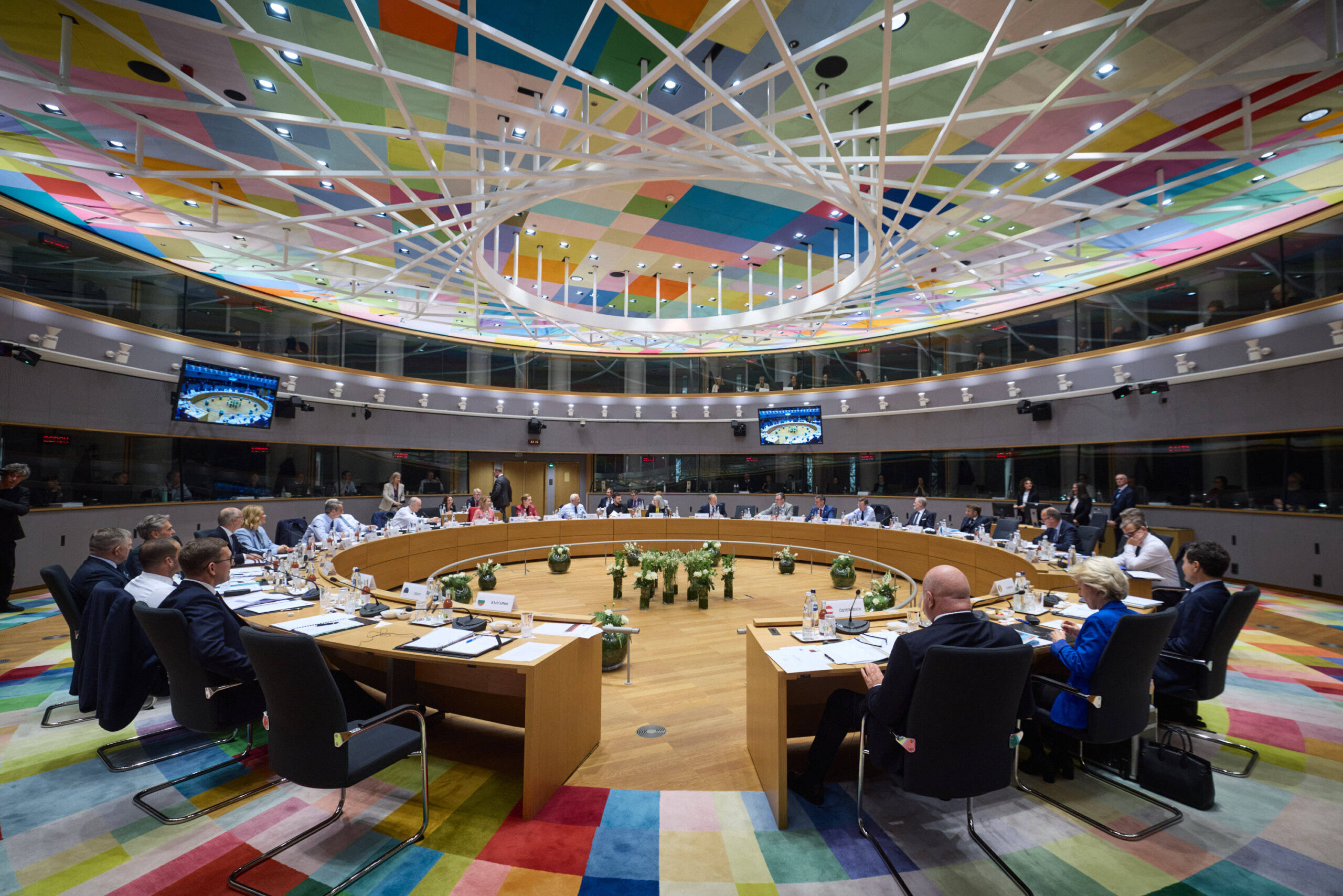
This Thursday and Friday, EU heads of state and government will meet to discuss and vote on this plan. The meeting might not settle every question to do with the complex scheme, but it will reveal whether the plan has the necessary support to move forward. With another vote scheduled on the controversial EU-Mercosur free trade agreement for the same meeting, there are so many moving parts that it is reminiscent of some of the truly memorable summits during the Greek sovereign debt crisis, Brexit, and the COVID-19 pandemic. The Council Conclusions—which may only be published late at night on Friday or even Saturday—will be pored over down to the last comma.
What’s in the plan
The details are important. This vote follows the important EU decision last week to use Article 122, the “emergency” provision of the EU’s treaty, to make the release to Moscow of Russia’s immobilized assets conditional on a peace plan and Russia paying reparations. While this move lifted a key hurdle to the reparations loan, it doesn’t mean the plan is a done deal. Belgium, where most of the assets are held, has objected to the plan, and Italy, Czechia, Bulgaria, and Malta have called on the EU to use alternative funding arrangements for Ukraine instead.
One possible reason for this objection can be found in rumors that the Trump administration has told European capitals that it does not want the scheme to go ahead. One of the points in the Trump administration’s recently leaked twenty-eight-point peace plan noted that $100 billion of the immobilized assets should be returned to Russia with another $100 billion for “US-led efforts to rebuild and invest in Ukraine,” with the United States receiving “50% of the profits from this venture.”
The European leaders signaling skepticism about the plan may earn themselves some brownie points in Washington, but they must also understand that the Trump administration’s alternative plan was buried by the decision they supported last week to invoke Article 122. Henceforth, the immobilization cannot be lifted until Russia pays Ukraine reparations.
What Belgium is thinking
The list of capitals expressing skepticism isn’t yet long enough to block the plans. But the arithmetic of qualified majority voting—which requires 55 percent of member states representing 65 percent of the EU’s population—isn’t the full story either. A “no” vote by Belgium could imply that member states can be forced to take steps that they perceive to be against their interests. So the main goal of the additional guarantees that are reportedly being prepared for Belgium is to convince its prime minister, Bart De Wever, at least to abstain from the vote.
At the same time, De Wever’s objections to the scheme should not be dismissed out of hand. Much was made of his comments earlier this month suggesting that Ukrainian victory was a “a fairy tale, a complete illusion.” There are indeed few examples of reparations being paid by a country that has not lost a war to a country that has not won it. The scheme being discussed relies on there being some chance that Moscow will pay reparations, so it is not unreasonable to raise how likely this is—even if the initial draft offered to mutualize the risk so that the principal would be repaid by all EU member states and not Ukraine if Russia doesn’t pay.
Russia is already wielding the threat of asymmetric retaliation against Belgium. Some of these risks also deserve to be mutualized, such as if Russia confiscates assets under Euroclear’s custodianship that have been immobilized inside Russia. While Euroclear has already built up a partial buffer against this, a stronger commitment by all EU member states would be fair. However, Belgium should not expect to be compensated for any asymmetric attack it may face, such as drone incursions. The EU should face the risks together but should not sponsor Belgium for doing its part against this collective threat.
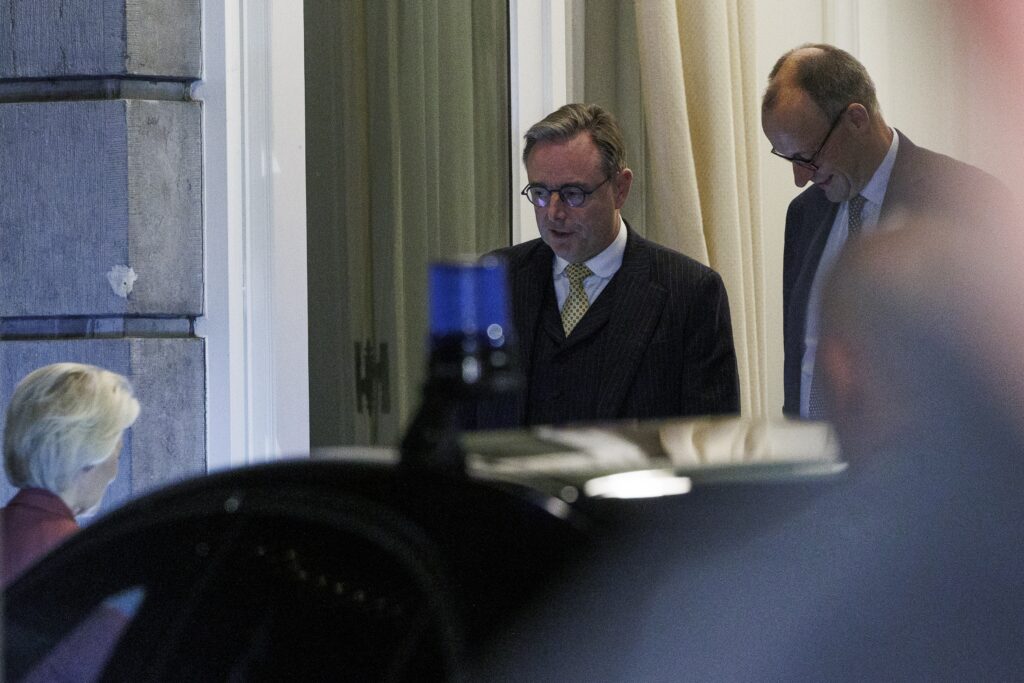
On December 5, German Chancellor Friedrich Merz, who has invested a lot of political capital in this scheme, and European Commission President Ursula Von der Leyen met with De Wever to discuss these issues over dinner. The outcome appears constructive. The technical work to provide Belgium with assurances on some of its concerns has reportedly continued apace. Germany has even signaled that it is willing to cover more of the risk than its share of EU gross national product normally dictates, but there is still quite a way to go.
De Wever’s steeliness has fed a wave of Belgian pluckiness, and the derogatory press speculation on his motives has made reaching a deal more difficult. The unlikely prime minister’s entire career has been built on Flemish nationalism and yet even Francophones trust he is standing up for Belgium’s national interest. And so, it is vital to provide him with enough legal and financial assurances. The institutions in Luxembourg, France, and the United Kingdom that hold smaller amounts of the immobilized assets should also be required to make the same move to make a U-turn palatable for Belgium. There are, moreover, solid arguments available to them. Even in friendly jurisdictions, Russia will struggle to prove its assets have been seized thanks to the reparations loan’s design, which does not constitute confiscation.
Where the money will go
What the cash is used for is an important and underdiscussed question, and it is bound to come up during the summit this week. The figure that would be made available to Ukraine next year has varied because of the number of parameters at play. Of the €95 billion allocated to macro financial assistance, €45 billion will actually have to be used to repay the G7’s ERA loans, which were meant to be repaid using interest revenue generated by the cash now being put to work in a different way. The remaining €155 billion allocated to supporting Ukraine’s defense industrial capacities should remain the plan even if there is a peace deal, as the money will provide Ukraine with the resources to rebuild and maintain a credible defense. Within this portion of the budget, it is very reasonable for there to be a quota devoted to supporting Europe’s defense industrial base. The arguments this week will likely focus on the level of the threshold.
So how will this week play out? European Council meetings featuring heads of state and government from all twenty-seven member states are described as historic a little too often. But what’s decided in the coming days will say a lot about how the EU deals with a world in which it must fend for itself.