WASHINGTON—The big surprise in Saturday’s stealth operation to bring Venezuelan dictator Nicolás Maduro to justice was not the success of the mission or the fact that US President Donald Trump approved the operation. The elite Delta Force commandos are some of the best trained in the world, and the overall precision of the mission demonstrated US military might yet again. For his part, Trump has wanted to see Maduro go dating back to his first term, when he led a coalition of countries recognizing an interim government.
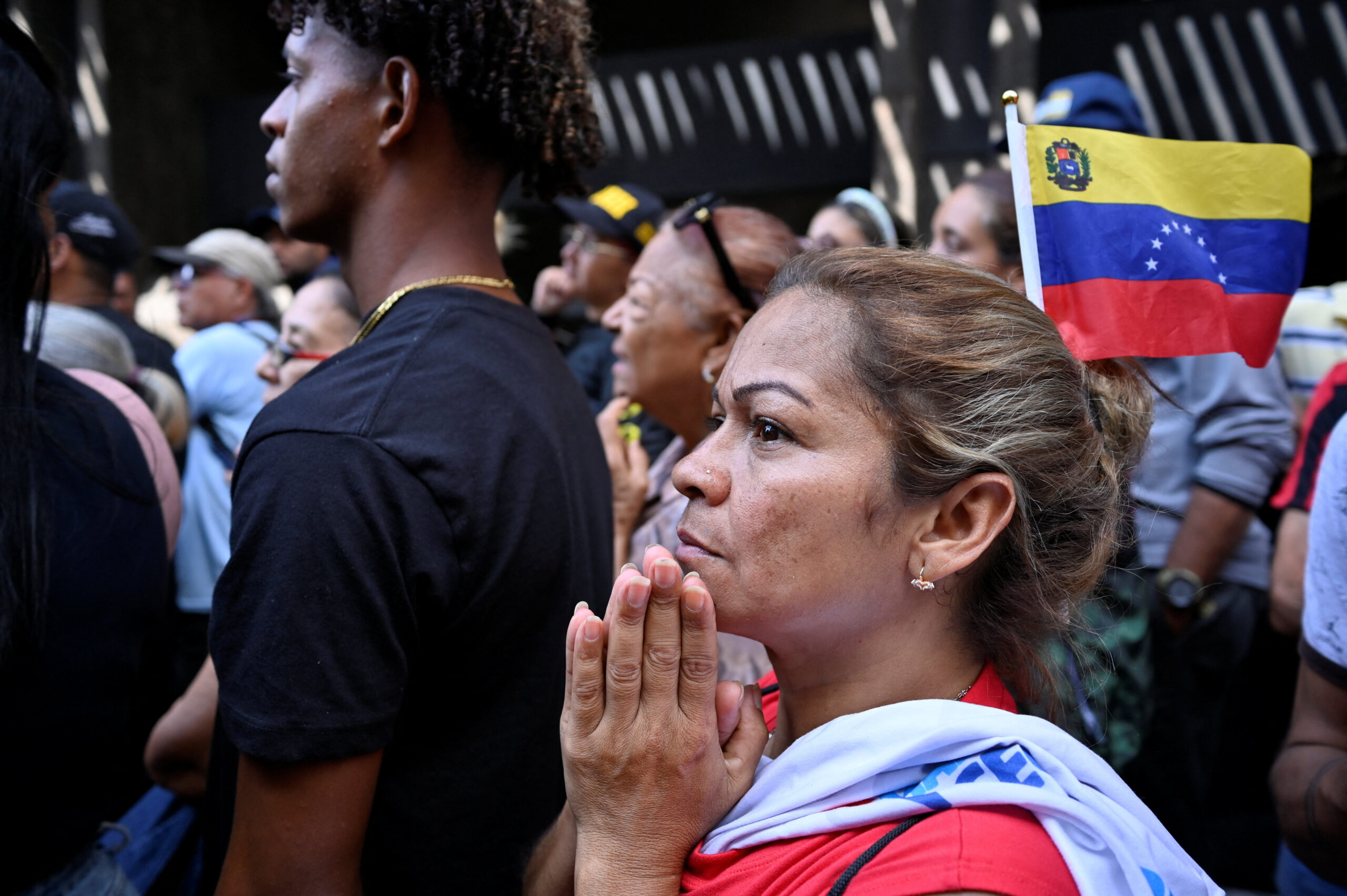
Nor was it a surprise that the country has been relatively calm since Maduro’s exit. Venezuela is not a powder keg. And Venezuelans didn’t flood the streets in celebration for fear of reprisal from security forces and Chavista-aligned paramilitary forces known as colectivos. Instead, Venezuelans flocked to the supermarkets to stock up—actions that again cast light on the economic suffering of the people in a country with an annual inflation rate over 500 percent and where 90 percent of the population lives below the poverty line.
Rather, what surprised some observers was the big gamble the Trump administration is making by giving Delcy Rodríguez, Maduro’s vice president and longtime Chavista loyalist, its blessing to run the country in the interim. Trump called her “gracious” in his press conference on Saturday. As for the leader of the Venezuelan opposition, Trump said María Corina Machado “doesn’t have the support within or the respect within the country.” There was no mention of the July 2024 election in which Machado was barred from running but then led the campaign of Edmundo González, who went on to win around 67 percent of the vote. This decision reinforced the strategic focus of phase one of the US mission.
How to explain this surprise? The administration is making what it sees as a strategic short-term bet on Rodríguez. Support remains strong for the Machado-led opposition with key US House Republicans forcefully voicing their support for her since the operation. Secretary of State Marco Rubio expressed “tremendous admiration” for Machado on Sunday, but he refused to endorse her or explicitly speak about a transition to democracy. Thus far, it appears that the opposition’s path to power rests on competing in yet another election. Yet that effort is doomed to fail unless the next election is different from all the previous ones under Maduro.
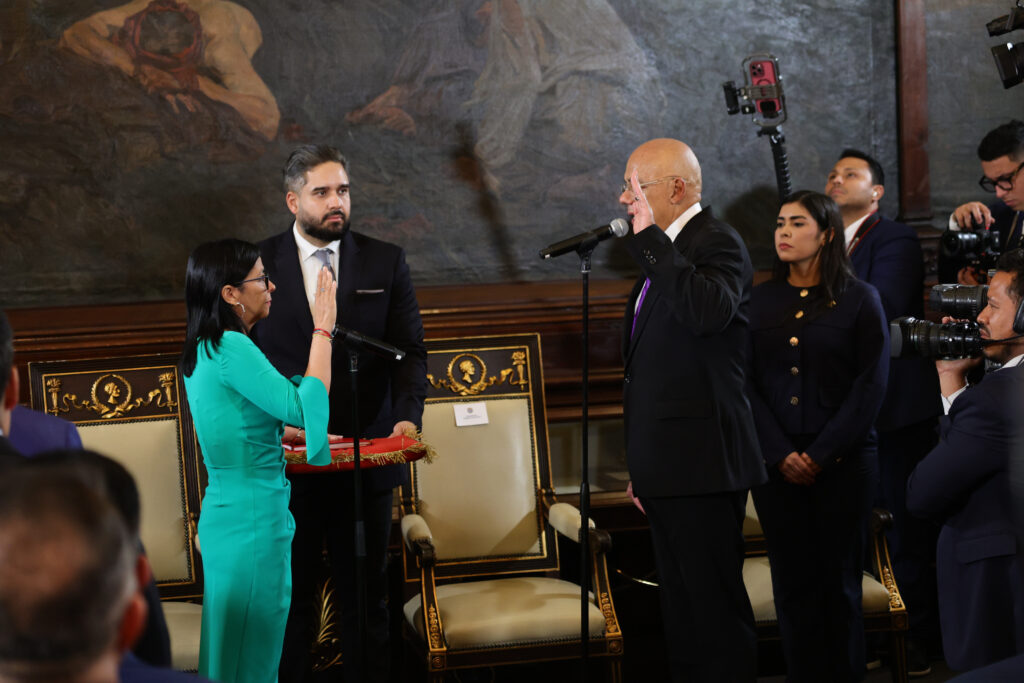
Rubio’s answer on the prospect for a transition to democracy was that “these things take time. There’s a process.” According to article 234 of the Venezuelan constitution, Rodríguez—who was officially sworn in on Monday—can serve ninety days as acting president, followed by an additional ninety days if approved by the Chavista-controlled National Assembly. Then the Assembly can declare an absolute absence of the presidency, triggering elections within thirty days. So, expect elections to be called within six months, if the regime is following the letter of the constitution. But so far the Venezuelan Supreme Court has danced around the many constitutional provisions around Rodríguez’s appointment, saying it was due to “circumstances not explicitly provided for in the Constitution.” A similar tactic of seeking to bypass established timetables was also used over a decade ago when former leader Hugo Chávez was dying.
With all this ambiguity, when the time is ready, what can the United States do to ensure elections are actually free, fair, and transparent, and that all candidates (including Machado) can run?
Thus far, the administration has shown little interest for elections in its public statements. That makes sense in the short run. This is an operation with a focus on transactional pragmatic realism. But elections will eventually be necessary to give political certainty to not only the Venezuelan people but also the foreign investors Venezuela badly needs. At that time, US pressure will be needed so Venezuela does not risk a dangerous repeat of previous elections—contests held in name only, without any real chance for non-Chavista-aligned politicians to officially win and assume power.
Rubio was right that there is a process that needs to occur. Venezuela has not seen a free and fair election this century. Staging one will require a number of factors: allowing all candidates to run, permitting airtime in the media, guaranteeing the safety of candidates, ensuring that voters are not intimidated at the ballot box, verifying that votes are not manipulated, and, of course, counting the votes accurately. An election under these conditions would give a significant advantage to opposition forces, who have proved they can win even under adverse conditions.
Given the dismal state of the country, the immediate US agenda has focused on strategic rather than political priorities. In media interviews on Sunday, Rubio clarified Trump’s statement that the United States would “run” Venezuela by laying out the terms that the administration wants: an oil industry that benefits US interests and the Venezuelan people, an end to drug trafficking, the removal of the Colombian criminal groups known as the FARC and ELN, and a country that “no longer [cozies] up to Hezbollah and Iran in our own hemisphere.” So, economic interests, security priorities, and stamping out foreign influence—all priorities laid out in the new National Security Strategy. Rather than running the country in the manner of an occupation, Rubio said on Sunday: “What we are running is the direction that this is going to move moving forward, and that is we have leverage.”
Trump has repeatedly threatened continued US military action—even warning of harsher actions—if Rodríguez does not comply with US demands. But we have learned time and time again that the Venezuelan regime cannot be trusted. Words don’t matter; actions do. And domestically, Rodríguez will seek to avoid being seen as too closely aligned with US interests to ensure her continued support among regime loyalists. That was clear in her combative comments on Saturday, shortly after the operation. Most likely, she will seek to walk a political tightrope to avoid being—at least for now—in the United States’ crosshairs. That much was evident with her Sunday statement where she pledged to “extend an invitation to the U.S. government to work together on a cooperation agenda.”
The Trump administration thus needs to establish specific benchmarks—incremental steps and final results—that the regime needs to meet when it comes to the economy, security, and foreign influence. The United States must set a timeline for compliance—and refuse to tolerate any attempts by Rodríguez to delay.
In addition to eventual elections, the Trump administration should pressure the Venezuelan regime to show it does intend to cooperate. One place to start is releasing wrongfully detained Americans from Venezuelan jails and freeing all political prisoners. But it also means means making concrete progress on key economic and security priorities such as:
- Resolving cases involving the oil assets expropriated by Hugo Chávez in 2007;
- Advancing a new hydrocarbons framework that allows oil companies to be able to operate in Venezuela either without the national oil company PDVSA as a partner or with a foreign company as the majority partner;
- Ensuring that foreign investments are respected;
- Clamping down on armed groups in the country and their myriad illicit activities, rooting out the strong linkages between these groups and the regime as well as foreign adversaries; and
- Cracking down on illicit narcotics flows.
This past weekend’s mission went entirely according to plan. But the United States is now forced to depend on the remnants of the Maduro regime for the next stage in the mission. That will be a much harder task. Ultimately, what’s needed in Venezuela is a partner government that allows for the freedom of its people, respects foreign investment, and that advances US and Venezuelan security and economic interests.