
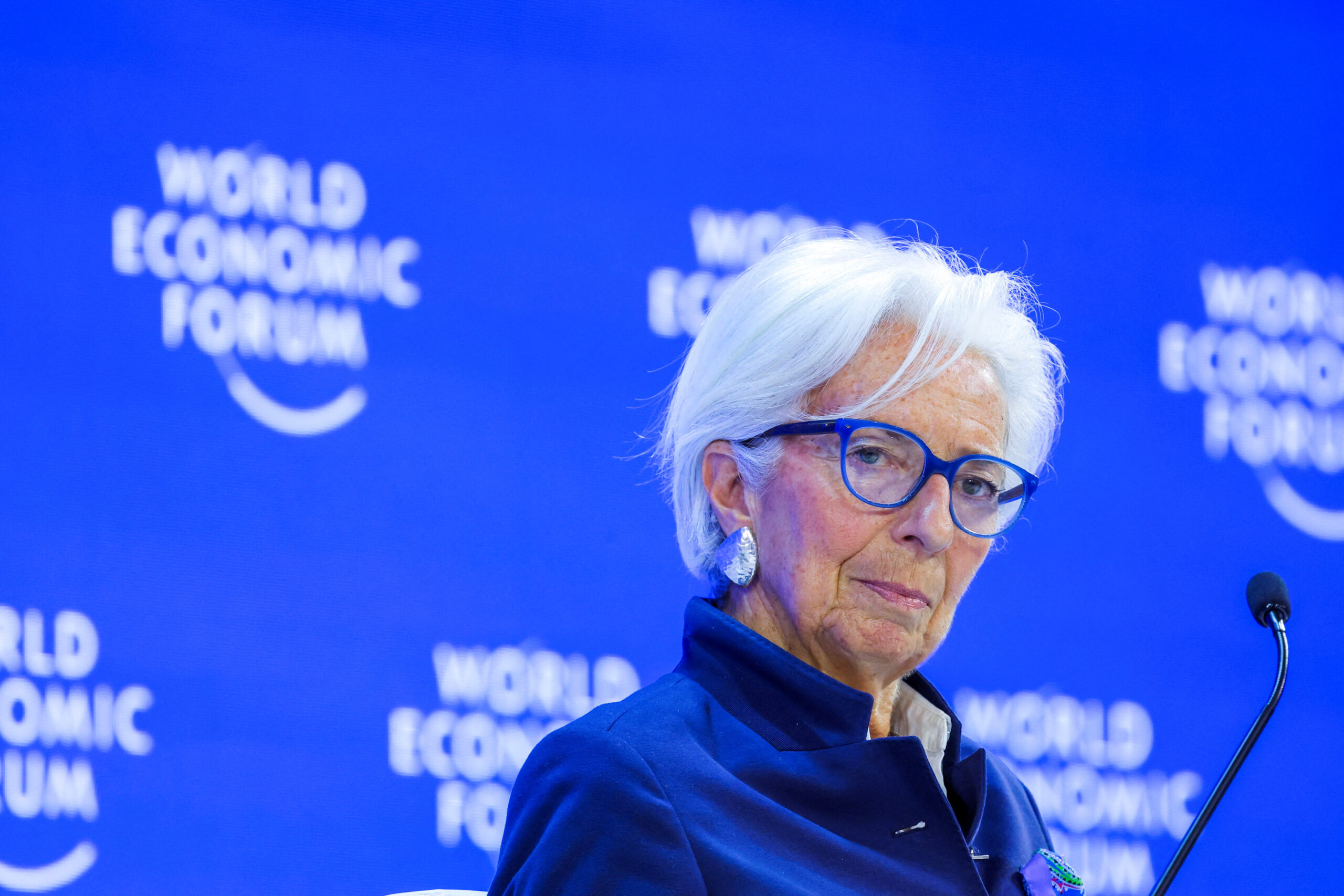
WARSAW—Speaking at the World Economic Forum in Davos, Switzerland, this past week, European Central Bank President Christine Lagarde said that Europe must “decide what we need to do to be strong by ourselves.” Against the backdrop of renewed transatlantic tensions over trade and the Trump administration’s desire for Greenland, this is a timely and necessary challenge for European leaders. But as the European Union (EU) looks to bolster its self-sufficiency, it is also worth asking: Where does Europe already outperform the United States and China? The answer is neither military power, where fragmentation remains a constraint, nor capital markets, which remain comparatively underdeveloped. But to stop there would be premature.
Too often, Europe is assessed through a narrow macroeconomic lens: economic growth rates, fiscal fragmentation, or the perceived slowness of political decision-making. On these metrics, Europe tends to fare worse than the United States or China. Europe is not built for speed or brute scale. Rather, it is built on a dense export base, technological depth, institutional stability, and economic diversity. As French President Emmanuel Macron put it in Davos: “Having a place like Europe, which sometimes is too slow, for sure, and needs to be reformed, for sure, but which is predictable, loyal, and where you know that the rule of the game is the rule of law, is a good place.”
Whereas the United States dominates frontier technologies and China excels in industrial mass production, Europe leads in the exports of luxury goods, processed agri-foods, and high-end services. Combined with its high levels of wealth and savings, human capital, and the advantages of the European single market, the EU has a solid foundation to build on as it seeks to reduce its dependence on Washington and Beijing.
The world’s largest trading power
Even focusing solely on the EU’s external trade, the bloc remains the largest global trading entity. In 2024, EU exports to nonmember countries reached roughly $4.5 trillion, exceeding both China ($3.6 trillion) and the United States ($3.23 trillion). This includes a surplus of roughly $370 billion, split between goods and services. And preliminary research indicates that over the long run, Europe’s economic output increased even amid the trade tensions with Washington over the past year.
Financial services, engineering, digital solutions, logistics, legal arbitration, and tourism form the backbone of Europe’s “intangible economy.” The United States remains the EU’s top partner in this domain.
In comparison, the United States runs a trade surplus in services and a deficit in goods; China runs a goods surplus and a deficit in services. Europe runs surpluses in both. This balance is not accidental. Rather, it reflects an economic model built around specialization and quality rather than volume. At the same time, Europe’s trade surplus is sure to be affected if Chinese overcapacity is permitted to flood European markets; a possibility Brussels is increasingly vigilant against.
Wealth and savings
Europe’s most underestimated asset is its wealth. European households hold approximately $18.9 trillion in bank deposits, against about $7.9 trillion in household debt. In the United States, household deposits amount to roughly $18.7 trillion, but household debt is far higher than Europe’s, at around $18.6 trillion. A larger share of US household wealth is also heavily exposed to equity markets. In China, wealth is concentrated in real estate and is less liquid due to capital controls. Europe’s savings-heavy model strengthens the bloc’s financial resilience in times of crisis and represents an enormous pool of latent investment potential.
Corporate Europe mirrors this financial conservatism. Leading firms from luxury brands to software companies have accumulated substantial cash buffers. This wealth remains underutilized, largely because Europe still lacks a fully integrated capital markets union. With such a capital markets union in place, Europe’s savings surplus could translate rapidly into higher investment, especially given that euro-area interest rates have historically been lower than in the United States.
Human capital
In higher education, Europe’s strength lies not in a handful of superstar institutions, but in depth and density. While the United States dominates the very top of global rankings and China is rapidly upgrading a small number of elite universities, Europe consistently places more institutions in the global top two hundred and top five hundred than either country. World-class universities are spread across Germany, France, Italy, the Netherlands, the Nordic countries, and Switzerland, forming a continent-wide talent base supported by free movement, public funding, and shared research programs.
This system produces a structural advantage. Europe excels at generating high-skill human capital at scale, with 4.4 million graduates in 2023, comparable to the United States, across engineering, life sciences, economics, and law. These are precisely the fields that underpin its strengths in advanced manufacturing, pharmaceuticals, high-end services, and regulation-intensive industries. Europe’s university network is therefore a quiet but critical pillar of its long-term economic power.
The single market
In terms of nominal gross domestic product (GDP), the EU roughly matches China and trails the United States. But this comparison understates the importance of Europe’s single market, the world’s largest integrated economic space. The EU’s free movement of goods, services, capital, and people across its twenty-seven countries add an estimated 9 percent to the EU’s yearly GDP.
To be sure, the United States is the leader in market capitalization. But while Europe may not produce tech giants like Google, it also produces fewer economic bubbles. And in several critical sectors, Europe is not merely competitive, it is dominant. These sectors include:
- Agri-food exports. The EU accounts for 35 percent of processed global agri-food exports (excluding intra-EU trade), leading not in raw commodities but in high-value, branded products protected by geographical indications, such as wine and cheese.
- Luxury goods. Roughly 70 percent of the global luxury market is controlled by European firms, forming an economic “fortress” around culture, heritage, and scarcity.
- High-end services. Europe exports complex machinery used worldwide and anchors global value chains that depend on trust, expertise, and legal certainty. Companies from the United States, China, and elsewhere use European arbitration institutions (like those in London, Paris, and Geneva) to settle cross-border commercial disputes.
Global supply chains, regulatory frameworks, luxury markets, financial services, and food systems all depend on Europe functioning smoothly. In a world of geopolitical fragmentation, this form of power is not obsolete. Europe does not need to outgrow the United States or outproduce China to matter. It already shapes how the global economy works.