
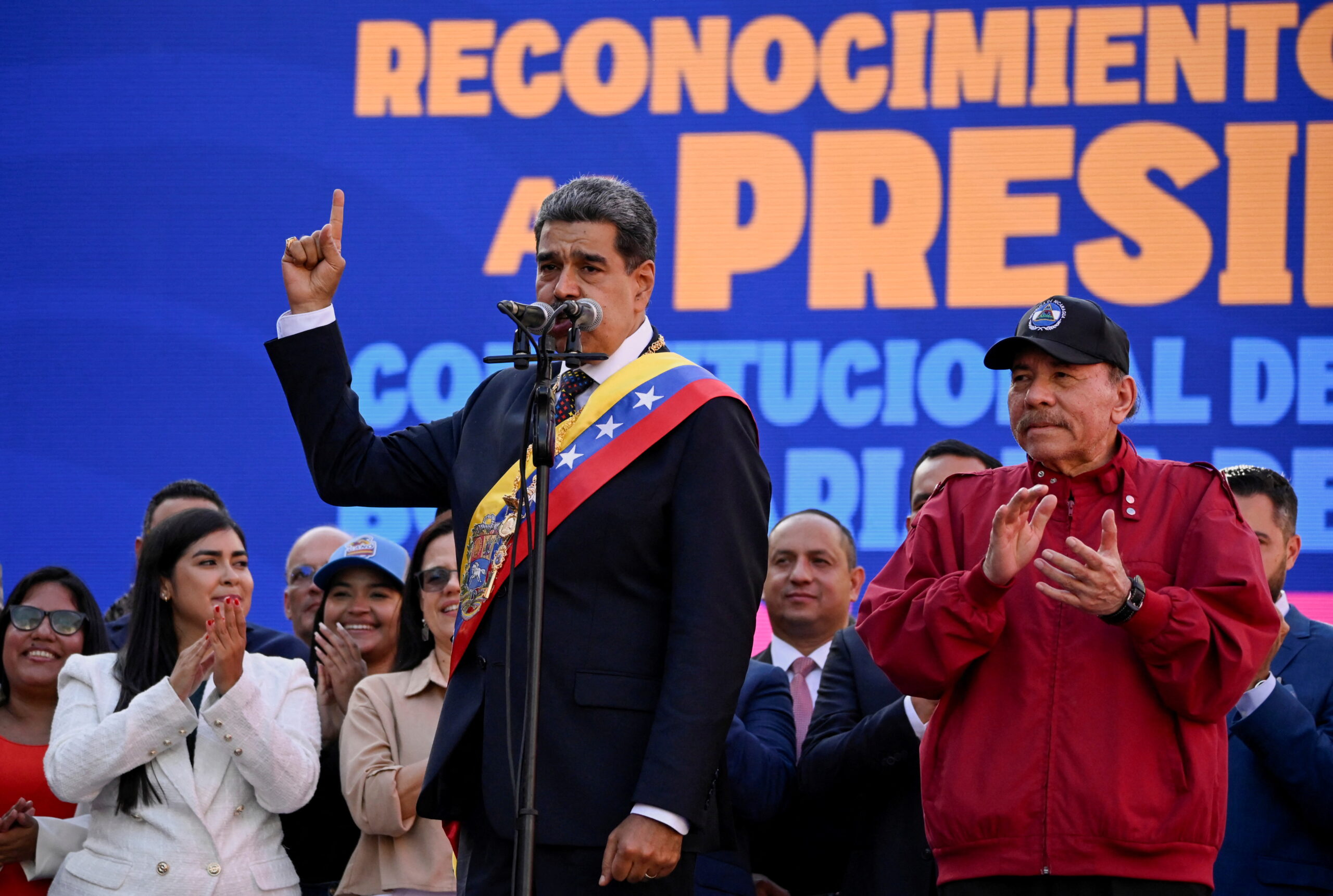
WASHINGTON—After nearly seven decades of communist rule, Cuba may be entering its most consequential period in generations. The Trump administration has increased pressure on the Cuban government, implementing a blockade on the island last month. Already struggling before the blockade, Cuba continues to endure food shortages, prolonged blackouts, and, for the past three months, a deepening energy crisis. On March 13, Cuban President Miguel Díaz-Canel stated that Havana has been in talks with Washington to “resolve bilateral differences.” According to reports, the Trump administration aims to force Díaz-Canel to step down in favor of someone more amenable to US interests.
If real change in Cuba does happen, then it will rank among the most important geopolitical developments in the Americas in a very long time, especially coming just months after Venezuelan dictator Nicolás Maduro was captured by the United States.
These developments suggest that a broader network of authoritarian regimes that long helped sustain one another politically, economically, and diplomatically is crumbling. To be sure, this does not mean that democratic openings will emerge on their own, as the case of Venezuela illustrates. Still, it is worth asking: With Maduro’s capture and the potential for a leadership change in Cuba, how should Washington and its partners in Latin America think about what comes next?
Not just a problem for Nicaraguans
While the unfolding situation in Cuba deserves the attention it is receiving, the United States should also turn its focus to another repressive Latin American regime: Nicaragua. The Central American country weighs more heavily on the long-term future of the region than many policymakers admit. For years, Nicaragua’s solidifying authoritarianism has been treated as a contained crisis, with its government considered to be repressive and diplomatically difficult but threatening few far-reaching consequences.
That view no longer holds. Today, the Ortega-Murillo regime is not only dismantling Nicaragua’s institutions, it is also shaping the region around it. United Nations (UN) experts have described the country as an authoritarian state with no remaining independent institutions. And Nicaragua’s persecution of its political opponents extends beyond its borders. The Ortega-Murillo regime is alleged to have denied passports, confiscated property, and even murdered dissidents in neighboring Costa Rica to silence the opposition. According to a report by the UN Group of Human Rights Experts published on March 10, the regime has a “transnational surveillance and intelligence network” that is embedded in diplomatic missions abroad. The malign influence also spills into geopolitics, as Nicaragua publicly backs Russia’s territorial ambitions in Ukraine. In September 2025, the regime signed trade agreements with three Ukrainian regions under Russian occupation, including Donetsk.
The Nicaraguan regime’s transnational repression creates problems across Central America. The Ortega-Murillo regime’s consolidation reinforces the notion that democratic erosion can become permanent. This complicates regional efforts to build a more predictable climate for investment, governance, and international cooperation. The subregion is already strained by migration pressures, weak institutions, and uneven democratic commitment. Any efforts to make Central America’s economies more cohesive will always be limited while one of its states continues to operate as an authoritarian holdout.
Thus, any serious ambition for a more governable, stable, and economically dynamic Central America runs through Nicaragua. The country is too central, large, and significant to work around. Too often, officials from the region have discussed Central American integration in siloed commercial or bureaucratic terms, as though it were mainly a matter of customs modernization, infrastructure, or trade facilitation. All these issues are, of course, important. But fostering a more integrated isthmus also requires political conditions such as legal predictability, credible institutions, and stronger cross-border trust. For any future vision of a more interconnected Central America, there needs to be a regional understanding that authoritarian breakdown in one country weakens the whole.
A new way forward
The subregion’s political conditions do not lend themselves to optimism. Its governments are preoccupied with domestic pressures. Its regional bodies are weak. There may be little appetite now for a broader conversation about reintegration, reconstruction, or long-term strategy for democratization. But that should not prevent US and Central American policymakers from thinking boldly about the future of the region.
A more serious approach to Nicaragua would begin with the United States increasing its economic pressure on the regime. The Trump administration’s decision in December 2025 to levy phased Section 301 tariffs against certain Nicaraguan goods is a welcome start. These efforts should be coupled with regional support for the opposition in Nicaragua and a blanket refusal to normalize the Ortega-Murillo regime’s repression.
A viable future for Nicaragua requires the country’s dictators, Daniel Ortega and his wife Rosario Murillo, to relinquish power and guarantee free and fair elections as soon as possible. US President Donald Trump should press the regime on this point while threatening greater economic pressure, especially where it would hurt the most: gold. Gold is the regime’s top export commodity, and additional US sanctions on the industry would certainly be felt by the leadership. In addition, the US Congress is currently considering other punitive measure on Nicaragua’s gold trade.
In the end, the White House may decide not to go as far in confronting Nicaragua as it did with Venezuela and Iran, or even as far as it is going with Cuba, where the endgame is still unclear. But the combined effect of these recent US actions elsewhere, together with increased economic pressure on Nicaragua, could motivate the current leadership to seek a peaceful exit.
But Nicaragua also needs more. It requires an amnesty for all arbitrarily detained political prisoners, a restoration of basic civil and political rights for all, and the creation of a more credible legal and regulatory environment. What Nicaragua needs is a government that makes room for the private sector and smaller entrepreneurs, as well as conditions that could eventually support domestic and foreign investment with greater confidence.