
To stop Chinese dual-use battery dominance, the United States and South Korea need to team up
Bottom lines up front
- China’s dominance in batteries enables key military capabilities, including drones, robotics, naval mining, placing US and allied forces at a disadvantage.
- China could establish a global monopoly in dual-use batteries, including in the South Korean market, despite Seoul being the world’s second-most capable actor in the battery market.
- The United States and South Korea must cooperate comprehensively across the whole dual-use battery supply chain and avoid unnecessary trade barriers on allies and friendly partners.
The Chinese battery export juggernaut threatens US national security supply chains across military hardware, robotics, and artificial intelligence. Alarmingly, Chinese battery technology is making inroads in surprising places, including South Korea, the world’s second-largest battery player. If Chinese firms can dislodge South Korean battery incumbents in their home market, they could cement global dominance in a critical dual-use technology. Battery supply chains that do not rely on China (sometimes referred to as “ex-China” supply chains) have been under pressure for years, but they may now be starting to crack. Ex-China refers not simply to goods assembled outside China, but to batteries and battery components whose manufacturing, ownership, and critical upstream material inputs are not substantially dependent on entities based in or controlled by the People’s Republic of China. The United States and South Korea must strengthen cooperation across the entirety of the dual-use battery supply chain and urgently expand non-China capacity across mining, processing and refining, and manufacturing.
Batteries are about as dual use as it gets
Batteries are important for both commercial and military purposes. Their commercial applications are straightforward, encompassing grid storage, electric vehicles (EVs), and more. Most autonomous vehicles run on a battery. As batteries improve, their commercial applications will shift: electric vehicles (EVs) using advanced batteries can obtain a range of six to seven hundred miles on a single charge.
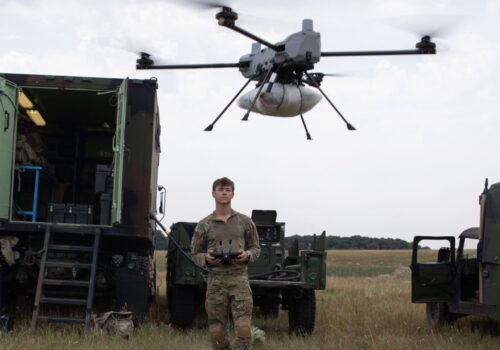
While advanced batteries’ commercial applications are vast, and growing, batteries—like many technologies—hold military consequences. They are already deployed in first-person-view drones and other autonomous weapons systems, with Ukraine alone procuring about 3 million first-person-view drones in 2025. They power intelligence, surveillance, and reconnaissance (ISR) platforms and sensors, and they sustain the operations of diesel-electric submarines currently in service worldwide (including South Korea’s next-generation KSS-III, which relies on lithium-ion battery propulsion). Advanced batteries could also enable next-generation systems such as directed-energy weapons or longer-endurance submarines capable of extended missions without surfacing. Extra-large uncrewed undersea vehicles (XLUUVs) employing diesel-electric propulsion could be particularly relevant in a Taiwan contingency due to their capabilities in enhancing anti-submarine and anti-surface operations, including for mine laying.
The robotics capabilities enabled by batteries could also prove decisive in future conflicts. For example, Chinese quadrupeds—or four-legged robots—often feature greater payloads and ranges than their Western counterparts due to more advanced batteries, along with manufacturing scale. According to an October 2025 SemiAnalysis article, the US–South Korean firm Boston Dynamics’s robots have a battery life of ninety minutes and a payload capacity of fourteen kilograms; conversely, the Chinese firm Unitree’s robots have a battery life of 180 minutes and a payload capacity of forty kilograms—and at less than half the cost. China’s growing capabilities in batteries and robotics are being seen in military exercises and even publicized by authoritative Chinese state media.
The Pentagon’s battery plans
The Department of Defense (DOD) has long recognized the importance of integrating batteries. It has planned to scale battery usage through multiple programs, such as the DOD Lithium-Battery Strategy (2023–2030), the Battery Network (BATTNET) program, the prototyping of commercial lithium batteries, and the Army Small Business Innovation Research (SBIR) program to seed small business innovation.
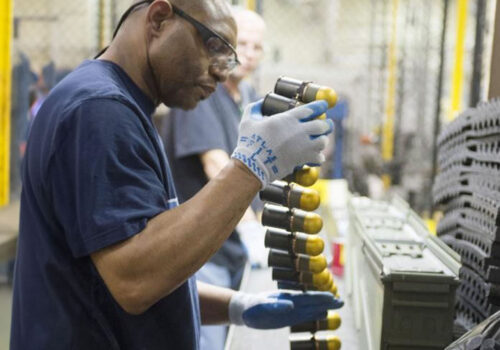
The Pentagon relies on roughly four thousand types of batteries across its supply chains, powering everything from radios and drones to missile systems and naval platforms. A significant share of these batteries likely originates from Chinese firms. In many cases, neither DOD nor the prime contractor has full visibility into the lower-tier battery supply chain. Firms may know the immediate product they are selling, but not the full origin, ownership, processing, or foreign-dependency exposure embedded in the cells, materials, or subcomponents. In some cases, suppliers may also have incentives to avoid asking too many questions or to present the chain as compliant unless forced to disclose deeper tiers.
While no law currently prohibits the Pentagon from importing Chinese-connected batteries, this dependence exposes the United States to potential coercion. Building resilient domestic and allied production capacity is therefore a strategic imperative.
The South Korean battery market might collapse under Chinese pressure
South Korea is a global leader in lithium-ion and solid-state battery technologies, with companies such as LG Energy Solution, Samsung SDI, and SK On pioneering high-density, reliable chemistries now powering vehicles, storage systems, and electronics worldwide. While South Korea is uniquely important in ex-China battery supply chains, it is facing growing pressure both at home and abroad. Both Seoul and Washington need to grasp the national security dangers of a China-dominated global battery supply chain and understand the risks of Chinese firms in the South Korean market.
China’s battery footprint in the South Korean market surged in 2025 as Shenzhen-based BYD became the first Chinese EV manufacturer to launch there. Affordability has been BYD’s main draw: the Atto 3 is cheaper than its Hyundai and Kia equivalents and sells in South Korea at its lowest price outside of China. Within just four months of its debut, BYD topped Tesla as the best-selling EV importer in South Korea, despite offering only a single model. South Korean customers’ longtime preference for domestic automakers and a stigma against Chinese-made products might yet limit BYD’s prospects. Nonetheless, Chinese-made EVs captured one third of the South Korean market last year and have already accounted for 30.9% of EV registrations in the first quarter of 2026. While Korean EV firms typically earn the bulk of their revenues in the global market–not domestically–the loss of the Korean market to Chinese players poses significant commercial, symbolic, and cybersecurity risks.
While facing pressure at home, South Korean battery makers and EV players are navigating intensifying challenges in global markets. From January to April 2026, LG Energy Solution and SK On collectively held just 12.6 percent of global market share in EV battery usage—down 1.2 percent from the previous year and dwarfed by Contemporary Amperex Technology Limited (CATL) and BYD’s combined 54.3 percent. With the discontinuation of US tax credits dampening EV demand, some South Korean manufacturers appear to be pivoting their North American operations towards Energy Storage System (ESS) batteries. Across the Atlantic, China is making an accelerated push into the European Union (EU), threatening to erode South Korean firms’ prior dominance in countries like Hungary.
Seoul’s battery dilemma
Concerns over physical safety, rather than strategic vulnerabilities, seem to have largely directed South Korean regulatory action so far. The current administration, for example, is pushing to mandate that EV battery-related information be made available to customers. While this move connects to growing public concern over battery fires, it also demonstrates the importance of enhancing transparency regarding battery provenance. In 2024, when the South Korean government first urged automakers to disclose manufacturing information for their EV models, twenty-one top automakers released battery information for sixty-nine models sold in South Korea. Astonishingly, about 25 percent of the models used Chinese batteries, suggesting deeper supply chain penetration than previously realized.
South Korea must carefully balance the realities of its economic ties with China while acknowledging that Chinese market penetration—especially in dual-use battery and robotics supply chains—poses security risks. President Lee Jae-Myung, who has declared a “pragmatic” foreign policy stance and promised to rejuvenate a stagnating economy, has pushed to stabilize relations with Beijing, making it unlikely that Seoul would enact any sort of discriminatory regulation that risks aggravating its neighbor. Striking this admittedly difficult balance will impact not only the South Korean economy but also allied competitiveness and resilience. If the world’s second-largest battery player folds, then ex-China battery supply chains could collapse.
Worryingly, China is already on pace to consolidate global dominance across dual-use battery supply chains. Its domestic battery production rose 46 percent from 2023 to 2024, Chinese firms might commercialize next-generation solid-state battery chemistries by 2030, and China dominates midstream processing and refining. China is also adding an astonishing level of overcapacity, with lithium-ion battery production 60 percent higher than total battery demand. Given excess domestic capacity, many Chinese-made batteries are shipped abroad: about 30 percent of finished battery production in 2024 was ultimately exported. Given that EV batteries are denser and more technologically complex—and therefore more militarily useful—than grid storage batteries, it is in the US national interest that Chinese firms not capture South Korea’s EV market. Seoul should prioritize policies that strengthen long-term competitiveness and domestic innovation, while working with Washington to secure allied leadership in advanced battery production.
How to avoid sole-supplier dependency
The United States and South Korea have a clear, mutual interest in deepening and broadening the alliance, including in the case of batteries.
First, the United States should avoid tariffs on South Korea and other friendly actors wherever possible, especially when these measures risk cementing a Chinese monopoly in dual-use technologies. Second, the United States and South Korea should consider leaping to advanced battery chemistries, such as solid state or lithium sulfur. South Korea’s “2030 K-Battery Development Strategy” and newly formed “2045 Science and Technology Frontier Strategy” committee–among other initiatives—have laid the groundwork for this effort. Moreover, Chinese market penetration in South Korea has generated anxiety among South Korean businesses with interests in achieving next-generation battery capabilities. Some solutions Seoul should consider include targeted, strategic subsidies tied to a battery’s energy density and the value of recycled metals, as well as measures that strengthen transparency while reducing strategic supply-chain dependencies.
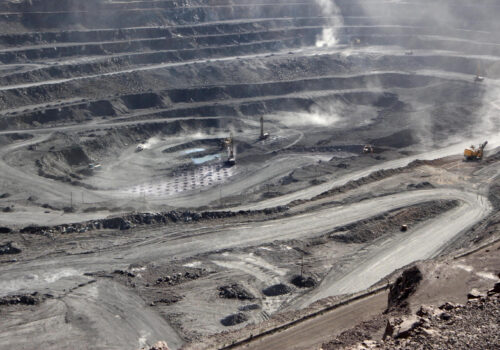
But a comprehensive United States–South Korean battery strategy would incorporate the entire value chain, including upstream mining and encompassing processing and refining.
First, under existing US rules, the Minerals Security Partnership, the Export-Import Bank (EXIM), and the US International Development Finance Corporation provide a framework for financing. These tools could allow US firms to invest in the same jurisdictions where South Korean companies are already active, such as in POSCO and LG’s investments in Australia, Argentina, and Indonesia. Both the United States and South Korea could explore explicit agreements linking minerals to refining streams for the US market.
Second, midstream cooperation remains underdeveloped. The Pentagon-backed Batteries and Energy to Advance Commercialization and National Security (BEACONS) facility at the University of Texas at Dallas is experimenting with solid-state, aqueous zinc-ion, and lithium-metal chemistries to create entry points for allied expertise. However, larger production pilots are needed. As such, Washington will need to leverage other funding streams and adapt them to guarantee Pentagon-linked offtake for cathode and anode materials. Embedding South Korean refiners such as Korea Zinc and POSCO into multiple Pentagon supply chains or other US funding streams, such as EXIM’s China and Transformational Exports program, and tying incentives to defense-grade standards would ensure commercially viable and strategically aligned midstream capacity.
Finally, downstream cooperation is most visible in large-scale battery manufacturing ventures. Expanding cooperation downstream in commercial EV and battery storage markets would require adapting joint ventures to produce defense-grade and dual-use batteries as well as targeting specialized defense applications. In tandem, Washington must also guarantee visa access and workplace security for the South Korean technical staff, engineers, and managers critical for transferring expertise. Embedding labor protections in defense-oriented requirements would create a bridge between commercial capacity and national security needs.
In sum, should China establish a global monopoly across battery supply chains, the military, strategic, and commercial implications for the alliance will be profound. The United States and South Korea must cooperate comprehensively across the totality of dual-use battery supply chains, from the upstream to the downstream, while avoiding unnecessary trade or investment barriers on allies and friendly partners. If the alliance can remain competitive with China in battery supply chains, or even surpass Chinese capabilities, it could strengthen the United States and its allies’ military and economic leadership.
About the authors



Related content
Explore the program

The Indo-Pacific Security Initiative (IPSI) informs and shapes the strategies, plans, and policies of the United States and its allies and partners to address the most important rising security challenges in the Indo-Pacific, including China’s growing threat to the international order and North Korea’s destabilizing nuclear weapons advancements. IPSI produces innovative analysis, conducts tabletop exercises, hosts public and private convenings, and engages with US, allied, and partner governments, militaries, media, other key private and public-sector stakeholders, and publics.
Image: CATL battery factory in Debrecen, Hungary, March 2, 2026. REUTERS/Marton Monus