

Recent analysis

Programs

The Global Energy Center develops and promotes pragmatic and nonpartisan policy solutions designed to advance global energy security, enhance economic opportunity, and accelerate pathways to net-zero emissions.

Events

Event Recap

Jun 19, 2012

Water and Watts: the Potential to Save Energy and Water in the Municipal, Industrial, and Commercial Sectors

By Adrienne Chuck

The third meeting in the Atlantic Council’s series on the Energy Water Nexus, the June 19th workshop entitled “Water and Watts” addressed the potential to save energy and water in the municipal, industrial, and commercial sectors.

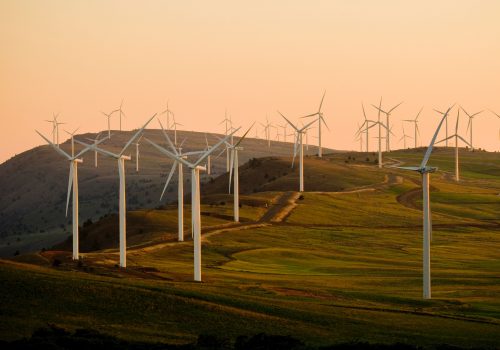
Climate Change & Climate Action Energy & Environment

Event Recap

Dec 9, 2011

Strategy Session with National Security Advisor to the Prime Minister of Bulgaria

By Jason Harmala

On December 9, the Atlantic Council’s International Security Program hosted an off-the-record strategy session with Svetlin Yovchev, national security advisor to Boyko Borisov, Prime Minister of Bulgaria. He was previously head of Bulgaria’s State Agency for National Security and earlier he worked in the former National Security Service.

Energy & Environment Energy Markets & Governance

Event Recap

Nov 10, 2011

Energy Water Nexus Primary Fuels for Power and Transportation in the US

By Adrienne Chuck

 The Atlantic Council Energy and Environment Program has undertaken a series of workshops to investigate the intersection between water and energy. The “energy-water nexus” examines water availability, or more accurately water scarcity, as a key energy-related issue. With this series of conferences, the Council built upon its work to better inform Congress, the American public, […]

Climate Change & Climate Action Energy & Environment

Content

Issue Brief

Jan 9, 2020

Transforming the power sector in developing countries: Geopolitics, poverty, and climate change in Bangladesh

By Robert F. Ichord, Jr.

As the South and Southeast Asian region faces increasing energy demand due to both population and economic growth, countries like Bangladesh must meet that demand while facing and overcoming critical environmental and energy security challenges. How is Bangladesh seeking to diversify its energy mix and establish more local and decarbonized power systems, and what are key opportunities for future government and foreign investment?

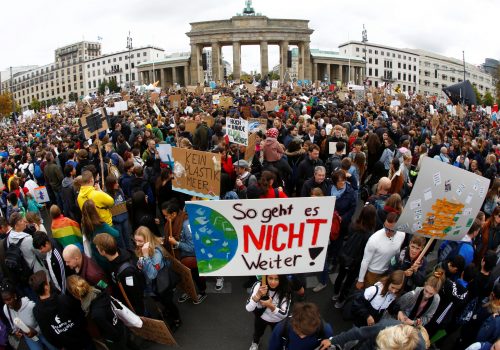
Bangladesh Climate Change & Climate Action

Issue Brief

Jan 9, 2020

Transforming the power sector in developing countries: Geopolitics, poverty, and climate change in Pakistan

By Robert F. Ichord, Jr.

As the South and Southeast Asian region faces increasing energy demand due to both population and economic growth, countries like Pakistan must meet that demand while facing and overcoming critical environmental and energy security challenges. How is Pakistan seeking to diversify its energy mix and establish more local and decarbonized power systems, and what are key opportunities for future government and foreign investment?

Climate Change & Climate Action Energy Markets & Governance

Issue Brief

Jan 9, 2020

Election 2020: What’s at stake for energy policy?

By David L. Goldwyn, Andrea Clabough

As the US presidential election in November 2020 draws nearer, the energy policy platforms—including domestic energy, climate change, foreign, and trade policies—from the Democratic candidates, as well as the energy policies of a potential second Trump Administration, have become increasingly clear.

Energy Markets & Governance Energy Transitions

Issue Brief

Jan 9, 2020

European energy diversification: How alternative sources, routes, and clean technologies can bolster energy security and decarbonization

By Richard L. Morningstar, András Simonyi, Olga Khakova, Irina Markina

The European Union’s efforts to achieve a carbon-neutral economy present a unique and timely opportunity to strengthen European energy security. What is the EU currently doing to meet its decarbonization goals, address the role of natural gas in Europe’s low-carbon future, and explain the potential for new gas sources, alternative gas routes, and clean energy technologies to reduce carbon emissions? And how can this be done while simultaneously increasing European energy security and opportunities for transatlantic cooperation?

Energy Markets & Governance Energy Transitions
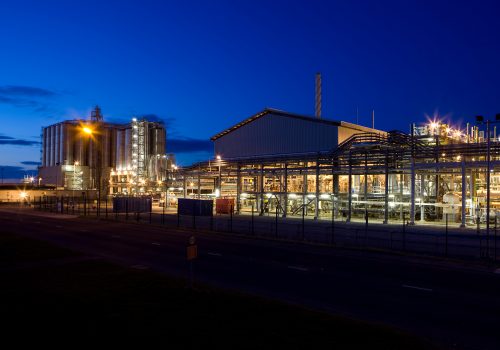
Manufacturing facility

Issue Brief

Jan 9, 2020

The Saudi Aramco-SABIC merger: How acquiring SABIC fits into Aramco’s long-term diversification strategy

By Private: Jean-François Seznec

Throughout 2019, financial markets have watched the planned Saudi Aramco initial public offering (IPO), which was finally launched in December. A quieter, but no less significant, story was the Saudi oil company’s acquisition of SABIC. Saudi Aramco strove to have a successful IPO, especially through increased transparency and diversification, and the SABIC acquisition was a key element of Saudi oil company's diversification strategy. Going forward, what does the merger mean for both companies, what is the new relationship between Saudi Aramco and SABIC, and what are the merger’s implications for the intricate relationship between the various bureaucracies and leadership in Saudi Arabia?

Energy Markets & Governance Energy Transitions

New Atlanticist

Jan 7, 2020

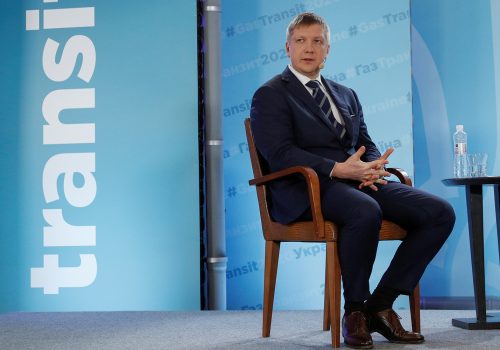
The 11th hour transit deal is a relief for European energy consumers and a pivotal opportunity for Ukraine’s future energy strategy

By Olga Khakova

The Naftogaz agreement with Gazprom is a cautious win for Ukraine, the agreement buys time for the country to reform its energy sector, which will be critical for Ukraine’s energy security, regardless of future contracts with Gazprom.

Energy Markets & Governance Geopolitics & Energy Security

In the News

Jan 1, 2020

Ellinas in Cyprus Mail: Energy outlook for 2020: the need to forge new path

Energy & Environment Energy Markets & Governance
Stock exchange

EnergySource

Dec 30, 2019

The Aramco IPO isn’t quite enough to realize MBS’s diversification ambitions

By Randolph Bell

After significant delays and a number of setbacks, Aramco finally listed shares representing 1.5 percent of the company’s total value on the domestic Tadawul exchange. The $25.6 billion that the IPO raised is nothing to scoff at, but it still is not enough to fully realize MBS’ ambitions. Where does the IPO go from here?

Energy Markets & Governance Energy Transitions

In the News

Dec 18, 2019

Cohen in Forbes: Saudi Aramco IPO Hits $2 Trillion Mark Amid Guarded Forecast

By Atlantic Council

Energy Markets & Governance Middle East

In the News

Dec 17, 2019

Shaffer quoted in Daily Sabah on Israel-Turkey gas relations

By Atlantic Council

Energy Markets & Governance Israel

Experts