
Recent analysis

Programs

The Global Energy Center develops and promotes pragmatic and nonpartisan policy solutions designed to advance global energy security, enhance economic opportunity, and accelerate pathways to net-zero emissions.

Events

Issue Brief

Jan 9, 2020

Election 2020: What’s at stake for energy policy?

By David L. Goldwyn, Andrea Clabough

As the US presidential election in November 2020 draws nearer, the energy policy platforms—including domestic energy, climate change, foreign, and trade policies—from the Democratic candidates, as well as the energy policies of a potential second Trump Administration, have become increasingly clear.

Energy Markets & Governance
Energy Transitions

Global Energy Forum

Jan 9, 2020

European energy diversification: How alternative sources, routes, and clean technologies can bolster energy security and decarbonization

By Richard L. Morningstar, András Simonyi, Olga Khakova, Irina Markina

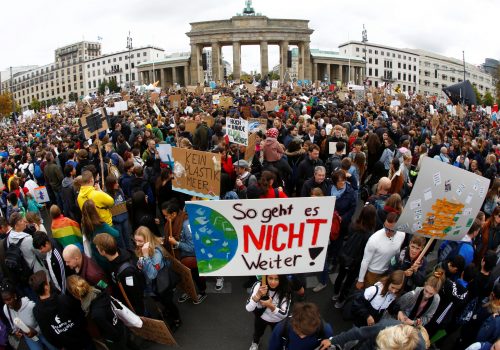
The European Union’s efforts to achieve a carbon-neutral economy present a unique and timely opportunity to strengthen European energy security. What is the EU currently doing to meet its decarbonization goals, address the role of natural gas in Europe’s low-carbon future, and explain the potential for new gas sources, alternative gas routes, and clean energy technologies to reduce carbon emissions? And how can this be done while simultaneously increasing European energy security and opportunities for transatlantic cooperation?

Energy Markets & Governance
Energy Transitions
Manufacturing facility

Global Energy Forum

Jan 9, 2020

The Saudi Aramco-SABIC merger: How acquiring SABIC fits into Aramco’s long-term diversification strategy

By Private: Jean-François Seznec

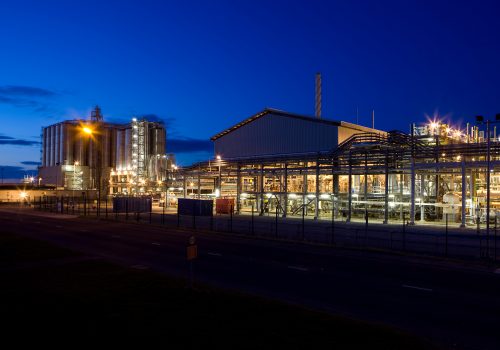
Throughout 2019, financial markets have watched the planned Saudi Aramco initial public offering (IPO), which was finally launched in December. A quieter, but no less significant, story was the Saudi oil company’s acquisition of SABIC. Saudi Aramco strove to have a successful IPO, especially through increased transparency and diversification, and the SABIC acquisition was a key element of Saudi oil company’s diversification strategy. Going forward, what does the merger mean for both companies, what is the new relationship between Saudi Aramco and SABIC, and what are the merger’s implications for the intricate relationship between the various bureaucracies and leadership in Saudi Arabia?

Energy Markets & Governance
Energy Transitions

Content

EnergySource

Jul 28, 2021

These military veterans are solving our energy and climate problems, one idea at a time

By Veterans Advanced Energy Fellows, Cohort 2

A series of policy papers focusing a host of topics from Just Transition policy in Colorado, to hydrokinetic energy in rural areas, to port decarbonization strategies, all written by the Atlantic Council's Veterans Advanced Energy Fellows.

Energy & Environment
Energy Transitions

EnergySource

Jul 22, 2021

Expanding nuclear energy to the Arctic: The potential of small modular reactors

By Julia Nesheiwat

As Arctic communities look to reduce reliance on diesel generators for electricity production, small modular reactors are becoming an increasingly attractive option. Collaboration between governments, private companies, and civil society organizations is crucial to ensure the successful development and deployment of safe, transportable, microreactors for remote areas.

Energy & Environment
Energy Transitions

EnergySource

Jul 21, 2021

Bitcoin mining: Digital money printing with real world footprints?

By Julia Nesheiwat

As interest in cryptocurrency surges and scrutiny over energy usage intensifies, new policies and market mechanisms to improve ESG standards and use clean energy for bitcoin mining have become increasingly important.

Central Europe
Digital Currencies

In-Depth Research & Reports

Jul 21, 2021

Brief 3: Hydrogen transportation and storage

By Cynthia Quarterman

This third brief in the Atlantic Council’s hydrogen policy sprint discusses pathways for hydrogen transportation and storage infrastructure development in the United States.

Energy Markets & Governance
Energy Transitions

EnergySource

Jul 17, 2021

Hydrogen: Australia’s new liquefied natural gas

By Mary-Rose de Valladares

Australia aims to be a leading producer and exporter of green hydrogen by 2030. It is already the world’s largest exporter of coal and the second largest exporter of liquefied natural gas (LNG). In response to climate change, Australia is emulating its own LNG export success in order to position itself for a new role as a major hydrogen producer and exporter.

Australia
Energy & Environment

EnergySource

Jul 15, 2021

Fit for 55: Reshaping global climate leadership and transatlantic cooperation

By The Global Energy Center

Global Energy Experts analyze the impact and highlights from the newly released European Union "Fit for 55" climate action package.

Energy & Environment
Energy Transitions

AC Selects

Jul 11, 2021

AC Selects: The carbon economy: impacts and solutions

Week of July 11, 2021 This week, the Global Energy Center dives into the carbon economy’s impact on spatial inequality, and how net-zero emissions goals are being targeted. Related events

Energy & Environment
Energy Transitions

TURKEYSource

Jul 1, 2021

Can energy be the key to Turkish-US relations in the Biden era?

By Eser Özdil

In spite of ups and downs in the political relationship, the United States and Turkey have always shared mutual interests on energy including through the Southern Gas Corridor and emerging LNG trade. Shared priorities on developing renewables and cooperation to strengthen the energy security of Eastern Europe are now emerging areas of cooperation.

Climate Change & Climate Action
Economy & Business

EnergySource

Jun 28, 2021

Climate change, energy security, and international nuclear energy: Competition in the Czech Republic

By Robert F. Ichord, Jr.

Recent reports of Russian intelligence operations in the Czech Republic in 2014 have escalated tensions between the two countries, directly affecting the Czech government's plans for the future development of its nuclear sector. In light of this changing dynamic, President Biden should work to support Czech energy security and act to weaken Russia’s position in Central and Eastern European nuclear power markets.

Central Europe
Energy & Environment

GeoTech Cues

Jun 11, 2021

Can AgriTech entrepreneurs save the Middle East’s food supply?

By Hezha Barzani and Matthew Goodman

On June 9, the Atlantic Council’s GeoTech Center and empowerME Initiative hosted a private, on-the-record roundtable. Read the key takeaways.

Energy & Environment
Energy Transitions

Experts