Recent analysis

Programs

The Global Energy Center develops and promotes pragmatic and nonpartisan policy solutions designed to advance global energy security, enhance economic opportunity, and accelerate pathways to net-zero emissions.

Events
Global Energy Forum

Jan 9, 2020

International grid integration: Efficiencies, vulnerabilities, and strategic implications in Asia

By Phillip Cornell

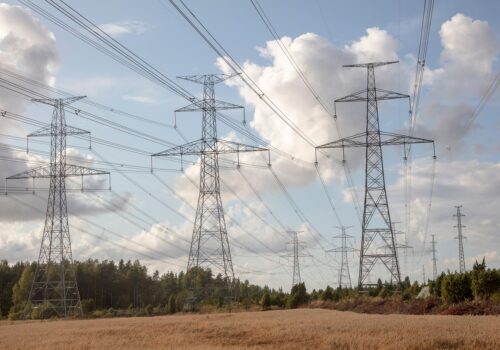
In order to meet growing global demand for electricity, and in response to an increase in renewables, power networks and markets are evolving and becoming increasingly interconnected. South and Southeast Asia have already had some success with interconnections, and China’s vision and Belt and Road Initiative loom large in the region, but there are geopolitical concerns to contend with. Could a US model manage these concerns? What is the state of regional power markets in Asia and investment in regional grid infrastructure, and what responses are we already seeing to emerging trends?

Climate Change & Climate Action Energy Markets & Governance

Global Energy Forum

Jan 9, 2020

Energy sector diversification: Meeting demographic challenges in the MENA region

By Bina Hussein

The Middle East and North Africa (MENA) region is projected to experience significant demographic growth by 2050, growth which will have to be met with commensurate economic expansion and job opportunities, or the region will risk an increase in political instability. To meet this challenge, countries in the region must diversify their economies beyond the energy sector and expand their energy sector beyond hydrocarbons. What are the key trends that MENA countries will have to contend with, what is already being done, and what further steps should be taken?

Energy Markets & Governance Energy Transitions

Issue Brief

Jan 9, 2020

Transforming the power sector in developing countries: Geopolitics, poverty, and climate change in Bangladesh

By Robert F. Ichord, Jr.

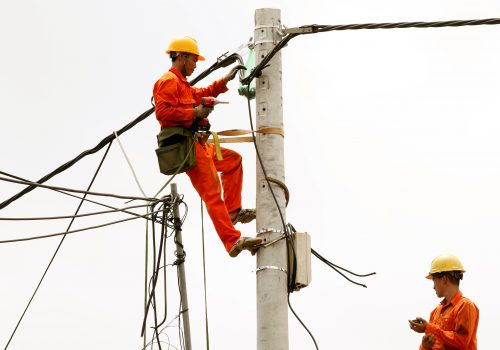
As the South and Southeast Asian region faces increasing energy demand due to both population and economic growth, countries like Bangladesh must meet that demand while facing and overcoming critical environmental and energy security challenges. How is Bangladesh seeking to diversify its energy mix and establish more local and decarbonized power systems, and what are key opportunities for future government and foreign investment?

Bangladesh Climate Change & Climate Action

Content

Report

Mar 31, 2017

Transforming the power sector in developing countries: The critical role of China in post-Paris implementation

By Robert F. Ichord, Jr.

Since the International Energy Agency projects that almost 90 percent of world growth in electricity generation in 2014-2040 will occur in developing and non-OECD countries, increasing investment in clean energy and changing the electricity mix in these countries are of critical importance. China’s role will be central, accounting for an estimated one-third of future electricity growth in the non-OECD countries.

China East Asia

Issue Brief

Feb 15, 2017

Energiewende: From Germany’s past to Europe’s future?

By Thomas Cunningham

Germany’s historical experience explains how the energy transition (Energiewende) came about, and largely explains the resilience of the policies to abandon nuclear power and to scale-up renewables in the face of the challenges they have posed to Germany’s consumers, utilities, and international competitiveness. Whereas the success of the Energiewende to date has come from the way it takes a unifying approach to energy, environment, and labor policies, its success will require expanding the scope from a German to an EU-wide scale.

Energy & Environment Energy Transitions

Issue Brief

Feb 15, 2017

Energiewende: From Germany’s past to Europe’s future?

By Thomas Cunningham

Germany’s historical experience explains how the energy transition (Energiewende) came about, and largely explains the resilience of the policies to abandon nuclear power and to scale-up renewables in the face of the challenges they have posed to Germany’s consumers, utilities, and international competitiveness. Whereas the success of the Energiewende to date has come from the way it takes a unifying approach to energy, environment, and labor policies, its success will require expanding the scope from a German to an EU-wide scale.

Energy & Environment Energy Transitions

Defense Industrialist

Jan 12, 2017

The tether of fuel—a brief counterpoint

By David Foster

Unless troops live off the land again, energy efficiency can only yield so much.

Conflict Defense Policy

Defense Industrialist

Jan 11, 2017

“Unleash us from the tether of fuel”

By Greg Douquet

Mattis put his faith in the 3rd Marine Air Wing’s ability to defeat Saddam’s formations surrounding Baghdad, and accepted the risk that his force might not achieve its objectives before running out of fuel. In later testimony, Mattis reflected back on the compromising situation of the “March Up,” as well as on the cost of increased fuel demand during the counter-insurgency efforts in Iraq and Afghanistan. In the future, he stated, the military must be “unleashed from the tether of fuel.” Mattis had seen the future imperative to change our sources of energy for military operations.

Afghanistan Conflict

Report

Jan 6, 2017

The end of Saudi Arabia’s addiction to oil: Downstream industrial development

By Jean-Francois Seznec

Saudi Arabia’s leadership recently introduced an ambitious plan called Vision 2030 to move the country away from oil and toward a more diversified, modern economy. What are the existing downstream industries in the public and private sectors, and what has made them so successful thus far?

Energy & Environment Energy Transitions

Report

Oct 21, 2016

Transforming the power sector in developing countries: A strategic framework for post-Paris action

By Robert F. Ichord, Jr.

As the Paris Agreement on Climate Change enters into force, signatories will face the challenges of transforming their energy sectors into more efficient, lower-carbon systems. This report provides a strategic framework to understand and address the challenges and hard choices developing countries face in moving to a cleaner energy mix while expanding access to those without electricity.

Energy & Environment Energy Transitions

Issue Brief

Dec 1, 2015

Renewable energy’s coming of age: A disruptive technology?

By Robert A. Manning

The eyes of the world are on the United Nations Climate Conference, also known as COP21, as leaders from around the world are gathered in Paris in an effort to combat the effects of climate change. It's one of the best chances we have to mitigate these harmful effects are renewable technologies, so what is the future of adopting renewable energy?

Climate Change & Climate Action Energy & Environment

Experts

Events