Recent analysis

Programs

The Global Energy Center develops and promotes pragmatic and nonpartisan policy solutions designed to advance global energy security, enhance economic opportunity, and accelerate pathways to net-zero emissions.

Events

Global Energy Forum

Jan 9, 2020

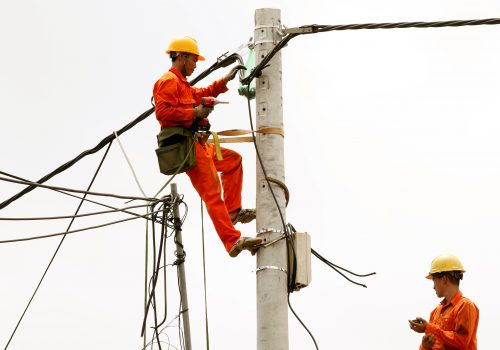
International grid integration: Efficiencies, vulnerabilities, and strategic implications in Asia

By Phillip Cornell

In order to meet growing global demand for electricity, and in response to an increase in renewables, power networks and markets are evolving and becoming increasingly interconnected. South and Southeast Asia have already had some success with interconnections, and China’s vision and Belt and Road Initiative loom large in the region, but there are geopolitical concerns to contend with. Could a US model manage these concerns? What is the state of regional power markets in Asia and investment in regional grid infrastructure, and what responses are we already seeing to emerging trends?

Climate Change & Climate Action
Energy Markets & Governance

Global Energy Forum

Jan 9, 2020

Energy sector diversification: Meeting demographic challenges in the MENA region

By Bina Hussein

The Middle East and North Africa (MENA) region is projected to experience significant demographic growth by 2050, growth which will have to be met with commensurate economic expansion and job opportunities, or the region will risk an increase in political instability. To meet this challenge, countries in the region must diversify their economies beyond the energy sector and expand their energy sector beyond hydrocarbons. What are the key trends that MENA countries will have to contend with, what is already being done, and what further steps should be taken?

Energy Markets & Governance
Energy Transitions

Issue Brief

Jan 9, 2020

Transforming the power sector in developing countries: Geopolitics, poverty, and climate change in Bangladesh

By Robert F. Ichord, Jr.

As the South and Southeast Asian region faces increasing energy demand due to both population and economic growth, countries like Bangladesh must meet that demand while facing and overcoming critical environmental and energy security challenges. How is Bangladesh seeking to diversify its energy mix and establish more local and decarbonized power systems, and what are key opportunities for future government and foreign investment?

Bangladesh
Climate Change & Climate Action

Content

EnergySource

Dec 6, 2019

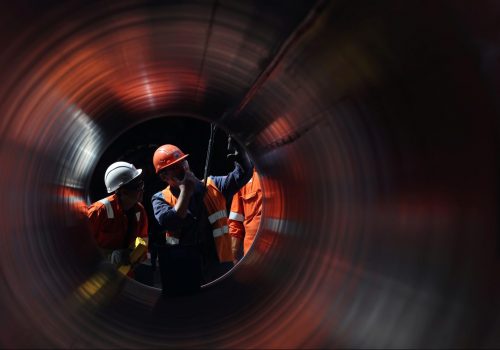
The Neue Ostpolitik approach to Nord Stream 2: A legal fiction carried a little too far

By Dr. Benjamin L. Schmitt

Some Nord Stream 2 proponents invoke the Ostpolitik of the late Cold War, which involved West German cooperation with Moscow on Russian energy exports to Western Europe. But this time around, Europe does not need additional Russian gas volumes and its position is in opposition to the views of most of Eastern Europe. From this perspective, Nord Stream 2 is flawed Ostpolitik.

Energy Markets & Governance
European Union

In the News

Dec 6, 2019

Cohen in Forbes: The Strategic Upside Behind Russia’s $55 Billion ‘Power Of Siberia’ Pipeline To China

By Atlantic Council

China
Energy Markets & Governance

In the News

Dec 6, 2019

Arslan and Bryza quoted in Anadolu Agency article on Turkey’s energy sector and US-Turkey energy cooperation

By Atlantic Council

Energy & Environment
Energy Markets & Governance

EnergySource

Dec 5, 2019

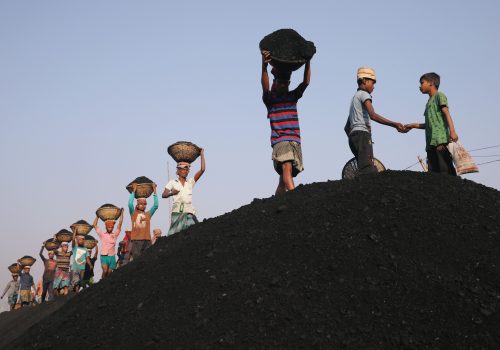
What does a sunset coal industry tell oil producers about peak demand?

By Henning Gloystein

When it eventually peaks, a look at coal gives a glimpse of what could happen in other sectors. Peak demand does not mean consumption will fall off a cliff—coal demand has so far plateaued at or near records, with pockets of growth still around. What could this mean for oil?

Energy Transitions
Oil and Gas

In the News

Dec 1, 2019

Ellinas in Cyprus Mail: Future of gas in Europe and what it means for Cyprus

By Atlantic Council

Economy & Business
Energy Markets & Governance

In the News

Nov 28, 2019

Bryza in Kyiv Post: Matthew Bryza: Rosneft undermining Venezuela and Iran sanctions

By Atlantic Council

Defense Policy
Financial Sanctions and Economic Coercion

EnergySource

Nov 27, 2019

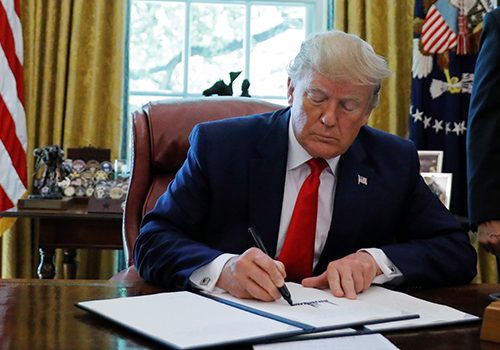
Is Rosneft undermining “maximum pressure” on Venezuela and Iran as Trump looks away?

By Matthew Bryza

US President Donald Trump is conducting policies of “maximum pressure” on two countries, Venezuela and Iran. In Venezuela, Russia’s state-owned oil company, Rosneft, actively undercuts this US policy by helping them circumvent Washington’s tough economic sanctions. Why doesn't Washington apply broad sanctions against the giant Russian company?

Energy Markets & Governance
Financial Sanctions and Economic Coercion

In the News

Nov 26, 2019

Cohen in Forbes: Making History: U.S. Exports More Petroleum Than It Imports In September and October

By Atlantic Council

Energy & Environment
Energy Markets & Governance

In the News

Nov 25, 2019

Tavakol joins TRT World to discuss the Iranian oil industry and economy

By Atlantic Council

Economy & Business
Financial Sanctions and Economic Coercion
Oil rig

EnergySource

Nov 21, 2019

Finding a path forward for oil and gas companies in the energy transition

By Reed Blakemore, David Yellen

2019 appears to be ending bleakly for the old guard of the energy sector—recent third quarter (Q3) reporting paints a gloomy picture: across the industry, profits have plummeted despite rising oil production. Observers have blamed those results on several potentially transitory headwinds, but are they actually what's driving the concerning outlook?

Energy Transitions
Oil and Gas

Experts