
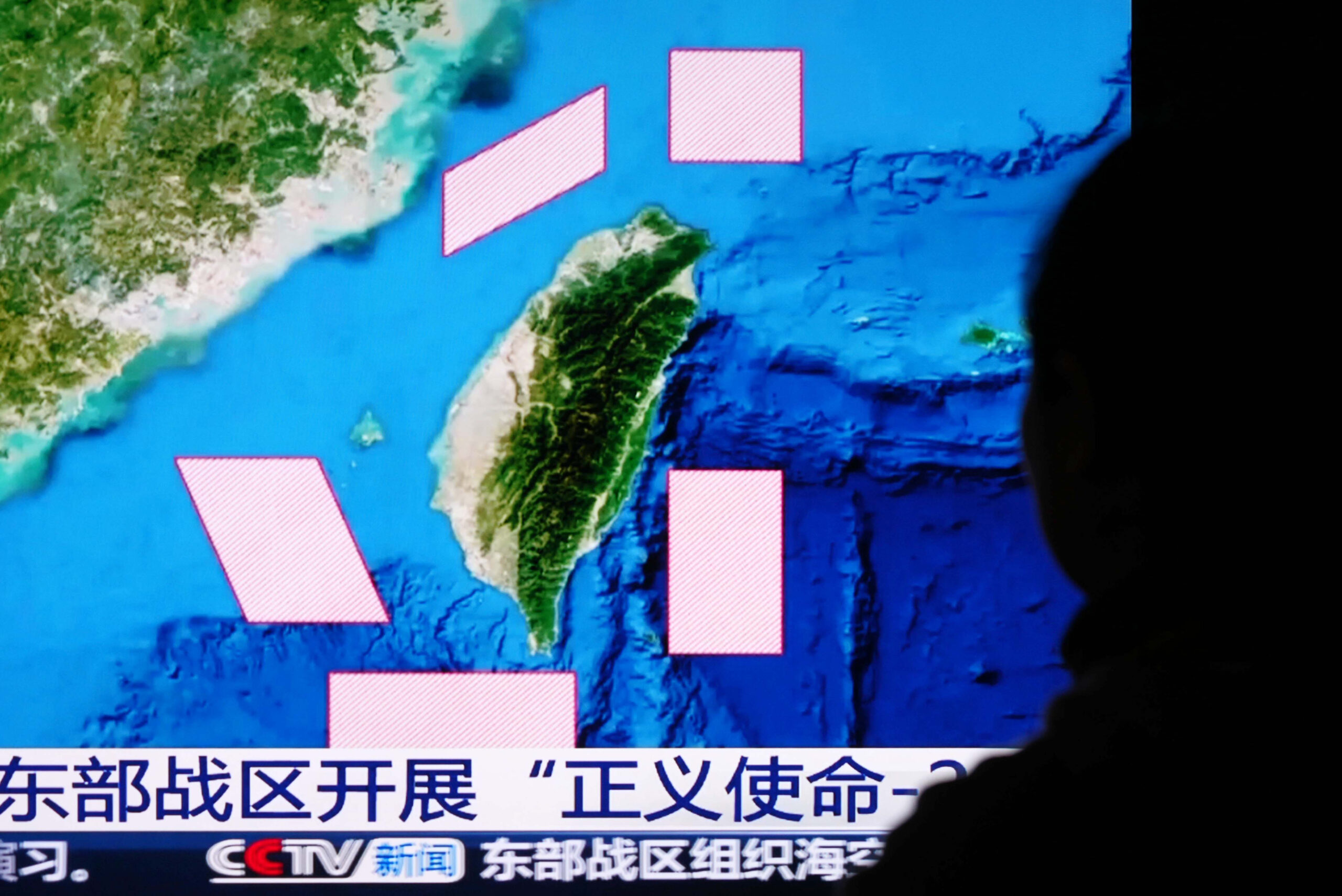
SEOUL—This past November, Japanese Prime Minister Sanae Takaichi made waves in the Western Pacific by saying that Chinese military action against Taiwan could pose a “survival-threatening situation” to her country. This implied that Chinese action against Taiwan might justify a Japanese response. This apparently sudden and consequential shift in Japan’s public stance toward Taiwan caught the attention of the international press as well as Beijing’s leaders, who criticized the statement. While no leader in Seoul has made an equivalent shift in South Korean policy toward Taiwan—and none should be expected—it would be too much to say that South Korea’s view of the island and its place in regional security remains entirely static.
Shortly before Takaichi made her comments, I visited Taiwan as part of an annual high-level Atlantic Council delegation. My trip to Taipei included intensive engagements with Taiwan’s senior leadership—including the minister of national defense, the minister of foreign affairs, and the secretary-general of the National Security Council—culminating in a meeting with the vice president.

Click on the banner above to explore the Tiger Project.
Coming from Seoul, where relations with Taipei have remained muted since the severing of diplomatic ties in 1992, I often found myself in a unique position within the delegation. Others spoke from a foundation of established alignment: The former Lithuanian foreign minister who led our delegation is known for his advocacy for Taiwan, and the American experts on the trip have worked for years on strengthening US-Taiwan relations. In contrast, Seoul’s strategic approach placed me in an ambiguous position. I listened carefully but contributed selectively, hovering just outside the cadence of shared convictions for cooperation.
Two thoughts have stayed with me since returning home. First, despite geographic proximity, Taiwan remains absent from Seoul’s strategic discourse—just as Seoul is notably absent from Taiwan’s. The blind spot is mutual.
Second, this realization sharpened my reflections on the increasingly popular narrative of “division of labor” among US allies. The idea—that each ally focusing on its primary threat inherently contributes to regional deterrence—may offer political convenience, but it also risks reinforcing strategic silos at a time when adversaries increasingly operate across connected theaters.
Taiwan Strait: Seoul’s strategic blind spot
South Korea’s relationship with Taiwan has long remained deliberately understated. Even as the Indo-Pacific security environment has become more interconnected, Seoul’s posture toward Taiwan has reflected the structural reality of its strategic position between the United States and China, as well as the enduring centrality of the threat from North Korea. For decades, this has meant that Seoul was rarely viewed as a meaningful partner for Taiwan-related security cooperation. Unlike Japan or the Philippines, South Korea avoided appearing as a frontline stakeholder in cross-Strait contingencies, preferring instead to manage its delicate balance between Washington and Beijing.
This approach created a predictable pattern: Seoul refrained from public engagement on the Taiwan issue to avoid antagonizing China, instead focusing almost exclusively on deterring North Korea—which, by any measure, remains its most immediate threat. In doing so, South Korea adopted a cautious regional diplomacy that kept the Taiwan Strait at arm’s length. As a result, Taiwan appears to perceive Seoul as a “potential but limited partner.” In conversations with Taiwanese officials, this idea repeatedly surfaced, reflecting the enduring view that South Korean strategy remains rooted in a single-theater mindset, in which the Korean Peninsula takes precedence over all other regional contingencies.
But this is changing, at least at the margins.
The Taiwan Strait enters Seoul’s strategic vocabulary
Despite Seoul’s historical caution, the Taiwan Strait now appears regularly in South Korea’s official statements and alliance documents. Several developments have driven this shift.
First, China’s growing assertiveness around the Korean Peninsula has changed Seoul’s perception of the strategic landscape. In the West/Yellow Sea, Beijing has expanded military and paramilitary activities, including the construction of artificial structures in the Provisional Measures Zone, preventing South Korean research vessels from nearing those structures by dispatching warships. South Korean policymakers from across the political spectrum now openly describe China as a source of maritime pressure. China’s expanding military presence is pushing Seoul to see the Taiwan Strait and the West Sea not as separate as they once appeared to be.
Second, the deepening alignment among North Korea, China, and Russia has created a new strategic simultaneity across regions. North Korea’s accelerated nuclear and missile developments now unfold in tandem with its revived defense pact with Russia and its improving relations with China. North Korea can no longer be treated as an isolated security challenge. And this interconnected threat environment makes it difficult for Seoul to treat the Peninsula as insulated from developments elsewhere.
Third, and perhaps most visibly, Washington and Seoul have over time institutionalized Taiwan-related language in its alliance diplomacy. Since the Moon Jae-in and Biden administrations, preserving “peace and stability in the Taiwan Strait” has continued to be reiterated in US-South Korea joint statements. The latest joint factsheet, released by the Lee Jae-myung and Trump administrations on November 13, 2025, also emphasized “the importance of preserving peace and stability across the Taiwan Strait,” encouraged a “peaceful resolution of cross-Strait issues,” and opposed “unilateral changes to the status quo.”
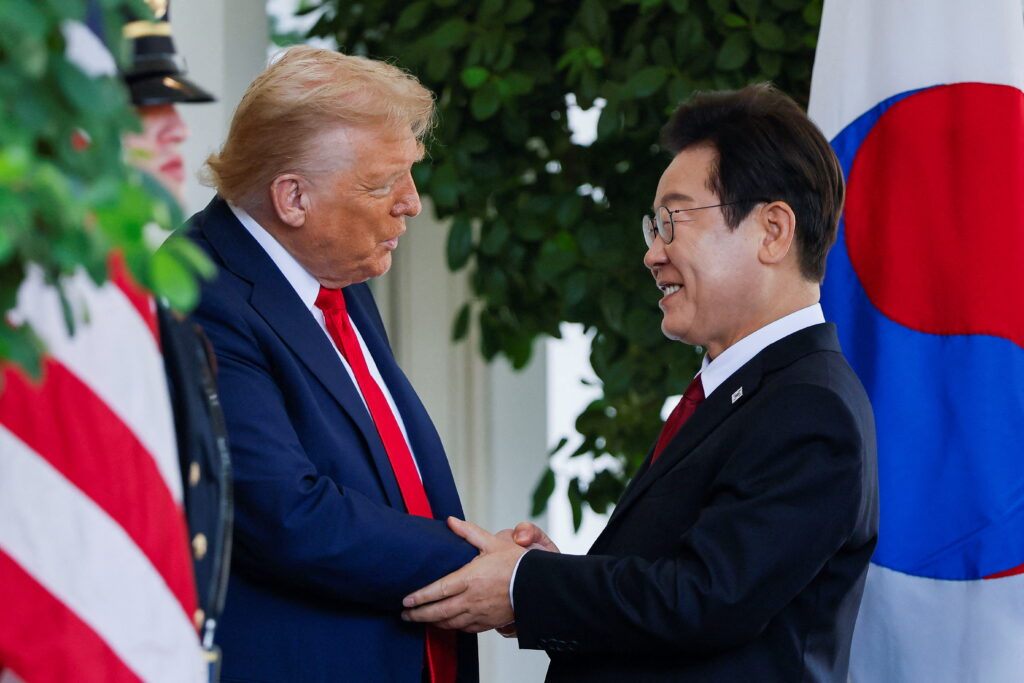
Seoul and Washington have also shown progress in coordinating the “strategic flexibility” of US forces in the region. Although both sides deliberately avoided the phrase “strategic flexibility”—referring instead to “relevant understandings since 2006,” a strategically prudent choice—the latest joint factsheet states that the United States and South Korea will enhance “U.S. conventional deterrence posture against all regional threats to the Alliance, including the DPRK.” This formulation signals that newly deployed assets such as the MQ-9 Reaper squadron, as well as future deployments, are intended to deter threats extending beyond North Korea.
These developments would have been unthinkable additions to Seoul’s diplomatic vocabulary just a decade ago. South Korea is gradually weaving the Strait into its broader understanding of regional security and alliance management.
Rethinking the “division of labor”
As these changes unfold, a strategic narrative has gained traction: the concept of a functional “division of labor” among US allies. I myself have endorsed the concept on several occasions, building from the view that Indo-Pacific allies have different threat priorities: South Korea is focused on North Korea, Japan on China, and Australia on regional stability. These US allies could nonetheless, under the division-of-labor concept, meaningfully contribute to broader regional deterrence if each ensured that its primary threat was effectively checked. The Biden administration’s “latticework,” or coalition-of-the-willing approach, was in many ways built on this logic. It sought to knit together a North Korea–focused South Korea and a China-focused Japan, alongside other regional partners, to strengthen overall US influence and deterrence across the first and second island chains.
But what may have been a pragmatic arrangement in earlier years—reflecting divergent allied priorities and capabilities—risks becoming increasingly untenable.
If the United States diminishes its interest in Pacific allies or its military presence in their territories, then adversaries may start to view this division of labor as developing seams that they can exploit. For instance, under the Trump administration’s repeated calls for Seoul to assume “overwhelming responsibility” for the Peninsula, North Korea may interpret this not as an efficient allocation of allied resources but as a signal that US commitment is becoming more compartmentalized or even reduced. If adversaries conclude that allies are divided in their responsibilities, then they may also conclude that allies are divided in their commitments.
This is particularly dangerous given the increasing coordination among North Korea, Russia, and China. In an environment where adversaries act across multiple theaters simultaneously, deterrence cannot be built on a framework that unintentionally communicates fragmentation among allies. Division of labor may function as a diplomatic tool, but it does not function as a deterrence strategy unless it is explicitly framed as an interim step toward deeper collective action.
For this reason, South Korea must recognize that its responsibility to deter North Korea does not remove the need to play a constructive role in broader regional security. Rather, the opposite is true: the more North Korea enhances its capabilities, the more South Korea must invest in regional frameworks that strengthen collective deterrence. The Taiwan question is central to this logic because the stability of the Strait directly influences the strategic choices of China and North Korea. Seoul’s willingness to acknowledge this connection—reflected in the recent South Korea–US joint presidential summit factsheet, Security Consultative Meeting joint communiqué, and Military Committee Meeting joint statement—is a necessary starting point for building a more coherent regional posture.
Toward a regionally engaged South Korea
South Korea’s historically low-visibility stance toward Taiwan is giving way to a more integrated regional strategy. Beijing’s maritime coercion, the tightening cooperation among North Korea, China, and Russia, and the increasing incorporation of Taiwan-related language into South Korea–US statements all underscore that the strategic distance between the Korean Peninsula and the Taiwan Strait is closing.
The challenge now is to ensure that the division of labor narrative does not become a strategic trap. If interpreted as a permanent arrangement or a form of compartmentalized responsibility, it risks signaling to adversaries that allied commitments are divisible. Deterrence in an era of interconnected threats demands the opposite: unified signaling, cross-theater coordination, and collective resilience.
The Lee Jae-myung administration’s decision to articulate this broader perspective in joint statements with the United States marks an important evolution. For South Korea, protecting its core interests on the Peninsula increasingly requires contributing to the stability of the Indo-Pacific as a whole.
Note: The Atlantic Council delegation’s visit to Taiwan was supported by the Taipei Economic and Cultural Representative Office (TECRO). This analysis represents the author’s views and not those of the government of Taiwan or those of any other entity.