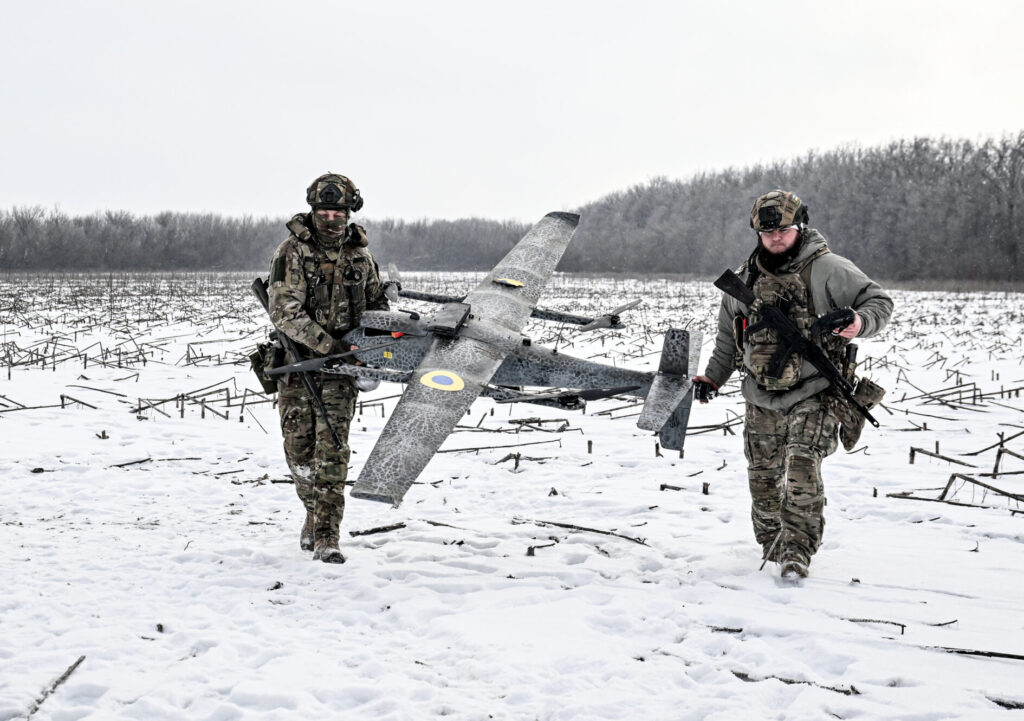
Ukraine’s defense tech and dual-use sector is a rare wartime success story, with over six hundred innovative and combat‑tested firms becoming increasingly attractive to international investors. However, the future growth of this sector is constrained by obstacles including export licensing bottlenecks, currency controls, weak intellectual property protection, inconsistent consultation between government and business, and fears that old problems including corruption and rent-seeking could re‑emerge.
The Ukrainian government has an obvious interest in supporting the growth of the defense tech sector, but many officials believe the top priority remains preventing strategic vulnerabilities. The list of potential threats includes infiltration by corrosive capital, a loss of sensitive technologies, and systemic risks arising from insufficiently regulated markets. Experts emphasize the need for new policy instruments, clearer definitions, monitoring systems, and alignment with G7‑style economic security practices. So far, discussion of these issues remains mostly conceptual, leaving businesses uncertain about rules, timelines, and risks.
Ukraine’s economic security debate is currently being shaped by three overlapping realities. First, the global economy has shifted away from maximum trade liberalization toward a more security-based paradigm, particularly in strategic sectors such as defense, energy, critical minerals, and advanced technology. Second, Ukraine is fighting a full‑scale war, making economic resilience and industrial capacity existential concerns rather than abstract policy goals. Lastly, Ukraine’s defense and dual‑use sectors have undergone an unprecedented transformation since 2022, emerging from a prewar model dominated by state enterprises to become one of the most dynamic segments of the Ukrainian economy.
The core question now is not whether the state should intervene, but how to design intervention that protects national interests without suffocating private initiative or driving away international investors. This means finding the middle ground between security and economic freedom. Democratic Ukraine must seek to strike a better balance than its authoritarian adversary in order to enable the kind of continued defense tech innovation necessary to prevail on the battlefield and increase deterrence.
Stay updated
As the world watches the Russian invasion of Ukraine unfold, UkraineAlert delivers the best Atlantic Council expert insight and analysis on Ukraine twice a week directly to your inbox.
There are currently concerns that Ukraine’s fast‑growing defense tech sector risks inheriting longstanding governance problems including opaque procedures, slow decision‑making, and uneven enforcement. Recent corruption scandals in Kyiv have already damaged trust, creating what some businesses have described as “negative expectations.”
From the Ukrainian government’s side, there is recognition that institutions are still adapting, with many of the available economic security tools still fragmented or not yet fully operational. This represents an opportunity for Ukraine if the country is able to build governance structures tailored to strategic sectors rather than retrofitting existing and outdated bureaucratic models. Creating a new generation of transparent institutions to address defense sector exports, investment screening, and procurement could become a competitive advantage for Ukraine if designed with private sector input from the outset.
Export licensing is one of the most acute potential bottlenecks. Ukraine’s defense tech businesses currently face a process requiring excessive approvals from multiple institutions, with little accountability or predictability. There is also a perception of unequal treatment, undermining confidence in the system. Ukrainian officials, meanwhile, tend to stress the necessity of strict controls to prevent leakage of sensitive technologies.
A risk‑based and tiered export control regime could address these concerns. By clearly defining a narrow list of highly sensitive technologies requiring strict oversight, the Ukrainian authorities could create faster and more predictable export pathways for less sensitive defense and dual‑use products. This would support economic growth while preserving core security interests.
Wartime currency controls and capital movement restrictions severely limit the ability of Ukrainian defense sector companies to expand internationally. Multiple investors have noted the paradox of profitable Ukrainian firms being unable to deploy their own capital abroad, forcing them to raise funds outside the country simply to operate globally.
From the perspective of Ukrainian policymakers, currency restrictions are viewed as necessary to preserve macro‑financial stability and to prevent capital flight. Targeted exemptions for vetted defense and dual‑use companies, particularly those pursuing foreign acquisitions or joint ventures aligned with national priorities, could unlock growth without undermining financial stability. Such a mechanism would signal trust in compliant firms and reward transparency.
Another key issue is intellectual property (IP). Standard IP processes are too slow for wartime innovation cycles. In the dynamic current environment, Ukrainian companies rely on trade secrets and know‑how rather than formal patents, but this increases risks when partnering internationally.
Ukrainian officials acknowledge the importance of innovation but have so far only been able to offer limited concrete solutions. Accelerated IP pathways for defense and dual‑use technologies, combined with support for joint research and development frameworks with trusted foreign partners, could help Ukrainian firms secure protection in allied jurisdictions while strengthening international integration.
Eurasia Center events

There is a degree of uncertainty in Ukraine’s expanding defense tech sector that can be seen in inconsistent terminology, unclear boundaries, and undefined red lines. A shared vocabulary and published strategic framework, co‑developed by the public and private sectors, could help reduce this uncertainty.
Different priorities lead to diverging visions. Defense tech industry executives and investors tend to view the issue of economic security primarily through the lens of scalability, competitiveness, and speed. Their key assumptions include the notion that innovation thrives in predictable, transparent environments.
Many also argue that Ukraine’s combat‑tested technologies represent a unique global opportunity, while cautioning that excessive controls risk pushing talent, capital, and IP abroad. With this in mind, industry representatives and investors generally support targeted security measures but fear blanket restrictions that treat all technologies and companies as equally sensitive.
Ukrainian officials tend to frame economic security primarily as a defensive necessity. They warn that adversaries actively use markets, investment, and technology transfer as weapons. Many are also concerned that under‑regulation could result in irreversible strategic losses. Naturally, their perspective prioritizes caution, monitoring, and alignment with allied security frameworks, even at the cost of slower growth.
The central tension here is time-based and risk‑based. Businesses operate on market timelines and accept calculated risk, while governments operate on security timelines and seek to minimize worst‑case scenarios. Without structured dialogue, these differences manifest as mistrust rather than complementary roles.
If managed effectively, wartime Ukraine’s approach to economic security in the defense tech and dual-use sectors could become a model for the country’s broader postwar reconstruction. Ukraine has the opportunity to redesign institutions in a strategic sector that already commands global attention. Success may depend on whether government policy is seen by businesses as a partnership or as an obstacle.
Constructive cooperation grounded in transparency, risk‑based policy, and continuous dialogue can transform economic security from a constraint into a catalyst for Ukraine’s long‑term strength and sovereignty, providing significant security benefits for allies and partners along the way. This is a realistic objective. After all, industry, investors, and government all ultimately seek the common goal of a resilient, innovative Ukrainian economy integrated with democratic allies and protected from adversarial exploitation.
Bridging the gap between perspectives is less a matter of ideology than of process, trust, and execution. Ukraine is currently in a period of transition that is marked by many significant challenges but no irreconcilable obstacles. Industry and investors are ready to scale globally while the government is racing to build safeguards against unprecedented threats. The task now is to synchronize these efforts.
Eric K. Hontz is director of the Accountable Investment Practice Area at the Center for International Private Enterprise.
Further reading
The views expressed in UkraineAlert are solely those of the authors and do not necessarily reflect the views of the Atlantic Council, its staff, or its supporters.

The Eurasia Center’s mission is to enhance transatlantic cooperation in promoting stability, democratic values, and prosperity in Eurasia, from Eastern Europe and Turkey in the West to the Caucasus, Russia, and Central Asia in the East.
Follow us on social media
and support our work
Image: Soldiers from a UAS crew of the Striletskyi special forces police battalion of the National Police in the Zaporizhzhia region carry a Ukrainian GARA drone in the Pokrovsky direction in the Donetsk region, Ukraine, on January 23, 2026. (Photo by Dmytro Smolienko/Ukrinform/NurPhoto)