
As war and the weaponization of energy drag on in Ukraine and Iran, discussions on stage at the Atlantic Council Global Energy Forum this week couldn’t have been timelier or the urgency of the moment more palpable. Front and center across sessions were the inextricable connections between geopolitical conflicts, technological innovation, economic stability, and energy security—and the inherent risks these interconnections carry. But despite facing two global energy shocks over the course of the past four years, speakers noted that energy systems have shown surprising resilience. But they also questioned how long this resilience can last as the Strait of Hormuz disruption continues to test it. Below, read the reflections of Atlantic Council experts who were on stage over the course of the two-day forum.
Click to jump to an expert analysis:
Charles Hendry: Rethinking energy policies to withstand ongoing crises
David Goldwyn: The US policies that help and hinder the growth of Western hemisphere energy supplies
Lee Beck: The decisions driving energy innovation and deployment will determine US competitiveness
Rethinking European energy policies to withstand ongoing crises
The 2026 Global Energy Forum has been a very timely opportunity to look at how Europe, after two energy crises in five years, can work toward genuine, lasting resilience.
While those two crises have been fundamentally different in their causes, both have highlighted European vulnerabilities. Post-Russia’s invasion of Ukraine, Europe has paid a heavy price for its overreliance on a single source of imported gas: Russia. Now, with the closure of the Strait of Hormuz, the world is seeing the issues of security of the “routes” through which the world gets its energy. Although most of that product does not come to Europe, Europe is still affected by global shortages and higher prices.
So, this is the time for Europe to rethink its approach to its energy security and resilience.
As the EU Ambassador to the United States Jovita Neliupšienė said at the forum, Europe is committed to a broad-based energy policy, and one that ensures Europe should never again be held to ransom over its energy imports. That means a continued focus on “sovereign,” indigenous sources, which also help the continent to continue to decarbonize its power systems.
In the spirit of the Atlantic Council’s mission of “shaping the global future together,” the focus of the panel was on finding areas of cooperation, while recognizing that many European governments have very different views on energy policy from the United States. It was especially valuable to have Josh Volz on the panel, special envoy for global energy integration at the US Department of Energy, who rightly encourages leaders to focus on the “opportunities not the obstacles.” He has been tireless in trying to find opportunities for cooperation, and the remarkable success of the new Vertical Corridor—bringing liquefied natural gas (LNG) into Greece and up through Romania, Bulgaria, and Moldova to Ukraine—is testimony to that work.
The Atlantic Council, with the publication of its recent report “From diversification to integration” is the perfect host for such conversations, bringing together global experts, such as Ambassador Geoffrey Pyatt, with those who have the practical experience in delivering solutions, like Kostis Sifnaios of Gastrade and Chris Treanor of Partnership to Address Global Emissions (PAGE)*.
The conclusions are that while this crisis is uncomfortable for Europe, and could yet get much worse, it is in better shape to withstand the shock than it was after Russia’s invasion of Ukraine, and the steps being taken to deliver lasting resilience show a determination to learn the lessons from past mistakes.
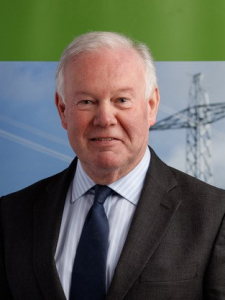
—Charles Hendry is a distinguished fellow with the Atlantic Council Global Energy Center and a former UK minister of state for energy.
The US policies that help and hinder the growth of Western hemisphere energy supplies
The Trump administration’s Western hemisphere policy is focused on addressing regional security issues and incentivizing political alignment with US policy. This Trump Corollary to the Monroe doctrine has utilized military force in the case of Venezuela, financial support in the case of Argentina, sanctions and isolation in the case of Cuba, and attempted coercion through tariff policy with Canada, Mexico, Brazil, and Colombia. The administration’s policy supports increased oil and gas production in the hemisphere in the hope that it will shift our neighbors’ revenue sources away from China and Russia, and toward the United States and the West.
In the case of Venezuela, the administration has made remarkable strides in quickly prompting Venezuela to reform its hydrocarbon and mining laws. While the current framework has serious inadequacies, such as weak provisions on international arbitration, too much discretion on the part of the energy ministry to cancel projects, and unhelpful limitations on the ability of Venezuela’s existing investors (other than Chevron*) to repay the massive debts they are owed out of current production, the administration is actively engaged in addressing these weaknesses.
But in other areas, there are deep contradictions in the administration’s policy. The cost of energy production in Canada and Mexico, and indeed the United States itself, is challenged by high tariffs on the steel and aluminum inputs required for building new energy infrastructure. Uncertainty regarding the renewal of the US-Mexico-Canada Trade Agreement (USMCA) puts the administrations near-shoring agenda at risk by potentially disrupting the deep integration of the continent’s oil, gas, and electricity markets. And further south, Brazil continues to be a major contributor to non-OPEC oil supply growth but has been a target of tariff threats over political issues.
When it comes to promoting hemispheric energy security, major producers like Brazil, Canada, Guyana, and Argentina have been on well-established pathways to supply growth well before the Trump administration took office. The most effective policy would be to do no harm by avoiding tariffs on the inputs for energy infrastructure, extending the highly successful USMCA, and supporting Guyana by making clear that any aggression by Venezuela in the disputed Essequibo region is unacceptable. Venezuela is trending upwards, with the potential to add 200,000 to 400,000 barrels a day in incremental supply growth in the next two years. Continued engagement on improving the investment framework could provide the administration with a much-needed policy win.
—David Goldwyn is chairman of the Atlantic Council’s Energy Advisory Group and a former special envoy for international energy affairs at the US Department of State and assistant secretary of energy for international affairs.
The decisions driving energy innovation and deployment will determine US competitiveness
The US innovation landscape is at crossroads: once-in-a-generation energy demand growth catalyzes the need for energy supply innovation; artificial intelligence (AI) holds both opportunity and risk; historic initial public offerings (IPOs) signal enthusiasm for energy tech; at-scale deployment faces macroeconomic headwinds at home and fierce competition abroad.
The United States has recently seen historic IPOs in the clean technology space. Most recently, small modular nuclear reactor company X-energy raised more than one billion dollars, while Fervo became the first advanced geothermal company to go public.
What both companies share is that they benefited early on from relatively modest public investment. The Advanced Research Projects Agency–Energy (ARPA-E) at the US Department of Energy provided targeted support focused on enabling technologies—from specific fuel supply for X-Energy to drilling technology capabilities for Fervo.
“We were able to identify, in a very laser-focused way, where the choke point was,” ARPA-E Director Conner Prochaska told the panel. “That’s our role, because without that holistic support early on, it’s difficult to convince venture capital and industry partners to join these teams.”
But public institutions can only take technologies so far. To build on the platform created by institutions like ARPA-E, anchor demand and offtake from industry is critical, argued David Livingston, Chief Strategy Officer at Galvanize, a global asset manager with investments in both X-Energy and Fervo prior to their IPOs. Capital innovation follows not only technical readiness, but also confidence that markets will exist.
The question now is how the current energy crisis—coupled with once-in-a-generation electricity demand growth—will shape the next wave of advanced energy innovation. Even as analysts debate the pace and scale of AI data center buildout, energy demand growth is here to stay, argued Eric Rubenstein of New Climate Ventures. Beyond data centers, demand from heating, buildings, industrial electrification, and transport is expected to continue driving US and global energy consumption—and US technological innovation.
Higher energy prices may further accelerate adoption of new technologies. With oil prices expected to remain elevated, demand for electric vehicles could strengthen, which is the demand signal that Kurt Kelty of General Motors argues is needed to catalyze US innovation. Competition abroad, however, is intensifying, which calls for more investment in research and development.
Yet innovation alone is not enough. The less visible deployment decisions—grids, transmission, transformers, inverters, control systems—may prove equally decisive. This “boring but critical middle,” says Livingston, increasingly sits at the intersection of industrial competitiveness and national security.
If the US wants to remain competitive domestically, both sustained demand signals—including for electric vehicles—and greater policy certainty across administrations will be required to enable long-lead infrastructure investments. In 2025 alone, businesses abandoned over $35 billion in clean energy projects.
More must be done to support innovators beyond US borders. Globally, 94 percent of nuclear reactors that began construction over the past decade were based on Russian or Chinese designs. China’s share in the solar value chain exceeds 80 percent, it also manufactures 80 percent of battery supply, and directs nearly half of its clean tech exports to emerging markets
—Lee Beck is a nonresident senior fellow with the Atlantic Council Global Energy Center.
The energy system is surprisingly resilient, but are markets—and policymakers—overconfident?
The Atlantic Council Global Energy Forum panel, “Products Under Pressure: A Stress Test for the Future Energy System,” brought together Zeynep Dereli of ODAS, Alex Grant of Equinor*, Jason Lemme of Hartree Partners, and Clifton White of Bank of America for a discussion of what the Strait of Hormuz disruption has revealed about the resilience of modern energy markets. Rather than focusing solely on the geopolitical origins of the crisis, the conversation examined how physical energy systems, commercial markets, and financial actors responded when a critical artery of global energy trade came under pressure.
A central conclusion was that the system demonstrated a greater degree of resilience than many observers initially expected. Drawing on perspectives from production, trading, infrastructure, and financial markets, the panel explored how oil, refined products, and liquefied natural gas (LNG) each responded differently to the disruption. Grant highlighted the flexibility that emerged across physical markets and supply chains, while Lemme emphasized the role of logistics, inventories, and commercial optionality in adaptable LNG markets, while also noting how trader behavior helped to limit aggressive activity in forward energy markets. White discussed the way investors and financial markets interpreted the crisis, noting the distinction between visible price signals and underlying physical stress. From an infrastructure and energy-security perspective, Dereli underscored the importance of diversified routes, frontier alternatives, and how a narrative based around electrons distorted the ongoing importance of hydrocarbons.
The discussion also examined whether the industry risks drawing the wrong lessons from a crisis that remained manageable. Several panelists argued that resilience was not costless; rather, stress was absorbed throughout the system by traders, refiners, infrastructure operators, and governments. This raised broader questions about whether policymakers and investors have become overly confident in the ability of global markets to adapt automatically to disruption.
Looking ahead, the panel considered how future energy systems may evolve in response. Themes included the growing importance of storage, interconnections, diversified supply routes, strategic reserves, and infrastructure redundancy. While views differed on specific priorities, there was broad agreement that resilience is increasingly becoming as important as efficiency. The discussion ultimately suggested that the most significant legacy of the Hormuz crisis may be a renewed appreciation for the physical foundations of energy security and the investments required to sustain them.
—Philip Cornell is a nonresident senior fellow with the Atlantic Council Global Energy Center and principal for energy and sustainability at Economist Impact.
The world has lost one billion barrels of oil so far. Here’s how energy flows have changed.
Governments facing the largest supply disruption in history are reevaluating energy security. Already, more than 1 billion barrels of Mideast Gulf oil supply have been lost. The world’s largest liquefied natural gas (LNG) export facility has been shut in since March. Oil and gas infrastructure has been damaged across the region, and it remains uncertain how quickly fields, pipelines, storage facilities, and loading terminals can restore normal operations.
Crude flows are changing as importers seek alternatives to Middle Eastern oil, largely from the Western hemisphere and from Russia. The past one hundred days have demonstrated the flexibility of the global refining system, as refiners adjust product slates—for example, to produce more jet fuel. But crude quality matters. Asian refiners can substitute for heavy and medium sour crudes from the Gulf, but these adjustments raise costs and reduce efficiency.
LNG flows are also changing. Qatar’s buyers are seeking alternatives, and the flexibility of US LNG cargoes facilitate market adjustments via the spot market. In advance of summer, Chinese LNG imports are rising toward the five-year seasonal average, and countries including Bangladesh and India are seeking to secure more spot cargoes. Spot prices in Northeast Asia remain at a premium to those in Europe.
A key question is how to distinguish short-term adjustments from longer term structural changes in energy supply. A panel discussion at the Global Energy Forum, featuring experts from Kpler, ConocoPhillips, Excelerate Energy*, and Ihlas Holding*, examined this topic. Several noted the risk of extrapolating from current events in the Gulf to adjust longer-term assumptions. But as they seek diversification of supplies and energy types, governments are likely to maximize their national resource endowments—including oil and gas but also renewable energy, hydropower, and coal.
This is the second global energy shock in five years. Time will tell whether it will produce new planning decisions and investments that will permanently reduce dependence on the Strait of Hormuz.
—Ben Cahill is a nonresident senior fellow with the Atlantic Council Global Energy Center.
*Chevron, Equinor, Excelerate Energy, Ihlas Holding, and PAGE are partners of the Global Energy Forum.
about the experts




stay connected
Sign up for PowerPlay, the Atlantic Council’s bimonthly newsletter keeping you up to date on all facets of the energy transition
related work


our work

The Global Energy Center develops and promotes pragmatic and nonpartisan policy solutions designed to advance global energy security, drive economic opportunity, and foster a sustainable energy future.