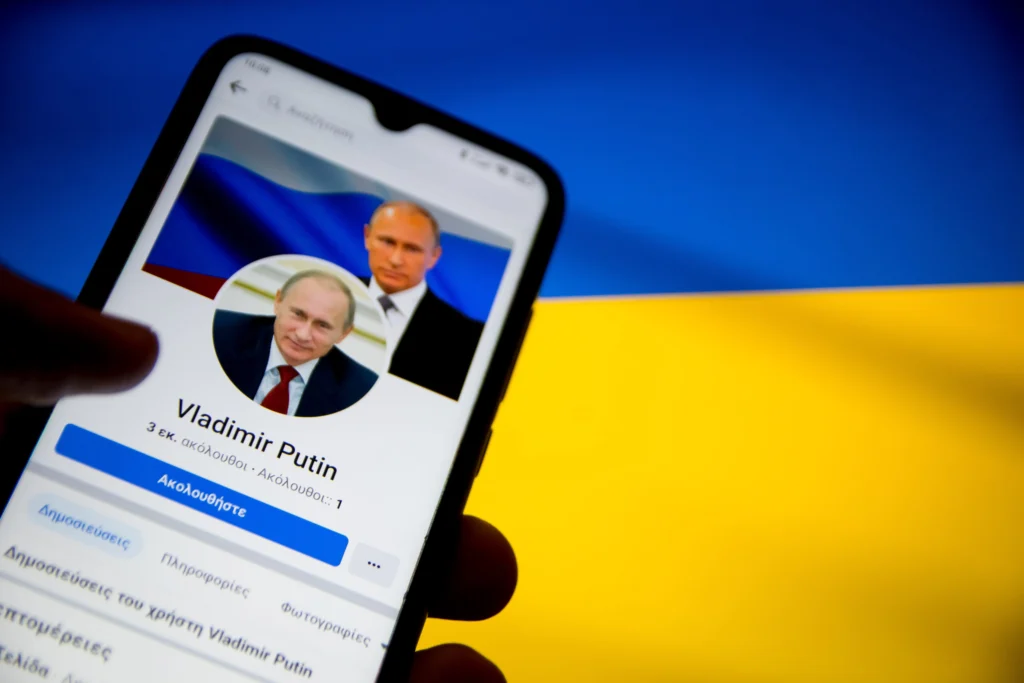
While Ukraine most often garners headlines for its drone warfare innovation, the country is also producing a playbook for countering the destructive effects of Russian propaganda. This Ukrainian experience offers important lessons for the wider Western world.
As NATO leaders convene for the Ankara Summit on July 7, the alliance’s future is at stake. Key objectives in Ankara include sustaining American commitment and embedding drone technology across the industrial base of the alliance to shore up security on its eastern flank. At the same time, NATO must also address what it calls “cognitive warfare” as a top priority.
Ukraine’s long record of countering Russian disinformation can help. “For democracies grappling with AI-enhanced foreign interference, Ukraine offers a living template: Build whole-of-society coalitions, couple innovation with ethics, and hard-wire literacy into national security,” argues MIT postdoctoral scholar Halyna Padalko in a 2025 paper.
Stay updated
As the world watches the Russian invasion of Ukraine unfold, UkraineAlert delivers the best Atlantic Council expert insight and analysis on Ukraine twice a week directly to your inbox.
Technology has been crucial to Ukraine’s fight back against Russian information warfare. The country’s Ministry of Foreign Affairs has debuted its own AI tool producing official statements in 30 languages backed by an embedded bar code signature that cannot be faked. Meanwhile, Ukraine’s Ministry of Digital Transformation is creating tools to directly combat Russia’s strategy of building thousands of websites amplifying false or distorted narratives, which AI platforms like ChatGPT then amplify without a critical lens.
Ukraine’s widely used Diia digital app for state services is investing heavily in free media literacy education for citizens. At the same time, Ukrainian media watchdogs and fact checkers map coordinated disinformation narratives across platforms and present real-time dashboards for journalists, civil society, and government bodies. Importantly, these efforts are backed by laws promoting open data and transparency that are firmly anchored in democratic values.
Some of the information security measures adopted by Ukraine may seem inappropriate for democracies that value freedom of speech and disavow censorship. On the other hand, it is important to acknowledge that information warfare is a natural strength for autocracies, which build their foundations on manipulating truth and constructing an overpowering ideological narrative.
As Peter Pomerantsev argues in his book “How to Win an Information War,” propaganda is one of the first things that an autocracy thinks of, while it may be among the last tools that a democracy considers. Yet he also tells the story of how during World War II, British propagandists learned to beat the Nazis at their own game by creating a fictitious character called Der Chef, whose broadcasts to German audiences questioned the ideas underpinning Nazism.
Eurasia Center events

Russia’s disinformation strategy is no secret and includes a consistent pattern of attempting to influence the outcome of elections, including in the former Soviet sphere and throughout the Western world. Russian information operations also often aim to destabilize democracies by amplifying polarizing messages in a bid to turn citizens and whole societies against each other. These activities have been underway for decades and have escalated dramatically since the onset of Russia’s Ukraine invasion in 2014.
NATO has been slow to catch up, but the alliance has made some significant strides in recent years. In June 2021, France hosted NATO’s first scientific meeting on cognitive warfare. In 2022, the alliance named cognitive warfare an official priority.
Last year, a NATO report signaled the need for a “whole-of-government and society approach” to defend against cognitive warfare. The report laid out three key aims: Reducing an adversary’s ability to influence and change behavior, improving human and technological cognition, and fostering resilience in order to recover from cognitive threats. Ukraine has valuable lessons to share in all three areas.
The roots of Russian information warfare against Ukraine run deep and are part of a centuries-old battle rooted in imperial propaganda and competing civilizational narratives. Even if a ceasefire between the two countries is eventually agreed, this would not end hostilities in the cognitive sphere.
Ukraine is therefore set to remain at the forefront of efforts to counter the Kremlin’s constantly evolving disinformation operations. Kyiv will continue to innovate in the information war, just as is it does on the battlefield. It is imperative that NATO leaders recognize this increasingly important part of Ukraine’s next-generation arsenal of democracy and seek to learn from Kyiv’s unrivalled experience.
Ryan Prior is a journalist and author. He has written for CNN, The Daily Beast, USA Today, Psychology Today, and others, with experience reporting on the ground from Ukraine. He is a Term Member at the Council on Foreign Relations and holds an MPA from the Harvard Kennedy School.
Further reading
The views expressed in UkraineAlert are solely those of the authors and do not necessarily reflect the views of the Atlantic Council, its staff, or its supporters.


The Eurasia Center’s mission is to enhance transatlantic cooperation in promoting stability, democratic values, and prosperity in Eurasia, from Eastern Europe and Turkey in the West to the Caucasus, Russia, and Central Asia in the East.
Follow us on social media
and support our work
Image: Nikolas Kokovlis via Reuters Connect