
When Russian President Vladimir Putin launched the full-scale invasion of Ukraine in February 2022, he was expecting a quick and complete victory that would erase the injustice of the Soviet collapse and revive Russia’s great power status. This now looks to have been one of the most disastrous miscalculations in modern history. Today, Putin finds himself trapped in the largest European war since World War II amid mounting indications that the tide is turning in Ukraine’s favor.
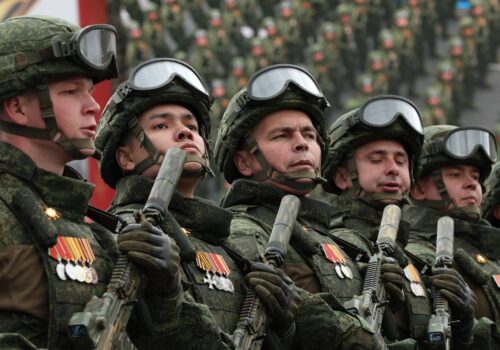
In 2022, the invading Russian military was so confident of success that some troops reportedly packed dress uniforms to wear during the coming victory parade in Kyiv. Few could have imagined that four years later, Putin would be forced to drastically downgrade Russia’s own traditional Victory Day parade in Moscow due to fears of possible Ukrainian attack.
And yet that is exactly what happened in May 2026. Putin even humbled himself by calling on US President Donald Trump to help broker a temporary ceasefire, while Ukrainian leader Volodymyr Zelenskyy added to his Russian counterpart’s obvious discomfort by issuing a mock presidential decree permitting the parade to proceed.
This year’s Victory Day humiliation was only one of multiple signs in recent months that Putin’s invasion is rapidly unraveling. In early June, Ukraine marked the opening of Putin’s flagship St. Petersburg International Economic Forum by bombing the city’s oil terminal and naval base. This was a major personal embarrassment for the Russian dictator, who was unable to prevent visiting foreign delegations from noting the huge plumes of smoke shrouding the city as they made their way to the forum venue.
The achievements of Ukraine’s strategic bombing campaign this year extend far beyond disrupting Putin’s precious parade and his flagship forum. Since the beginning of 2026, escalating Ukrainian missile and drone strikes on military and industrial targets inside Russia have succeeded in hampering the Kremlin war machine and sparking a fuel crisis that is threatening to destabilize Putin’s home front. Meanwhile, a series of large-scale attacks on Moscow have confirmed Ukraine’s growing ability to bring the war home to Russia.
Stay updated
As the world watches the Russian invasion of Ukraine unfold, UkraineAlert delivers the best Atlantic Council expert insight and analysis on Ukraine twice a week directly to your inbox.
Ukraine’s success is directly challenging the unspoken social contract between the Kremlin and the Russian population. For years, Putin has promised ordinary Russians higher living standards while vowing to shield them from the negative consequences of his wars. In return, the general population has been expected to stay out of politics. With Russia’s cities under frequent bombardment and millions of people forced to queue for hours in search of fuel, this informal agreement is beginning to look outdated.
The current situation in Russian-occupied Crimea is even more alarming for the Kremlin. In recent months, Ukraine has imposed what it terms as a “logistics lockdown” of the strategically crucial Black Sea peninsula, using drones to target all major supply routes. This has forced the occupation authorities to restrict fuel sales to civilians and declare a state of emergency.
Russia’s prospects on the battlefield are little better. Putin’s army has struggled to advance at all in 2026, with minor territorial gains in many cases canceled out by successful Ukrainian counteroffensives elsewhere along the front lines of the war. This lack of progress has come despite continued heavy casualties, with the UK estimating in late May that Russia had lost around half a million soldiers since the start of the invasion.
Putin has also been confronted with a series of setbacks in the international arena. Since the start of the year, Russia has lost key allies in Venezuela and Hungary, while efforts to bully Armenia have proved counterproductive and undermined Russian influence in the southern Caucasus region. These blows have highlighted Russia’s diminished status on the global stage due to the faltering Ukraine invasion.
Meanwhile, the Kremlin’s efforts to undermine international support for Ukraine have fallen flat. Many in Moscow breathed a sigh of relief when Trump won the US presidential election in 2024, but he has proved unable to end the war on Russian-friendly terms. Instead, Europe has dramatically stepped up military aid to Kyiv, purchasing weapons from the United States and significantly increasing direct funding for the Ukrainian war effort. With Ukraine now widely recognized as indispensable for the future of European security, this enhanced support is likely to continue.
Eurasia Center events

None of this means the war is almost over. On the contrary, Putin has reacted to his declining fortunes by clamping down on domestic internet access inside Russia and escalating attacks on Ukraine’s civilian population. Speculation is also mounting that Moscow may be preparing some kind of limited military operation in the Baltic region in order to raise the stakes further and intimidate Europe into abandoning its support for Ukraine.
Nor is Putin likely to run out of soldiers any time soon. While he is deeply reluctant to embark on a politically risky mass mobilization, he will almost certainly do so if the alternative is admitting defeat in Ukraine. This would not be popular but is unlikely to spark any major unrest. With no real anti-war movement or political opposition in Russia, there seems little chance of Putin facing credible domestic challenges to his grip on power.
While Russia is not on the brink of collapse, there is no escaping the fact that Putin is currently more vulnerable than at any time since Ukraine’s battlefield victories during the first year of the invasion. Western leaders should seek to exploit this weakness in order to secure a sustainable peace by boosting support for Ukraine.
As Ukrainians, we are profoundly grateful for the support we have received so far, just as we are well aware that continued financial and military backing requires considerable courage and political will from partner countries. At the same time, the past eighteen months of failed efforts to negotiate a compromise peace have confirmed that Putin will not stop until he is stopped. Together, Ukraine and its allies now have a window of opportunity to do just that.
Ukraine’s wish list is well known. Priorities include the expanded and reliable supply of interceptor missiles for the country’s Patriot air defense systems in order to protect Ukrainian cities and civilian infrastructure from Russian ballistic missiles. Likewise, Ukraine also needs more Western-made missiles to strike targets far beyond the front lines, including inside Russia.
In addition to direct military aid, further financial assistance is equally important. This includes investments in the Ukrainian defense industry, which has proven highly innovative and effective over the past four years but still lacks the funding to reach its true potential. In parallel, Ukraine’s Western partners must maintain sanctions pressure on Russia, with a particular focus on closing loopholes used by the Kremlin to circumvent restrictions.
The coming months will require considerable resolve in Western capitals as an increasingly desperate Putin attempts to bluff and threaten his way out of the predicament he now finds himself in. Through it all, Ukraine’s partners must remain focused on the goal of securing peace through strength. If they fail to seize this opportunity, the cost of stopping Putin will only rise.
Kira Rudik is leader of the Golos party and a member of the Ukrainian parliament.
Further reading

The views expressed in UkraineAlert are solely those of the authors and do not necessarily reflect the views of the Atlantic Council, its staff, or its supporters.

The Eurasia Center’s mission is to enhance transatlantic cooperation in promoting stability, democratic values, and prosperity in Eurasia, from Eastern Europe and Turkey in the West to the Caucasus, Russia, and Central Asia in the East.
Follow us on social media
and support our work
Image: Servicemen of the 148th Separate Artillery Zhytomyr Brigade of the Armed Forces of Ukraine fire a BM-21 Grad multiple launch rocket system towards Russian troops, amid Russia's attack on Ukraine, in Dnipropetrovsk region, Ukraine. June 22, 2026. (REUTERS/Stringer)