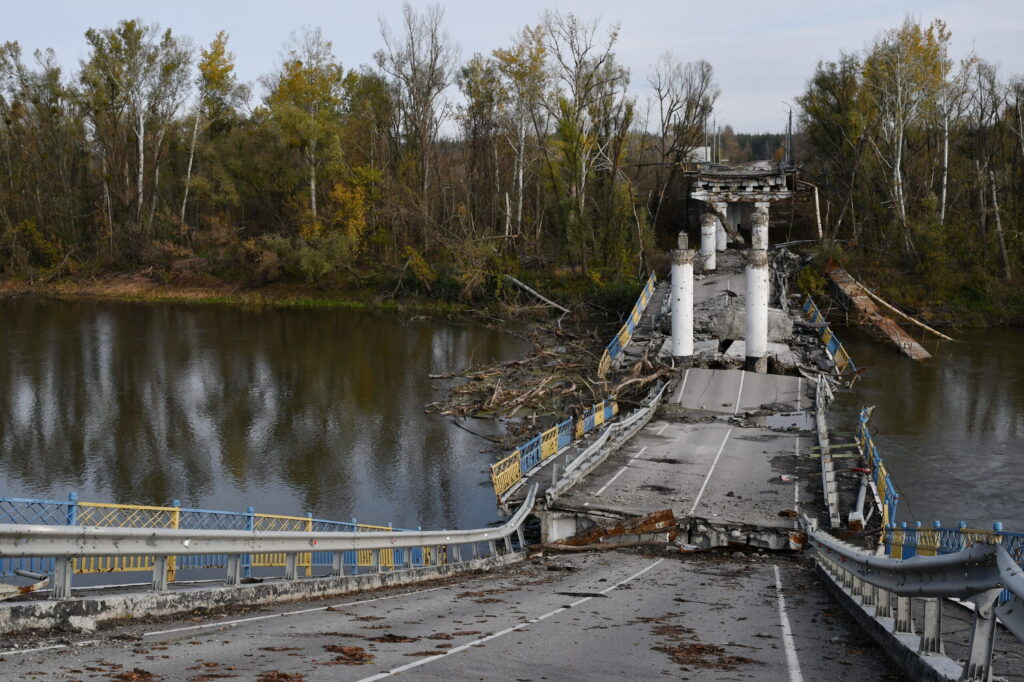
As international efforts to end the Russian invasion of Ukraine continue, it is also vital to look beyond the battlefield and address the issue of Ukraine’s recovery. This will shape Europe’s future for decades to come, with profound implications for European security and the democratic world’s ability to respond to international aggression.
Since the early stages of Russia’s full-scale invasion, the discussion over Ukraine’s recovery and reconstruction has focused primarily on numbers. The anticipated cost of recovery has risen steadily over the past four years, with current estimates putting the price at significantly more than $500 billion. While partner countries and potential institutional investors debate financing mechanisms and support programs, it is crucial to clarify what kind of country should emerge from the horrors of Russia’s invasion.
The objective should not be to repair and rebuild all that was lost or damaged during the war. Instead, Ukraine’s recovery must focus on creating a stronger and more economically competitive country that can offer security and prosperity to its citizens.
Ultimately, the true measure of success will not be the amount of bridges repaired or buildings constructed, but the number of Ukrainians who choose to build their future in Ukraine. Will displaced Ukrainian families return home? Will the next generation of young professionals choose to stay and build their careers? Will military veterans find new opportunities and a renewed sense of purpose in the country they fought to defend? The answers to these questions will define Ukraine’s recovery.
Stay updated
As the world watches the Russian invasion of Ukraine unfold, UkraineAlert delivers the best Atlantic Council expert insight and analysis on Ukraine twice a week directly to your inbox.
Russia’s invasion has caused enormous damage to Ukraine’s industrial base. The key task during recovery is to move beyond the outdated industrial models of the past. For decades, Ukraine has remained trapped in an economic system based largely on exporting raw materials while importing value-added products. Ukraine should now plan to move up global value chains by localizing production and becoming more competitive on international markets.
This goes beyond simple economics and has implications for society as a whole. A competitive industrial sector creates high-quality jobs, strengthens communities, and gives people a sense of confidence in the future.
In frontline Ukrainian regions like Mykolaiv, entrepreneurs continue to invest, hire staff, and expand production in exceptionally challenging conditions. This has a very positive impact on local communities, underlining the fact that recovery begins when people believe the future is worth investing in. The same logic should help guide national recovery efforts.
Ukraine’s industrial upgrade will require far greater energy resilience. The war has exposed the vulnerability of the country’s overly centralized energy systems, with a single Russian bombardment sometimes leaving entire regions without power. This has to change.
The recovery period is the ideal time to create a more modern, secure, and decentralized energy network. This must include a far greater emphasis on renewable energy and distributed electricity production. The result should be a more reliable power grid that is attractive to investors and capable of deeper integration into European markets.
The sheer scale of Ukraine’s recovery requirements means that public financing alone will not be enough. We must therefore ensure the right conditions for investors. This means building trust in state institutions and putting a suitable legislative framework in place for large-scale investments that emphasizes transparency, predictability, and the rule of law. Innovative financial instruments, risk-sharing mechanisms, and investment guarantees will all play important roles.
One of Ukraine’s greatest competitive advantages is digital governance. Technology is already transforming many aspects of daily life in wartime Ukraine. Looking ahead, the digital revolution can also strengthen transparency, accountability, and trust. For example, international investors should be able to monitor project implementation in real time, track the allocation of funds, and evaluate outcomes.
The world’s most successful economies all embrace innovation. Ukraine can do the same. Science, education, technology, and entrepreneurship must become national priorities. Universities, research institutions, tech companies, and startups should operate within a single innovation ecosystem. This is how nations establish lasting competitive advantages.
Eurasia Center events

Ukraine’s greatest single postwar challenge is likely to be demographic. No country can thrive without people. This is why bringing home the millions of Ukrainians who left the country following Russia’s full-scale invasion is a strategic priority. Providing attractive housing, healthcare, education, and employment opportunities will be central to these efforts.
Ultimately, when planning Ukraine’s recovery, every initiative should be subject to the same simple question: Will it improve people’s lives? This indicator must be at the heart of efforts to build a better Ukraine.
Ukraine’s recovery process is an international challenge with consequences that will extend far beyond the country’s borders. The outcome will send a powerful signal to global audiences of the democratic world’s ability to mobilize and live up to the values so often repeated in Western capitals.
For Western leaders, a successful Ukraine would represent much more than a foreign policy achievement. It would strengthen a key security partner on Europe’s eastern flank and reinforce transatlantic stability. In an era of mounting global competition, it would also create significant new trade and investment opportunities that would boost Europe as a whole.
The entire transatlantic community has an interest in ensuring Ukraine’s successful recovery and national revival. Clearly, the top priority remains defending Ukraine against Russia’s invasion and securing a durable peace. However, ending the war will not be enough. In order to win the future, Ukraine must emerge stronger, safer, more innovative, and more prosperous than ever before.
Vitalii Kim is Head of Mykolaiv Regional Military Administration.
Further reading


The views expressed in UkraineAlert are solely those of the authors and do not necessarily reflect the views of the Atlantic Council, its staff, or its supporters.

The Eurasia Center’s mission is to enhance transatlantic cooperation in promoting stability, democratic values, and prosperity in Eurasia, from Eastern Europe and Turkey in the West to the Caucasus, Russia, and Central Asia in the East.
Follow us on social media
and support our work
Image: Credit Image: © Andriy Andriyenko/SOPA Images via ZUMA Press Wire
