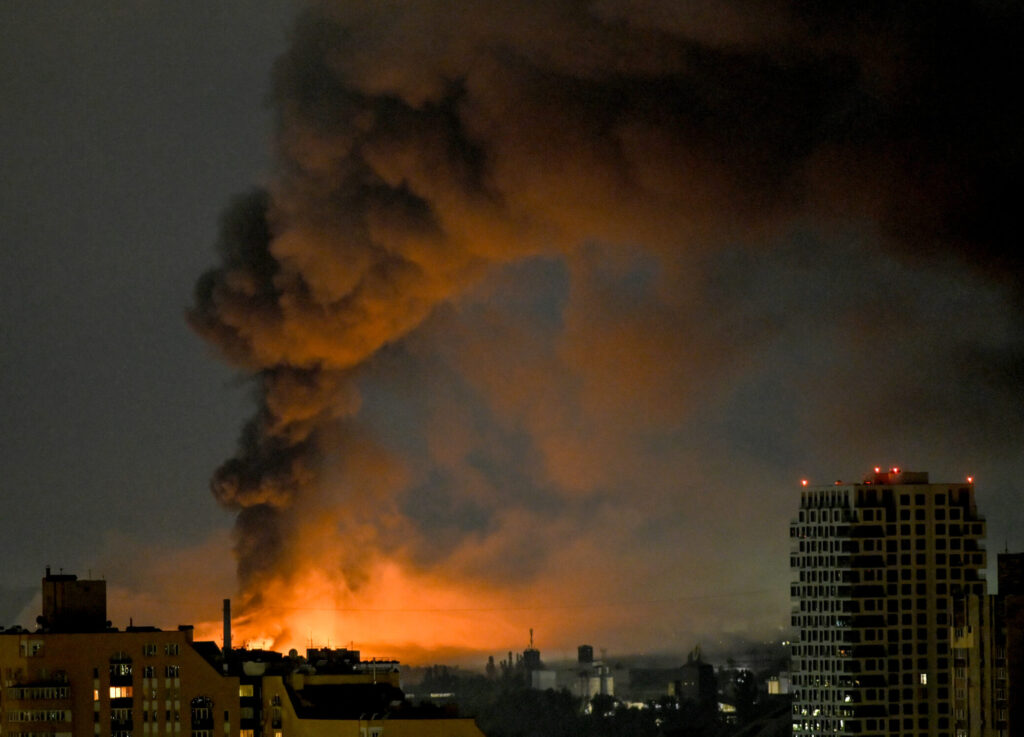
Russia launched 126 ballistic missiles at Ukraine in July 2026, the New York Times reports. This figure represents a new monthly record since the start of the full-scale invasion as Moscow steps up the bombardment of Ukrainian cities and civilian infrastructure.
The recent surge in missile attacks comes as Ukraine runs short of air defense ammunition, leaving the country virtually defenseless against the Kremlin’s ballistic blitz. Russian President Vladimir Putin clearly aims to exploit Ukraine’s vulnerability and bomb the country into submission.
The death toll from Russia’s escalating bombing campaign is already rising alarmingly. Around 400 people were reportedly killed during July, while UN data indicates that 1,396 Ukrainian civilians died and an additional 7,978 suffered injuries during the first six months of this year, a 37 percent rise from the same period in 2025.
Ukraine’s only effective protection against Russian ballistic missiles is the US-made Patriot air defense system. However, the country’s Patriot interceptor missile stocks have now been almost entirely depleted, while Kyiv’s efforts to secure fresh supplies are currently failing.
The United States is unable to provide Ukraine with Patriot interceptors as America is currently experiencing its own supply challenges due to the war with Iran. A recent report produced by the Center for Strategic and International Studies estimated that US stockpiles of Patriot ammunition have fallen from over 2,300 missiles in February to around eight hundred.
Work to boost Patriot interceptor output is already underway, but this not expected to result in any major increases until 2030. Meanwhile, US President Donald Trump recently raised the prospect of granting Ukraine a license to produce Patriot missiles, but no agreement has been reached. Even if Kyiv receives the green light, it could be years before the first interceptors are ready.
This leaves Ukraine with no easy solutions as the country struggles to defend itself against Russia’s air offensive. Ukrainian President Volodymyr Zelenskyy has stated that Ukraine requires at least 300 interceptors to protect the civilian population and prevent the destruction of critical infrastructure ahead of the fast approaching winter season. At present, this goal looks unachievable.
Stay updated
As the world watches the Russian invasion of Ukraine unfold, UkraineAlert delivers the best Atlantic Council expert insight and analysis on Ukraine twice a week directly to your inbox.
With US stockpiles running low and current missile production falling far short of Ukraine’s needs, Kyiv is turning to the country’s European partners and hoping they can be persuaded to contribute interceptors from their own limited reserves. In today’s uncertain European security environment, however, many countries are reluctant to undermine their own defensive capabilities by handing over interceptor missiles to Ukraine.
This is leading to mounting frustration in Kyiv. Following the latest deadly Russian bombardment of the Ukrainian capital, Zelenskyy spoke in frank terms about the consequences of Europe’s caution. “Ballistic missile interceptors could have saved the lives of those killed today. It is very important that our partners understand that delays in supplying them, or an unwillingness to provide anti-ballistic systems, lead directly to such horrific casualties and destruction,” he commented. Earlier this week, the increasingly exasperated Ukrainian leader also suggested that the reluctance of international partners to address Ukraine’s lack of interceptors may be an attempt to make Kyiv more “accommodating.”
One long-term solution to the problem of Kyiv’s current shortages is the Freyja project, which involves a coalition of European countries working to develop an anti-ballistic air defense system. If successful, this Ukraine-led initiative will reduce dependence on the United States and provide a far greater degree of European autonomy, but timing remains an issue. While initial test launches may happen in the first half of 2027, it could be three to five years before the system is fully operational.
Eurasia Center events

Ukraine’s mounting vulnerability to Russian bombardment was underlined on August 5, when the country’s air defenses failed to intercept any of the 24 ballistic missiles launched at targets in the Kyiv region. With no reliable short-term solutions to the lack of Patriot interceptors, Ukraine must look beyond purely defensive measures and explore potential offensive options.
Many in Ukraine have long questioned whether air defenses alone could ever fully counter the threat posed by Russian airstrikes. Advocates of a more offensive approach argue that the country should be aiming to “shoot the archer, not the arrow.” Russia’s rapidly escalating ballistic missile attacks now make this a top priority.
Ukraine has already demonstrated its ability to target launch systems inside Russia. In July, a unit from Ukraine’s Unmanned Systems Forces managed to destroy an S-400 system in the Bryansk region on the border with northern Ukraine, which is frequently used as a base for ballistic missile strikes.
One of the key challenges is locating launch sites. During his recent visit to the US, Zelenskyy reportedly sought a meeting with Elon Musk to discuss using the Starlink system inside Russia to hunt ballistic missile launchers. If Starlink restrictions are not lifted, Ukraine will need to maintain enhanced surveillance of Russia via other means. This option will require increased supplies of drones due to what would probably be a high attrition rate while operating in missile launch areas featuring dense Russian air defenses.
Some have suggested that the most effective strategy to counter the ballistic threat could involve upgrades to Ukraine’s existing military capabilities. Writing in the Washington Post recently, retired US Navy Rear Admiral Mark Montgomery made the case for modifying the weapons and targeting systems used by Ukraine’s F-16 fighter fleet in order to strike launch sites from the air. “The technology exists, the platform exists, and the weapon is already approved for sale. A small change in US policy would make a big difference in Ukraine’s fight for survival,” he noted.
Others argue that Ukraine’s best chance of blunting Russia’s ballistic attacks lies in developing the country’s own ballistic missile capabilities. Ukraine is currently expected to have two ballistic missile models ready for combat use by late 2026, according to Iryna Terekh, the CEO of Ukrainian drone and missile maker Fire Point. This would significantly enhance Kyiv’s ability to strike Russian missile launch and production sites, while also potentially boosting deterrence.
Ukraine’s partners appear to have little appetite for addressing the country’s air defense deficiencies, but there is much they can still do to help counter Russia’s bet on ballistic terror. First and foremost, they can support Ukraine’s offensive efforts by providing the intelligence needed to locate launch sites and supplying the weapons needed to strike deep inside Russia. Increased support for the Ukrainian defense sector will also enhance Kyiv’s long-range capabilities.
Putin is currently ramping up Russian ballistic missile production and escalating airstrikes as he seeks to break Ukraine’s resistance. If he is not stopped, the Ukrainian civilian population will pay a terrible price in the coming months and Kyiv may be pushed toward capitulation, with grave consequences for the future of European security. There are no easy solution to this Russian ballistic threat, but Ukraine’s allies must recognize that defensive measures alone will not be enough.
Mykola Bielieskov is a research fellow at the National Institute for Strategic Studies and a senior analyst at Ukrainian NGO “Come Back Alive.” The views expressed in this article are the author’s personal position and do not reflect the opinions or views of NISS or Come Back Alive.
Further reading


The views expressed in UkraineAlert are solely those of the authors and do not necessarily reflect the views of the Atlantic Council, its staff, or its supporters.


The Eurasia Center’s mission is to enhance transatlantic cooperation in promoting stability, democratic values, and prosperity in Eurasia, from Eastern Europe and Turkey in the West to the Caucasus, Russia, and Central Asia in the East.
Follow us on social media
and support our work
Image: August 1, 2026, Kyiv, Ukraine: A plume of thick black smoke rises from a fire caused by the impact of an overnight Russian missile attack, Kyiv, Ukraine, August 1, 2026. (Credit Image: © Evgen_kotenko/Ukrinform via ZUMA Press Wire)
