
Ukrainian President Volodymyr Zelenskyy addressed the United Nations last week and used the occasion to dismiss suggestions that minor territorial concessions could bring the Russian invasion of his country to an end. Zelenskyy’s comments reflect widespread exasperation in Kyiv over what many Ukrainians feel is the failure of their Western partners to grasp the true scale of Russian President Vladimir Putin’s imperial ambitions.
US-led efforts to revive peace talks between Kyiv and Moscow are currently focused on an approximately 6000 square kilometer stretch of Ukrainian-held land in the Donetsk region that Russia has been unable to seize militarily. US Special Envoy Jared Kushner claimed recently that a peace deal is already in place if Ukraine agrees to withdraw, but Zelenskyy warned UN delegates that ceding more land would only embolden Putin. If the Kremlin dictator is given control of the contested area, “he will once again make it clear to the world that even our Donetsk region is not enough for him. He wants more of our cities, Odesa, Kharkiv, Dnipro, and others,” stated the Ukrainian leader.
Zelenskyy’s United Nations speech was not the first time he has questioned the entire notion of a land for peace deal with Russia. In a recent CBC News interview, he argued that Putin already rules the largest country in the world and is not motivated by the prospect of seizing additional territory in Ukraine. “It’s a crazy idea,” Zelenskyy noted. “Putin doesn’t need extra kilometers, he needs Ukraine. He needs Ukraine to be part of Russia.”
The Ukrainian president’s skepticism comes as the Trump administration renews efforts to end the largest European invasion since World War II. Critics of the US approach have claimed that while Kushner and fellow special envoy Steve Witkoff appear to view their negotiations with the Kremlin as a geopolitical real estate deal, the Russian side is on a completely different wavelength altogether. As far as Putin is concerned, the invasion of Ukraine is no mere land grab or border dispute; it is an historic quest to extinguish Ukrainian statehood and revive the Russian Empire.
Stay updated
As the world watches the Russian invasion of Ukraine unfold, UkraineAlert delivers the best Atlantic Council expert insight and analysis on Ukraine twice a week directly to your inbox.
Any serious attempt to end the Russia-Ukraine War must begin with a frank assessment of the historic grievances and imperial insecurities that form the bedrock of Putin’s geopolitical worldview. The Kremlin dictator’s bitter opposition to Ukrainian statehood reflects his deep-seated resentment over the fall of the Soviet Union, which he has referred to as the demise of “historical Russia.”
To Putin, Ukraine is not only the most populous of the numerous non-Russian republics to emerge from the wreckage of the USSR; it is culturally, spiritually, and historically inalienable from Russia itself. Reconquering Ukraine is therefore the key to reversing the Soviet collapse, while the further consolidation of Ukrainian statehood threatens to act as a catalyst for the next stage in Russia’s retreat from empire. This has inspired an obsession with the destruction of independent Ukraine that has come to define Putin’s revisionist ideology and dominate his entire reign.
Long before the full-scale invasion began, Putin was already notorious for insisting that Ukrainians were actually Russians (“one people”). On the eve of the invasion, he published an entire essay arguing against the legitimacy of the Ukrainian state. Since 2022, the Russian army has been putting this eliminationist anti-Ukrainian agenda into action. In areas of Ukraine that have fallen under Kremlin control, the Russian occupation authorities are ruthlessly erasing all traces of Ukrainian language, heritage, and national identity.
Crucially, Putin has framed his invasion as the return of “historically Russian lands.” This alone is enough to cast serious doubt over the durability of any settlement based on the current front lines of the war. A deal reflecting today’s battlefield realities would limit Russian gains to approximately 20 percent of Ukraine, while the rest of the country would remain beyond Kremlin control and would be free to continue consolidating its position within the wider Western world. This would be viewed in Moscow as a major defeat, with Putin doomed to enter Russian history as the man who lost Ukraine.
Eurasia Center events
Almost everything about Putin’s present posture indicates that he has no interest in ending the war and no intention of coexisting with an independent Ukraine. While the Russian ruler pays lip service to the idea of a peace deal, he has repeatedly refused to join Kyiv in agreeing to an unconditional ceasefire. Instead, Putin insists on addressing the so-called “root causes” of the war, which in practice means imposing restrictions on Ukrainian sovereignty that would turn the country into a Russian vassal.
The proposed terms outlined by Kremlin officials would leave Ukraine partitioned, defenseless, and internationally isolated, while also reestablishing Russian dominance over key aspects of the country’s domestic affairs. Moscow’s long list of demands includes a ban on NATO membership and any other military alliances, together with significant restrictions on the size and capabilities of the Ukrainian army. It does not require much imagination to predict what Putin intends to do if he succeeds in disarming Ukraine in this manner.
Putin’s fierce opposition to a postwar European military presence on Ukrainian territory is similarly revealing. He recently stated that any attempt to deploy European troops to Ukraine would mean “war with Russia.” Given the longstanding presence of substantial European forces in the six NATO member countries bordering Russia, Putin’s objections make little sense from a purely military perspective. Instead, his intimidation tactics are a clear indication that he intends to complete the conquest of Ukraine and does not want even symbolic numbers of European troops to stand in his way.
While Putin’s broad historical framing of his Ukraine invasion makes a compromise peace virtually impossible, there are also powerful practical considerations pushing him to fight on. Indeed, stopping now may actually be dangerous. “Despite its many costs, the war has bolstered Putinism and has been woven into the fabric of Russian statehood,” wrote Michael Kimmage and Maria Lipman in a recent analysis for Foreign Affairs. A ceasefire would challenge this militaristic transformation and pose a direct threat to the political, economic, and social foundations of the Putin regime.
Putin is also no doubt eager to delay the return from Ukraine of more than half a million brutalized Russian soldiers, whose presence on the home front could easily become a source of domestic destabilization. Veterans of the Soviet Union’s war in Afghanistan played a key role in the rise of lawlessness amid the breakup of the USSR during the late 1980s and early 1990s. Nobody in Moscow wishes to risk a repeat.
Putin’s determination to wipe Ukraine off the map and his regime’s reliance on the current wartime conditions make further escalation a far more realistic prospect than peace. Indeed, if he is unable to secure a decisive victory in Ukraine, Putin will almost certainly opt to continue the war indefinitely rather than gamble on a compromise settlement that would have uncertain consequences for his regime.
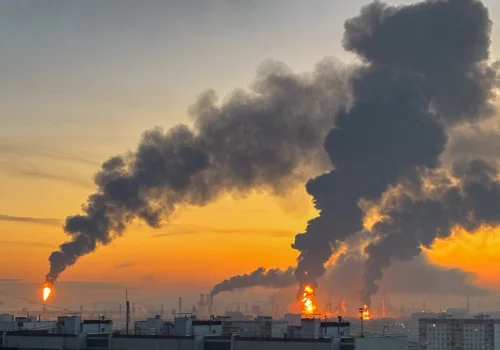
This escalation is already underway. With Russian troops struggling to achieve a military breakthrough, the war is now entering a new phase marked by significantly higher levels of death and destruction beyond the battlefield. In recent months, Russia has dramatically increased the bombardment of civilian targets across Ukraine, with round-the-clock attacks on cities designed to terrorize the population and disrupt every aspect of daily life.
In parallel, Russia is expanding sabotage operations and other acts of gray zone aggression throughout the EU in a bid to deter Kyiv’s European allies. Meanwhile, the Kremlin has unveiled plans for an enlarged army and record military spending in 2027 as Putin looks to crush Ukrainian resistance once and for all.
This deteriorating outlook makes a mockery of current diplomatic efforts to broker a compromise peace. The Trump administration deserves considerable credit for trying to bring Russia and Ukraine to the negotiating table, but talk of a limited “land for peace” deal betrays a fundamental misreading of Putin’s maximalist position.
The Russian ruler believes he is waging a holy war to destroy Ukraine and reclaim his country’s superpower status. He will not be distracted from this messianic goal by the promise of minor territorial concessions. Instead, serious negotiations will only begin when Putin is placed under considerably more pressure by Ukraine’s international allies. Peace with Putin’s Russia is possible, but it can only be peace through strength.
Peter Dickinson is editor of the Atlantic Council’s UkraineAlert service.
Further reading


The views expressed in UkraineAlert are solely those of the authors and do not necessarily reflect the views of the Atlantic Council, its staff, or its supporters.

The Eurasia Center’s mission is to enhance transatlantic cooperation in promoting stability, democratic values, and prosperity in Eurasia, from Eastern Europe and Turkey in the West to the Caucasus, Russia, and Central Asia in the East.
Follow us on social media
and support our work
Image: Russian President Vladimir Putin attends a meeting with members of the government via a video link in Moscow, Russia. September 23, 2026. (Sputnik/Vyacheslav Prokofyev/Pool via REUTERS)