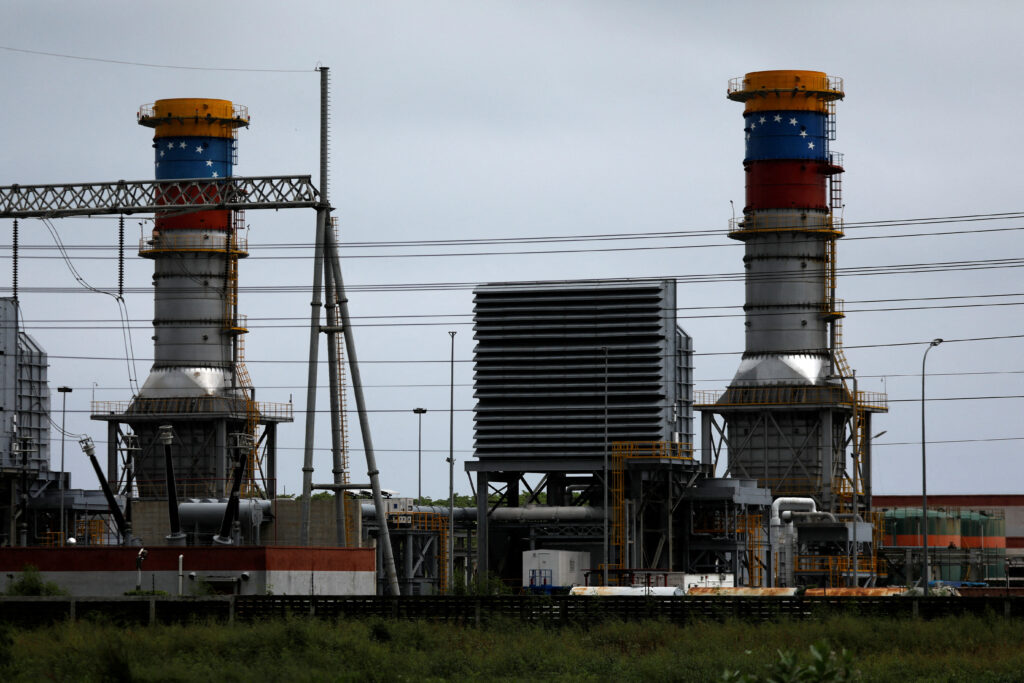
The US intervention in Venezuela to arrest President Nicolás Maduro has sown uncertainty in energy markets. As the United States navigates this uncertainty, it’s worth applying the tripartite framework that Imdat Oner of Florida International University provided for the post-Maduro political era in Venezuela. With outcomes framed as “the good, the bad, and the ugly,” Oner’s political scenarios are useful for structuring thinking about Venezuela’s oil future—and its resulting implications for US diesel and trucking markets.
In the good scenario, Delcy Rodríguez, the new leader of the Chavismo regime, serves as a transitional figure on Venezuela’s path to democracy, capitalism, the rule of law—and prosperity largely financed from the country’s substantial oil reserves. In this scenario, Secretary of State Marco Rubio’s apparent plan of stabilization, recovery, and transition succeeds. In tandem, Venezuelan oil production and exports would rise sharply. Still, most analysts hold that oil production challenges will persist even in this best-case scenario.
In the ugly variant, the Chavismo regime largely stays in power but undertakes policies meant to bolster oil production, in line with Washington’s preferences. Markets seem to view this modified status quo as most likely: crude oil prices have modestly fallen while share prices for pure-downstream players like Valero—which could process more heavy crude volumes—have risen. Indeed, if the raid quickly leads to political stability and other supportive conditions, Venezuelan oil production could rise. Still, a renaissance for Venezuelan oil and gas will be difficult to achieve. Even if Washington maintains a single-minded focus on oil extraction, political risks and uncertainty will remain acute, likely ensuring that US companies will remain deeply reluctant to commit huge amounts of capital for “decadal projects.”
Alternatively, in a bad scenario, the raid could trigger significant convulsion in Venezuelan politics and foreshadow a longer and larger military intervention, which would likely send Venezuela’s crude oil production sharply lower. In this case, the loss of Venezuelan crude oil—which is highly suitable for middle distillates like diesel—could reverberate throughout global and US energy and food prices. The data suggest that, in the United States, the trucking sector and rural areas are disproportionately exposed to diesel markets and will face affordability pressures if a large-scale military intervention doesn’t go well. While the Trump administration’s seizure of 30 million to 50 million barrels of Venezuelan oil (equivalent to about one to two months of Venezuela’s crude oil exports) will provide some buffer against short-term disruptions, long-duration outages could prove damaging.
As we’ve written previously, Venezuela is less influential in global crude oil markets than it used to be due to declining production, but it nevertheless retains a somewhat more important role in diesel markets. That’s because Venezuela (and Colombia, where the conflict could escalate horizontally) exports heavier crude oil grades that are highly suitable for diesel, while US Gulf Coast complex refineries are configured to process these grades.
The diesel “crack spread”—the difference in price between crude and diesel—indicates that while crude oil prices currently account for 41 percent of diesel prices, other factors also matter, like suitable crude grade availability. The energy consultancy RBN finds that diesel crack spreads are rising to their highest level since early 2024. Internationally, the International Energy Agency reports that global middle distillate markets are already facing price pressure on limited supplies. Accordingly, persistent disruptions to Venezuelan (and potentially Colombian) oil could hold significant impacts for US diesel and trucking markets.
Who will feel the pinch
Given the potential for a diesel price uptick and its effects on the affordability crisis, it’s worth examining how the fuel is consumed. In the United States, diesel consumption is overwhelmingly tilted to transportation, which accounted for over 75 percent of US middle distillate consumption in 2023, by volume.
Sources: Energy Information Administration, Author’s Calculations.
Accordingly, the more than 3.5 million professional truck drivers would be disproportionately impacted if diesel prices rise. Unsurprisingly, this market and workforce skew away from metropolitan areas, as about 48 percent of truck vehicle miles traveled occur in rural areas.
But rural areas wouldn’t be the only places affected. A jump in diesel prices would also be felt across much of the United States. State-level distillate fuel oil consumption correlates with population and energy consumption. Texas is the largest distillate fuel oil consumer in absolute terms, followed by California, New York, Pennsylvania, and Florida.
Viewed through the lens of per capita consumption, or distillate intensity, Wyoming’s was the highest at about 983 gallons (assuming that every barrel of distillate holds about 42 gallons). Other distillate-intensive states include North Dakota, Alaska, Nebraska, and New Mexico. While these states do not directly import crude oil from Venezuela (or Colombia), they will nevertheless be impacted if shortages propagate through diesel markets.
Some of the most distillate-intensive states are surprising. Some reasons for their elevated diesel consumption include their geographic scale, coupled with large rural areas and large industrial sectors. Other reasons relate to fuel economy: diesel consumption, especially on trucks, can rise due to winter weather, high cross-winds, or hilly terrain.
Accordingly, if distillate prices rise due to major, sustained outages in Latin America arising from the US intervention in Venezuela, diesel-reliant states, trucking markets, and rural areas will face disproportionate costs. The initial raid against Maduro was an undeniable tactical success, but the economic costs and strategic tradeoffs of a long-duration and large-scale military intervention in Latin America could prove high.
Joseph Webster is a senior fellow at the Atlantic Council Global Energy Center and the Indo-Pacific Security Initiative; he also edits the independent China-Russia Report. This article represents his own personal views.
about the author

Stay connected
Sign up for PowerPlay, the Atlantic Council’s bimonthly newsletter keeping you up to date on all facets of the energy transition:
related content

our work

The Global Energy Center develops and promotes pragmatic and nonpartisan policy solutions designed to advance global energy security, enhance economic opportunity, and accelerate pathways to net-zero emissions.
Image: FILE PHOTO: El Palito refinery of the Venezuelan state oil company PDVSA is pictured, in Puerto Cabello, Venezuela February 10, 2024. REUTERS/Leonardo Fernandez Viloria/File Photo